Mark Reckless MP for Lodge Hill rails against Natural England, Quangos, spiders, bugs and – vegetated shingle

Following yesterday’s blog on the latest machinations at Lodge Hill, I was informed that the local MP for the Lodge Hill area Mark Reckless, had not made any statement either for or against the development at Lodge Hill or the SSSI notification. Intrigued, I dug around a bit on the internet and found this video of him asking a question about Lodge Hill to that defender of the environment Nick Boles, planning minister; this was about a year ago.

Mark Reckless was elected an MP in 2010. Educated at Marlborough, then doing PPE at Oxford (along with about half of the cabinet), he went on to do an MBA then trained as a barrister, though he was only at the Bar for three years before becoming an MP. He had worked for a leading Merchant Bank and was rated as one of the top City of London economists during the 90s. He went on to work in the deregulation unit in Conservative Central Office in the early 2000s. He was a Medway Councillor from 2007 until 2011. During his time as a prospective Tory candidate he received funding from Tory uber funder and string puller Michael Ashcroft, via Bearwood Corporate Services. Clearly regarded as a Tory high flying new boy, he has disappointed many in the party by being one of the most rebellious MPs of the new intake and is vociferously anti immigration and anti europe. I would suggest he sits rather uncomfortably on the barbed wire fence between the Tory right and UKIP. This will probably play well with some of his voters in 2015.

Reckless claims to represent all those in his consituency “Since being elected in 2010 I have worked hard to represent all of the people in my Rochester and Strood constituency, irrespective of who they backed at the election”.

Is that really true – perhaps Reckless should organise a local referendum on this issue.

No doubt aware of the very strong opposition to Lodge Hill being developed from within his constituency, Reckless has not made any public pronouncements, at least not to his constituents. He has made his views very clear in the Commons though. This is the type of anti-environmental rhetoric I am becoming used to hearing from Tory backwoodsmen old and new.

Mark Reckless complained bitterly about Natural England, calling them part of the quanogocracy. He claimed that the Bonfire of the Quangos had had no effect on Natural England and had “fizzled out.”

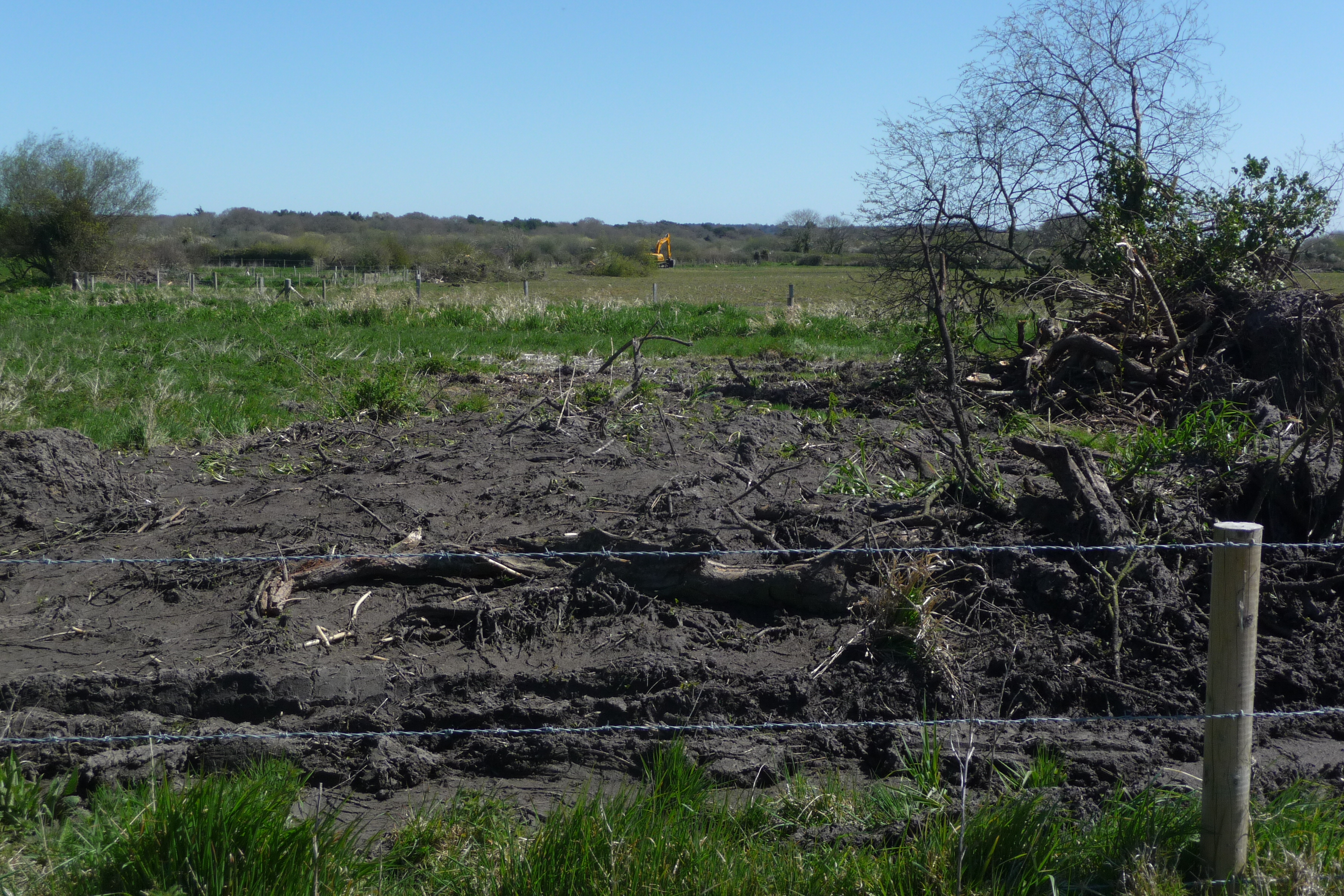
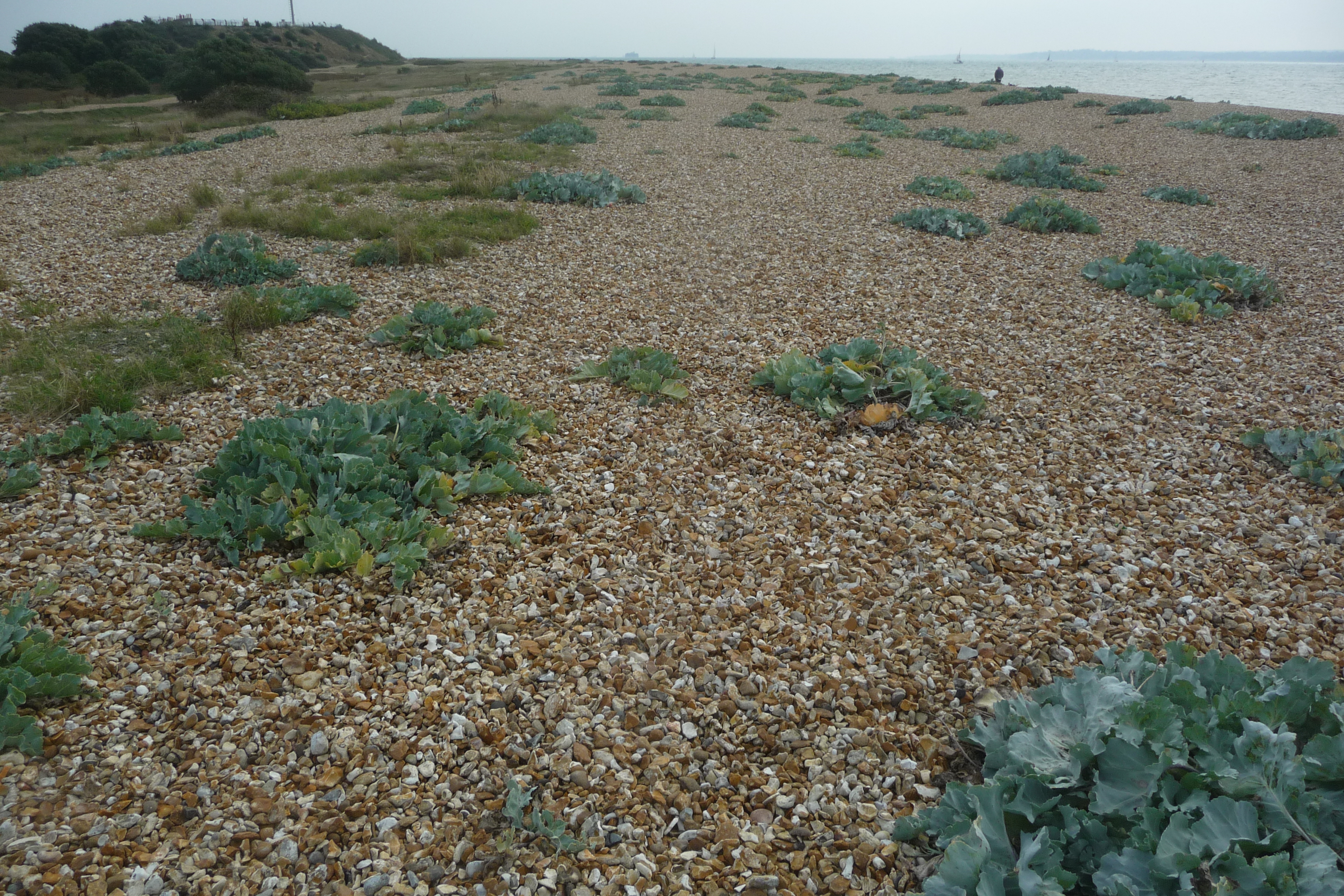
He railed against the notion that 84 nightingales had stopped the building of homes fo5 12000 people and jobs for 5000. He went on to  mention other places in his constituency “Grain – where 6ooo jobs have been delayed for 3 years because of the habitat of a bug” and at Swanscombe where “27000 jobs are at risk due to a spider“. He then went way outside his constituency and lamented that “at Dungeness where vegetated shingle must be considered for power development“.

He then implored the Minister to “end this absurd situation of a non-elected government agency dictating to national and local government how to run things.” and sought “the ministers assurance that our local council will decide where best for development to go not ministers or inspectors, still less these quangos.”

He talked about us being in the great global economic race and asked “Is Natural England board able to consider the policy of this government. If not, how will ministers have their way.”

Minister Boles replied sympathetically ” I can well understand his dismay that this major scheme be put at risk by notification”. “A notification does not necessarily mean a site cannot be developed” he said  “the developer has to make very advanced efforts both to mitigate, and if they cannot entirely mitigate, the compensate for any impact on the site.”

Boles “met with the Natural England chair asked him… how the notification can be managed in such a way to ensure that the houses needed for the people of his constituency can be built.”

Now this is old news in a way (nearly a year old) but is still highly pertinent.

Firstly Boles has made it clear he and CLG will look very sympathetically on a mitigation/compensation package for Lodge Hill – ie Biodiversity Offsetting. Note the use of language here – he truncates the mitigation hierarchy neatly ignoring the first test – avoid damage and moving straight on to mitigate – oh but don’t worry it you can’t mitigate on-site you can just compensate (ie offset) instead.

Secondly CLG are clearly leaning on Defra and Natural England to ensure that the SSSI can be “managed” in such a way that the houses get built. Managed as in destroyed. As in some Martin Scorsese mob  movie. “Hey, Luigi did you sort out that err problem – has it been managed” “yes boss, we took care of it for ya.”

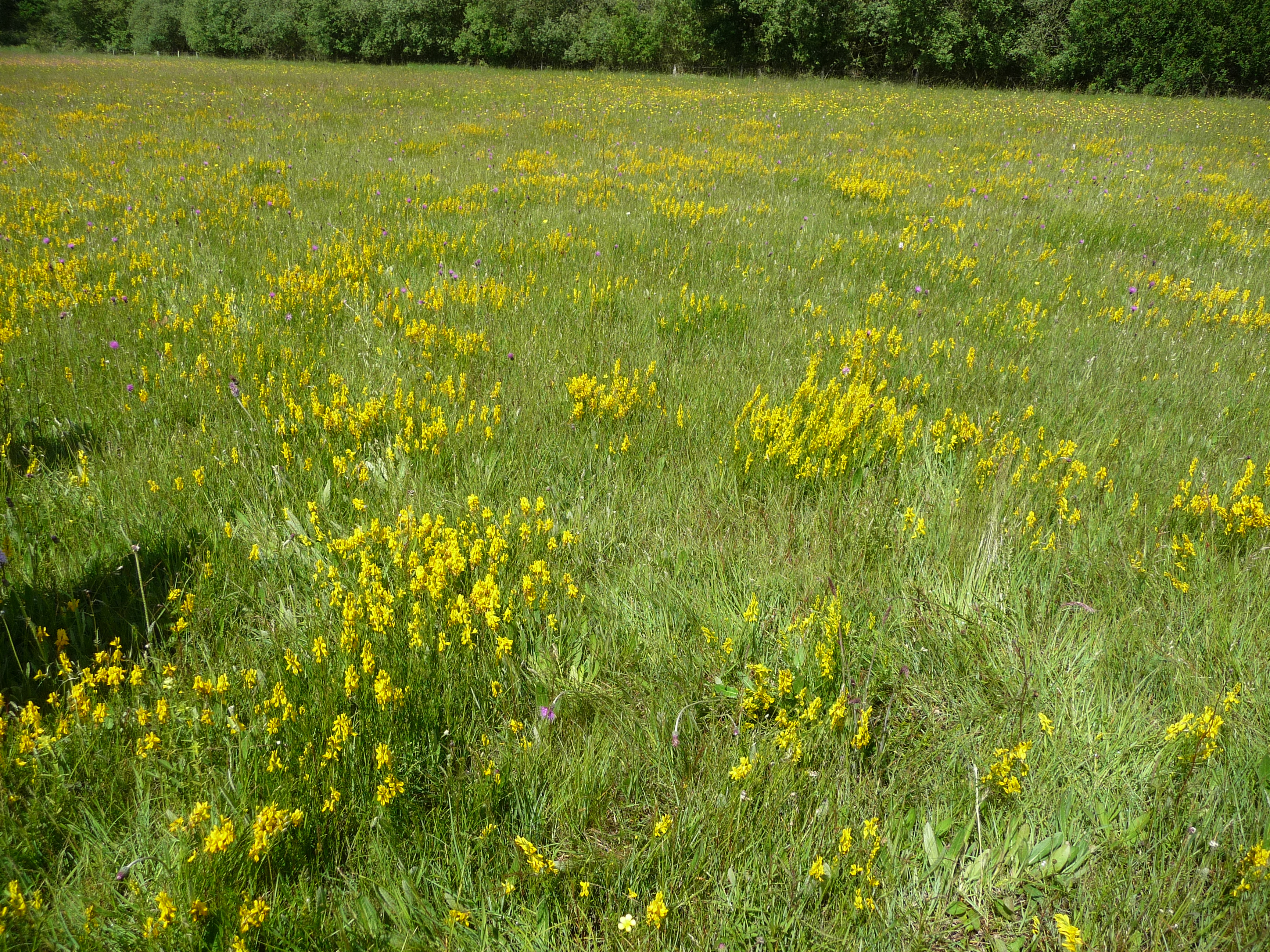
Thirdly Mark Reckless by his own admission is reckless in regard to the environment of his constituency or indeed it would seem anywhere else. Why pick on the vegetated shingle of Dungeness – did he have a traumatic childhood experience with a yellow horned poppy?
P1030025 2

The reason why England is falling behind in the global economic race – vegetated shingle.
Posted in anti conservation rhetoric, anti-environmental rhetoric, biodiversity, biodiversity offsetting, Lodge Hill, Natural England | Tagged , , , | 5 Comments

Offsetting at Lodge Hill rears its ugly head again.

CIEEM held a conference on biodiversity offsetting last week, and I was lucky enough to be the first speaker. I had put in an abstract for a talk which was highly sceptical of offsetting and whether it would provide any benefits for conservation. CIEEM will be putting the talk up on their website and I’m not going to repeat it here – for regular readers you will be familiar with my arguments. The talk appeared to have been well received although some came up to me afterwards and suggested I had not been tough enough in my criticism of BO. A straw poll on the day indicated about half of the audience (of about 300) were for and half were sceptical of BO.

Some of the other talks were very interesting – examples from Queensland indicated a scale of habitat loss resulting from mining activities which dwarfed anything we could imagine here, but the approach to offsetting was to improve the condition of existing habitat (in the long term but still temporarily). Habitat creation was not really an issue for them, as there were still large areas of natural habitat there. We were also treated to a presentation from ecologists working for HS2 who had decided the Defra metric wasn’t helpful to them, so they had changed it to include offsetting the loss of ancient woodland. This was roundly condemned in the question time, by none other than Jo Treweek, one of the founders of offsetting, who lambasted HS2 for taking this approach, stating this was exactly the type of thing that led people to justifiably call offsetting “a licence to trash”. HS2’s approach to offsetting ancient woodland was that it was worth twice as many credits as normal priority habitat.  This does sound very similar in approach to Owen Paterson’s idea – paraphrasing Chairman Mao “let a thousand trees be planted” which I wrote about in January.

If I took away one thing from the day it was that it would be a good idea to use the existing defra metric on developments that have already taken place where some mitigation has been incorporated, before offsetting was created. One example I gave in my talk was the Weymouth Relief Road, which created considerably more good quality neutral and calcareous grassland than had been lost. I will let you know the results of that exercise – but please think about developments near you where this might also be applied. It will be a good test for the metric and might yield some surprising data.

Probably the biggest test case for biodiversity offsetting is rumbling on – Lodge Farm SSSI in Kent. As you may recall Lodge Farm is a MoD site which the Government are keen to sell off for 5000 new houses and associated infrastructure. I don’t know why they haven’t rebranded it a garden citylike they have for the Ebbsfleet developmen up the road a few miles. Lodge Farm was confirmed as an SSSI in November, for Nightingales and its unimproved grassland. I have pondered previously whether Offsetting would be applied to Lodge Hill despite it being an SSSI.

The Defence Infrastructure Organisation (a Government Agency) has resubmitted the planning application for the development. I will repeat that again for effect – the Government has, in the last four months – confirmed that Lodge Hill is of national importance for its wildlife value and used primary legislation to protect it from harm; and then almost immediately applied for planning permission to destroy it. One of the justifications for this ludicrous act is that another (untested) government policy – “biodiversity offsetting” will mitigate that harm. That answers my previous question, at any rate.

Several things occur to me:

  • clearly the Biodiversity Duty is a totally useless and meaningless piece of legislation if it allows this sort of thing to go ahead.
  • Biodiversity 2020 the England Biodiversity Strategy is fatally flawed if it fails to prevent one arm of government from so flagrantly over-riding another arm of Government to destroy such a valuable site.
  • Planning Guidance to inform planning decisions affecting SSSIs was previously provided through circular 06/05 which updated PPS9. Both of these have been superceded by the NPPF and Defra is at this moment working on updated guidance.
  • Big questions now sit over the effectiveness of SSSI legislation as a means to protect sites from development – with the impending introduction of a “duty to have regard to economic growth” for Natural England in the wings.
  • Applying Biodiversity Offsetting to an SSSI will quite possibly kill the Biodiversity Offsetting goose before it has had any chance of laying any eggs of any colour, because no self-respecting organisation/developer would want to touch it with a barge pole.

The Biodiversity Programme Board in Defra sits at the heart of B2020 and is the key place where environmental folk from MoD would talk biodiversity with Defra folk. I wonder whether there have been any heated discussions about Lodge Hill with table banging, shouting and people storming out.  Somehow I doubt it. Though we do know that Lodge Hill has been raised at the Cabinet this time last year. Incidentally the England Biodiversity Group is gradually dying on its feet as members find more interesting things to do with their time. We know that the veil of interest in the environment has finally dropped away from the Government altogether.

Back to Lodge Hill. The planning application has now been re-submitted with a deadline for comments of 15th April. Here is the link for submitting comments.

As some of you will recall, I provided expert advice to RSPB on the value of the grasslands at Lodge Hill – and after a very lively debate at Natural England board, the unimproved grasslands were eventually included in the SSSI. I wrote about this here and here. The grasslands at Lodge Hill are highly valuable – supporting increasingly scarce plants such as Dyer’s Greenweed and Pepper Saxifrage. Wet areas support the priority plant species True Fox Sedge which has become extinct across most of its English range. I have not come across a single example of a successful translocation of grassland supporting either Dyer’s Greenweed or Pepper Saxifrage.

Dyers Greenweed

Dyer’s Greenweed (c) Miles King

I would argue it’s simply not possible to translocate this species, nor should it be even considered. This type of ancient grassland should fall into the category of “irreplaceable habitat”. Defra have yet to come out with a definitive list of what they regard as irreplaceable – nor has CLG. The new Planning Practice Guidance website is silent on the matter.

Yet the Government, in the form of DIO is proposing just that. In the Environmental Statement recently published (downloadable from the Medway Council website) it is stated that ” Approximately 144ha of the SSSI will be lost to development….. and greater than 90% of the neutral grassland.” What is also clear is that the developers (the Government) are trying to claim that the only areas of unimproved grassland that they have to consider are those which were surveyed in 2012 and 2013. This is not true – there are others areas which the MoD prevented surveyors from looking at, including the best grassland supporting Pepper Saxifrage and Dyer’s Greenweed, which are in the SSSI and therefore automatically qualify as features of interest.

They go on to claim “The loss of the neutral grassland elsewhere in the ..planning.. boundary will be mitigated and compensated by a combined approach of using seeding and translocation.”

There is also a proposal to create a Nightingale Compensation Area on MoD land at Foulness in Essex, about 20km away. RSPB are obviously interested in this, from the viewpoint of Nightingale conservation. With their new “All Nature” approach I would hope that they continue to be as interested in the unimproved grassland at Lodge Hill as they are by the Nightingales.


Posted in biodiversity, biodiversity offsetting, Lodge Hill, RSPB, Uncategorized | Tagged , , , , , | 8 Comments

No targets and prescriptions – Conservation: The Knepp Way

P1030363

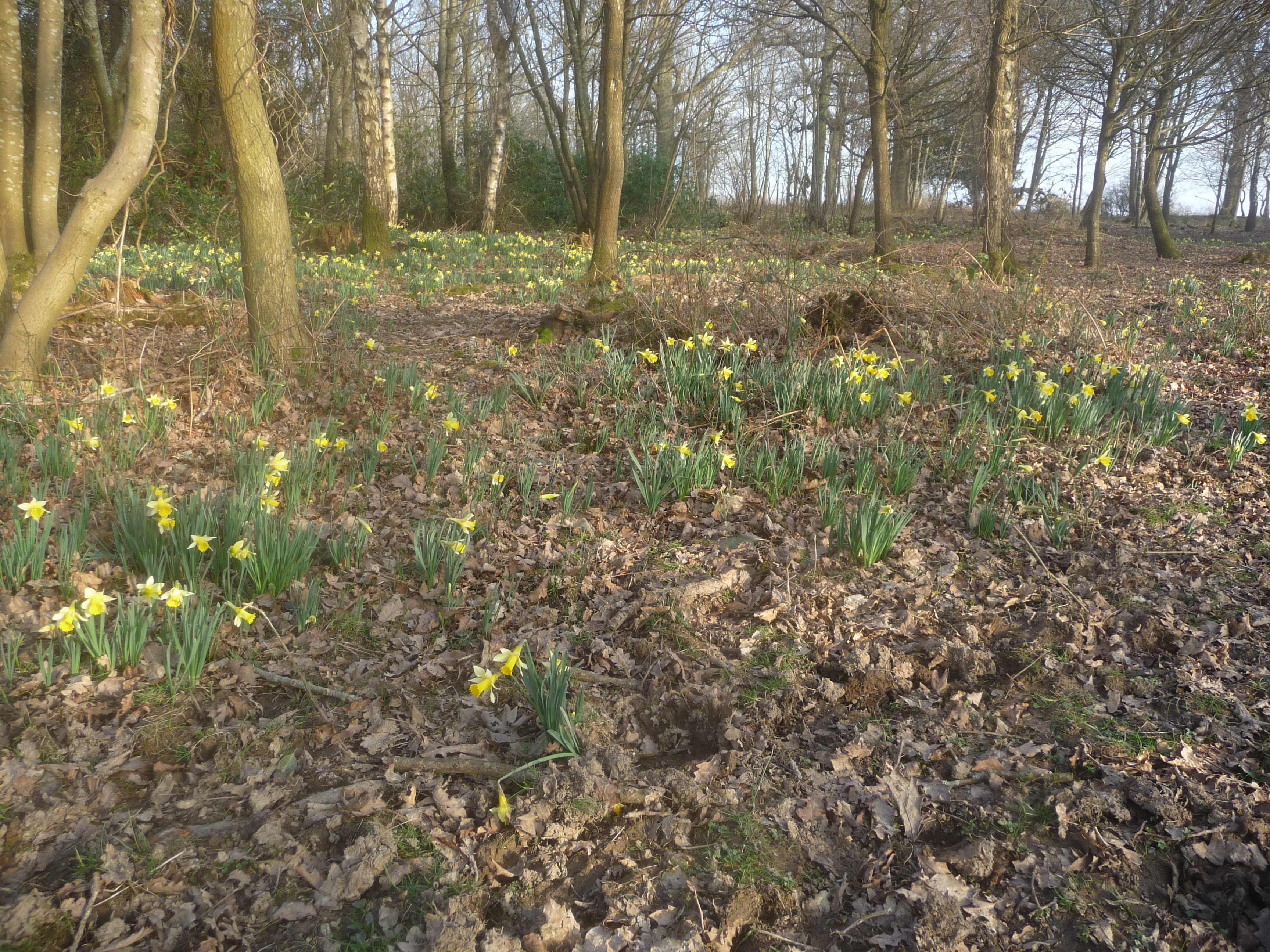
wild daffodils on Knepp Estate (c) miles king

On Wednesday I was privileged to spend a day at the Knepp Estate in Sussex, with Natural England Agriculture Policy experts – not that NE do policy of course. Other experts (and friends) also attended including Sussex Wildlife Trust Chief Exec Tony Whitbread and Weald Meadow Project founder and wildflower meadow creation expert Keith Datchler.

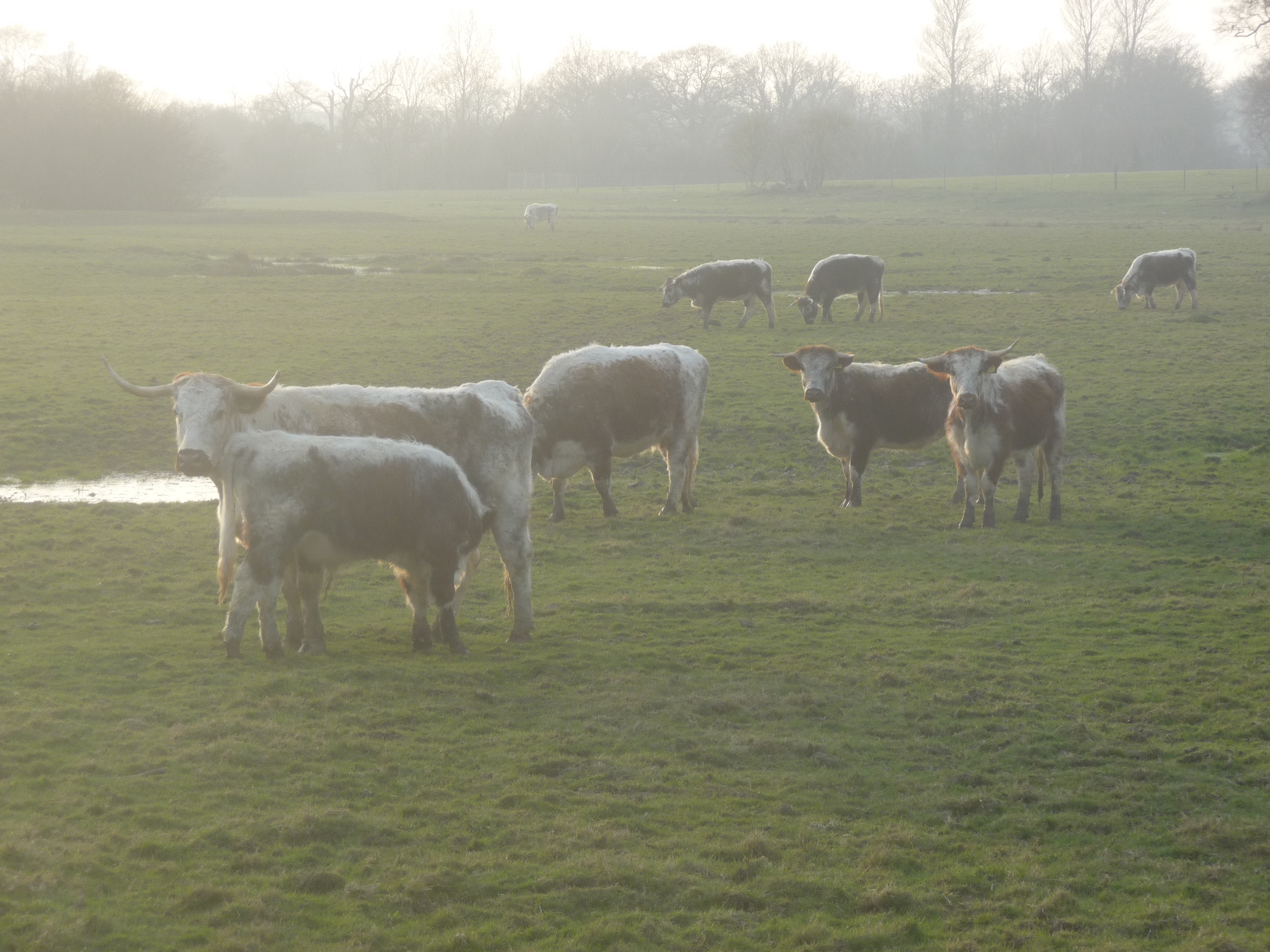
Over the last 12 years the owner, Charlie Burrell, has converted what he had run as an intensive mostly arable estate of 3000 acres, into very low intensity naturalistic grazing land. Some might even call it re-wilding. Charlie (formally Sir Charles Burrell 10th Baronet) showed us round with great pride and ecological expertise. Fields that had been intensive arable less than 10 years ago were supporting nationally important populations of nightingale and Purple emperor. 24 species of dung beetle had appeared (from where?) thanks to large herds of Longhorn cattle, Exmoor Ponies, Fallow and Red deer and Tamworth pigs. And the other ecosystem goods that are provided by this project are likely to be highly significant whether it be carbon storage, pollinator provision, water quality and flood prevention, as well as jobs and the economy   – Knepp Ecosafaris is starting up this year.

Naturally a great deal of scrub is developing – but it was interesting how the composition varied from field to field, as did the sward. Some areas were covered in common fleabane last year – to such an extent that 50 head of cattle had to be taken off that particular area. Charlie was concerned that the fleabane would take over, but we wondered whether it was one of those “boom and bust” episodes so common to recently reverted land. But I don’t think any of the suggestions about how to “manage” the fleabane would be acted upon. This is because Charlie is determined to make as few interventions as possible. Under law he has to pick ragwort from a strip around the estate border, to appease his neighbours. Otherwise everything is left to nature, under the influence of all those grazing animals. Charlie was really interested in what would happen – not deciding what was going to happen then steering the ecosystem towards that goal. I would still like to see a beaver family or two.

P1030366

Longhorn cattle grazing on the Adur floodplain (c) miles king

I led a discussion after the tour, about re-wilding and what is means and whether it matters. Naturally we talked about predators and trophic cascades, ecosystem engineers and invasive exotics. Some of the NE experts just couldnt make the leap beyond prescriptive, target-driven conservation, to the exciting world of emergent properties. Many did though.

Charlie receives Single Payment and HLS on the re-natured land, which adds up to enough to make the thing profitable – remarkable when you realise that farming it intensively made a loss, even including SPS income. The project has freed up half a million square feet of redundant agricultural buildings which are now being used by small businesses. 200 people now work on the estate – far more than have been employed in agriculture there, probably since before the first world war.  Without HLS and SPS the equation would change and that is frightening possibility.

One of the reasons is that the most innovative elements of the  New Environmental Land Management Schemes (NELMS) are being strangled at birth by the Rural Payment Agency. They are telling Natural England that those options whose outcomes require more than the cognitive abilities of a five year old to measure, (or preferably someone sitting in an office looking at a satellite image) are not verifiable and therefore the European Commission will disallow. This means we could end up with a completely dumbed down set of agri environment options and imaginative schemes like Charlie’s would never see the light of day.

Secondly the RPA are becoming more and more anal about what constitutes eligible land for SPS. One farmer friend has had tiny field corners with valuable emergent scrub mapped as ineligible by RPA and for a couple of hundred pounds fine, their entire SPS payment has been stuck in the system for 7 months. Charlie told us one year 3% of his SPS was with-held, then it was returned the following year, only to be with-held, then returned again. This is presumably because one person looked at a satellite image and decided they could see grazeable sward underneath, while the following year another could see no grass, so no payment. Neither understood that cattle,especially hardy breeds, will happily strip the bark off scrub in the winter. I guess they didn’t disallow the areas under ungrazed fleabane though. Madness.

Still, at least under the new CAP rules we will see the back of the notorious GAEC 12 “encroachment of unwanted vegetation” rule; and hopefully the equally crazy 50 trees rule has also been put in the dustbin of wacky agriculture subsidy rules; issues I have written about on many occasions.

I would like to see a Knepp or two in every county of England; in addition to really large scale projects (10,000-50,000ha) where predators could also be introduced. When you consider that Knepp is delivering nearly 1500ha of new dynamic high quality wildlife habitat, providing that dynamic mosaic of habitats about which so many get so excited (rightly), why are we spending so much on arable field margins?

Posted in agriculture, biodiversity, carbon storage, Common Agricultural Policy, ecosystem services, grazing, landscape dynamics, rewilding, scrub | Tagged , , , , | 7 Comments

Defra publish correct Bovine TB herd breakdown data – previous figures were inflated by one third

The Badger Cull has been found to be ineffective and inhumane according to Defra’s own expert panel looking at the Pilot areas in Somerset and Gloucestershire.

The BBC report Prof Rosie Woodroffe, a scientist at the Zoological Society of London, said that the panel’s “findings show unequivocally that the culls were not effective and that they failed to meet the humaneness criteria.

“I hope this will lead to the Secretary of State (Owen Paterson) to focus on other ways of eradicating TB in cattle,” she told BBC News.

In January, Defra announced that the figures it used to justify the badger cull, namely the number of cattle herds that had tested positive for Bovine TB, were based on flawed data. The number of herd breakdowns were lower than had previously been reported. Now the data have been published for all to see.
1887_Herds_not_officially_TB_free_due_to_a_bovine_TB_incident

I have to say this is pretty astonishing. Gloucestershire – one of the cull pilot areas on account of how much bTB there had been – originally published cases – 259, actual cases 194 – that is 34% over-reporting or an error of one third.  Somerset –  published figure (used to justify badger cull) 327, actual figure 264 – a 24% over-reporting error, or one quarter.

Now I am not decrying the pain and hardship suffered by the farms in Somerset and Gloucestershire that have had TB breakdowns. But there must be some very serious questions to ask of Defra and its agency the AHVLA (the Defra vets), who were recording and reporting these incidents. How could they have got it so wrong?

In Dorset, where I live and which is now in line for a badger cull this year if it is not abandoned, the figures are 175 published, 133 actual incidents. That’s  32% over-reporting or again an error of one third. For Hereford and Worcester the error was a staggering 58%, but this was beaten by Cheshire –  with a 68% over-reporting!

For the West and South West as a whole (which is all under a 1 year testing regime), there was an over-reporting error of 30%.

Not only is this stunningly awful in terms of the errors in the data, but previously herd breakdowns were published by Parish (until 2010), meaning that there was far greater resolution in the published data, for those of us interested in such things. The EC have been apparently encouraging Defra to move towards county and eventually Regional bTB status. That may be all well and good but the parish level data are still essential for monitoring the spread (or decline) of bTB and the public should be able to see these data. After all, AHVLA hold data on herd breakdowns at farm level.

It’s easy to say “heads must roll” but there is one distinct possibility, other than yet another public sector IT foul-up. The cuts at Defra (and its agencies) have been deeper than any other Government department. This extraordinary mess could well be the result of cutting that quickly and that deeply. And of course it does give new and powerful ammunition to any pro-cull organisation seeking to use statistics to support the badger cull.

One head that should roll of course is Secretary of State Owen Paterson, who has unambiguously nailed his own colours to the Badger Cull mast. What will he do?


Posted in badgers, Defra | Tagged , , | 4 Comments

The Supergrass that betrays real Environmental Goods

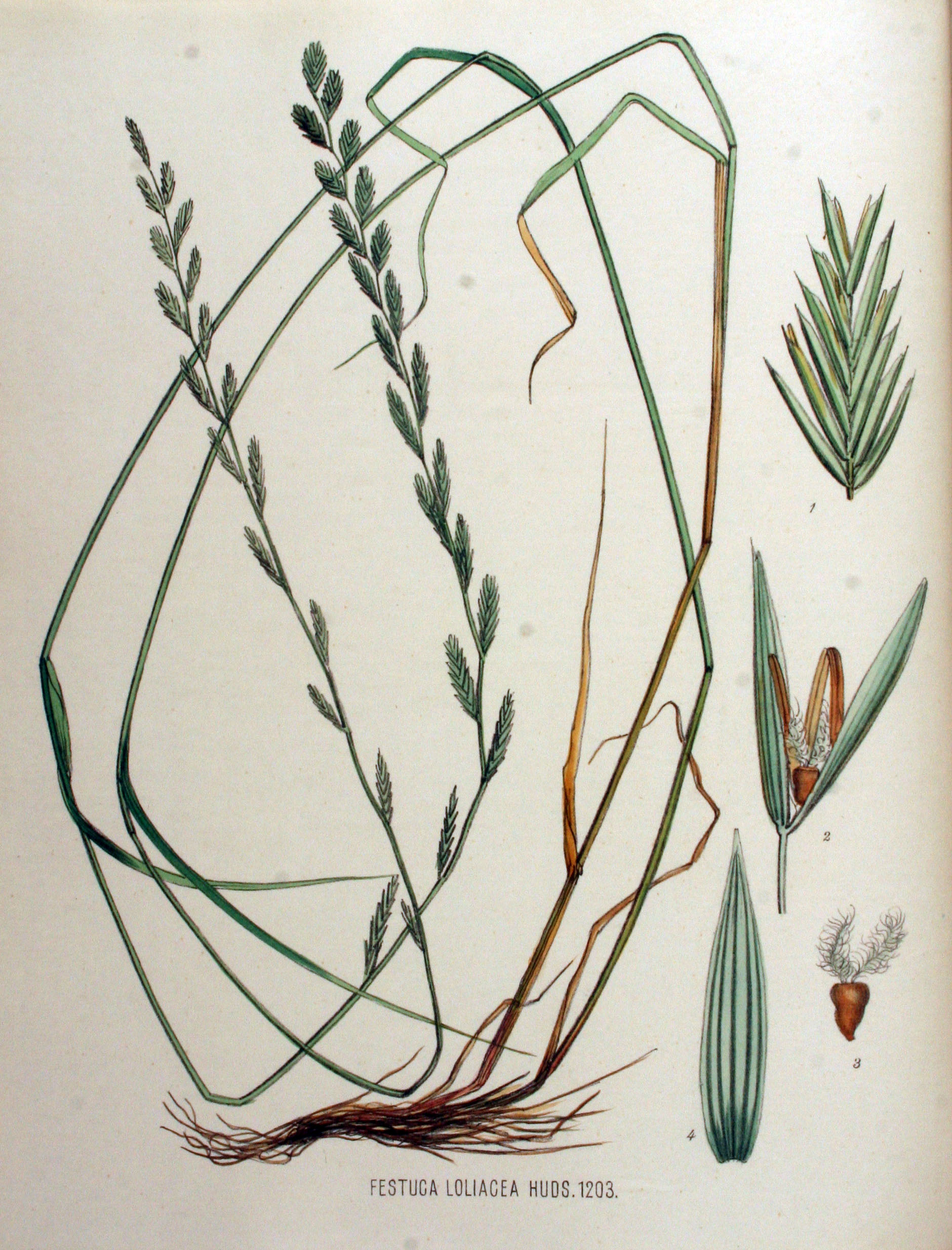
Festuca_loliacea_—_Flora_Batava_—_Volume_v16

I was intrigued by this headline in Farmers Weekly (where else?) – “£2.5M boost for grass that helps prevent floods“. What can it be? A panacea for all our flooding problems – is it superabsorbent? Is it a climate change buster? Yes – it’s Festulolium. Huh? I hear you grunt over your toast and tea.

Yes – Aberystwyth University – to be precise IBERRS, which I believe has evolved from IGER the Institue of Grassland and Environmental Research (a euphemism if ever I heard one – but that’s another story.), has landed a couple of million to research into the benefits of sowing Festulolium to combat flooding, reduce soil erosion and soil compaction. It really is a Supergrass if you believe this hype.

What is Festulolium? According to IBERRS it’s a swarm of natural hybrids formed when Lolium perenne, our ubiquitous agricultural grass Perennial Ryegrass; and Festuca pratensis, Meadow Fescue. In the sense that both Lolium and Festuca pratensis are native, it’s true that Festulolium is a native hybrid. It is disingenuous though to suggest that Festulolium is a common native now. In fact native perennial ryegrass is difficult to find these days, as the agricultural cultivars are everywhere and there is so little grassland with native grass in it. No, Festulolium is just another highly bred agricultural grass. IBERRS make some bold claims about it wondrousness. Festulolium achieved a 51% reduction in run-off compared with other grasses grown alongside. Without finding the details of the research (if indeed they are accessible) I would imagine the “other grasses” are Rye grass cultivars. I would be more interested to see how the soil run-off compared against a mix of native grasses, flowers and shrubs, let alone a native woodland ecosystem or bog.


Perhaps the thing that made my alarm bell ring was this paragraph “Many river catchments are upland grasslands predominating in the wettest areas of the UK, say scientists. They believe if the rates of surface run-off could be reduced and rainfall captured more effectively by grassland soils, then the worst impacts of heavy rainfall down-stream may be reduced.”

The implication is that Festulolium could or should be sown in the uplands. The very act of sowing an agricultural grass involves cultivating the soil (leading to soil erosion, compaction and err run-off.) Plus to get the grass growing properly would involve application of artificial fertiliser, herbicide and doubt Bayer would find some reason – killing slugs perhaps (ah yes big fat profits – that’s the one) to develop a Neonicotinoid-based ubuiquicide that absolutely had to be used on this new crop.

The beauty of this approach is that it avoids having to tackle the effects of other grasses – such as Maize,  on which George Monbiot has just written further and better.

It also shows how the concept of ecosystem services is so vulnerable to coruption by Agro-Industrial Technofixes.

Image by Janus (Jan) Kops [Public domain or GFDL (http://www.gnu.org/copyleft/fdl.html)%5D, via Wikimedia Commons

Posted in agricultural pests, agriculture, ecosystem services, flooding, grasslands, Neonicotinoids, public goods, Uncategorized | Tagged , , | 3 Comments

Solar Farms and Grasslands: A cautionary Tale.

280px-Dorset_rampdn_01

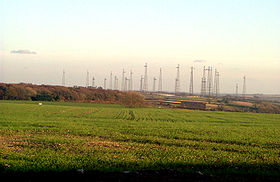
Rampisham Down Masts

Anyone who has lived in West Dorset for more than five years will immediately recognise the extraordinary landmark that was the Rampisham Down Transmitting Station. A large array of very tall Masts on one of the most prominent hills in West Dorset, Rampisham could be seen 4 counties on a clear day.

Rampisham Down was purchased by the BBC in 1938, to create a massive transmitting station, presumably for war purposes. Apparently the original world service station at Daventry was though vulnerable to bombing, so an alternative safer location was purchased. Rampisham went on to play a critical role in the Second World War and Cold War transmitting both propaganda and coded messages to spies and partisans across the world. Its last “active service” was broadcasting into Libya during the war that toppled Gaddafi.

Because it had been purchased just before the War and the impact on the landscape of The Great Harvest and the War Agriculture Committees, Rampisham escaped the ploughing that happened all around it. Even during the Cold War and after, Rampisham was undisturbed by the Agricultural Revolution, apart from some bracken being sprayed with Asulox. As a quasi military site (certainly a strategic bit of infrastructure), Rampisham was a bit like a military camp, run by civilian engineers. Sheep grazed under the massive antennae to keep the grass down, and it was also mowed in places. Older maps show a cricket pitch.

In the 80s the station was substantially upgraded (at great expense) to provide a state of the art short wave transmission station. In fact at the time of its closure it was the third most powerful SW transmitting station in the world, after the Russians and the Iranians.

But the cuts introduced by the Coalition took a swathe through BBC World Service funding and Rampisham was closed and put up for sale in 2011. It’s a large site – 76ha (187 acres in old money). As farmland it was low quality pasture, perhaps worth £12000/ha back then. That would have made a sale price of £912000. I guess the Foreign Office decided that radio was a dead technology in this world of the internet. That may turn out to have been a little bit naive; after all, who controls the internet? It’s easy enough for a country to stop web-users accessing sites – look at China.

The site was sold as a “potential renewable energy opportunity” “subject to planning.” In other words it did not have planning permission for wind turbines or a solar farm. The Agent wisely recommended potential purchasers make their own enquiries about these possibilities with the Local Authority, West Dorset District Council. What the Agent did not mention is that Rampisham Down was a County Wildlife Site, designated in 1996, on acccount of its unimproved Lowland Acid Grassland habitat. As it now turns out, it is the largest area of LAG habitat in Dorset, and one of the largest areas of U4 grassland in lowland England.

U4 (in the National Vegetation Classification – the NVC) is a ubiquitous grassland in the upland fringes of Britain and one expression U4e is often a species poor and impoverished grassland dominated by sheep’s fescue, common bent and mat-grass, created by sheep overgrazing heathland. Just the sort of thing decried by George Monbiot, and quite right too. The U4 at Rampisham could not be more different, as Rampisham is a chalk hill with a layer of more acidic clay on top. For the most part the clay completely covers the chalk, but in places becomes thin enough for teh chalk to influence the soil and vegetation. Calcicoles such as stemless thistle occur, along with fairy flax, ladies-bedstraw and others such as Betony and mouse-ear hawkweed that benefit from the impoverished soil. This places Rampisham closer to the very rare U4c, which is normally only found in upland areas with calcareous bedrock, such as the Peak District or Teesdale.

The site was purchased by British Solar Renewables Limited. This company is putting up solar farms all over the south west and have just had a cash injection of £40m. Their Managing Director Angus McDonald stated this would enable them to reach their target of constructing 120Mw of solar power generation in 6 months to now. That’s a lot of solar farms. And we need solar energy as part of our energy production mix: it’s not the complete obviously, but it will continue to become a more significant element of renewables, thanks for generous subsidies paid for by electricity consumers, like you and me. This subsidy is helping solar farm builders, and farmers, make a good profit. Solar farm businesses like BSRL will pay handsomely to rent land from farmers for 25 years, build the solar farms, and take the income. How much? According to this article, solar farm rentals can generate an income of between £1000 and £1500 per acre for a landowner, plus free electricity, for a site large enough to generate over 6Mw. That’s a very appealing figure, compared to £100 or £150 an acre for agricultural rent, and dwarfed only by housing development value. And the beauty of it is that a farming income can still be achieved, through sheep grazing. Whether or not such land would be eligible for single payment (or agri-environment schemes) I don’t know, but I imagine it would be. The market is white hot at the moment – non-domestic solar power generation increased by 20% globally in 2013. No wonder solar farms are springing up here there and everywhere.

British Solar Renewables make a big play on their being farmers and having an affinity withg the land. “As farmers ourselves, we have a lifelong affinity with the land and we know how to care for it.  We encourage our landowners to continue agricultural practice by grazing sheep on our sites and our land management experts will provide a constructive strategy for improving biodiversity on developed land where appropriate“.

BSR’s website gives some criteria for landowners to think about the perfect solar farm site – one of the criteria is “No SSSI’s or County Wildlife Sites.” BSR also target low quality agricultural land, but this is often where the wildlife lives.

Despite Rampisham Down being an SNCI when it was purchased, BSR decided to go ahead with a planning application which would place solar panels over a significant area of the site. The impact of construction (each panel sits on metal posts concreted into the ground) and shading from the panels would have caused short and long term irreparable damage to the grassland. Natural England, to their credit, speeded up their plans to notify the site as an SSSI (it was already recognised as needing notification before it was even sold). The landowners objected to the notification. Dorset Wildlife Trust objected to the planning application and this is where I came in – they took me on to represent them at the NE Board – supporting the case for Rampisham to be notified. After having helped RSPB put a strong case for the SSSI at Lodge Hill to be confirmed, I thought it would be a good opportunity to present evidence to the Natural England board, about grasslands and the NVC. Some of you may remember I was less than charitable about the NE Board and their understanding of the NVC, after the Lodge Hill meeting. Doug Hulyer had chided me for that remark, so I sought to make amends by explaining to the Board that the NVC is not about placing a higher value of sites which are more similar to the NVC “archetypes” but instead places equal value on sites which are atypical. And Rampisham certainly was atypical – partly because when the NVC was written, the presence of U4 in lowland England was unknown. I find this odd – after all chalk heath (effectively Rampisham is the acid grassland equivalent of chalk heath) was known about for a long time, certainly since the 50s. Anyway here’s my powerpoint presentation to the Board. Rampisham presentation Miles King

Thankfully Natural England confirmed the SSSI notification for Rampisham. A couple of things come to mind:

1. When the site was owned by the BBC it would have been subject to the Biodiversity Duty. How then can it be right for this duty to magically vanish when a site is sold into the private sector. Perhaps this could be tackled by the Law Commission Review, through a conservation covenant for example.

2. It simply cannot be right for a government subsidy (feed in tariff) to be blind to other values of land, such as biodiversity value. DECC should immediately change the rules governing application of the FIT such that it is not eligible for any solar or wind farm affecting a site supporting a priority habitat, unless it can shown categorically that no harm will be done. The burden of proof should be reversed.

Posted in biodiversity, grasslands, Solar Farms | Tagged , | 5 Comments

Keeping a Level Head

P1020102

A Somerset Levels Wet Meadow (c) Miles King

I feel almost reluctant to put pen to paper (metaphorically) on the issue of the floods and the Somerset Levels, because so much has been written or spoken in recent days fromn a position of almost complete ignorance. And I sit somewhere on that particular spectrum, though I have some knowledge from a nature conservation perspective.

What I see is various interest groups seeking to make political capital out of the floods, out of people’s misery. The Floodgate Blamegame has started. It kicked off with Eric Pickles, Communities and Local Government Secretary on Sunday. He had been given temporary leadership for flooding, while Owen Paterson was having his retina re-attached. It’s entirely possible that Pickles, known as a ruthless political operator, saw an opportunity to take some ground from Defra, while Paterson was down and out of the ring. CLG and DEFRA come from a long line of competing departments with a big overlap between them. Anyone remember MAFF and DETR? Using his new found position as Floods Tsar, he laid into the Environment Agency with characteristic malice, on the Andrew Marr Show. He gave a non-apologetic apology on behalf of the Government, who he implied had been given duff advice by the experts at the EA.

EA chair Chris Smith came in for some particularly nasty attacks from the Bridgewater MP Ian Liddell-Grainger, who was quoted as calling Smith a “little git” and claiming he was going to flush Smith’s head down aloo if he found him while Smith was visiting the Levels. Liddell-Grainger lives on the edge of Dartmoor, so it’s unlikely he would have found Smith there.

Various Tory members of the commentariat and thinktank-apparatchiks are already using the floods as an opportunity to revive their quango-bashing from a few years ago. “Look” they cry, we told you to get rid of all these quangoes (like the EA).  Calls to return flood management to landowners continue. Thankfully the EA board, including some individuals with serious political clout, have fought back at personal attacks on their chair and implied criticism of their staff. Pickles had to shamelessly deny he had ever criticised Smith or the EA, when answering an emergency question in the Commons on Monday.

Clive Aslet, Country Life Editor, writing in the telegraph has blamed the RSPB for the floods. He argues (and I am sure plenty agree with him) that RSPB and other conservation bodies, in a conspiracy with the EA and NE, and the connivance of the EU, are turning the countryside into a playground for nature lovers. Presumably if they were turning it into a playground for country sports he wouldn’t complain so much, or at all.

And this is the other subtext. There are plenty who would love to see the UK walk away from our obligations under the Birds and Habitats Directives (the Nature Directives, including of course our very own Chancellor of the Exchequer, who regards them as a barrier to economic growth. Some are pointing to the way the Somerset Levels are managed to comply with the Nature directives – forcing water levels to be maintained at higher levels than they were in the bad old days. Arch climate-change sceptic and Europhobe Somerset dweller Christopher Booker has already espied an EU Conspiracy to Flood the Levels. It is difficult to believe that someone could get the story quite so wrong as Booker has. But his agenda is clear and he will make up the story to fit his needs. The idea that the control over drainage on the Levels has been whisked away from the farmers by the evil Baron EA is laughable. The Somerset Drainage Boards Consortium work hand in glove with the EA. It’s as likely that the SDBC were as frustrated by the EA budget cut as the EA were.

A couple of Lords have complained that the Dawlish railway collapse was down to a delayed bird survey on the Exe Estuary SPA, which prevented an artificial beach having been created in front of the railway embankment, to stop wave damage. “Its Birds before People” they say. Well birds before railways anyway. One of the Lords was a former railway industry executive.

The Steart Peninsula is another “Birds before People” story that has been rumbling for a while, with the aforesaid Mr Liddell-Grainger doing a lot of rumbling. I dare you to read his blog about it, but I won’t be held responsible for any ill health you may suffer as a result of reading it. If you looked at this story through squinty eyes you could force yourself to believe that the EA spent £20 million creating a bird reserve instead of spending the money to STOP THE LEVELS FLOODING. The reality though is that Steart was compensation for areas of the Severn Estuary SPA that will be lost due to flood defences elsewhere. This is another consequence of the Nature Directives.

And I think this is perhaps the most worrying of all – that UKIP has jumped on this bandwagon and is now thumping the tub marked “EU Conspiracy.” Watch this video, purportedly made by an “independent” film-maker. I have been told that they are interviewing worried locals on the Levels, scaring them and trying to persuade them that the flooding of the Levels is a deliberate EU-led conspiracy. I think they are referring to the Raised Water Level Areas, which have been around for about 15 years. Farage has blamed immigrants for the flooding, not unexpectedly. What else is there to say? The amazing thing is that people actually believe him.

I thought I would try and find some historical perspective on all this.

The Somerset Levels flood is a very bad one yes and I would be horrified if I lived on the Levels. I was interested to discover that most farm buildings on the low lying Levels and Moors are 19th or 20th century. Even after 2000 years of drainage works, its only very recently in historical terms that the lowest land on the Levels was habitable all year round.

Previously the meadows and pastures were used in the summer only, with stock being wintered on the nearby hills.  It was in the 20th century and particularly after the war, that intensive agriculture came to the Levels, which had been dairy and beef country for a long time.

What had been a landscape of wet meadows, pastures and peaty “moors” (both Fen and Raised Mire) was rapidly disappearing, replaced by improved grassland and industrial peat extraction. Armed with a few teeth, thanks to the 1981 Wildlife and Countryside Act, the Nature Conservancy Council tried to stop the losses by notifying large areas of what remained as SSSI. This led to the infamous effigy burning and very bad blood between Levels farmers, peat-diggers and conservationists. To assuage the farmers, they were paid very handsomely, through compensatory management agreements, not to intensify management on the SSSIs.

This didn’t go down well with the farmers who had already destroyed the wildlife value of their land – they wanted a slice of the pie. To assuage these farmers, the Government of the time (1987) created the Somerset Levels and Moors Environmentally Sensitive Area, covering nearly 27000ha of land. This paid out the most generous Agri-Environment Subsidies of all the many ESAs in England. I think if memory serves correctly it was the most lucrative AE scheme in the whole of Europe. For continuing to farm in a less intensive way, farmers were paid, on top of their production subsidies, over £300/ha per annum basic area payment., plus all sorts of top-ups for this and that, and even more if they were in a Raised Water Level Area. These farmers were being paid a vast amount of money NOT to intensify their land – by the European Union. Yes, the EU. But the wildlife continued to decline – because of very generous MAFF grants to install super duper new drainage pumps, drying out the wet meadows and pastures. This is how the Raised Water Levels Areas came into being – farmers were paid to be farmers, then paid to be in the ESA, then paid another £170/ha to turn off the pumps (which MAFF had paid for).

I did some botanical survey on the Levels about 12 years ago. The raised water level areas had been pretty disastrous for the plant communities – they had been too wet all year round. The wet meadows of the Levels are very unusual, but have affinities to Lowland Flood Meadows and Flood Pastures. The Excellent Floodplain Meadows Partnership is the leading expertise on flood meadows and pastures and are researching how the Levels Meadows relate to other wet grasslands. When managed well they are exceptionally rich in wildlife as well as being wonderful historic artefacts. And they produce high quality food and many other public goods beside. What’s not to like?

The last of the ESA agreements were renewed in 2004 – they are 10 year agreements. They run out this year. How many Levels farmers (outside SSSIs) will continue to receive such generous subsidies is anyone’s guess, but it will undoubtedly be far fewer than in 2004.

I cannot  but wonder whether it is a coincidence that once again the balance between wildlife and farming on the Levels has come to the nation’s attention.

Oh and Dredging? There are definitely some watercourses in the Levels that need de-silting. Its all laid out in the Water Level Management Plans. As I explained last week, silt is borne down to the Levels from unsustainable farming in the catchment. The Levels are like one big water meadow and managing the water levels is crucial to their conservation value and for continued farming. But dredging the tidal Parrett and Tone is another matter altogether. As New Scientist (I can hear Pickles groaning now – “not more experts!”) said,  it would have made no difference because so much rain has fallen.

Posted in agriculture, anti conservation rhetoric, anti-environmental rhetoric, Common Agricultural Policy, Environment Agency, European environment policy, Floodplains, grasslands, meadows, Owen Paterson | Tagged , , , , , , | 15 Comments

Lost in the drainage Maize

I wrote this blog twice yesterday but both times wordpress refused to publish it. I’m trying again – third time lucky. I now know the reason it crashed. I was trying to copy a map from a pdf and upload it into the blog. I have now managed to do it.

defra-stats-foodfarm-landuselivestock-june-detailedresults-cropmaps111125

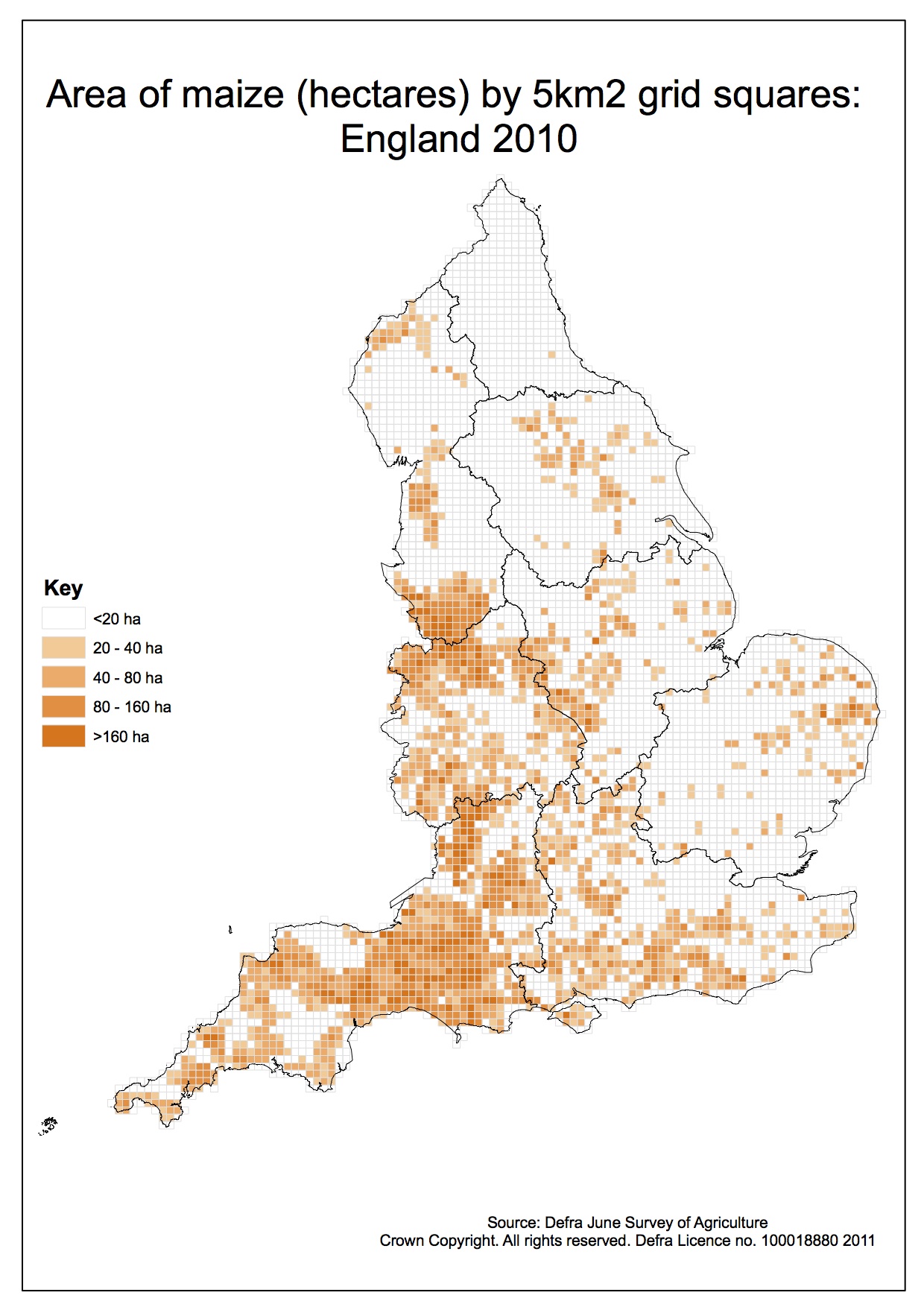
this is the culprit. It’s a map showing where Maize is grown in England. Maize is a relatively new crop for us. In 1970 only 1400ha was grown. Now its 160,000ha, mostly to feed to cattle, and mostly to dairy cows. 10% of the crop is grown to fuel biogas plants. There’s a generous subsidy from the Government to produce biogas as a low carbon fuel. This is acting as an incentive for farmers to rent out their land to contractors who will do everything needed and ctake away the crop at the end of the season, cash on the nail. The biogas maize contractors have a vision  – to see 200,000ha of England covered in biogas maize by 2040.

Maize is a high energy crop, but it also has a large environmental footprint. Maize tends to be grown on the same fields, year after year. Large quantities of  fertiliser are applied (up to 500kg/ha), as well as herbicides and other pesticides. Even the official Fertiliser Manual notes that Maize production can lead to Nitrate and Phosphate entering local watercourses.  Maize is a warm climate grass and needs a lot of help growing in our climate. In the past the most popular herbicide used on Maize crops was Atrazine, which has been banned for the past 8 years in Europe. Atrazine is a persistent organic pollutant (POP) and an endocrine disruptor. It’s still widely used in the US. Other herbicides are now used on Maize in England. Perhaps most significantly for our story, after Maize is harvested (which can be as late as October), the stubble is left overwinter, and not ploiughed in until the following Spring. This means soils are left uncovered during the Autumn and Winter, when they are vulnerable to heavy rains creating soil run-off. Very fine particles of soil are washed down slopes from maize stubble fields into nearby streams and eventually rivers. They take some fertiliser and pesticide chemicals with them and deposit silt and agrochemicals in downstream rivers.  Whether you agree that the Parrett and Tone in the Somerset Levels need dredging or not, the silt there has left the catchment of those rivers, and one prime source is maize fields. Inspect that pesky map from Defra – look at how much Maize is grown in Somerset, Dorset and East Devon. And wonder where that other 200,000ha might go, if the Biogas Maize boys get their way.

The Night of the Long Knives

The knives are out for the Environment Agency and its outgoing chair Chris Smith. It’s easy for Tory backwoodsmen like Ian Liddell-Grainger to call for his head when they know he’s leaving anyway in the Summer, after 2 terms at the helm. The Tory apparatchiks have smelt blood – Con Home ran an opinion piece calling for the EA to be dismantled; and the Telegraph called for landowners and farmers to be given the responsibility and power to drain the land themselves.

And that has worked so well in the past hasn’t it? For 40 years after the war land drainage was controlled by Internal Drainage Boards. These were small groups of local landowners and farmers who received funding from central government, and a levy on all landowners, to spend draining land. They acted enthusiastically, dredging rivers, canalising brooks, deepening ditches and drying out the land. They succeeded in destroying a great deal of wetland wildlife habitat. When conservation tried to protect special wet places against the marauding IDB’s, this led to some of the most famous conservation battles of our times. Halvergate Marshes on the Norfolk Broads, over 5000 acres of marshland, was to be drained by the IDB. It was a combination of the Countryside Commission, Friends of the Earth and the NCC which successfully stopped this despoliation. At around the same time effigies of NCC chairman Sir Raph Verney and local NCC staff were burnt on the Somerset Levels for trying to stop the continuing destruction of the Levels’ wildlife in the name of intensive farming. Since the advent first of the National Rivers Authority, then the EA, landowners’ enthusiasm for drainage has been curtailed; even the surviving IDBs have transformed into custodians both of the farmland and also the environment.

Call me a cynic but I see the NFU and CLA quietly orchestrating these mostly unfounded and certainly misguided attacks on the EA, as a way of rolling back the regulation that has redressed the balance between intensive (unsustainable) land use and the environment sensu lato.

Instead, as I suggested on Monday, we need to look at the whole catchment, not just the floodplain, for solutions to flooding.

No-one seems to have noticed, but Natural England and the Environment Agency have been working together quite well for the past 7 years or so, on a project called Catchment Sensitive Farming. Advisors visit farmers and discuss ways that things like Agri-Enviroment funding (plus a small pot of their own for capital works) can be used to reduce the impact of intensive farming systems (like dairy) on the whole catchment. It could be rolled out much more widely, given a whole load more powers, and do some real good for a change. Better than just letting the farmers get on with it, as Owen Paterson wants to do.

Posted in agriculture, deregulation, Dredging, Environment Agency, farming, flooding, Owen Paterson | Tagged , , , , , | 32 Comments

World Wetlands Day Blog: On the Level

In honour of World Wetlands Day (when will we next see an international environmental convention signed in Iran?) I write today about the Somerset Levels.

Has anyone noticed that the Somerset Levels are under water? There’s been a bit in the news about it. Indeed it seems as though it is the main news on TV day after day, week after week.  John Kay must be up for the “Longest time spent by a correspondent talking about nothing to camera while standing in 4 inches of water” award at the RTS. “and I can now tell you that the water has actually gone down a little over night, but rain is expected here soon and I have been told that the water may well be coming up again tomorrow – people are preparing for the worst Fiona.”

Action is demanded, “something must be done”. Local MPs fulminate, looking around for scapegoats. The Environment Agency! It must be their fault. They look after the environment after all, don’t they? They should have dredged that river years ago. Let’s revive an old plan from the 60s, when anything seemed possible, to drain the levels. At least Natural England aren’t getting it in the neck. They heave a sigh of relief while sympathising with their colleagues at EA.

ditch clearance

sympathetic land drainage ((c) Miles King)

The Prime Minister wades in. Its not acceptable that people have to live with flooding  – “I am making sure everything that can be done is being done”. 

And he says he is “not ruling out any option to get this problem sorted out”.

Really Dave? Money no object? New legislation if necessary? No, I didn’t think so.

Why have the Levels flooded? There have been biblical amounts of rain around in the South and West (I should know, living in Dorset and nerdily measuring daily rainfall totals). I have recorded an astonishing 480mm in 45 days in Dorchester. Records are tumbling – in the longest continuous series of rainfall measurements in England, it’s the wettest winter month of the lot, wettest in more than 250 years. Now whether this is the result of climate change or not is difficult to say. But for a long time climate scientists have predicted and are now observing that climate change will bring more extreme rainfall, more storms and wetter winters to the UK.

The Levels themselves have had a good amount of rain – 100-150mm in January, which followed the same in December – but nothing spectacular. It was the surrounding hills (Mendips, Blackdowns, Poldens and Quantocks) that caught much more rain, and inevitably it drained into the Levels, which is the base of the bowl. So the cause of the flooding in the Levels lies outside the Levels, or rather we should look at the Levels and their catchment as one.

What’s happening the catchment? Take a look on Google Earth. The kind of land-use which encourages land to retain its rainwater is woodland, heathland, rough pasture. That has almost all gone from the hills. Now they are dominated by those modern land-uses of improved grassland and arable. Both depend on drainage – physical drainage. That means that pipes are laid under the soil in a pattern which takes rain water away and off the farmland. As quickly as possible. That water finds its way into more pipes until it arrives in streams and ultimately rivers, like the Parrett and Tone. And it brings silt with it. Silt which ends up in those Rivers. Farmers want the water off their land as quickly as possible because they grow crops all year round. Winter wheat does not like sitting in wet soils and lots of fungi like growing on it, so farmers have to spend more money on fungicides and make less profit. Those farmers who outwinter their stock don’t like putting them out on wet pastures, because the stock cut up the grass, which costs money to repair, and sheep get foot rot if they are in wet pastures. So they drain their land to keep it as dry as possible in winter.

Incidentally farmers have just lost their right to use methiocarb as a slug pellet on potatoes, because it’s been found to poison sparrows and finches. The other 85% of the slug pellets used in the UK are metaldehyde. This finds its way from farmland into drinking water, where it is toxic. The water companies would love UK farmers not to use metaldehyde, as its a cost to them (which they pass on to us consumers). But slugs do eat crops, especially in very wet weather. Organic farmers have worked out that it is possible to grow crops without killing slugs using toxic chemicals.

Water courses are managed to speed the flow of water through them, rather than hold it back. Evidence is building that things like retaining large woody debris (or trees as they are also known) in rivers reduces the size of spate floods. Yet intelligent Cabinet Ministers like Oliver Letwin (my local MP) are still trotting out the 1960s vision where water is sped to the sea.

Oliver Letwin, MP for West Dorset, said ‘common sense measures’ need to be taken to tackle streams and rivers which are prone to flooding.

“Mr Letwin said it is a question of finding a balance between clearing rivers to keep water flowing and protecting natural habitats.

He said: “The measures will vary from location to location, but essentially, they are about clearing obstacles that have accumulated in streams and rivers.”

Science is, in these febrile times, no match for “common sense”.

So the Levels are flooding because there has been an exceptional weather event, where nearly half a metre of rain has fallen in 45 days; and because the catchment of the Levels is being managed in a way that speeds the water away from it and into the Levels as quickly as possible.

It is always a personal tragedy when houses are flooded; and for the 40 homes on the Levels that have suffered flooding, this is awful. My mum was born and grew up in a massive floodplain in Australia and lost a great deal in a flood there. But it is only 40 homes. Farmland on the Levels has been underwater since Christmas. This is obviously inconvenient for the farmers, but hey – we pay them £200 per hectare per year for every flooded field. And they are still complaining and arguing that more public money should be spent removing the water from their land – even though that water is there because we the public pay the farmers on the hills £200 per hectare, some of which will go into maintaining the drainage network which – causes the floods in the Levels.

And nature conservationists are accused of being a special interest group and of special pleading. The irony.

So if David Cameron really was serious when he said he was “not ruling out any option” and he really is looking for long term solutions, this is what I suggest.

Let’s start by getting something back for our public support for landowners.

Make payment of farm subsidies conditional on:

  • Landowners ensuring that they retain water on their land through SUDS creation, wetland restoration and creation; and sensitive stream and river reprofiling to remove deep ditches and canalised stretches.
  • Landowners reducing land-use intensity eg restoring rough grassland, heathland and woodland ,where this will reduce downstream flooding.
  • Any land drainage scheme including field drainage works subject to assessment and approval by EA.
  • Explicit recognition by Government that CAP subsidies are paid to compensate farmers for providing public goods, such as storage of flood water in the winter. Farmers in these areas should be automatically entitled to enter agri-environment agreements which help them reduce the intensity of their land-use and increase its wildlife value while also providing flood storage areas. The Ouse Washes is a great example of this.
  • The Government to ensure that the “Active Farmer Test” does not stop landowners from receiving farm subsidies while enabling natural processes to develop to help reduce downstream flooding.

There could be another reason why Cameron et al are so interested in the Levels. Somerset has 6 MPs and Five are Lib Dems. Four of these are Lib Dem/Con marginals. I’ve heard a lot of fulmination from the single Somerset Tory MP, but remarkably little from the 5 Lib Dems (one of whom, David Heath, was a Defra minister until recently: and is stepping down at the next election.)

Posted in agriculture, Common Agricultural Policy, David Heath, Dredging, Environment Agency, Floodplains, public goods, Uncategorized | 9 Comments

Planting Trees in the Uplands? There’s an idea….

Jonathan Billinger [CC-BY-SA-2.0 (http://creativecommons.org/licenses/by-sa/2.0)], via Wikimedia Commons

Jonathan Billinger [CC-BY-SA-2.0 (http://creativecommons.org/licenses/by-sa/2.0)%5D, via Wikimedia Commons

I was so excited at the thought of OPatz going to live in the woods, foraging for mushrooms and curing  badger hams , that I forgot to check what was actually said earlier this week, in relation to flooding and re-wilding.

Here is what Lord Rooker said in the Lords on the 23rd January (my bold): “Weather events happen with or without climate change, let us be clear about that. The national risk register covers the lot. Two years ago, drought was a key crisis. We have to think about the serious volatility of changes in climate. The Thames barrier has a limited life. I had already put this in my notes, and I was really worried when I heard yesterday about the delay. The Thames barrier is sinking, and we are going to wait until 2070 before we start having a look at it. Flood defences are more than walls and dams: they should be environmental as well. I commend to the Government—I am sure that someone has read it—the major article by George Monbiot last week. It appeared first on Tuesday in the Guardian and then on two pages in the Mail on Sunday. True, the latter newspaper used it to attack the EU but the article was the same in both. George Monbiot highlighted the methods for preventing floods that UK scientists have being using for years in the tropics—planting trees in the hills to save and protect communities down stream from flooding. Here, we pay farmers to grub up trees and hedges and plant the hills with pretty grass and use sheep to maintain the chocolate box image, and then we wonder why we have floods where we should not really have them and which we could prevent if we took the advice. Monbiot says that water sinks into soil under trees at 67 times the rate that it sinks in under grass, so why are we not doing that in the UK in areas that we know flood unnecessarily?

To me, this is not Lord Rooker extolling the wonders of re-wilding. What he is saying is that trees in the uplands are better than grass for soaking up excess rainwater. Nothing to disagree with here. It’s just not an exhortation to re-wild, merely to plant trees. In fact, Rooker’s criticism of landscape management for aesthetics could be seen as equally antipathetical to Monbiot’s dreams of  wild beasts, and more akin to Opatz’ purely utilitarian approach to the land.

This reminded me of another story about planting trees in the uplands. It was Nigel Lawson (he of the Global Warming Policy Foundation) who, as Chancellor of the Exchequer in 1988, did two things. He had created the Lawson Boom, which was bloating to epic proportions in late 1988, thanks to changes to mortgage tax relief. Secondly he abolished Schedule B tax relief on tree planting.

This was a tax avoidance scheme used by celebrities (Terry Wogan and Status Quo were often mentioned, though I suspect the knew little or nothing about it), the rich and powerful, involving planting trees in the uplands, as a tax dodge. Trees were being planted in, amongst other places, the Flow Country of Caithness, one of the UK’s most valuable natural treasures. They wouldn’t grow as it was too wet, but preparing the ground to plant them did irreparable damage to the wildlife and landscape.

The whole fiasco culminated in a bust up between the Nature Conservancy Council and OPatz’ late uncle-in-law, the previously most awful Environment Secretary Britain has ever Seen, Sir Nick Ridley (now relegated to second place on this particular league table). You can guess who won.

To me this indicates that wherever large scale Government-supported tree planting schemes are waved around as a panacea for something, beware of the law of unintended consequences.

Posted in flooding, Forestry, Forestry Commission, Owen Paterson, rewilding, uplands | Tagged , , , , , , | 8 Comments