Mown Down or Gone to Seed: the confusing world of verges and churchyards

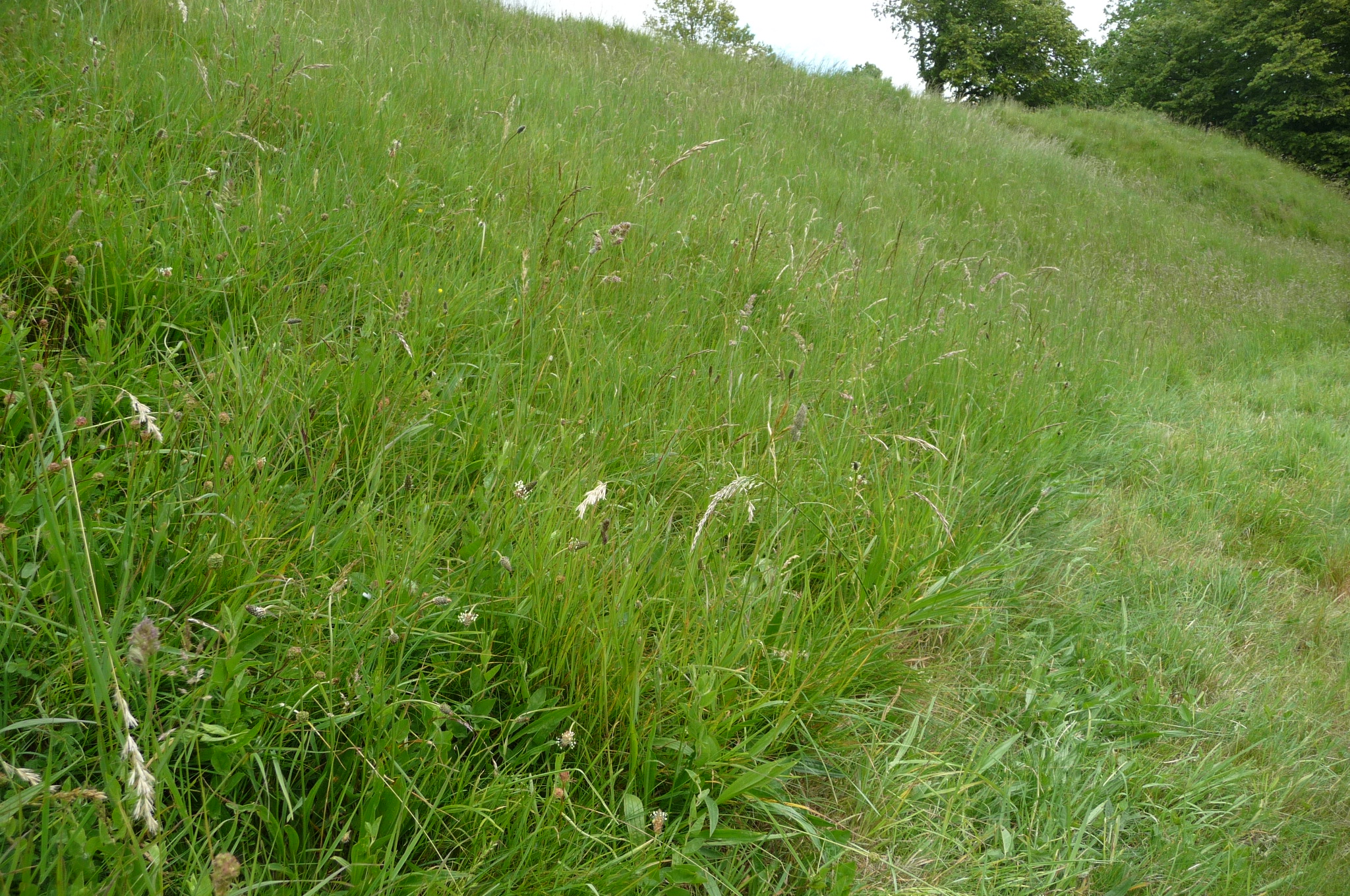
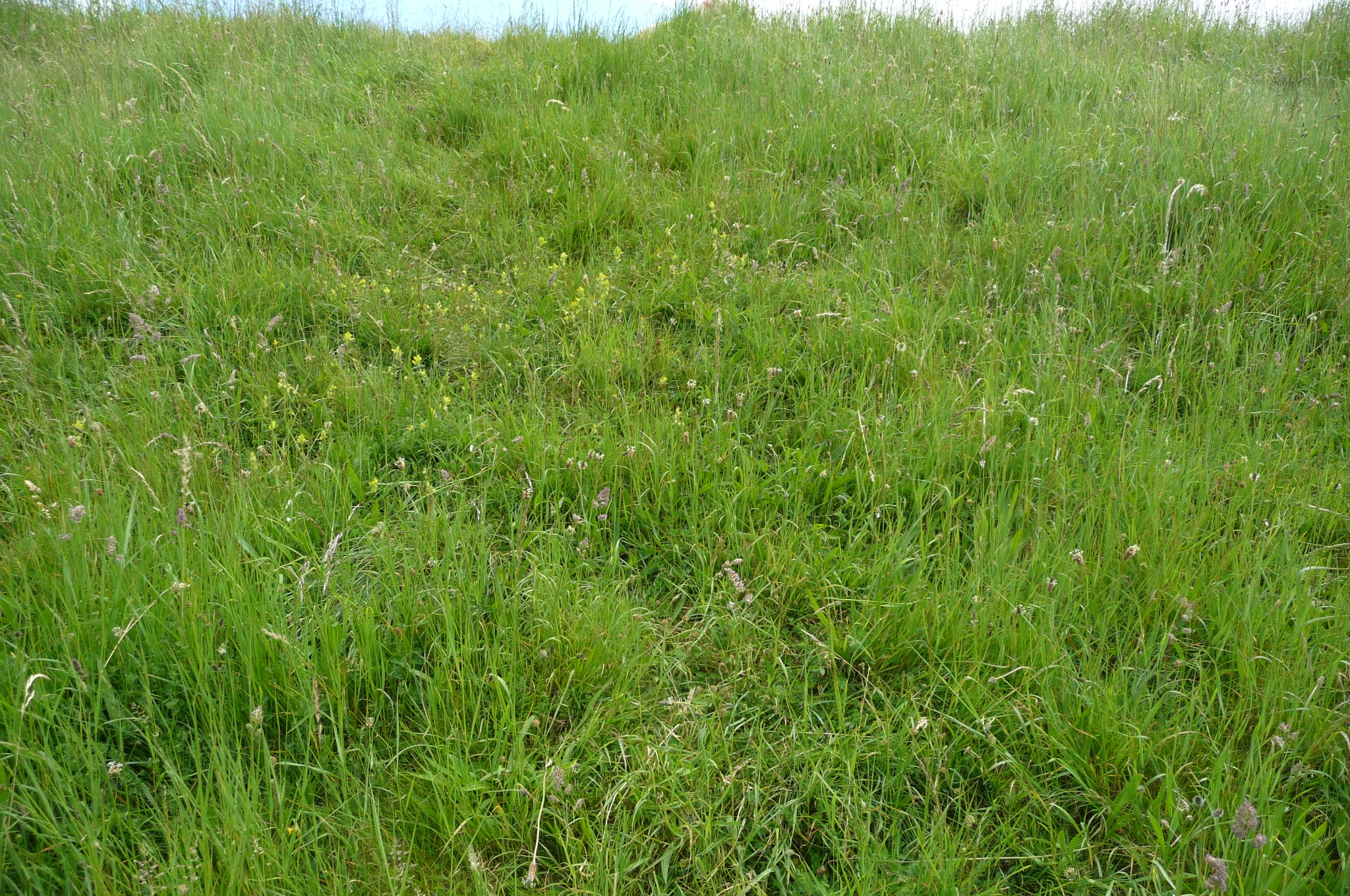
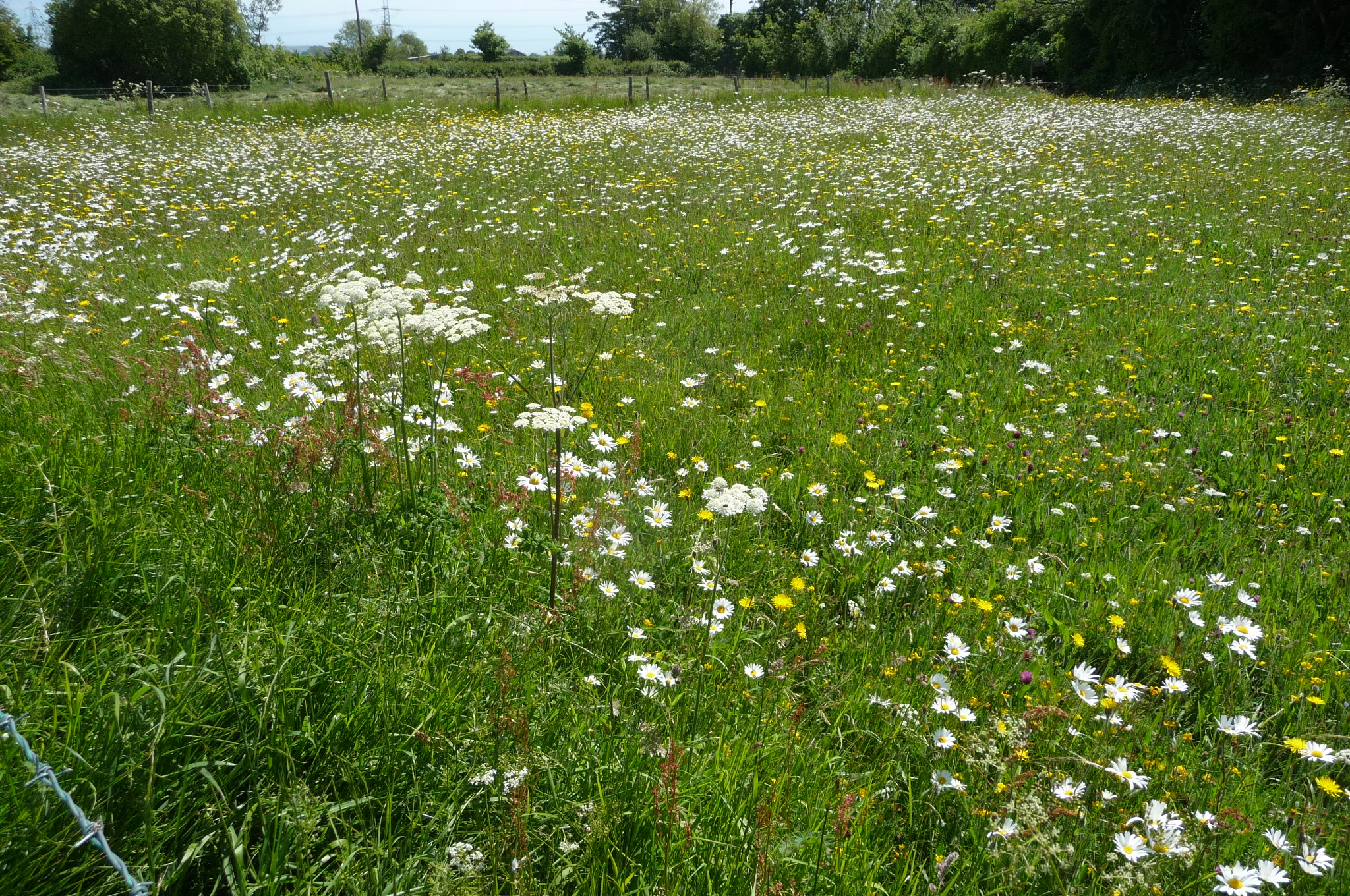
a tiny meadow full of wildflowers

a tiny meadow full of wildflowers

Mowing and not mowing the grass is making the news in the South West of England this Summer.

Police were informed after a churchyard nature area was “accidentally” mown by contractors in Cornwall. According to the Western Morning News the mangled bodies of hedgehogs were extracted from within the innards of the contractors’ mowers. Villager Daniel Grant said the area had been “completely destroyed”. The area is normally left until Autumn before being mown. Mowing wildflowers before they have set seed is a bad thing apparently.

Meanwhile in Dorset a village has had to withdraw from entering the best kept village competition (which it has previously won) because the council had not mown the verges. Vice chair of Owermoigne Parish Council Tony Wormald complained the grass in the village was “in a terrible state”. The County Council claimed they had left the grass uncut on account of the cultivated daffodils. “To ensure a good show next spring we need to allow the green parts to produce energy which is stored in the bulb for the next year’s growth.” I wonder whether these Daffs had been planted as part of the Best Kept Village competition.

Elsewhere Dorset County Council have been trialling sowing road verges under their management with Yellow-rattle, aiming to reduce the growth of grass by more natural means using this parasitic plant, instead of having to mow them.

It seems there will always be someone who complains whether the grass is cut too short, left too long or mown at the wrong time. The truth is there is no perfect time to mow grass. Every decision to mow has to balance different and sometimes conflicting priorities. Many people do want neatly trimmed short grass without any flowers in it. Others want to see flowers which benefit bees, butterflies and other insects, as well as looking attractive.

There is also a mistaken notion that it is necessary to leave flowers until they have set seed, presumably the thinking being that flowers need to shed seed in order to appear in subsequent years. This is based on a misunderstanding of plant biology. Most flowers that occur on road verges or in churchyards are perennials. They do not need to reproduce from seed each year. Many perennial plants can also reproduce vegetatively, for example by means of runners or stolons. Plants such as ivy, bindweed, clematis and bramble all produce runners or stolons which spread either above ground or through the soil. By not mowing until Autumn, these plants are given a big competitive advantage as they can colonise new ground while other plants are stuck where they are. Other plants such as bulky competitive grasses like cock’s-foot, false-oat grass or Tall fescue do very well when mowing takes places late in the season. These can form large tussocks or spread through the sward with runners. So it is often the case that churchyards or verges that are not mown until Autumn quickly get taken over by brambles, ivy or become dominated by tall bulky grasses.

Road verges also receive a healthy dose of nitrogen fertiliser from the exhausts of passing vehicles, and those bulky competitive plants are just better at taking up that extra nitrogen than smaller flowers, so this again gives a further push towards what might be called “Rank” vegetation.

Regular mowing (and, essentially, removing the arisings) will reduce the vigour of these competitive plants, and prevent plants with runners from spreading. Removing the arisings also removes nutrients from the grassland. This is exactly what is needed for the wildflowers that most people would like to see on verges and in churchyards, to flourish. Where a verge or a churchyard has become rank or overgrown, it may need several cuts a year for the first few years before the “bullies” are under control or removed. These cuts should be earlier in the year, rather than later, because it is earlier in the year when the vigorous plants are growing at their fastest, and removing their growth at this time is most effective at weakening them. It is also necessary to create bare ground when mowing. This provides opportunities for buried seed of flowers to germinate. Yellow-rattle also needs bare ground for its seeds to germinate – best practice suggests at least 50% of an area must be bare to get successful yellow-rattle establishment.

So was the Cornish churchyard really devastated – had the wildflowers been completely destroyed? It was extraordinarily crass of the contractors to mow around the sign saying “churchyard nature area do not mow”, or some such wording. And in creating ideal conditions for hedgehogs it’s not surprising that individuals were killed when those conditions were removed. I would tentatively suggest though that all the flowers that were in the churchyard will be back again next year, perhaps in greater numbers because of the early cut (depending on whether the arisings have been removed or not.)

Nature is pretty tenacious when it comes to things like mowing. Grassland plants have all evolved to be adapted to being grazed through their growing season, and mowing is a proxy for animal grazing. Indeed grassland plants depend on some activity keeping the habitat open, and preventing succession to scrub and woodland. While mowing verges every April or May will prevent plants from flowering, overall it’s better to mow earlier (June or early July) than later (August – October); as long as flowers get a chance to flower and set seed every few years they will be fine.

Caring for God’s Acre is an excellent charity which produces a range of guidance for how to best manage churchyards.
Posted in churchyards, mowing, road verges | Tagged , , , | 9 Comments

half-baked ONS mix up their semi-natural with the semi-improved

The Office for National Statistics has produced some infographics to celebrate World Environment Day. This has left the BBC statistics editor somewhat bemused.  As the UK’s natural capital was calculated to be worth £1.5 trillion in 2011 (I expect it’s worth a bit less after the last four years of Coalition Government) which is the same as the national debt, he shrewdly asks whether we can sell it to pay off the debt. Don’t go giving George Osborne ideas!

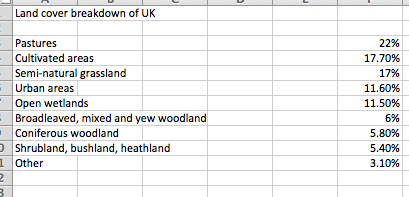
Another statistic in the ONS’s infographic caught my eye. It said that the dominant habitat in the UK was “pastures” covering 22% of the land surface; and “semi-natural grasslands” cover another 17%.

I had a moment. I wondered, what could this mean? Was it a horrendous mistake – had someone left a couple of noughts off?

Now the UK is 24.3 million hectares, so 17% of this is 4.1 million hectares. There was I for years at the Grasslands Trust banging on about how little semi-natural grassland was left in the UK and blow me there was masses after all.  Where could this enormous amount of semi-natural grassland have been hiding all the time? I had a look back at the UK National Ecosystem Assessment. The figures are on page 167 of the grassland chapter (table 6.1).

The NEA estimated 216000 ha of semi-natural grassland in  priority habitats, those being the ones full of wildlife. Then there is another 1.476 million hectares in upland acid grassland. This is very poor in wildlife and is basically that mass of upland overgrazed heathland that has been grazed by sheep for decades – the stuff George Monbiot talks about in such scathing terms. So those two together make 1.692 million hectares. I would struggle to call the upland sheepwrecked landscape semi-natural grassland but people do.

Even including the sheepwrecked uplands, we are still way less than half way to the ONS figure. Where could they have got the other 2.4 million hectares from? I had another look at the infographic – there, winking at me, was a hotlink – “download the data” it said. I felt like Alice looking at the bottle which said “drink me”. I downloaded. The excel spreadsheet opened to reveal……

ONS figures

ONS figures


I felt swindled. There were no data, just a repeat of the figures in the infographic. Finally I found where the data originated, an ONS report looking at changes in land use cover. But that still drew a blank (other than noting that bracken had been lumped in with semi-natural grassland.) Then I realised what they had done. They had taken the figures for grassland from the Countryside Survey. CS breaks down grassland into neutral, calcareous and acid grassland, but these are almost all semi-improved grasslands; they are relatively poor in species of flower other than the very commonest, plus a few species of grass. They tend to have 10 or 15 species of plant in a field if you’re lucky. The difference in plant species richness between the “improved” pastures which the ONS call pastures and the semi-natural grasslands is actually very small. Note that the UK National Ecosystem Assessment specifically excluded these semi-improved grasslands from their definition of semi-natural, for good reason.

So there you have it. The ONS has ignored the approach taken in the UK National Ecosystem Assessment, which excluded the large area of semi-improved grassland from what they regarded as semi-natural. By doing so they bump up the figure for semi-natural grasslands to a staggeringly healthy figure of 17% of UK land cover. And hunky dory we don’t need to do anything about conserving semi-natural grasslands any more. Simples.


Posted in grasslands, ONS, statistics | Tagged , , , | 1 Comment

Make with the Rake

After seven hours raking on monday, my back is just about ok now. I had asked the Council to come and do a partial early cut of Maumbury Rings. And they did. As they haven’t managed to commit themselves (yet) to the raking, I do it. I think it must be 10 years this year since I started working with Dorchester Town Council on restoring the grassland at this magical tiny open space, which I’ve written about before. I must have raked about a tonne of hay off the slopes. It’s a pity it doesn’t go to a good home; if you know anyone who would like it let me know. I think it just gets taken to the green waste tip and is composted.

P1040164


I didn’t manage to do all of the area that the Council had mown, but certainly most of it and far more than I have achieved before. I enjoy raking, there’s a great sense of satisfaction to seeing a large area clear of mown hay; especially when you get a really long row of hay and manage to roll it down the slope more or less in one go. The mowing and raking also reveal what’s been left underneath. In this case, it was mostly beer bottles, but also a few nitrous oxide canisters and lots of little empty plastic bags. It’s clear the Rings get used for hedonistic activities by the local teenagers. To be honest I’d rather be finding these things than dog poo. And I was struck by how little of that there was under the grass. Perhaps dogs don’t like pooing in long grass?

Some might think mowing in early June is too early, but it’s just the time when hay would have been cut in the past. I think too often places managed as meadows get cut too late these days, as people think that the flowers should be left to go to seed. By leaving the grass to grow on, what happens is that the vigorous grasses get through their life cycle and are better prepared for the following year, both in terms of seed production but also by storing energy produced from their leaves. By cutting earlier, you knock back the vigorous grasses, by removing both the seed source and also taking off leaves that are still photosynthesising.

P1040166This photo shows an area which had not been cut or raked until a couple of years ago. It was dominated by the coarse grasses Cock’-foot and False oat-grass. Now it’s had a couple of years cutting and raking, it’s transformed. Flowers such as Salad burnet and Ribwort plantain are really common now, while Bird’s-foot trefoil and Red clover (loved by bees) are spreading through the sward. A patch of hedge bedstraw is also quickly increasing. I expect other things to appear soon, colonising in from the tiny patch of very rich downland sward that is next to this area.  The grasses are changing too, as those that thrive without management are replaced by others – I have even seen a patch of Upright Brome which I have not seen on the Rings before.

I was also delighted to see that yellow-rattle continues to flower on another part of the Rings. P1040167This area is one of the surviving remnants of downland and includes Quaking grass as well as other downland grasses like Yellow oat-grass, Meadow oat-grass and Downy oat-grass. We introduced the yellow-rattle about five years ago as an experiment to see whether it would help reduce the vigour of the coarse grasses. But the sward was too closed and there wasnt enough bare ground for it to really take off. Still, it’s nice to see its still there doing its bit. Yellow-rattle is a surprisingly influential species to have in a grassland. By parasitising coarse grasses, it has a highly beneficial effect on invertebrates groups, including predators. If you’re going to add any plants to your roadside verge  – add yellow-rattle, not garden Daffodils!

I’ve decided this year that the whole of the grassland at the Rings will get mown in about a month’s time. I had been leaving the most flowery bits until September previously, but once the summer holidays arrive, the local teenagers make good use of the Rings and inevitably the tall flowers get squashed as desire-way paths are created through the long vegetation.

I’ll hopefully get a team of rakers together this time. So if anyone wants to join me I’ll be raking the grass on Saturday the 11th July.


Posted in grasslands, greenspace, management, maumbury rings, meadows | Tagged , , | 2 Comments

Defra budget takes another hit; farmers worried they may have to pay for the Badger Cull

Defra received a further cut to its budget last week, shaving another £83M off. This is on top of the already planned £200M cut to take place this financial year.

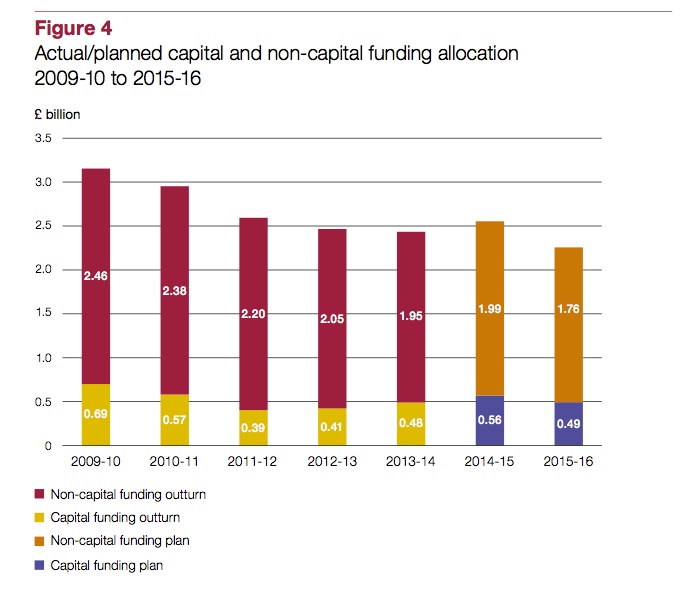
The Defra budget has declined by around 25% since 2010, according to ENDS report. The National Audit Office recorded Defra’s shrinking budget in a report last year. This graphic is taken from that report. 2015-16 revenue spending had been planned at £1.76Bn before the latest cut brought it down to £1.68Bn, compared with £2.46Bn in 2009-2010. I make that a 32% cut in revenue budget.

Defra Spending

Defra seemed to have lost sight of how much they had underspent on their budget in 2013-14, something the EFRA committee chided them for, in their annual report.

It is unclear how the £80 million underspend in 2013 14 set out in Defra’s written evidence corresponds to the £50 million underspend set out in Defra’s Annual Report and Accounts for the same period. It is also unclear what the distinction is between “underspend within the disallowance ringfence” and “disallowance funding not utilised”: in total these two disallowance figures are worth £53 million which does not agree with the disallowance underspend of £30 million set out in the Annual Report and Accounts. Lastly, Defra’s written evidence refers to £50 million being transferred from 2013 14 to 2014–15 with Treasury approval, whereas the Annual Report and Accounts states that £20 million was transferred with Treasury approval.

Where might the cuts fall?

Natural England and the Environment Agency can expect to take another cut to their already emaciated budgets. I heard this weekend that National Nature Reserve Managers cannot afford to have their equipment serviced as there is no budget. This is the sort of false economy that starts to operate in desperate times, as the cost of replacing equipment that breaks because it has not been serviced, will be many times more expensive. Or just won’t happen.

The Farming and Landowning Industry has already set out its stall. Quoted in Farmers Weekly, ” CLA president Henry Robinson said: “Defra is an important department that does crucial work to create a regulatory framework that is a vital factor in how rural businesses make decisions.

“It also plays an essential role in administering support payments. We will work closely with officials to help them understand how they can achieve their objectives.”

Priority work included administering basic payments, tackling animal and plant disease and ensuring regulatory enforcement was efficient and targeted, said Mr Robinson. ”

NFU President Meurig Raymond echoed Robinson. According to Farmers Guardian,

“Mr Raymond pointed out the latest cuts came on top of recent heavy reductions from a budget ‘where there are so many demands’.

He said: “The Department is already under-resourced and we are obviously concerned when you see a reduction of £80 million out of a budget of just £2.3bn.”

“It is a fair chunk on money and any reduction is a worry as we don’t know where the axe is going to fall.

“The big concern, with so many demands on Defra, we could end up with more demands for cost recovery for animal health. At a time when the industry is suffering very badly on output values, that would be difficult.”

Defra’s animal health budget, in particular is under immense strain and the Department and the Animal Health and Welfare Board for England has been looking for a while at areas where costs could be passed onto farmers, particularly in bovine TB policy, which eats up a huge chunk of the budget.

Mr Raymond cited TB testing as an example of where the Government might look to recover costs.

“We know the cost of bovine TB is increasing and until the Government delivers the strategy in full to help get the disease under control, it is not going to fall.””

So Farmers are worried they might have to stump up more money to pay for TB controls, perhaps even having to take on all the costs of continuing the badger cull.

You’d think on that basis they would welcome news from the National Trust that they had completed a four year trial of badger vaccination across a large Estate in East Devon. The Trust has managed to get costs for vaccinating badgers against TB down to £242 per animal. This compares quite well with the costs of killing badgers which have come in at between £3ooo and £5000 per animal. NFU’s actual response was this, from Deputy President Minette Batters:

“But we must remember that vaccination will not cure a sick badger and in areas where bTB is endemic up to one in three badgers could have the disease.

This particular National Trust programme was carried out in an area where TB is endemic and therefore is unlikely to have had any impact on controlling disease – indeed some farms in the area came down with bTB during this badger vaccination trial.”

I expect Edward Jenner received the same kind of response when he invented vaccination in 1796. Vaccination is itself named after the Cow because it was cowpox which was used to vaccinate against smallpox. Ms Batters seems to struggle with the concept of vaccination being a preventative measure, and not intended to cure sick animals. As for TB being endemic to an area, it is only endemic when animals in that area are infected. It can survive in the soil, only for months. Once all the animals in an area are disease-free, the area is disease-free.

It seems, regardless of increasingly savage cuts to DEFRA budgets, NFU would rather spend thousands per badger killing the animals, than hundreds per badger on disease eradication. Perhaps when they are expected to meet the full costs of the cull themselves, farmers may decide to ignore their union and proceed with vaccination programmes.


Posted in badgers, Defra, NFU | Tagged , , , | 4 Comments

The Solar Farm Gold Rush is over

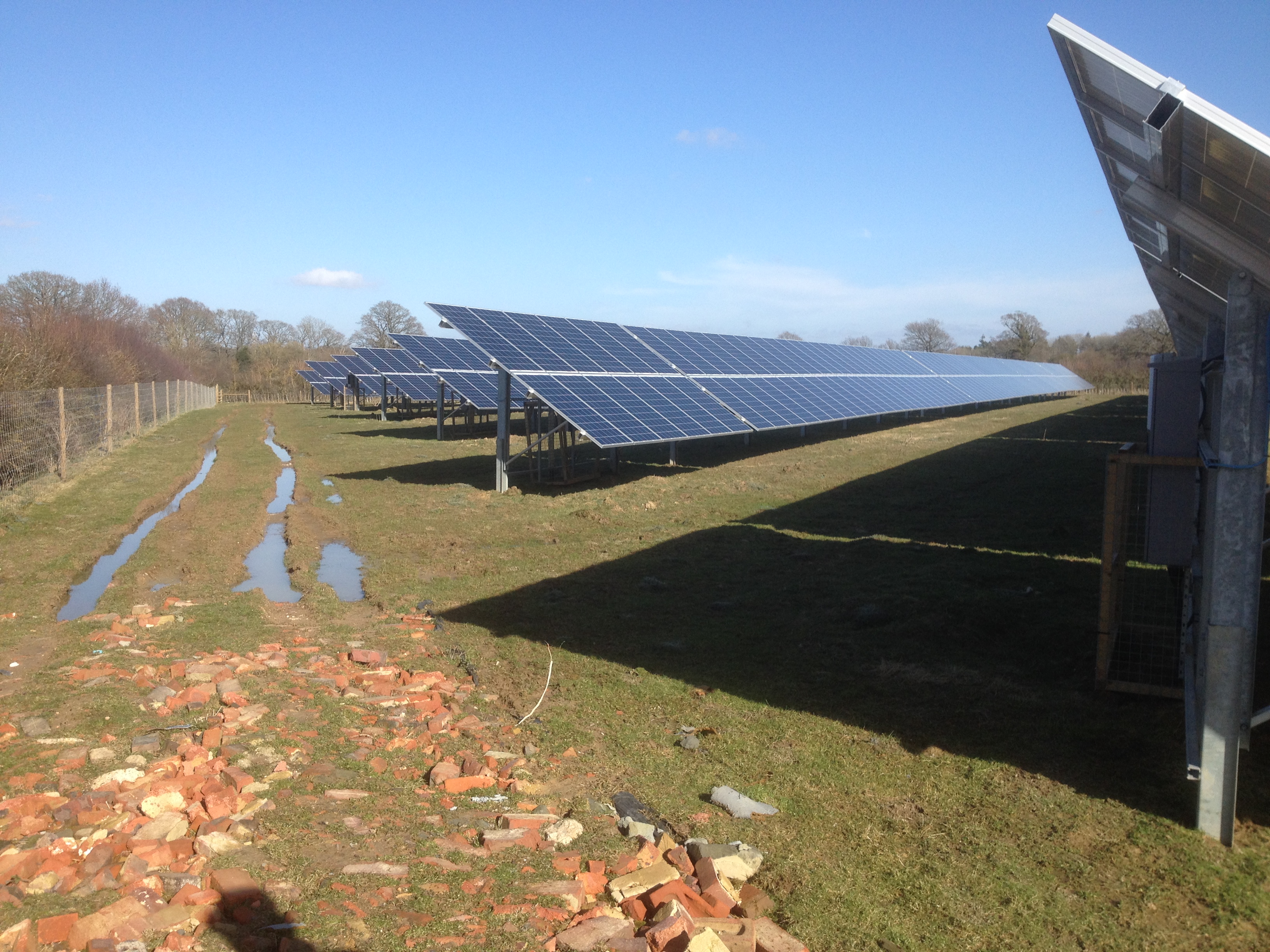
IMG_0666

Solar Farm (c) Miles King


This spring it was almost as though there was a gold rush around here, but the gold was a very generous public subsidy for private landowners to build solar farms; and the subsidy magically vanished on the 31st March this year. The gold rush was over. And many hundreds perhaps thousands of hectares of land across the south-west of England were covered in shiny new solar panels.

The subsidies, which had been more generous previously, had led to a one thousand percent increase in the area covered by solar farms across England in the last five years, from 10ha in 2009 to over 1000ha in early 2015. Out of the 380 solar farms which are generating electricity, an amazing 190 (data here) or exactly one half were built in the south west of England (which I count as including Cornwall, Devon, Somerset, Avon, Gloucestershire, Dorset and Wiltshire.) No wonder it feels like solar farms have popped up all over the place down here. Another 25 farms have planning permission in the south-west, out of 77 across England and Wales. This includes the proposed Rampisham Down Solar Farm, about which I have written on many occasions.

It cannot be any surprise to anyone that this level of industrial development (for that is what solar farms are) on previously agricultural land was going to create discontent in the south-west, an area built on a long and fine tradition of discontent. This is partly because of the visual impact of solar farms on the landscape. They are shiny, they are metallic, they have high security fences and cctv cameras. What they look like, more than anything else, are detention camps for solar panels. It only takes on solar farm covering say 20 acres, in an open landscape, to alter how that landscape looks, or feels from nearby viewpoints. This is regardless of whether the solar farms are a good thing, producing renewable electricity.

And it therefore should come as no further surprise that Farming minister and Cornish MP George Eustice should reflect that concern in comments made recently at the Devon Show, where he said solar farms were “trashing the countryside in Cornwall”

and

“There is a public policy issue here that politicians have t0 address and that is the impact of renewables on the beautiful landscape of the South West. Some parts have certainly got far too many solar farms.”

Eustice, I am pleased to say, also noted with concern the massive increase in the area of Maize in the south-west, which is grown to feed anaerobic digester plants to produce biogas. I have also written about this scam before. Renewable energy this most certainly is not.

Needless to say the Country Landowners and Business Association hit back hard against their good friend at Defra. CLA’s Ross Murray said

“It is unacceptable for on the one hand Government policy to promote investment in solar power and at the same time ministers to talk about stopping solar panels because they are trashing the countryside. We need a policy that gives businesses the ability to make plans”.

On the one hand I can sympathise with the CLA – society does need landowners to invest in the long term, where that investment can benefit society. Politicians chopping and changing their minds on policies which have multi-decadal implications for land management is deeply unhelpful. But then the landowners are not forced to chase after the latest subsidies, are they? And this is exactly what they have been doing with solar farms. As I wrote previously, landowners can get £1000 an acre per annum to rent land to a solar farm developer. As a 25MW farm covers about 50 acres, you can do the calculations.  This is an astonishing amount of money by any standards, especially as it is being paid by taxpayers. Unlike farming, where the subsidy is around £80 per acre, and then there is the risk that the harvest fails, or your livestock succumb to disease, the return on a solar farm is guaranteed, for doing nothing. Pretty much all the money goes to the solar farm developer and the landowner, but the local community benefits very little, apart from some token voluntary payments into community funds.

Community Involvement

As one way to get communities to support the production of renewable energy in their areas, DECC have been encouraging community buy-in to things like solar farms. This means that local community members or groups can invest directly in a local solar farm and reap financial benefits from it, as well as being supplied with renewably sourced electricity. This was something which DECC seemed keen to promote, but sadly the Treasury had other ideas and earlier this year removed key financial incentives making community-led energy schemes much less viable. Was this an example of Osborne’s heavies putting the knife in to the Lib Dems in the run up to the election? History will eventually tell us what happened. Nevertheless the Solar Trade seemed keen to promote the idea of community involvement in solar farms and amended their Ten Solar Commandments to include “thou shalt involve thy local community (where commercially viable)”.

Note the caveat, because let’s not forget that for all the good words about renewable energy, many solar farms are built by subsidy-driven solar farmers, such as British Solar Renewables. Perhaps, sensing that the subsidy stream for solar farms is now drying up, they have rebranded themselves to British Renewables (no solar).

Community Heat and Power

Now with profit-driven businesses like BSR around, one would hope that there were independent sources of advice and support for local communities considering entering into some sort of financial arrangements with developers of solar farms. Community Heat and Power, about whom I have written before, put themselves forward as providing that independent expert advice.

“CH&P is an independant (sic) organisation which can listen to you” they say to local community groups, who may be opposing the development of a solar farm, or trying to extract community benefits from a solar farm developer.

I have been trying to find out who owns CH&P to determine just how independent they are. Last year they were owned by Community Utilities Limited, as I explained in my previous blog, but it wasnt possible to tell who owned CUL. Now that accounts have been filed I have a bit more information.Although the directors of CUL, Hannah Lovegrove and Julian Brooks, own 5% of CUL shares each, 90% of the company is owned by a Galion Consulting limited, which is a new company as of last August. Galion Consulting Limited is in turn wholly owned by Galion Holdings Limited. Galion Holdings is a new limited company with one Director, Angus MacDonald, and 2 shares worth £1 each. Once again as it’s a new company, it’s not possible to tell who owns the shares. It may be a coincidence that Angus MacDonald is the main shareholder in the very similarly named Galion Homes Limited. MacDonald was doing housing developments before he got interested in solar farms.

Angus MacDonald is Chief Executive of British Solar Renewables.


Posted in British Solar Renewables, community heat and power, Rampisham Down, renewable energy, Solar Farms | Tagged , , , | 17 Comments

Verging on the Spectacular

Roads and wildlife have a complex relationship. Roads can still cause damage and destruction to wildlife and nature. But roads and other infrastructure can also create the opportunity to let nature thrive.

Just down the road from us is the Weymouth Relief Road. The road cut through the South Dorset Ridgeway, which is made of chalk. The normal approach to dealing with a large cutting would have been to sow it with a mix of amenity grasses and mow it, or plant it with trees. Trees and roads can be problematical though, as once they get big enough, there is a real risk they will fall down or lose branches, causing accidents. Grass it often is then, regularly mown to keep it tidy, leaving few opportunities for nature.

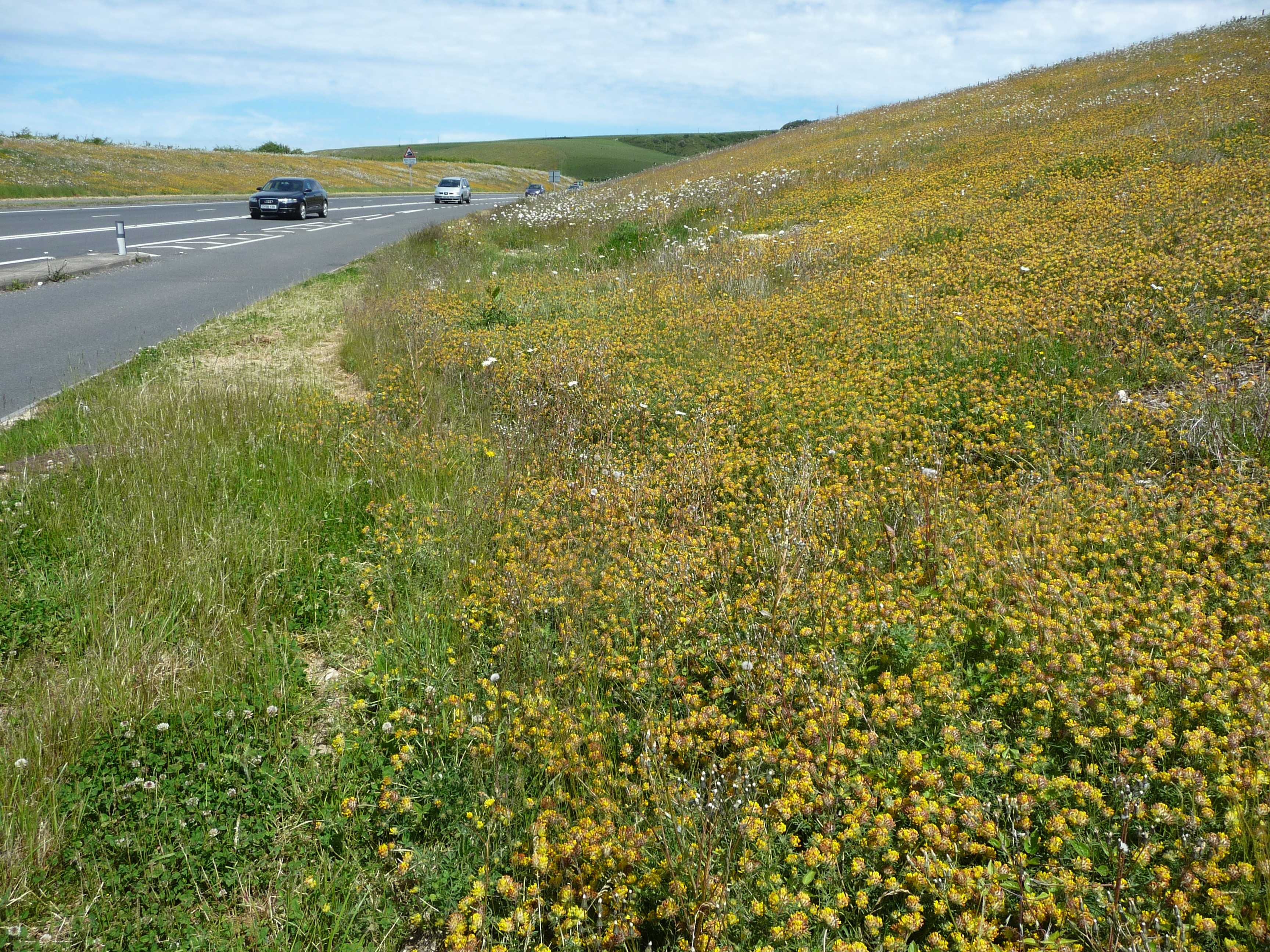
Thankfully here in Dorset we have some enlightened people like Dr Phil Sterling at Dorset County Council, until recently the County Ecologist. He suggested sowing the bare chalk with wildflower seed collected from local limestone grassland sites. He had to mount a very strong case to change the way things were done, but one argument was that a great deal of money would be saved because the area would not need to be regularly mown, not having any grass in it. He won the day and the cutting was sown with plants that love bare chalk, such as Kidney vetch, Horseshoe vetch and Bird’s-foot trefoil, as well as other flowers like Ox-eye daisy. These just happen to be the food plants for a variety of threatened butterflies, including the Small Adonis and Chalkhill Blues. All these flowers also provide hectares of nectar for other invertebrates, including, of course, Bees.

Fast forward a few years and this is what it looks like:

A spectacular array of Kidney vetch on the Weymouth Relief Road cutting

A spectacular array of Kidney vetch on the Weymouth Relief Road cutting I wonder how many people driving to and from Weymouth every day wonder what all these yellow flowers are.


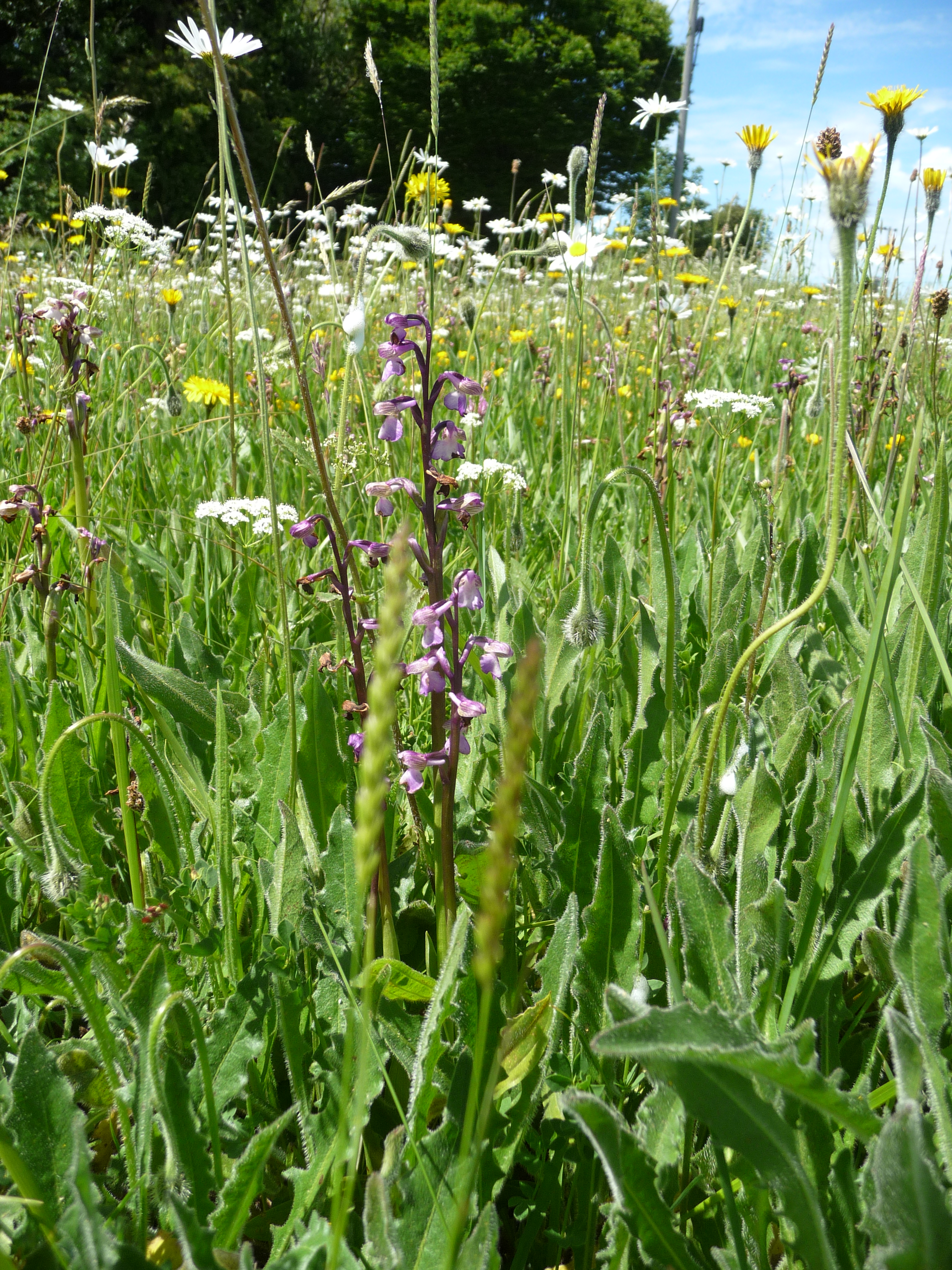
Only a few miles away on a much smaller road I came across a tiny triangular meadow, little more than a glorified road verge. We had noticed it on the weekend when heading past for a walk along the edge of the Fleet. I went back to have a better look and it was a gem. There were hundreds of Green-winged orchids, among an exceptionally rich limestone grassland, with masses of Rough hawkbit, Ladies-bedstraw, Ox-eye daisy, Bird’s-foot trefoil and so on.

a tiny meadow full of wildflowers

a tiny meadow full of wildflowers


This meadow must be old, for all those flowers to have survived there. Most of the Orchis morio had gone over, but there were still a few in good shape.

Green-winged orchid Orchis morio

Green-winged orchid Orchis morio


a group of green-winged orchids

a group of green-winged orchids

I was surprised that the meadow didn’t show up as an area of priority grassland habitat on MAGIC, given how obvious it was right next to the road. I will check with the Wildlife Trust to see if they know about it.


I wonder if the people of the village treasure this gem of a mini meadow, when they post their letters in the letterbox next to it. I imagine they do.

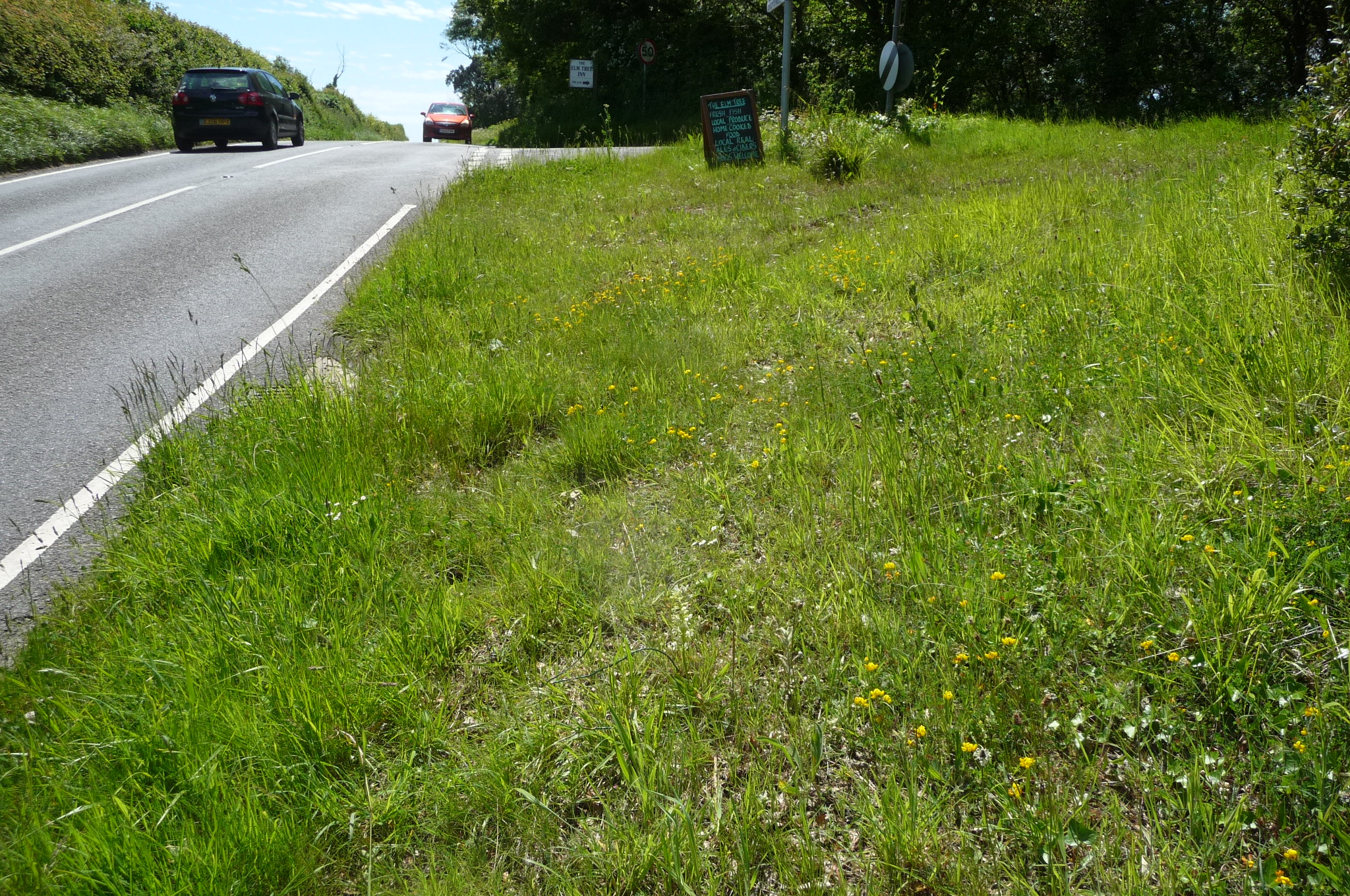
Last stop was to check whether I really had seen a lone Greater butterfly orchid on a road verge half a mile away from the meadow. It was quite late on sunday evening after our walk along the Fleet and I had started to doubt my botanical skills. I found a convenient place to park and wandered back along the road to the junction where I thought I had seen it. The road must follow a limestone ridge, and on the north side, the closely grazed fields below were carpeted with wild flowers, while the horse who was evidently the grazier, was happy in its stalls. The road verge I was looking for was on quite a busy road (the inland coast road from Weymouth to Bridport) and I imagine there were a fair few peole driving past wondering what on earth this bloke was doing standing on the verge staring at the ground taking photos.

a road verge on the busy Weymouth to Bridport road

a road verge on the busy Weymouth to Bridport road


I was delighted to discover that it was indeed a lone Greater butterfly orchid, more or less at peak flowering.

Greater butterfly orchid

Greater butterfly orchid

What I was surprised to discover was that this orchid had the remains of a cage still protruding from the soil next to the plant. Someone had very caringly tried to protect the orchid from damage by creating a wire “hat” to stop it from being damaged. But the hat/cage had disintegrated leaving a few random strands of green plastic-covered wire sticking out the ground. The orchid had carried on regardless.


This tiny verge formed a triangle where the village road joined the main road at an acute angle – the butterfly orchid was down in one corner, next to a little bank covered in Horseshoe vetch. I’m not sure what had happened, but the main part of the triangle had been laid bare for some reason and there were large tractor marks running across it, which you can just see in this photo.

P1040160


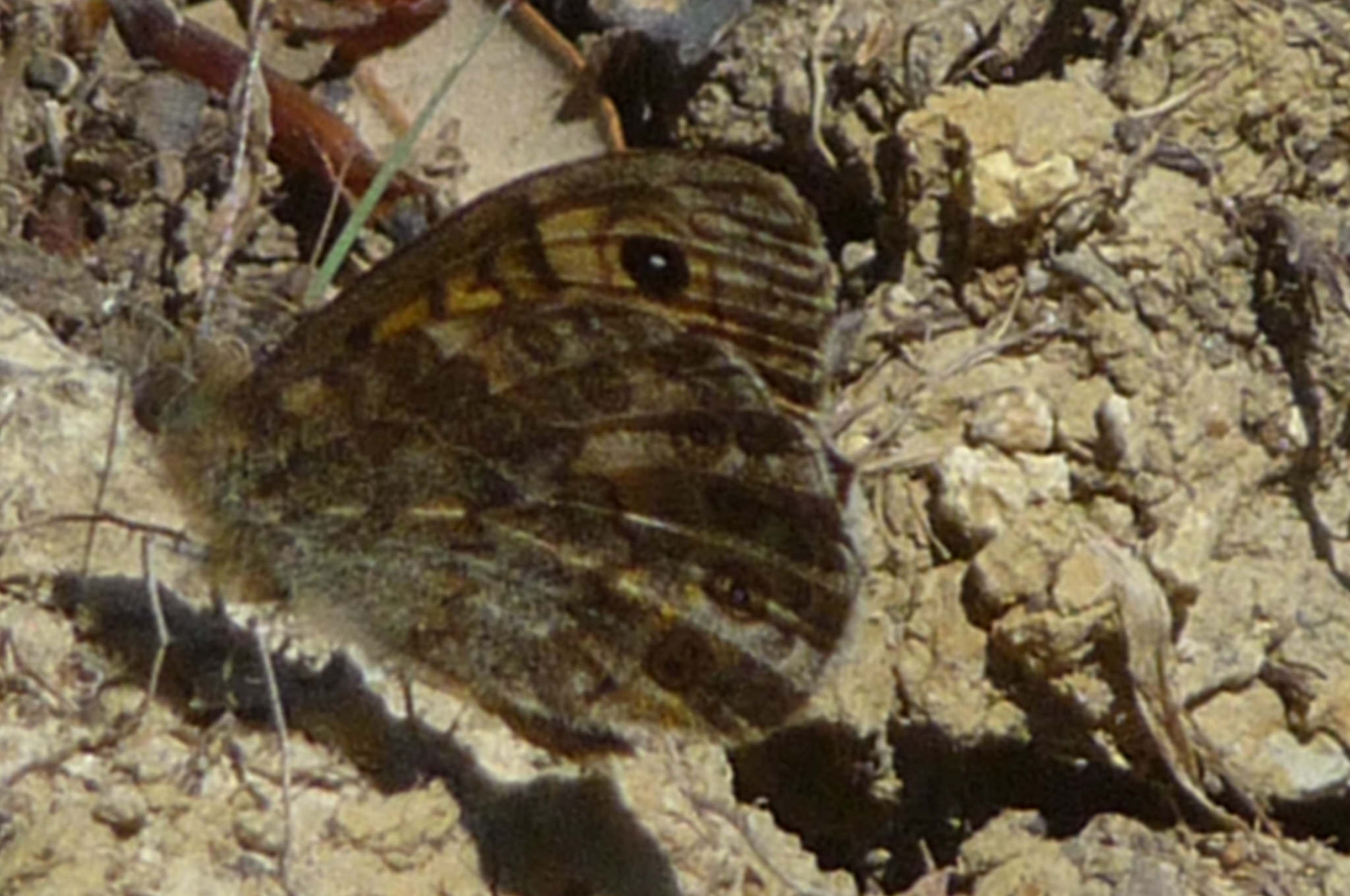
But although there was bare ground and it looked a bit messy, the plants were recolonising and a Wall butterfly was finding something to eat from the bare earth, perhaps licking salt.

P1040162


Road verges, new and old, are refuges for nature. They don’t get much management and they don’t need much management. They are full of surprises if you’re prepared to stop and look.


Posted in road verges | Tagged , , | 26 Comments

The State of Europe’s Nature

Wisdom for Nature?

Wisdom for Nature?


Today is International Biodiversity Day. Instead of being out and about enjoying biodiversity (or nature as I prefer to call it), I’m sitting at my computer writing this. Does that make any sense?

How is biodiversity nature doing in Europe? A weighty report has appeared from the Eco-gnomes at the European Environment Agency, entitled State of Nature in the EU.

Thank goodness they have not forgotten that people care about nature, but may well not know what biodiversity means. One UK survey found 80% of people thought it was a washing powder. Whether this is true or a factoid, I cannot say, but it has been quoted extensively.

The State of Europe’s Nature report is based on each country’s reporting on what is happening to the Birds and Habitats (and species other than birds) listed under the Birds and Habitats Directive, which occur in those countries. So this reporting is assessing the status of the species and habitats in the EU which are regarded as needing the most protection. It is not a report about all nature across Europe, far from it. In the UK, Birds and Habitats Directive listed habitats and species are protected in sites covering just 7% of the land surface.


Birds Directive Reporting

Recording of data on bird populations is very good in most countries, with the exception of Greece, who did not provide any data either for Birds of Habitats.

For birds listed on the Birds Directive, the most recent reporting found that populations of just over half of all bird species were stable, while a third were either near threatened or really threatened. For breeding birds, the short term trends were that half the species were stable or increasing, and just under a third were decreasing. The long term trends were 44% stable or increasing, 27% decreasing. For those birds whose populations are under pressure, Agriculture was identified as the main cause of pressure, followed by “modification of natural conditions” which I suspect is Eurospeak for loss of habitat quality.

Habitats Directive Reporting

The Habitats Directive story is very different. While there were 7259 reports on the Birds Directive across the EU, there were only 10,100 for all habitats and non-bird species, despite there being many more habitats and species listed on the Habitats Directive, than on the Birds Directive. In some countries, more reports for birds were sent in to the EC than for habitats and non-bird species together. The picture painted by the reported data is also less positive. For the 26 countries which have reported back, only nine reported that more than 25% of all their habitat assessments were favourable; and these nine included the very small countries of Cyprus and Malta. The UK was third from bottom in reporting a positive assessment, with only about 5% of assessments being favourable and 90% unfavourable/inadequate or unfavourable/bad. Only the Netherlands and Denmark fared worse.

The reporting of non-bird species was more positive, with only nine countries reporting less than 25% of species assessments as favourable; and the UK doing relatively well here, coming 7th in the ranking.

The overall assessment for Habitats Directive listed habitats across the EU found 20% in favourable or unfavourable improving, 30% unfavourable declining and 33% unfavourable stable. There is also a big difference between EU biogeographical regions in the proportion of positive assessments; Macaronesia, Alpine and Steppic bioregions (26-50% favourable) fared much better than the Atlantic and Boreal regions (over 50% unfavourable status).

For groups of habitats, the assessment also reveals changing fortunes. Dunes, coastal habitats and grasslands are doing badly, while heath, scrub and Alpine habitats are doing best. Even so, those habitats doing best still only score 25-30% favourable, and 45-75% unfavourable.

Non-bird species again are doing better than habitats, but not as well as birds. 27% of assessments were favourable or unfavourable improving, while 20% were unfavourable stable and 22% unfavourable declining.

Once again Agriculture was identified as the principal pressure on Habitats Directive listed habitats, followed by “modification of natural conditions”; and the same result was found for non-bird species, although Forestry was also identified as a significant pressure.

There is wealth of detail in the report which I have just skimmed across here, but you can go and look for yourself.

So, the picture is that birds are generally doing better than species other than birds, and both are doing considerably better than habitats. And these species and habitats are the highest priority for conservation action. So one conclusion could be that the Birds and Habitats Directives are not really doing very well at protecting or restoring population of top priority species or habitats. However, the extent to which these Directives have achieved what they set out to or not, has to be considered in light of all the other things that are happening to prevent or promote those achievements.

It is no coincidence that the EU pays out billions of euros in farm subsidies on the one hand, and that agriculture is far and away the single most significant pressure on the future survival of Europe’s “finest” species and habitats. Despite 36 years of implementing the Birds Directive and 23 years of the Habitats Directive, there has been little success in altering the course of the Common Agricultural Policy Supertanker.

Fitness Check

The new European Commission last year announced a review of the Birds and Habitats Directive, a so called Fitness Check. The RSPB have launched a campaign to protect the Birds (and Habitats) Directive from what they perceive to be a serious threat to weaken the measures currently available to protect nature. The bells of doom are being rung, and 100 organisations under the Joint Links banner have signed up to a statement that this refit is “the biggest single threat to UK and European nature in a generation”.

But if these Nature Directives really are doing such a fantastic job that any changes to them would be so threatening, why are their own reporting mechanisms showing that the highest priority birds, other species and habitats are still declining? Could it be because these Directives are not helping with the conservation of Europe’s nature, as much as RSPB would like us to think they are?

Certainly in the UK, where only 7% of the land surface is protected under these Nature Directives, it has to be said that positive action for nature brought about by the Directives has been very limited and mostly restricted to that 7%. There has still been some fantastic work done under the auspices of the Nature Directives, including many projects funded through LIFE; and the extra protection afforded these sites through things like the planning process has done some good in preventing impacts from new housing developments or roads, for example. But, as the Directives own reporting shows, there has been little to stop the continuing damage to nature from intensive agriculture or forestry, or unsustainable fishing practices promoted by the Common Fisheries Policy.

Elsewhere in Europe the Nature Directives have had more of a positive effect, especially in countries which had little in the way of domestic nature protection legislation. Some EU countries have declared large areas as protected under the Birds and Habitats Directives – Slovakia has 29% coverage of SACs/SPAs while Slovenia has 36% coverage. In fact every single other country in the EU has a larger proportion of land protected under the Nature Directives than the UK, even large countries like Spain have 27% land area protected. To what extent these are really protected is moot, but designation is certainly a step further along the road towards nature recovering or thriving.

EU Referendum

It seems we will be voting in a referendum next year to decide whether the UK (or the rump UK minus Scotland) stays in the EU or not. Given the UK Government’s lack of enthusiasm for all things regulatory, including nature protection laws, there is certainly a risk that implementation of the Nature Directives (or get out clauses from that implementation) is used as a bargaining chip in the coming negotiations.

Actually of all the countries in the EU, given our paltry implementation of these Directives,  nature would lose out least were we to lose the protections afforded by the EU legislation, assuming we continued with the domestic nature legislation that was there before. That may not be a particularly popular statement with the conservation NGOs, but it is still true.

It was almost a year ago that I wrote about the pros and cons of being in Europe, for the environment. I am still none the wiser. It would be great if we could have an open honest debate about the EU and whether it has helped nature (in the UK and more widely in Europe) or not, and what would need to happen for it to be a strong force for nature, before the referendum.

The least we can do is all try and make the environment and nature a prominent part of that debate, something which frustratingly did not happen in the general election.


Posted in Birds Directive, Common Agricultural Policy, European Commission, European environment policy, Habitats Directive, Uncategorized | Tagged , , , , , | 8 Comments

Countryside Alliance get their man into Defra

Wolf and Fox Hunt: Rubens

Wolf and Fox Hunt: Rubens

The slow death of Defra continues, as it loses Lord de Mauley as the Defra minister in the Lords.

Lord de Mauley is a decent sort of chap. He didn’t agree with his former Boss Owen Paterson’s ravings about being stalked by the Green Blob.  He took up the call for action on Bees and became the Minister for Bees. He was given the task of creating the National Pollinator Strategy, which is all about saving Bees. Needless to say the Bees have not responded yet to the Strategy, the ungrateful blighters. That the strategy doesn’t mention doing anything about bee-cidal Neonicotinoids insecticides might explain that.

It will be interesting to see who is given this particular political hot potato now that de Mauley has gone.

The new Defra spokesperson in the Lords is Lord Gardiner. Gardiner had a long career as private secretary to a variety of Tory Ministers before becoming the Countryside Alliance’s chief spin doctor. He was then in the deputy chief exec role which he held until 2010, when he was ennobled and joined the House of Lords. Between 201o and 2012 he continued to be an executive director of the Countryside Alliance, while carrying out Government duties in the Lords.  In 2011 for example the Countryside Alliance boldly celebrated an intervention:

“During a House of Lords debate on biological diversity on Monday 20 June (2011), Lord (John) Gardiner – Executive Director of the Countryside Alliance – singled out the work upland landowners and grouse moor managers do in halting declines in habitats and species.”

Here are some things he said in that debate:

I turn to matters rural, for it is here that much of Nagoya in the UK will be achieved. With more than 70 per cent of the UK managed by rural communities, farmers and land managers play a crucial role for the nation in so many regards such as water supply, flora and fauna, food production and landscape. We need increasingly to ensure that we produce enough food in this country, as food security becomes an ever higher priority in public policy. There is of course a range of professionals who have cared for the land over many generations. The Government should back them in this role.

When it comes to halting declines in habitats and species-a key objective in the Nagoya agreement-one needs to look no further than the uplands of the north of England. There, heather moorland that has been managed for grouse shooting has been responsible for making the greatest contribution to the improvement in the environmental health of the country’s outstanding wildlife and geological sites. Sites of specific scientific interest cover more than 2 million acres of the land surface of England, and provide vital and extensive refuges for wildlife and essential free natural resources for people. Today, 96 per cent of grouse moors are in a favourable or recovering condition. The support of upland landowners and grouse moor managers has been crucial in achieving this goal. Moorland managed for grouse shooting accounts for some 850,000 acres of uplands, 60 per cent of all upland SSSIs and nearly one-fifth of all England’s SSSI land.

What is either not known or overlooked is that the majority of that management is carried out at the private expense of the land manager. The rural community of this country has a long track record of working in harmony with nature. Since the Moorland Association was formed 25 years ago, members have regenerated and recovered more than 217,000 acres-including 57,000 in the past decade-thereby exceeding the Government’s 2010 conservation target by 170 per cent. Grouse moor owners have shown that they have the ability to achieve this at their own cost, but it should be with the Government’s backing.

It may be an inconvenient truth for some, but it is the case that the hare was in its most abundant numbers when its habitat was managed for coursing and hare hunting; the red deer herd on Exmoor was one of the finest in the world because of the management undertaken by the three packs of staghounds; and the fox was best managed and looked after when the species was considered quarry rather than vermin.

Here is Gardiner’s statement and the Countryside Alliance’s fond farewell to Gardiner in October 2012, when he took up his role as a Whip in the Lords

Fare Well from John Gardiner

Following my appointment as a Government Whip in the House of Lords, I have to stand down as a Board Member and Executive Director of the Countryside Alliance. It has been the greatest of privileges to work for the Alliance and the rural cause since December 1995. The opportunity it has given me to meet so many members and supporters and to enjoy their friendship and encouragement will remain with me forever. Even in the more testing political times, no one could have received greater support from colleagues and members alike. Words cannot adequately express just how much my time at the Alliance means to me. I leave with the Alliance in good hands and I wish Barney and his team every possible success.

Barney White-Spunner writes: As you know John has been a long serving and is a very experienced member of the team whose expertise and commitment to our countryside has been total. I am sure you will join me in wishing John every success in his new role and thank him for his outstanding and unstinting contribution to the work of the Countryside Alliance over many, many years.

As Gardiner was chair of the Vale of Aylesbury Hunt from 1992 to 2006, joining the Whips seems appropriate. I expect he is looking forward to Hunting across the Vale again.

That reminds me of a personal experience I had with the V of A Hunt. It must have been around 1992, when I was a conservation officer for BBONT as it was then, in Buckinghamshire. I was in my favourite nature reserve at Finemere Wood, with a group of volunteers who were on an scheme for unemployed people. We were doing some scrub bashing, when I heard the unmistakeable sound of hunting horns nearby. I moved as quickly as I could towards the sound, to see the entire hunt illegally entering the nature reserve, after a fox. I tried to remonstrate with them, but it’s quite hard getting your point across to men on horseback, who clearly had the “blood up”. They ignored me and carried on. I was not amused. The volunteers, who were all from Buckinghamshire and a rural bunch were not keen on the hunt and I remember vividly they waved them waving their billhooks and slashers in the air as the hunt rode past. It was a scene straight out of the Peasant’s revolt, though there were no clashes other than verbal ones.

I remember fuming about it with my colleagues later, but what could we do? The Hunt were a law unto themselves.

Gardiner’s declared interests include being a Partner in a Buckinghamshire farming enterprise C M Robarts and Son of Kimble Wick. The farm is in ELS, all 250 off hectares of it, so it’s good to know our Defra Lord is benefiting from the Common Agricultural Policy.   He is also a Director of Robarts Investment Limited ,which is not registered in Bucks, but in Essex. Robarts Investment Limited is valued at £2.6M. It’s not clear how much of the business Gardiner owns.

I think we can expect Gardiner to be involved in the repeal of the Hunting Act, given his personal interest and his experience as a Whip in the Lords. He will also no doubt speak up in support of rolling out the Badger Cull. We might also expect him to get involved with the debate around Grouse Moors and Raptors, especially in light of the Judicial Review against Natural England on licences for gamekeepers to shoot Buzzards.

Will he start to make statements about the need to remove Beavers from the Countryside, or how damaging Lynx might be? Or perhaps he is a fan of rewilding, on  the condition he and his mates can hunt in the rewilding zones.


Painting by Peter Paul Rubens [Public domain or CC BY-SA 2.0 (http://creativecommons.org/licenses/by-sa/2.0)%5D, via Wikimedia Commons


Posted in 2015 election, bees, blood sports | Tagged , , , , | 2 Comments

Which is the biggest threat to sheep – Dogs or Lynx?

Found_something_interesting_-_geograph.org.uk_-_777471

It’s understandable why sheep farmers and their organisations should be worried about the reintroduction of Apex Predators such as Wolf and Lynx. Recent proposals to reintroduce Lynx have met with stiff opposition from the likes of the National Sheep Association, and their revulsion at the idea of a predator that eats sheep being brought back into the countryside forced Natural England to make a statement.

Any application to introduce lynx into England would need very serious consideration in terms of its impact right across the UK. If such an application were made, Natural England would consider it in line with prevailing legislation; international guidelines; following proper public consultation and evidence gathering, and taking into account any input from government.”

The Lynx Trust has garnered much attention and a good deal of public support over the last few months, and it’s great that they have created debate around the issue of reintroducing large extinct mammals. That they didn’t really help themselves by making nonsensical statements that “the countryside is dying and the Lynx will bring it back to life” is beside the point.

Farmers will not want their sheep to be killed by predators such as Lynx or Wolf, and even though Lynx take relatively few sheep in countries where they are currently found, for a sheep farmer to lose a prized breeding ewe or ram is always heartbreaking. But there is another angle here, which is that this is happening already. There is an apex predator roaming the hills killing sheep. It’s the domesticated Wolf, or dog as its more commonly known.

North Wales police have been gathering statistics on the number of dog-worrying sheep incidents and found there were 108 incidents over the past 12 months. They found there were on average 9 incidents a month, with one incident involving 30 sheep. When a dog is found to have attacked sheep, the owner can be fined and the dog destroyed. And this is what North Wales police have done, enforce the law. But as far as I know, the sheep farmer does not receive compensation for their loss. In this case, 70 sheep were killed by three dogs, casuing a £20,000 loss, but no compensation was paid.

So here’s the rub; Lynx, when they do take lambs or sheep, only take what they need, just one animal per kill. Dogs will behave differently, and especially if there is more than one dog, can kill large numbers of sheep in one attack. There would be a compensation scheme for sheep lost to Lynx attacks, no such compensation scheme exists or is likely to for domestic dog attacks.

Would the presence of Lynx in an area cause the behaviour of domestic dogs to change? Would they behave more warily in those circumstances, or indeed would their owners behave more circumspectly? Perhaps not.

But it does seem pretty clear to me that if I were a sheep farmer I would rather have the minor problem of having the occasional animal taken by a Lynx (with compensation), than having the major problem of sheep worrying by domestic dogs.

Dog worrying incidents continue to rise across the UK….yet the NSA seem keen to focus publicity on what a handful of Lynx might do to their flocks. Have they given up the fight to get dog owners to act responsibly?

Photo by Evelyn Simak [CC BY-SA 2.0 (http://creativecommons.org/licenses/by-sa/2.0)%5D, via Wikimedia Commons

Posted in dogs, lynx, National Sheep Association, rewilding, Uncategorized, wolves | Tagged , , , , | 5 Comments

Two Years of A New Nature Blog

KONICA MINOLTA DIGITAL CAMERA

I’m celebrating two years (yesterday) since I started writing this blog.

This isn’t the first blog I have written though, as I started in October 2010 when I was working for The Grasslands Trust. That one lasted just under two years, before TGT went under.

It’s customary to bore you with statistics on anniversary days, so here goes:

I have written 240 posts in the last two years (that’s got to be a book’s worth) and I have received 102,711 page views, for which I am eternally grateful.

My best day for views was the 4th October 2014 when I had 2415 views. That was when I published The Strange Case of Dr Earth and the UKIP Environmental Policies. This has been my most popular blog, so far, with 4326 views; and I’m pleased that people are still discovering this particular bit of fun. I don’t know whether Dr Earth himself has read it yet, if he has, he hasn’t let me know.

In a very respectable second place on the list is Held to Ransom: Solar Farms: green or greed, with 2295 views. And in 3rd place with 2,040 views is The New Natural England Chair Andrew Sells.

Perhaps the one that means most to me is the Obit I wrote for my brother Simon, who died nearly two years ago; and being able to publish the tribute written by his great friend Bob Hornegold.

I’m really pleased to have received 1215 comments from a wide range of contributors. Top commentators are Dave Dunlop, Mark Fisher and Mud-Lark – all from the North. Thanks to you and to everyone else who has commented, especially those who have disagreed with me.

I can see this blog being part of my life for some time to come. It has certainly been helpful to me, in some kind of therapeutic way. As some of you will know the last five years has been very difficult for various reasons. But despite what happened on Friday and its potential consequences, I feel positive about quite a lot of things (even if that doesn’t necessarily express itself in what I write about) and I am still hoping to set up a new nature charity this year.

In the meantime, kind people have given me paid work which I find interesting and doesn’t cause me ethical problems: for which I feel lucky. I have also lost nearly 4 kilos in the last 7 weeks on the 5:2 diet and that is definitely helping my health and wellbeing.

Thanks for reading.

Photo By Anssi Koskinen from Turku, Finland (2) [CC BY 2.0 (http://creativecommons.org/licenses/by/2.0)%5D, via Wikimedia Commons
Posted in blogging, Uncategorized | Tagged , | 14 Comments