Is exporting death good for the economy?

paraquat


We are told, repeatedly, that one of the main reasons why the UK should stay in the European Union, is because we have access to the single market. And this argument is being used in particular for agriculture.

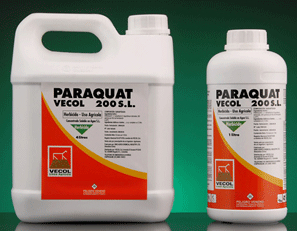
But some agricultural products made in the UK are not exported to the EU, because they have been banned there. In fact some products made here are so toxic that they have been banned for use in the UK, as well as the EU. One such product is the herbicide Paraquat.

Paraquat is exceedingly toxic – and easily ingested. It has been blamed for thousands of deaths across the world, including suicides and murders. Sri Lanka banned it as a agrochemical because of the number of people using it to commit suicide. A study last year in Indian tea plantations found paraquat being widely misused and the BBC reported pesticide exposure causing illness and hospitalisation.

Paraquat is manufactured in Huddersfield by Syngenta, the same company who make a range of neonicotinoid insecticides, blamed for killing pollinators like bees. Last year, thanks to what appeared to be a combination of poor maintenance and human error, nearly four tonnes of paraquat was accidentally released from a tanker at the Huddersfield plant. To give you an idea of how much this is, the entire consumption of paraquat in India in 2013/14 was 5000 tonnes. It’s estimated that a lethal dose for a human is 14ml. A quick fag packet calculation would suggest that enough paraquat was released in the accident to kill over one hundred thousand people. Fortunately the wind was blowing in the right direction and the paraquat stayed inside the factory boundary. Syngenta was fined £200,000 yesterday for health and safety breaches – and would like everyone to “move on”, as they have vowed to do.

A couple of things come to mind, from this story.

First off, is that, far from being “red tape” that needs to be removed, regulations such as those on health and safety, are a vital part of society. Regulations are needed to ensure that businesses don’t just focus on the profit and ignore everything else. And as we can see from the story of the Paraquat use in India, where regulations are weak, bypassed or ignored, people and the environment suffer.

Secondly, what on earth are we, as a society, doing allowing businesses like Syngenta to produce agrochemicals in the UK that are so lethal they have been banned across Europe and in many other parts of the world? Is this really the sort of economy we want to support, and are these really the sort of products we want to be exporting? This Government (and previous ones) have done all they can to prevent EU agencies such as the European Food Safety Authority from restricting the use of agrochemicals such as herbicides and insecticides. EFSA recommended that Neonicotinoid use should be phased out, but the UK Government allowed farmers to continue using it.

We need to stay in an EU which will,  strengthen protection for people and nature, through regulation.

Posted in agrochemicals, deregulation, EU referendum, European Commission, European environment policy, Neonicotinoids | Tagged , , , , | 6 Comments

UKIP farm spokesman Stuart Agnew & his deeply unpleasant views

Stuartagnew

Stuart Agnew UKIP farm spokesman:

I have been drawn, reluctantly, back into looking at Stuart Agnew, UKIP’s chemically-challenged farm spokesman, as a result of  some undercover filming carried out at his “free-range” chicken farm in Norfolk. Agnew, you will recall, is so worried about the great climate change conspiracy, that he believes it will suck so much carbon dioxide from the atmosphere it will stop plants growing. And he needs his 400 acres of EU-subsididised arable farmland to grow wheat to feed his chickens.

Whether animal welfare conditions for animal like free-range egg laying chickens would improve if the UK left the EU is unclear. Brexiteer farm minister George Eustice as suggested that under a UK only farm subsidy scheme, farmers should be paid extra for better animal welfare. So much for regulation then.

But what really caught my eye was something I had missed him saying at the recent conference of the National Farmers Union, for which has was previously Norfolk chairman. For Norfolk, perhaps as much as any rural English county, depends on a large number of low paid farm labourers. Labourers who in the main come from central and eastern European countries.  Labourers who can move here without restriction as we are part of the EU. Bearing in mind 38% of the workforce   in “the manufacture of food products” are foreign born, I imagine Agnew uses east European labour to pick his free range eggs.

This is what Agnew had to say at the NFU conference:

“You do not have to throw your doors open to, at the moment, 480 million people just to get a few people to work in agriculture. Alongside those who work in agriculture, you have got criminals, traffickers, people who are carrying infectious diseases, people who have murdered other people. All we need is a work permit system. It’s not really very difficult where the employer sponsors the individual who comes to work, agrees to accommodate them, guarantee their good conduct and make sure they return when they finish.”

I’m glad I don’t live in Agnew’s world, where, apart from a few people who work in agriculture, johnny foreigner is either a

  • criminal
  • trafficker,
  • diseased
  • a murderer (of other people).

UKIP received 34.5% of the vote in the East of England in the 2015 European Elections.

Photo By Euro Realist Newsletter – https://www.flickr.com/photos/33119465@N03/3456959067, CC BY-SA 2.0, https://commons.wikimedia.org/w/index.php?curid=32001878
Posted in Brexit, Stuart Agnew, UKIP, Uncategorized | Tagged , , , | 7 Comments

Cameron woos Welsh farmers: it’s all about the exports


This from Today’s Farmers Weekly:

EU exit could cost UK’s livestock farmers £330m, says PM

Livestock farmers would be forced to pay an extra £330m a year to export their goods abroad in the event of an exit from the EU, the prime minister has claimed. David Cameron ramped up his efforts to persuade people to vote to stay in the EU by warning farmers they would “suffer enormously” from an exit. He visited a farm in north Wales on Friday (11 March) as part of his tour around the country to convince eurosceptics to vote “In” on 23 June. Mr Cameron said more than 90% of UK lamb and beef exports – worth about £605m in total value – were traded in the EU. The farming sector contributes £9.9bn to the UK economy and employs almost half a million people.

“British farmers and food producers rely on the single market”
David Cameron

But he warned that leaving the single market and relying on World Trade Organisation rules would result in extra costs of exporting British beef of £240m/year. An extra £90m would also be added to the cost of British beef exports, the prime minister claimed.

“British farmers and food producers rely on the single market,” said Mr Cameron.

“It gives them access to 500 million consumers, to whom they can sell their goods on an open, unrestricted basis. No tariffs, no barriers, no bogus health and safety rules designed to keep our products out.”

However, UKIP agriculture spokesman Stuart Agnew accused Mr Cameron of scaremongering and overseeing “Project Fear”.

He said: “It’s important to be clear here on a few things. The French export £650m of wine to the UK and they import £170m of lamb from the UK each year. Who is going to rock the boat on that deal? Staying in the EU means we are subject to Mercosur countries ultimately, where beef is likely to be the sacrificial lamb. UK and Irish beef will be desperately hit. Suckler beef will really be a museum beef it Mercosur comes to fruition.”

Eurosceptic former Defra secretary Owen Paterson has told farmers they would be better off outside the EU. Mr Paterson said a UK government outside the EU would save money and be able to allocate more generous farm payments than under the common agricultural policy (CAP).

“Agriculture and food production is hampered by our membership of the common agricultural policy”
Owen Paterson, former Defra minister

“I believe that the United Kingdom has a great future beyond the political arrangements of the European Union,” Mr Paterson told the Oxford Farming Conference in January. Agriculture and food production is hampered by our membership of the common agricultural policy. CAP negotiations between 28 countries inevitably mean that we have to accept compromises, these are at best deeply unsatisfactory and at worst actively damaging to UK farmers.”

Outside the EU, the UK would be able to develop its own bilateral trade agreements, increase farm output and work with like-minded countries to combat plant disease and animal disease, Mr Paterson added.

Farm minister George Eustice has also come out in favour of an EU exit, putting him at odds with Defra secretary Liz Truss who is calling on the UK to stay in Europe. Mr Eustice said there would be an £18bn/year “Brexit dividend” in savings if the UK left the EU. He added: “Could we find the money to spend £2bn on farming and the environment? Of course we could. Would we? Without the shadow of a doubt.”

Farmers Guardian were also there and Cameron said to them

“If Britain votes to leave we would have to put in place an agricultural support system. I am very pro-countryside and pro-farming and, as Prime Minister, I would make sure that happens. But I would say to farmers you are giving up the certainty of what we have now with the uncertainty of the future.”

He then couldn’t resist making a snide remark about Labour’s Defra Shadow secretary of state Kerry McCarthy, who has been reviled in the farming press for being a vegan.

“If you look at what Jeremy Corbyn offers with a vegan agriculture spokesman, are you really certain, if the alternatives get in, you are going to have the sort of support in the countryside we have today?”


The Prime Minister clearly thinks that the farming sector is a very important one to persuade of the EU’s benefits to them – and once again, it’s all about exports. It’s notable that the Prime Minister sought to persuade sheep farmers in North Wales that the benefit of staying in the EU was their export market. The reality is that sheep farming in North Wales would not exist without the generous support they receive from the Common Agricultural Policy  – paid for by you and me, the taxpayers. There wouldn’t be any exports without the CAP, whether we were in the single market or not. This is not really what sheep farmers want to hear, that they are the most heavily subsidised industry in the UK – to such an extent they should really be regarded as being in the public sector.

It would undoubtedly be cheaper for us all if we nationalised the entire UK sheep farming industry.

It’s also worth putting these figures about the agriculture sector in some context. The charity sector in the UK had an economic value calculated at £12.1Bn in 2012/13, compared with £8.3Bn for Agriculture in the same year – it’s around 50% larger. In the same year the charity sector employed 821000 people and supported nearly 14 million regular volunteers. So the charity sector is 50% larger than Agriculture, and employs 40% more people.

Has anyone seen David Cameron talking to charity employees about the benefits of staying in the EU?

Hardly; instead Cameron’s cabinet office and place men at the Charity Commission are busy making up new rules to stop charities from campaigning for or against the EU. That’s in addition to stopping charities saying anything at all to politicians or civil servants, if they are in receipt of state funding.

Posted in agriculture, Charities campaigning, EU referendum, Uncategorized | Tagged , , , , | 4 Comments

The true story of David Cameron the Water Voles and the Dredging


Water_Vole_on_Boot_Hill_(5592665124)Some of you may recall that back in January I wrote about David Cameron’s Water Vole “epiphany”, in which he realised that wildlife didn’t need protecting and the Environment Agency should focus on protecting people’s property, and stop worrying about the Environment. Dubious that all the facts had been placed before the Parliamentary Liaison Committee, to which he had spoken, I thought I would do a bit of burrowing myself.

I asked the Environment Agency for the correspondence relating to the Kelmscott Vole Incident. And they have obliged me by providing a series of emails, file notes and other such useful literature, that enables me to piece together a more complete picture.

The area concerned is a rather remote spot in West Oxfordshire, right on the north bank of the Thames. As I have written about before, Kelmscott also happens to have been where William Morris, founder of the Arts and Crafts movement and the National Trust, amongst other things, lived for a time. The village was badly flooded in the extraordinary events of the 20th July 2007. Little did we know at the time that such events would cease to become so extraordinary, and more extreme events have taken place, practically every year since then. This is the impact of human-induced climate change.

After the incredibly wet year of 2012, it appears that forces operating within West Oxfordshire were mobilising to get watercourses that were considered to be failing to move water away sufficiently quickly during flood events, to be dredged. West Oxfordshire’s Principal Engineer, Laurence King  (no relation) was pushing for the EA to do more dredging of watercourses. This from July 2013:

Laurence King, Shared Principal Engineer for West Oxfordshire District Council and Cotswold District Council, Environment & Commercial Services is very keen that we put pressure on the Environment Agency to ensure that all the water courses for which they are responsible are regularly cleaned out.

This is important as when heavy rain occurs, these water courses need to be capable of draining the maximum amount of water to prevent flooding and foul water contamination.

Now what we know about dredging water courses is that it has no effect on drainage during flood events. This is because the water course channel has a tiny volume compared with the floodplain. So during a flood event, the water spills out of the channel into the floodplain, as it is supposed to do. No amount of dredging will change this fact of physics. Dredging is only helpful in a particular set of circumstances, such as artificial watercourses which run through urban areas, or pinchpoints such as bridges.

In August 2013 the Environment Agency issued a consent to Mr King at West Oxfordshire District Council for “light maintenance works” to be carried out on a series of watercourses around the village, including the Radcot cut, a parallel pair of ditches running east-west parallel with the Thames. Here it is in the middle of the map.the radcot cut


A “Light Maintenance” consent approach was developed in the West Oxfordshire region by the Environment Agency as away of reducing regulation, for activities which did not involve dredging or building structures. It just happens that Kelmscott also falls within one of the 7 river maintenance pilot areas where EA were trialling a new approach whereby landowners would not need to apply for consent before doing things like dredging water courses. Whether the “light maintenance” light-touch regulation was part of the pilot scheme is not clear. The EA report does mention the fact that WODC cleared 1km of watercourse to “remove silt”.

A water vole survey of the Radcot cut had been commissioned by WODC and carried out in July 2013. The survey showed there was a chance that the strictly protected mammals were present and precautions should be taken. The EA biodiversity officer visited the site with Mr King and they discussed what activities would be consented within the light maintenance consent. The southern channel was to be left untouched as it had no influence on the flooding of the village – and a linear reedbed had developed in it since it had last been cleared. For the northern channel, the EA agreed with WODC that some sensitive management could be carried out – careful clearance of trees and hedges was needed to allow access by excavator to the channel, where clearance of the channel would “leave bank toes and faces undisturbed” to prevent illegal damage to water vole burrows.

In early May 2014 the EA visited Radcot Cut to discover that the consent had been flagrantly breached. Both teh channels had been cleared, trees and hedges had been destroyed, the channels had been scraped clean of their vegetation and gravel. And water vole burrows had been damaged. EA staff noted the presence of fresh water vole droppings on the day of the visit, confirming that the law had been broken. The EA stopped any further clearance work in the Radcot Cut while they investigated the illegal activities.

A flurry of emails both within the EA and between the EA, the Police and WODC followed. The Police were informed that an offence had been committed under the Wildlife and Countryside Act. Between 19th and 23rd May 2014, notices were served on the adjacent landowners that the EA were going to visit the site and take photographs of the damage.

It would appear that immediately following the visit of the EA to record the damage, someone decided to contact their local MP, a certain David Cameron. Cameron’s office then emailed the EA on the 4th June (saying what I don’t know as I have not been sent that correspondence). This was followed by a letter on the 12th June (ditto).

On the very same day, the EA evidently decided that it was not going to proceed with prosecution of Mr King for breaching his Land Drainage Consent. Although there had been previous mention of taking the case to the EA Enforcement Panel, by the 12th  “Current thinking from legal is that we won’t take this to [the enforcement panel] and it will be warning or advice letter outcome”. Whether the EA had decided to draw back from prosecution as a result of Mr Cameron’s intervention is unclear, but the timing would make it quite a coincidence.

The Kelmscott Flood Committee evidently became very unhappy that the work they considered to be essential to helping prevent future flooding had been stopped and approach Mr Cameron again, this time sending him a “brief” and asking for a site meeting. Obligingly Mr Cameron attended a meeting on the 11th July, where he had his Vole Epiphany. As Cameron said to the Liaison Committee, as they stood on the bank of the Radcot Cut and surveyed the damage,

“It doesnt look to me like they’ve done anything wrong.”

and that’s when the homeless Water Voles appeared.

The brief from the Kelmscott residents is revealing, as is the annotations on it from EA staff. Far from appreciating the “light maintenance” light-touch regulation approach, the Flood Committee were aggrieved that their maintenance work had been halted, or indeed that the Environment Agency was even considering the need to work within the law. As the Flood Committee said in their statement,

“Light maintenance consent lays down very specific guidelines on how the work is to be carried out. The EA appears to have very limited flexibility in interpreting these guidelines and does so strictly to the law as has been seen in Kelmscot. We believe current issues are due to the fact that light maintenance consent is not appropriate for working on badly neglected watercourses but full dredging consent is not necessary, difficult and time consuming to obtain. The issues are exacerbated by the conflict of interest between flood management and biodiversity regulations, with the latter seeming to have a higher level of importance.”

Never mind the fact that there are laws which are there for a reason and a Regulator whose role is to ensure laws are not broken!

The Police eventually decided not to prosecute over the Water Vole disturbance, despite a prima facie case. The police officer who dealt with the case said rather revealingly

“it is very political”

before then saying that they would be asking WODC to consult with Natural England over any future Water Vole bothering. Naturally the EA were rather unimpressed by this, as they are the lead regulator with responsibilities for the furry ones. The EA expressed their disappointment with the Police quite robustly,  pointing out that riparian landowners would indeed feel that they did not need to work within the law, if such flagrant breaches escaped justice.

In a recent Parliamentary question, shadow Defra minister Alex Cunningham asked

“what steps [the Secretary of State] plans to take to ensure oversight mechanisms are put in place when further powers to dredge watercourses are extended to farmers.

Floods and Biodiversity Minister Rory Stewart replied

“The draft Environmental Permitting (England and Wales) (Amendment) (No.2) Regulations 2016 include conditions that must be followed by those wishing to undertake dredging under an exemption. If works are not undertaken according to the relevant conditions, then the Environment Agency will be able to take enforcement action. This includes suspension notices to stop any further works being carried out, enforcement and remediation notices requiring remediation within a specified period, and the power to prosecute.”

Judging by the Kelmscott Vole incident, the EA may feel they are not being encouraged to take such enforcement action, by their Political Leaders.


Posted in David Cameron, deregulation, Dredging, Environment Agency, flooding, Water Voles | Tagged , , , , | 13 Comments

New Report investigates impact of Brexit on UK Environment:

reblogged from the People Need Nature blog:

brexit reportbrexit report

An important new report has appeared today, to contribute to the debate about whether the UK should stay in or leave the European Union.

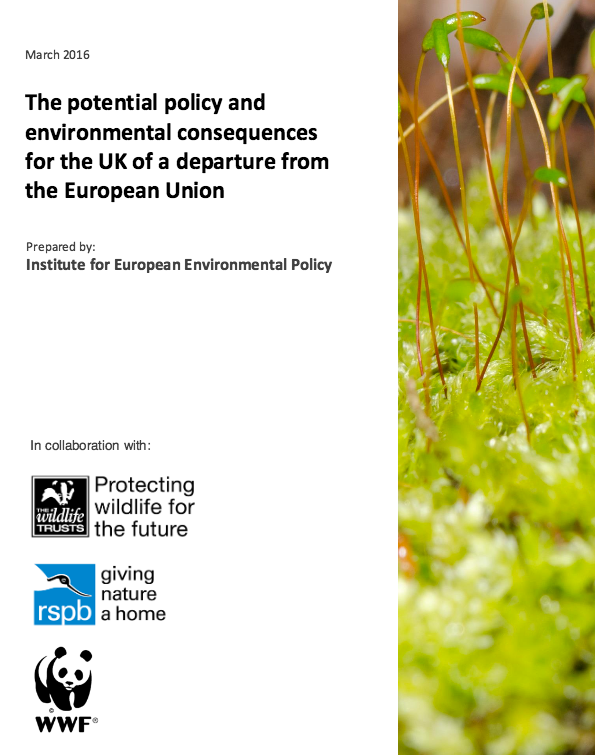
Commissioned by RSPB, The Wildlife Trusts and WWF UK, the report was prepared by the Institute for European Environmental Policy (IEEP). The report investigates the EU policies which have a significant impact on nature and the broader environment in the UK, assesses them for their effectiveness, strengths and weaknesses, and considers what might happen were the UK to leave the EU. In order to make this assessment, two scenarios are explored, one involving the UK leaving the EU but remaining in the European Economic Area, the other involving a total exit. Depending on which path is taken, the impacts on the environment are very different. In many ways, this sums up the broader debate around Brexit – there are so many variables, that it’s very difficult to see what the ultimate consequences of leaving the EU would be, on the environment, as much as anything else.

What is clear from the report is that were the UK to stay in the EEA, some of the environmental protections that currently exist would be maintained, because in order for the UK to export products to the EU, they would have to have been produced within the same framework of rules that apply to other members of the EEA, most of whom are within the EU. This is something that the various Brexiteer groups have not really explained to the public – which of the options on the table they are intending to take.

These are the main conclusions from the report are:

  • Membership of the EU has had, and continues to have, a significant positive impact on environmental outcomes in the UK as well as other parts of Europe, with cleaner air, waterand oceans than otherwise could be expected.
  • This is because of a range of legislative, funding and other measures with the potential to work in combination. EU environmental legislation is backed up by a hard legal implementation requirement of a kind that is rarely present in international agreements on the environment; and which is more convincingly long lasting, and less subject to policy risk, than national legislation.
  • Complete departure from the EU (Brexit Scenario 2) would create identifiable and substantial risks to future UK environmental ambition and outcomes. It would exclude the UK from decision making on EU law and there would be a risk that environmental standards could be lowered to seek competitive advantage outside the EU trading bloc.
  • Departure from the EU whilst retaining membership of the EEA (Brexit Scenario 1) would lessen these risks, as most EU environmental law would continue to apply. However, there would be significant concerns related to nature conservation and bathing water, as well as to agriculture and fisheries policy. In addition, the UK would lose most of its influence on EU environment and climate policies.
  • Under both exit scenarios, significant tensions would be created in relation to areas of policymaking where responsibility is devolved to the governments in Scotland, Wales, and Northern Ireland, but where a broadly similar approach has been required as a result of EU membership, including environmental protection, agriculture, and fisheries.
  • The uncertainty and period of prolonged negotiation on many fronts caused by a UK decision to leave would, itself, create significant risks both for environmental standards and for the green investment needed to improve the UK’s long term environmental performance.

The broad headline is

“it is likely that a UK departure from the EU would leave the British environment in a more vulnerable and uncertain position than if the country were to remain as a member of the EU.”
There are some mildly contentious sections of the report – for example it paints a probably overly rosy picture of the effect that implementing the two Nature Directives  – for Birds, and for Habitats and Species, has had on nature in the UK. Successive Governments of all colours dragged their feet over implementation of both Directives and consequently sites were lost before they could be protected, while the minimalist approach to implementing the Directives saw the UK taken to the European Court time and again, and eventually we still only have a relatively small area of the UK protected by these European Sites, compared with many other EU member states; and we score pretty low on attempts to conserve the species and habitats for which we have international responsibility. The damage inflicted on nature through the Common Agricultural Policy and Fisheries Policy is also downplayed. However, the report also ignores the profound positive impact of European Directives on Environmental Assessment, mostly of which operate through the planning system.

The sponsors of the report, RSPB, the Wilfdlife Trusts and WWF, have come in for some criticism from Brexit supporters, and the Charity Commission has brought out new guidance, which has already been seriously criticised, on how Charities should consider whether to campaign for one side or the other. This guidance has come, hot on the heels, of  a Government announcement to prevent Charities from lobbying, where they receive public funding.

The strength and depth of evidence in this report will bolster those organisations who are campaigning for the UK to stay in the EU, in a debate which has been marked, thus far, by the lack of much if any considered analysis on either side of the debate. RSPB Conservation Director Martin Harper has written about their view this morning and I am sure RSPB will have given the matter very careful thought before deciding whether to adopt a neutral stance on the EU debate or to campaign for one side or the other.

People Need  Nature does not have a formal position on the EU referendum, but we will continue to seek out and publicise evidence about the potential impact of Brexit to help people who care about nature to make up their minds.

Posted in Brexit, People Need Nature | Tagged , , , | 1 Comment

Farm leaders make case to stay in EU, to protect exports and their influence in Brussels

flag_yellow_lowFarm business leaders are clearly rattled. They can see that the campaign to take the UK out of the EU is not going away, even if the “leave” camp is currently channelling the amphitheatre scene in Life of Brian, with the People’s Front for Judea vying with the People’s Judean Front. While Cameron et al are variously threatening the British public with Fire and Brimstone if we leave the EU (Project Fear) or pummelling them with statistics about better business conditions in the EU (Project Fact), farm leaders have set out to persuade us with Project Farm.

Thursday saw Cameron in Edinburgh explaining to the Scots why leaving the EU would be so bad for their farmers. And it was all about exports. As the Guardian reported,

“Risking fresh charges of scaremongering, the prime minister told the Scottish Tories’ spring conference on Friday that salmon, lamb and beef farmers could face tariffs as high as 70% in countries such as Canada if the UK were excluded from the EU’s overseas trade deals and stood outside the single market.

In a clear challenge to Eurosceptics such as Liam Fox – the Scots-born Tory MP for North Somerset, who had earlier addressed an anti-EU fringe event – Cameron said that Scotland’s exporters and 250,000 jobs relied on untrammelled access to the single market.

“It’s for [Eurosceptics] to look those farmers in the eye and tell them if they’re going to have to pay tariffs and, if so, how much,” he told delegates at the Scottish national rugby stadium, Murrayfield.”

Why Cameron is spending his time in Scotland, who already are showing strong support for the UK to stay in the EU, is probably more related to how the Tories will do in the upcoming Scottish Parliamentary elections than the referendum.

Meanwhile on Friday, a group of Agri-Business leaders called “Farmers For In” launched their campign with a letter published in the Times, despite Times owner Rupert Murdoch being enthusiastically pro-leave. Perhaps he had taken his eye off what was going on at the offices of the Thunderer, while preparing for his marriage to Jerry Hall the following day. Or perhaps he thought that his readers would be less pro-EU if they read the letter as farm business leaders wishing to protect their cash cow. The letter was signed by the great and the good from the NFU, CLA and assorted camp followers.  Here it is:

Sir, Leaving the EU is too great a risk for UK farmers. The European single market accounts for 73 per cent of Britain’s agri-food exports and gives us access to a market more than twice the size of the US. Outside the EU we could keep all or some of this market, but we would have to abide by EU regulations without a say in their formation and pay into the EU budget without receiving EU payments in return. We’d pay, but have no say.

The Leave campaigns talk about trying to negotiate a free trade deal similar to the Swiss model. But that would not cover all products and would not give the same unrestricted access as provided by the single market. Where we did get duty-free access we would still be required to meet EU standards and regulations. In other words, the regulatory bonfire we’ve been promised by the Leave campaigns just wouldn’t happen. In any case, some of the worst regulations, as well as the “gold-plating” of EU directives, happen in the UK, not Brussels. On direct payments, Leave campaigners have said it is inconceivable that any UK government would drastically cut support. But it is government policy, set by Labour and endorsed by the coalition government in 2011, to abolish direct payments in 2020.

Leaving the EU would mean reducing our access to our most important market, little or no reduction in regulation, no influence on future rules, the speedy abolition of direct support and an uncertain future for UK agriculture.

So the message is clear, it’s all about exports (which appear front and centre of the first sentence) and the suggestion that we’ll be stuck with EU regulation whether we stay or leave. Apparently Leave are promising a “bonfire of regulations”. It’s not entirely clear how this particular bonfire of regulations will be different from the “bonfire of regulations” which Francis Maude introduced in 2010. Or indeed the bonfire of regulations Francis Maude introduced in 1994. Or for that matter the Bonfire of Regulations Michael Heseltine talked about in 1986. Regulation Bonfires appear to flare up every ten or fifteen years in Whitehall – it’s a wonder any of the buildings are still standing.

One interesting comment worth picking out is the one about Government policy (and the Opposition’s too) to abolish direct payments by 2020. While the UK remains in the EU, this won’t happen, though the current CAP only continues through to 2021. So what the Agribusiness leaders are saying is that we need to stay in the EU so that its rules can over-ride the policies adopted by both the main UK political parties, who want to see more public benefit in return for the £3Bn a year farm subsidy system. They are saying “we can influence farm policy on things like subsidy rules, in our favour, more effectively via Brussels than via Westminster, so we should vote to stay in.” If I were a wavering voter that is exactly the sort of “red rag to a bull” comment that might make me vote leave.

One rather risible farm-based intervention from the leave side also happened, in the form of Northern Ireland Secretary Theresa Villiers, suggesting that farm subsidies could actually increase if we leave the EU, because of all the extra cash swilling around. The Ulster Farmers Union has claimed that food prices could rise by 30% if the UK leaves the EU – though that is an extreme position that even the NFU are not adopting. It’s difficult to imagine how prices would shoot up that much. Farming is a more significant economic sector in Northern Ireland than it is elsewhere in the UK with 3% employed in the sector.

Villiers appeared to be parroting the position George Eustice set out last week ie same money less regulations, but with bells one.

When asked if she could guarantee that they would continue at the current level, she said: “I don’t think one would want to say that it continues in exactly the same form, but arguably we’ll have cash to spare, so it’s not impossible that we could have a more generous system.”

Ms Villiers declined to say whether a more generous system of farm subsidies was likely, saying that was “for future decision” but added: “I don’t think there’s a credible political party that says they should be scrapped.”

She said that a UK system of subsidies could be less “bureaucratic” that the current Common Agricultural Policy payments.

She said: “I think every political party accepts that we need to continue with farm subsidies – for our food security and for our rural economy, it’s crucial that we support our farmers. There’s no one suggesting otherwise.

“So those kind of payments – maybe not in the same form, but they’d certainly continue – and the sorts of programmes that the EU has funded in Northern Ireland, again, it’s perfectly possible that we could continue to support them because we will have at least an extra £9 billion to spare.

“Even if we continue with every single penny of funding which the EU currently provides in Northern Ireland, there’d still be money left over. This is about ensuring that decisions over those taxpayer funds are actually made here in the UK, rather than in Brussels.”

It’s worth noting that EU funding for agri-environment schemes in Northern Ireland has been cut and cut again over the past 10 years.


Posted in agriculture, Common Agricultural Policy, EU referendum, Europe | 1 Comment

People Need Nature website is up and running

PNN4 Default


I’m delighted to say that the new People Need Nature website is now up and running.

You can read about what People Need Nature is, what we are planning to do, and why we think it’s important.

I will also be writing a regular blog for the PNN website as well as continuing “a new nature blog”. So please keep an eye out on both for latest posts. I’ve already written a couple of posts on the PNN blog, which you can read here.


Posted in People Need Nature | Tagged , | 5 Comments

Last week’s EU Poll – the results

flag_yellow_low

Thanks to everyone who took part in last week’s poll on whether to stay in or leave the EU.

208 people took part, out of 492 who read the post – so 42% of readers decided to vote.


Hopefully the actual referendum will have a slightly higher turnout.  Bizarrely though, 42% was the turnout in the last referendum that took place in the UK (as opposed to Scotland) in 2011, the bungled vote on changes to the way we vote for members of parliament. Only 36% of the electorate voted in the 2014 elections for Members of the European Parliament.

The readership here is not representative of the voting electorate – well I say that, I have no direct evidence that it is true, but I imagine it is.

Anyway 75% of you voted to stay in the EU, while 19% voted to leave, with 5% still undecided.

I suspect the real poll will be a lot closer than that.

Posted in EU referendum | Tagged | 2 Comments

Reasons to stay in the EU: “It’s not the economy, stupid”.

EU budget figure (1)

net contributions to EU budget from member states in 2015

The people imploring us to leave the EU complain that we pay so much into the EU budget, but get so little back. It is true that last year the UK was the 3rd largest contributor to the EU budget, contributing 12.57% (after rebate), but still behind France and Germany, the largest contributor. It’s also true that we receive considerably less back from the EU than we pay in – last year the difference was £8.5Bn. This might sound like a lot, but the UK’s total Gross Domestic Product last year was £2000 Bn, so our net contribution to the EU was equivalent to 0.4% of GDP.

the UK making a net contribution to the EU budget is equivalent to London being a net contributor to the UK budget, while Cornwall is a net recipient. The UK is one of the wealthiest countries in the EU. Since the EU is not just a single market, but also has a social purpose, it seems right and proper that we contribute to make things better in poorer parts of Europe.

Who benefits directly from financial payments from the EU to the UK?

Of the £4.6Bn received last year, £3bn went straight to landowners, via the Common Agricultural Policy. Most of this was in the form of a single payment, paid to landowners whether they grow food or not. About 15% of it went to Rural Development and most of this  was spent on Agri-Environment Schemes.

It’s worth noting that there are some that argue that much of this subsidy is taken from food producers by others within the supply chain, and in particular the large retailers such as supermarkets. Others still argue that ultimately consumers benefit from cheaper food as a result of these subsidies. Both of these arguments are complex and I’m not going to go into the detail of them now.

£1.3Bn went to Regional Development Funds . These have now been wrapped up into one budget, which is spent via the Local Enterprise Partnerships (LEPs). The LEPs spend the money supporting local businesses in various different ways. For example 40% of the projected £3.6Bn LEP spend of EU money in the coming years will be spent “enhancing the competitiveness of small and medium enterprises (SMEs)”. SMEs have a turnover of up to £50M a year. As a comparison, 3% of the budget goes to projects “to preserve and protect the environment and promote resource efficiency”. £370M also went into the Social Fund, to support more employment, mostly by private businesses.

It’s also worth noting that £1.3Bn of EU funding went to UK private sector businesses to support research and development, but that this figure is not included in the calculations for the UK net contribution to the EU. If it was, our net contribution (for last year) would be reduced by 8.5%.

So it’s pretty clear from these figures that the direct beneficiaries of the £4.6Bn of EU funding last year are: landowners and other private businesses. A small amount of EU funding finds its way to the Public Sector and the Charity Sector, mainly to charities with large land ownerships such as the National Trust, who benefit from CAP subsidies.

It is true, for the average UK citizen, we pay into the EU budget via our taxes, and receive very little financial return. Most of the income from the EU goes to businesses of one sort or another. Is that a reason to leave the EU? I would suggest not.

I believe the EU can be a force for good if we can reclaim its social and environmental purpose. If it is downgraded to a single market then the arguments for staying in become much weaker.

But, to paraphrase a former US President “It’s not the economy, stupid”.


Posted in Common Agricultural Policy, EU referendum, Europe, European environment policy | Tagged , | 14 Comments

Farm Subsidies after Brexit – the first hints from Farm Minister Eustice

future fields?

Brexit could lead to even more intensive farming

We’ve had a first hint from the Brexit side, as to what support farming would receive if the UK left the EU.

This from Farmers Weekly

First details have emerged of a plan for British agriculture if the UK leaves the EU after a summer referendum.

Fledgling policies – including the possibility of area payments to farmers – were outlined by Defra minister George Eustice to reporters and delegates during a session at the NFU annual conference in Birmingham on Wednesday (24 February).

Mr Eustice said: “You would probably keep something similar to an area payment but you might look at accreditation schemes that farmers could enrol on automatically rather than having the chaos of an annual application process with a hard deadline.”

This would avoid situations where farmers lost their entire support entitlement for the year when subsidy applications were lost in the post, said Mr Eustice.

“There are lots of things you could do differently,” he added.

The UK’s in-out referendum will take place on 23 June.

But many farmers will need far more detailed policy proposals when it comes to agriculture before they can make an informed decision about which way to vote.

Mr Eustice unveiled his Brexit farming plan after announcing he would campaign for the UK to leave the UK – a decision which puts him at direct odds with Defra secretary Liz Truss, who has warned that such a move would be a “leap into the dark”.

The existing way of tackling agricultural and rural development policy would be completely scrapped if the UK left the EU, suggested Mr Eustice.

“My view is that you would probably dismantle the whole two pillar structure,” he said.

Cross compliance, which was “bureaucratic and unnecessary,” would be completely streamlined. Food security would be enhanced through investment in science and technology.

The government would look at risk-management tools for farmers, such as insurance schemes.

Mr Eustice said he would also like to see high levels of animal welfare on farms rewarded in the same way farmers are rewarded for undertaking environmental measures.

Agri-environment schemes would continue but without the EU bureaucracy and reporting requirements, he said.

“We would do far better as a country if we ended the supremacy of EU law and actually shaped new, fresh thinking and created policies that would really deliver for our agriculture”
George Eustice, Defra minister

Mr Eustice said he had “wrestled with all sorts of EU regulation” during his time as Defra minister.

“We would do far better as a country if we ended the supremacy of EU law and actually shaped new, fresh thinking and created policies that would really deliver for our agriculture.”

If the UK left the EU, there would be an £18bn a year “Brexit dividend” in savings, said Mr Eustice.

“Could we find the money to spend £2bn on farming and the environment? Of course we could. Would we? Without the shadow of a doubt.”

Concerns that the UK Treasury wouldn’t support agriculture to the same extent as Brussels were ill-founded, suggested Mr Eustice.

“Ultimately the Treasury does what parliament tells it to do. If we took back control of agricultural policy, parliament would re-engage.”

One point of information. the UK received €4Bn in farm subsidies in 2015. So where the figure of £2Bn came from, I have no idea.

Basically Eustice is following the UKIP model for agriculture, which I outlined a while ago. This should surprise no-one as Eustice was a UKIP candidate before joining the Tories. What he said to the NFU conference boils down to this:

Area payments – in other words Free Money. Farmers continue to get paid just for owning land, not what they do with it, or what public benefits they provide.

Auto enrolment. That means a free pass – get your free money without any checks as to what you’re doing (eg growing Maize and emptying silt into your local river).

Dismantle Pillar 2 (which is used to pay for Rural Development including Agri-environment schemes).

Completely Streamline Cross Compliance. Cross compliance in theory is the way that landowners who receive farm subsidies are required to deliver public benefits. Now I’d be the first person to criticise cross compliance, because it is so risibly ineffective. To abandon it altogether means that there would be no checks at all on what farmers are doing – for example what damage they are causing the environment. It’s not clear what “completely streamline” means, but I would interpret it as “get rid of”. This is what the NFU wants.

Reward High Levels of animal welfare in the same way as Agri-Environment. This is interesting  – would these high levels be higher than now, or are the current levels regarded as high so everyone gets rewarded? If the latter, this would be equivalent to the old abandoned Entry Level “money for old rope” approach to Agri-Environment, which has been abandoned because it did not deliver much if any environmental benefit but used up 75% of the budget.

Enhance Food Security through investment in Science and Technology. This is sustainable intensification in a nutshell. It means producing yet more food, more intensively and would probably mean widespread introduction of GMO crops.

Look at risk management tools including insurance schemes. It’s not clear exactly what this means, but it could include a return to the bad old days of intervention buying – which led to the milk lakes and butter mountains of old. Other insurance schemes could mean farmers are paid from public funds if their crops fail, because of flooding, for instance. I wrote about an example of this recently.

Agri-Environment continues without reporting or bureaucracy. It’s not clear what this means, but it could mean farmers get paid to deliver schemes but no-one knows whether they are being done or not, in which case more money for old rope.

Eustice then brazenly suggests that the Treasury would happily hand over £3Bn a year for farm subsidies, should Brexit occur. Given this Treasury and this Chancellor, I think this is ludicrously optimistic. Osborne will take that money and use it elsewhere.

It’s interesting what Eustice did not say – eg he did not mention continuing or increasing support for marginal farming such as sheep in the uplands.

As expected, this is a hard-line neoliberal agenda for farming. Regulations are scrapped or weakened seriously. Public benefit is discarded as unnecessary, because the market will provide all the benefits the public needs. Competition will be the key, with costs driven down as hard as possible. Small and marginal farms will be driven out of business, while larger farms will become more intensive and larger, through land purchase. Nature will be driven further out of the lowland farmed landscapes. In the uplands a withdrawal of subsidies may well lead to a collapse in the upland farming industry. You might think this could lead to rewilding. But it’s more likely the land will be sold or (in large estates) converted to other uses – such as intensive grouse moor management and commercial forestry.

Posted in Brexit, Common Agricultural Policy, farming, George Eustice, NFU, public goods, rewilding | Tagged , , , , | 10 Comments