
This gallery contains 20 photos.
This is a great project from Pale Blue Dot, fusing the arts with nature conservation…..
This gallery contains 20 photos.
This is a great project from Pale Blue Dot, fusing the arts with nature conservation…..
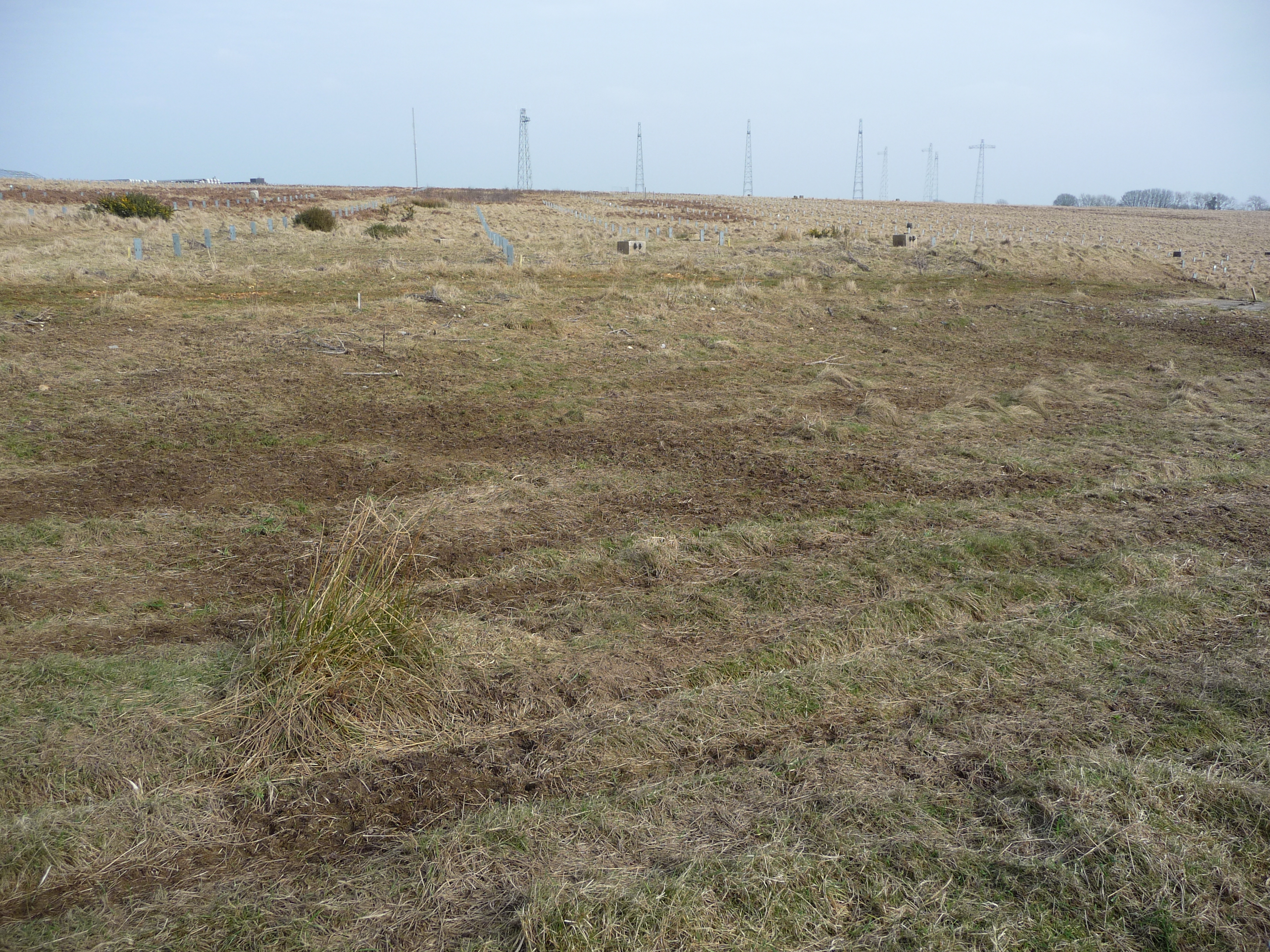
It pays to know who you are dealing with, and this is as much the case at Rampisham Down as anywhere else.
The developers of Rampisham Down are British Solar Renewables, as I have mentioned before. BSR’s directors include Angus MacDonald, a farmer and business man whose father was a prominent Tory party fundraiser and politician Ian MacDonald. A recent addition to BSR’s board is Rupert Cotterell, who was in the Bullingdon Club at Oxford University with George Osborne. Giles Frampton is also a director of BSR.
Although these are the directors, the company is, according to Companies House data, owned by another company, Sustainable Power Generation Limited. This is owned by Angus MacDonald and his sister. This company has taken out a big loan (around £13m) from another company called RRAM Limited. RRAM has share capital of nearly £45M, just under half of which is owned by the MacDonalds; plus two financiers, and just under a quarter of its equity is owned by Lombard International Assurance. LIA are a “wealth management” company based in Luxembourg, and have recently been bought by Global Investment Company Blackstone.
BSR also raised £40M by selling a bond to a Pension Fund investment company The Pension Insurance Corporation. Or rather another MacDonald company, Solar Power Generation Limited, raised this funding. It’s not clear to me how it relates to the above Sustainable Power Generation Limited.
I know very little about how these things work, but it does seem to me that BSR has quite a complex company structure. Each solar farm they develop is set up as a separate company. This may make good business sense, making it easier for BSR to sell off farms they have developed. Indeed this is exactly what BSR did last year selling off three solar farms for £74M.
Another company which seems to be very involved with Rampisham, and BSR’s business more generally, is Community Heat and Power. CHandP have a lot to say about Rampisham – most of the “comments” on their website are about Rampisham. It was their website which made the silly claim that Natural England’s photos of the flower-filled lowland acid grassland couldn’t have been taken at Rampisham “because it looks nothing like this”. And it was they who chided me for criticising Professor Ghillean Prance’s views that the SSSI quality lowland acid grassland at Rampisham Down was “very degraded” and supporting no botanical species of concern”. Professor Prance is being paid by CHandP to advise on the Rampisham “monitoring experiment”.
Now CHandP have proudly announced that BSR have commissioned them to work on a big new project, which will culminate in ecological management plans being produced for 30 of BSR’s solar parks. It doesn’t mention whether Rampisham is included in the 30 or not. Indeed the whole piece doesn’t mention Rampisham once.
Buglife has signed up to help develop the technical guidance for invertebrates and Buglife think that this project “will set the Gold Standard for conservation in and around Solar installations”. Or does it? I queried Buglife’s role in this with Buglife and they stated that they were a “consultant” to CHandP. Now I know enough about charities to know that charities cannot do consultancy; they have to set up trading arms, often known as consultancies, to do any profit-generating work. I understand that Buglife has recently established such a trading arm called Buglife Ecological Consultancy Services. So I can only assume that CHandP have mistaken Buglife the charity with Buglife Ecological Consultancy Servces, the business. Buglife objected to the Rampisham Down Solar Farm proposal.
But who are CHandP? CHandP is a little over a year old. CHandP state on their website that they
“provides industry expertise, project management, advice and investment to help local communities maximise the benefits of renewable energy schemes.”
According to Companies House, CHand P has one Director, Hannah Lovegrove. Hannah Lovegrove is British Solar Renewables’ Director Giles Frampton’s partner. Lovegrove is also director of 10 of BSR’s Solar Park companies and several other related companies within the BSR company group. CHandP is owned by Communities Utilities Limited, whose current directors are Lovegrove and Julian Brooks. A previous CHandP Director was Neil Lawson. Lawson is head of renewable heat at Ardenham Energy, which was bought by British Solar Renewables in 2013.
Community Utilities Limited was registered at a Dorset Solicitors on 27th March 2014. The preceding and proceeding companies registered with this solicitors were:
Project Blue Sky Limited (2nd May): Directors initially Hannah Lovegrove, followed by Angus MacDonald
and
Skyfall Energy Limited (17th March): director Hannah Lovegrove, with six Solar Farm Companies as subsidiaries. These include BSR’s Coombe Bissett pv Park, another controversial proposal which has just got its planning permission.
The evidence I have been able to find so far, shows close links between Community Heat and Power and the “British Solar Renewables” group of companies. When Community Utilities Limited (CHandP’s parent company) submit their annual return to Companies House in May we will hopefully find out who owns them.
Photo: (c) Miles King
I find myself in the strange position of sharing an intimate and life-changing experience with Nigel Farage. We have both lost a testicle to cancer. However, this is where our shared experience ends.
His tumour was not recognised and he was misdiagnosed, it appears, several times, before a private doctor identified the condition correctly. In his autobiography, he deliberately mentioned that it was an “Indian Doctor” who was responsible for one of the mis-diagnoses. As if being “Indian” automatically meant that you were less capable of doing your job effectively.
He used the experience to criticise the NHS, as if the failings of doctors within the NHS were somehow caused by the NHS itself, instead of being their own individual failings. He was 21 when this happened, he is only 4 months older than me, so this happened just around 30 years ago, in 1985. I developed my cancer in 1998.
I think a lot changed between those dates, in terms of the awareness of Testicular Cancer among GPs. By the time mine appeared, my doctor was able to refer me to a consultant immediately following me turning up to see her, and I was operated on the following day after seeing the consultant.
Since then the prevalance of Testicular Cancer has continued to increase and it’s now the most common cancer in young men. It’s treatable, as long as it is caught early enough. I was lucky in that I didn’t feel embarrassed about going to see my GP fairly quickly when I realised something was wrong.
After the op I then had chemotherapy as part of a clinical trial which lasted ten years. During that time I made regular visits to see my consultant who was one of the leading experts in Testicular Cancer in the country. So I felt extremely well looked after.
I had a very positive experience of the NHS during that time, although since then with other family members I have seen different sides to our Health Service.
Some say having Cancer changes you life. I would say I had a minor brush with Cancer, especially now having lost my dad and brother to terminal forms. One thing that having Cancer did for me was it led me to immediately give up smoking. It was just an obvious thing to do, I didn’t really think about it. So now when I see Nigel Farage with a fag in his hand – and he seems to use it as some sort of totem, a way of saying “I’m one of you” to his followers – I think, what an idiot. You’ve survived one cancer scare, why invite it back?

Amid all the flummery of Clarkson’s cold cuts, Shapps’ second job, and Champion’s poppy wreath claim, there was a youGov poll, which showed Labour and the Tories neck and neck in the race to the General Election. No news there then.
The pollsters also like to ask the public about other matters, and in this budget week they asked if public spending should be cut or increased: 44% said if any money was available to spend it should be spent on public expenditure, nearly twice as many as those who wanted tax cuts (25%) or spent on cutting the deficit (20%).
The pollsters went on to ask about where future cuts in public spending should fall. Asked to choose three sectors from a list, the polled chose the following:
and a number of other sectors which added up to 16 points. Ignoring the don’t knows, the total was 192. If everyone had chosen three, then the total would have been 300 (less the don’t knows). So clearly not everyone chose 3, the average being just under 2.
There was cross-party support for cutting the overseas aid budget, although welfare benefits cuts were most popular with Tories. UKIP voters were equally enthusiastic about cutting welfare and environment/climate change budgets. Labour voters preferred to cut environment and climate change funding ahead of welfare. LibDems preferred to cut Welfare and Defence spending before environment/climate change, which tied for fourth place with transport.
Of course this is just a snapshot with 1400 voters and the usual caveats apply. It’s also to my mind unhelpful to lump the environment in with climate change, particularly as it is such a polarising policy area. A bit of context might have been useful. The Welfare budget is £120Bn, Overseas Aid is £11Bn. Defra’s budget is £2.2Bn while DECC spent £7.6Bn last year, most (over £5Bn) of which appears to have been spent decommissioning nuclear reactors. The NHS spends £100Bn a year and Schools £54Bn.
Given the relatively tiny amounts spent on the environment and climate change, it’s all the more extraordinary that these areas should be picked out by the public for further cuts – especially as Defra was the hardest hit Government department in this Parliament, taking a hit of over 30% in its funding.
It’s difficult to draw any other conclusion from these results, that, apart from the 9% who would protect spending on the environment and climate change above all else, the remainder of the public are either neutral, or have active animosity against spending on the environment/climate change. It may well be that the environment as a concept does not really have much meaning to the public, because it is so all encompassing; and if climate change is becoming a toxic issue for many (and there’s an interesting take on that by Mark Lynas here ) then “the environment” will be tainted by association.
What is clear though is that without the support of the general public, politicians of all flavours will not take these things seriously. And the environment movement has to take responsibility for the fact that, after 40 years of work, and regardless of millions of people belonging to and supporting environmental organisations, we have failed to persuade the general public that “the environment” is an important part of Government policy and spending.
photo: Poppy wreath By Caroline Ford (Own work) [GFDL (http://www.gnu.org/copyleft/fdl.html), CC-BY-SA-3.0 (http://creativecommons.org/licenses/by-sa/3.0/) or CC BY-SA 2.5-2.0-1.0 (http://creativecommons.org/licenses/by-sa/2.5-2.0-1.0)%5D, via Wikimedia Commons

UKIP Farm Spokesman and Egg Farmer Stuart Agnew
UKIP’s agriculture spokesman (John) Stuart Agnew may know nothing about chemistry, but he knows how to raise chickens. Agnew has a farm in Norfolk, where he has a 35000-chicken free range egg farm. Agnew also receives EU farm subsidies on his Norfolk acres, both Single Payment and Entry Level Scheme.
Agnew’s Fincham Farm (or is it Paxfield Farm?) received around €100,000 of single payment in 2007, that equates to a sizeable 500ha farm – rather more than the 400 acres suggested in the Harrogate Informer. Agnew also receives ELS on 175ha which adds up to around £5250 a year. Mr Agnew is former chairman of Norfolk NFU.
Agnew is also grandson of Sir John Stuart Agnew, 3rd Baronet Agnew. Cousins in the direct line of ascendance own the Rougham Estate in Suffolk. Agnew’s cousins appear to be considerably more enlightened than him.
Although Agnew clearly feels that the EU has been a disaster for Britain, he has done remarkably well out of it personally. But if UKIP win, he will be alright, because, as UKIP farm spokesman, he has already committed UKIP to carry on subsidising farmers (for doing nothing other than owning land), up to around £120,000 a year. That’s handy. UKIP would also remove livestock (eg Chicken) units from Integrated Pollution Prevention Control (IPPC) regulations. Handy too.
Mr Agnew is pro-GM and uses GM-feed for his chickens. He thinks introducing GM-sugar beet means “wild beet will be history“. This is the first time I’ve heard any politician advocate exterminating a wild native plant from Britain. But then this is Norfolk, where growing Sugar Beet is very big business.
Agnew has done well enough from his farm subsidies to be able to afford to fly business class to India to have a hip operation done privately out there, because the NHS had a “laid back attitude towards arthritis.” I’m glad our taxpayers money subsidising farmers like Agnew has been spent so well, but I’m not sure how well this fits in with UKIP’s policy on the NHS hiring doctors “who don’t speak very good English“.
Agnew will be much less happy about what’s happening on his neighbour’s land. His neighbour used to be the RAF at RAF West Raynham. The RAF closed the airfield and it was sold off years ago. It’s now fallen into the hands of the dreaded Solar Farmers. Good Energy has won planning permission to build one of the largest Solar Farms in Britain – a massive 49 MW array, all over the land neighbouring Mr Agnew’s farm, where his chickens lay their eggs.
Imagine someone who is so incensed at the idea of action against climate change that they think it will stop plants growing, waking up every morning and being greeted with the sight of hundreds of acres of shining solar panels; silently, malevolently, mercilessly sucking precious life-giving gases out of the atmosphere.

There’s an interesting piece on Farmers Weekly online today about rents landowners can expect to receive from Solar Farm developers. Despite the changes in the subsidy regime, the article suggests landowners can still look for £1000 an acre per annum for solar rental. If they can then persuade Defra that they are still actively farming the land, they can receive another £80 an acre of CAP subsidy on top. Though that looks pretty paltry compared to what they are getting for solar.
Another interesting point made in the article is that the national grid is now at capacity – there is so much electricity flowing into the national grid on a sunny day that it cannot cope with it all. One wonders what happens to the excess (cue UKIP concern about surplus solar electricity leaking out into the countryside, killing farm animals). The key appears to be whether a solar farm is “grid-permissioned” or not. If it’s not, then it won’t be able to feed electricity into the grid, which makes it pretty redundant.
At the proposed Rampisham Down site, there was a high voltage connection to power the previous Radio Transmitting Station on the site, so it is obviously well-connected to the national grid. I don’t know whether Rampisham qualifies as a “grid-permissioned site” or not though – any ideas?
The last point from the article is that Solar Farm developers are now looking to scale up to a point where the farms operate at a profit without subsidy, and the break point is thought to be above 20MW. Rampisham is currently proposed to be 24MW, though would be larger still if British Solar Renewables go ahead with their planned additional solar farm north of the A356.
UKIP Agriculture Spokesman Stuart Agnew made this statement/asked this question in the European Parliament yesterday, of Socialist Group leader Gianni Pitella
Mr Pitella are you aware that if you succeed in decarbonising europe our crops will have no natural gas to grow from. We have to have carbon dioxide. This is madness, absolute madness what you are suggesting and our industry, our Agricultural industry is going to suffer heavily if we attempt to bury carbon dioxide in the ground. It is absolutely mad.
Amazingly some people clapped. And even more amazingly UKIP have proudly put the video of this on their website. (UPDATE: sadly UKIP removed the video from their website – but fortunately it’s still available here)
There is a strong contingent of the tin-foil hat brigade within UKIP and it now seems clear that Stuart Agnew is a member, alongside Environment spokesman Professor Doctor Andrew Charalambous aka Dr Earth, who is equally concerned about contamination of his precious bodily fluids.
Agnew’s revelation follows hot on the heels of a UKIP prospective parliamentarian asking
what happens when the renewable energy runs out?
original story via ThomasPride
Here’s an excellent post from another Miles, Dr Miles Richardson, ecopsychologist at the Unversity of Derby, on the links between nature, health and wellbeing.
Last week I was at ‘Towards a Daily Dose of Nature’, part of the Nature & Wellbeing Summit in Bristol. One of the ideas presented on the day was comparing nature to a drug. This inspired me to produce a drug packet design for Nature, a useful exercise as it forced me to sum up the evidence of the health benefits. Looking at the benefits for health, and the numerous ‘side effects’ for wellbeing, I think it’d fly off the shelves. Of course, nature is out there, and it’s free – so why isn’t it part of our everyday healthcare?
 Copyright Miles Richardson 2015
Existing models of healthcare essentially view people as separate from the environment and affected by events. The biomedical model is basically about deviation from normal, and treating those deviations, often with drugs. However, the NHS is now spending £100 billion on cures and a very…
View original post 183 more words
I am in two minds whether to buy Tony Juniper’s new book, What nature does for Britain. On the one hand I think it will be well written and entertaining with lots of good examples of positive action for nature. On the other I will struggle to get past the fundamentals, that we need to place an economic value on nature, in order to “save” it.
The development of Natural Capitalism is making me feel increasingly uncomfortable, the more so when I hear so many stating that we have no choice, we must adopt the language of economists (especially free-market economists) in order to be able to persuade those economists, or Treasury civil servants, or politicians, or whoever, that nature is important.
I am still struggling to put a rationale together to justify (post hoc) what is a visceral feeling. But here are couple of things I have come across, which I wanted to share. The first is from Classical Economics: Gresham’s Law. Gresham Law states that bad money will push good money out of circulation. It’s similar to the “race to the bottom”, whereby without regulation, cheap unsafe products will drive out more expensive, better products that are safe and have been produced under better conditions for workers, society and the environment.
Gresham’s Law applies specifically to the amount of precious metal in coinage; without regulation (coins with less eg Silver in them than they should have (bad coins), eventually completely replace the coins with the right amount of Silver in them, because it is more profitable to keep the “good” coins, melt them down and sell the Silver.
Can this law be applied to the notion of natural capital? Well, radical thinker Gregory Bateson sought to apply it to the evolution of ideas, arguing that simplistic ideas would drive out sophisticated ones. I would suggest that the risk with Natural Capital approaches is that delivery of ecosystem services will be achieved by the lowest necessary value ecosystem. While an ancient woodland might be a very good carbon store, a newly planted conifer plantation stores more carbon more quickly, and so will outcompete the ancient woodland for carbon credits, or whatever monetary system is being used. The non-use value of the ancient woodland (its history, its meaning, its beauty) will be undervalued.
The second thing is the Tainted Altruism Effect. This is best examplifed by the story of Daniel Pallotta who was reviled for raising $300M AIDS research. Reviled because he was paid $400,000 a year. Our psychology seems to treat people like Pallotta who appear to be acting altruistically, while actually creating significant benefit for themselves, as immoral, even though he raised massive amounts of money for an altruistic cause.
People support the conservation of nature because they believe nature is essential to our lives, for all sorts of reasons. I believe, generally, people do not value nature from an economic perspective, in their everyday lives. Who hears a Robin sing and thinks either a) that is worth a lot of money or b) it’s important that we place an economic value on that Robin so we can help prevent it from being killed/displaced. No, people value it for a wide variety of reasons, but not economically.
The Tainted Altruism Effect suggests that the introduction of economic value into a system which depends far more on aesthetic, spiritual or cultural values, taints those values and diminishes them. Using arguments about the economic (monetary) value of nature may actually put people off supporting action for nature, because they feel that action is tainted by the idea that someone is going to make a profit from it; and nature is not something that should be considered as just another asset class.
Now of course people make profit from nature all the time – arguably all profit is derived from nature. But the difference between a farmer deriving profit from nature by producing a crop, even if that crop is damaging to nature, and a charity encouraging profit to be derived from nature, in the name of conservation, is the Tainted Altruism Effect.
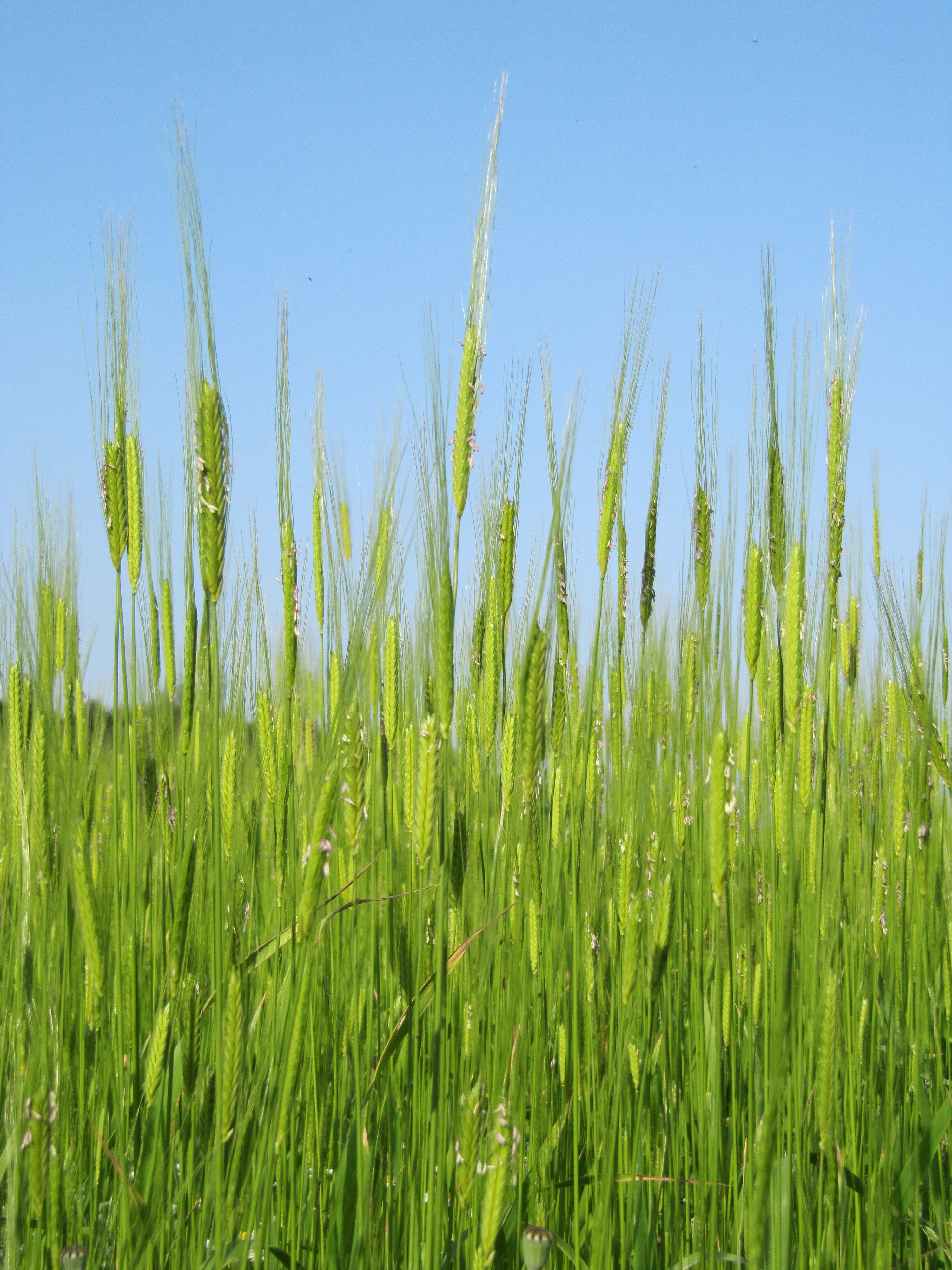
Einkorn – the first wheat
Some of you may know that I co-authored a book called “Arable Plants – a field guide” about 12 years ago (still available from all good internet book outlets, and possibly some bookshops too: no, I don’t get a commission!).
My co-author Phil Wilson, is a real arable weed expert and wrote the technical accounts. I wrote the history and conservation sections. The story of Agriculture in Britain, we were led to believe, started about 6000 years ago, when people from continental Europe arrived, bringing seeds of ancient Wheat (known as Einkorn) and Barley, along with the weeds that grew alongside these crops, all which are native plants of the Near East. Sheep and domesticated Cattle arrived then too. The “native” British people were hunters, but mostly gatherers. They eat an awful lot of hazel nuts, and used fire to create hunting chases and glades within which they could corner and kill animals. With the arrival of the Neolithic crops and domesticated animals, the inexorable shift from gathering and hunting, to farming, started. It’s still up for debate to what extent it was an “invasion” and Neolithic people replaced the Mesolithic peoples they encountered, or whether it was a cultural shift, with more or less the same people changing the way they lived.
That was the story, until now. Underwater archaeologists have been studying Mesolithic camp sites which have lain relatively untouched under the sea; and at one particular site at Boulnder Cliff off the Isle of Wight, they have found something really extraordinary. They have found the unmistakeable signature of near Eastern ancient Wheat, in a DNA sample, from around 8000 years ago. This is 500 years before Neolithic farming started in North-West Europe.
The campsite yielded DNA from Oak, Poplar, Crab Apple and Beech DNA plus grasses and flowers, suggesting a mainly forested landscape. Remember this is land that is now 12m under the sea. 8000 years ago Bouldner was a wet wooded landscape on a tributary of the Solent River, many miles from the sea. The Solent river headed east and south to join a great river, which became an estuary, south of the Isle of Wight. This was the English Channel. Britain became separated from the Continent around the same time, possibly as a result of a Mega Tsunami. And 700 years later Bouldner disappeared under water. The archaeologists at Bouldner have found evidence of log-boats from that time.
How would ancient wheat have moved from the Near East to Bouldner? Given that the first evidence for Neolithic crops in North West Europe only appears 500 years later, it seems more likely to me that the movement was coastal, rather than by land, using small boats to navigate along the coastline of the Mediterranean and Atlantic.
It is possible that Mesolithic people were growing Wheat at the time but the evidence of this was lost to the flood which created Britain as an island – of course that’s pure speculation. Whether or not the wheat was “traded” between Neolithic and Mesolithic peoples is also speculation. What is not in doubt is that the evidence is building for a sophisticated Mesolithic culture in Britain, and not small bands of hunter gatherers eking out an existence in the wildwood.
Photo by Alupus (Own work) [GFDL (http://www.gnu.org/copyleft/fdl.html) or CC BY-SA 3.0 (http://creativecommons.org/licenses/by-sa/3.0)%5D, via Wikimedia Commons
 | navasolanature on Poundbury Nature for Wellbeing… |
 | Alex Tylor on ‘Look but don’t pick’ – Wild M… |
 | AllRoundNature on Will Prime Minister Truss aban… |
 | Peter Lancashire on The true story of David Camero… |

 a new nature blog