Some initial thoughts on what may happen to Nature under the new Government.

future fields?

future fields?


After the shock that arrived about 130 yesterday morning when it became clear that the exit poll was right and all the polls had been wrong (or rather had not picked up that the undecideds would vote Tory), I started to wonder what impact a Tory Government with a weak majority might have on Nature over the next Five years.

This is really just a few first thoughts, so please don’t hold my feet to the fire if I get it wrong. I may be overplaying the influence of the hard right in the forthcoming Government, but I do see them in a much stronger position to demand concessions in return for being well behaved this time round (they were not in the last Parliament but it didnt matter so much as the Coalition had a proper working majority.)

  • Abolition of DECC, replaced by Department of Energy.
  • Abolition of DCMS, dismembered parts go to various departments, including BIS.
  • Abolition of Defra, merger with DCMS, BIS and/or the Department of Energy.
  • Badger cull rolled out to 25 areas, reducing badger populations by 70% in those areas.
  • A free vote on repealing the hunting Act, but with a small majority it won’t get through.
  • Natural England either merged with EA and/or required to consider “economic growth” when making all decisions on eg new SSSI notifications.
  • Moves to support the EU in weakening the Nature Directives (Birds and Habitats).
  • Further weakening of implementation of other EU Directives such as EIA, SEA, under Red Tape Challenge 2.
  • Abandonment of Biodiversity 2020, introduction of new 25 year Natural Capital plan.
  • A large scale sell off of Public Land. This will include areas which are either already recognised as being highly valuable for nature, or not.
  • Pressure from landowners will prevent further reintroductions of large mammals (Lynx) or the expansion of existing populations of Beaver.
  • Wild Boar may be re-eradicated.
  • Further relaxation of the planning laws, making it easier to build on greenfield sites as well as brownfields – a possible reform of the Green Belt.
  • Introduction of Biodiversity Offsetting and incorporation into the NPPF.
  • Introduction of trading in biodiversity credits.
  • Introduction of GMO crops.
  • Repeal on ban of Neonics.
  • Very relaxed implementation of Cross Compliance (or at least as relaxed as possible within EU rules.)
  • Very onerous implementation of standards for Agri-Environment Scheme entrants.
  • Negotiating position to abolish the CAP in 2022.
  • Abandonment of Terrestrial Wind Farm and Solar Farm subsidies.
  • Fracking introduced to Britain.
  • Possible repeal of the Climate Change Act.
  • Payments introduced for landowners to store floodwater on their land.
  • All Schools will become Academies, total loss of Education function within Local Authorities.
  • Further heavy cuts to Local Authorities  – ecological functions (including planning) will be outsourced or shared between authorities.
  • Management/ownership of Parks and other open spaces will be divested to local community groups.
  • A PPG17 type review to identify “surplus” land will see much more sold off to cover loss of central government income. Total sale of remaining County Farm estates.
  • Charities are further prevented from lobbying and “political activity” is redefined to make it much harder for Charities to speak out on work to change policy.
  • The London Garden Bridge, but eco-activists secretly sow Japanese knotweed into the concrete structure while it being built, turning it into an impenetrable knotweed jungle. It is subsequently destroyed.

If this sounds rather depressing, I’m sorry and I may be painting an overly dark picture. How many of these things will actually happen depends on how society views nature and how much nature is valued. A small Government majority means that people like Zac Goldsmith; and others who are sympathetic to nature, become really key figures within the Tory ranks.


Posted in 2015 election, Uncategorized | Tagged , | 17 Comments

The Dog Poo Bag Deposit Mystery

Dog Poo Bag Deposit

Dog Poo Bag Deposit

There’s a house on the corner of our road which doesn’t seem to be occupied, or at least only occasionally. The hedges grow out over the pavement and there’s an old hawthorn – much of which is dead, which is gradually dropping large lumps of deadwood. So far no-one has been brained. I worry that one day the whole thing will come down onto someone’s car.

The house is near the top of the hill and exposed to the south-west wind which can rip through, and quite often a fence panel gets punched out by the wind. The owners haven’t been by for a while and the fence panel has blown into the garden, leaving a laurel hedge exposed to the pavement, as the photo shows.

A local dog-walker walks past this spot. Having picked up their dog’s poo and bagged it (in what look like biodegradeable bags), they consciously drop it through the hole in the fence, into the garden beyond, under the Laurel bush. They don’t do it every day, just some days.

There are five poo bags there now, plus one which is on the pavement nearby.

I am trying to put myself in the place of the dog-walker, trying to work out what thought process would lead me to pick up my dog’s poo, bag it, tie a knot in the bag, carry it a certain distance, spot a hole in someone’s fence, drop the bag through the hole, then do it again, and again.

In some ways the person should be congratulated for having not just left their dog’s poo on the pavement, or in the local park at Maumbury Rings – as others do. But on the other hand, it seems extraordinary to deliberately drop it into someone’s garden.

Do they have some long-standing family vendetta with the owners of the house? Or are they making a critical (excremental) statement  about the lack of fence maintenance undertaken by the owners? Or are they suffering from some sort of mental health disorder where they feel compelled to create a collection of dog poo bags in that particular spot for some unknown reason.

It’s a mystery which has compelled me to write about it and share it with you. Is there some metaphor to be drawn about personal and civic responsibility and society?

Yes there probably is, but I will leave you to draw that for yourself.

Posted in dog poo, Uncategorized | Tagged , | 12 Comments

The Uninspiring Election

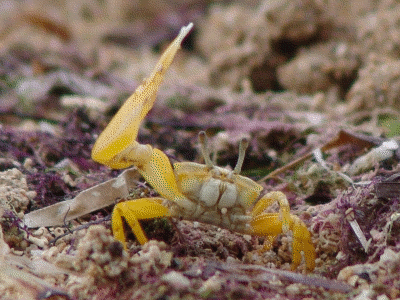
Fiddler Crab waving

Fiddler Crab waving


It’s a while since I have written anything on here. To be honest I have been feeling uninspired – and this may in large part be down to this extraordinarily tedious election campaign which seems to have been going on forever.

Of course it’s disappointing for nature and the environment to have been completely excluded from the political debate – and I’m not alone in thinking that. A poll from YouGov showed Education and the Environment were the topics electors wanted to hear more about from the parties. Even the Green Party has had almost nothing to say about nature. And plenty of commentators and politicians are happy to conflate action on climate change with environmental action, let alone any concern for nature. Why should I be surprised? Nature and the environment are not issues high up on any politician’s priority list, and they will say “the electorate is concerned about the economy, or the NHS or Europe, so we have to say what we will do” blah blah. As if we only want politicians to hold up mirrors to ourselves, rather than provide leadership.

The election appears to be being played amongst the politicians and the media, without any reference to the electorate – and that means that there have been very few genuine policy debates, just a lot of posturing and positioning.

There’s a very good reason for this. As the polls have consistently shown, another hung parliament has been guaranteed for months, so we have been subject to the unedifying performance of the parties appearing to talk to their electors, but in reality signalling like fiddler crabs on a beach, to each other, as to what they would be prepared to do (or not do) to work together.  Because of our now thoroughly anachronistic first past the post voting system, the battle has focussed down on a few key marginals, and just a hundred thousand voters will determine the outcome for the other 65 million inhabitants, so all the resources of the parties are concentrated on these pressure points.

It is no real surprise that, apart from in Scotland where PR and the close fought referendum has energised politics, the electorate feels disenfranchised and angry or apathetic; and this in part will lead to a large “protest vote” for UKIP on the right and the Greens on the left, but also could see the lowest turnout in modern election history. Whoever ends up in Government may struggle to persuade the country they have a mandate, though whether they will care about that seems questionable.

Who will I vote for? West Dorset isn’t a real marginal and the campaigning has been very sub fusc. Our MP is Oliver Letwin and he has slowly increased his majority over the past few elections  – in 97 it was a very slim 840, in 2010 it was just under 4000. I don’t think it will surprise anyone that I won’t be voting for him, even though he is evidently quite a good constituency MP. The Labour candidate and the Green have both said they support the Rampisham solar farm development, which will make it difficult for me to give either of them my vote, even though I usually vote Green.

That leaves the Lib Dem Ros Kaye who has changed her mind and now objects to the Rampisham development, which is good news. And the Lib Dems are the only party who could unseat Letwin. But then they have been complicit in so many awful policy decisions as part of the last coalition Government – could I really hold my nose, ignore that, and vote on local issues close to my heart? To be honest I am still undecided and I am not alone. Apparently 40% of the electorate have not made up their mind yet.

How will you vote? Will you bother, and what sort of a Government would you like to see at the end?


Photo by Mnolf (Photo taken on Taveuni, Fiji) [GFDL (http://www.gnu.org/copyleft/fdl.html), CC-BY-SA-3.0 (http://creativecommons.org/licenses/by-sa/3.0/) or CC BY-SA 2.0 (http://creativecommons.org/licenses/by-sa/2.0)%5D, via Wikimedia Commons

Posted in 2015 election, Nature | Tagged , , | 16 Comments

An outbreak of nonaerophobia among UKIP spokesmen

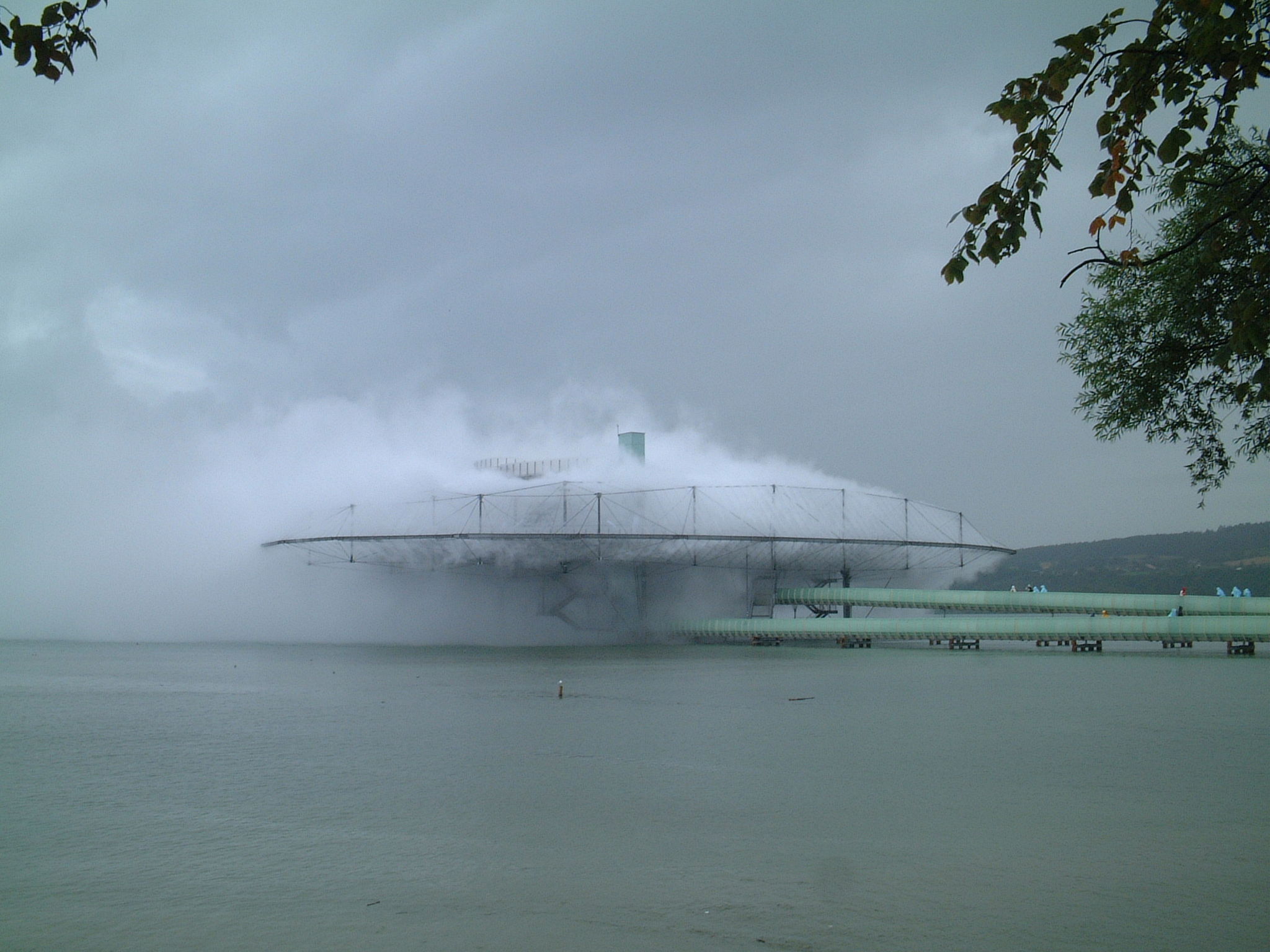
20020717_Expo_Yverdon_21

gas-extracting machines have been smuggled into Britain by evil foreign master criminals


What is it about UKIP Spokesmen and their fear of gases disappearing?

First there was farm spokesman and chicken farmer Stuart Agnew, telling the European Parliament of his desperate worries that the EU’s action on climate change will lead to all the Carbon Dioxide being sucked out of the air, preventing plants from growing.

Now their housing (and Environment) leader Andrew Charalambous invites us, on his fascinating blog, to ask “when our countryside and forests are radically diminished where will we get our oxygen to breathe from?”. A question indeed.

I wonder if this is a subtle new election tactic, to ignite the electorate’s own smouldering fears of the loss of gases – a latent nonaerophobia just waiting to break forth into mass hysteria, resulting in a late swing to UKIP in the polls – it will go down in political history as “The Great Gas Swing”.

Will we hear climate change and energy spokesman Roger Helmer decry moves towards a Hydrogen Economy, as he reveals his fears that all the hydrogen will float away into space, before it can be used? Perhaps someone could attach some large hydrogen filled balloons to Mr Helmer, to see whether it does.

Could we even see the Great Leader Nigel Farage raising the prospect (in a very high voice) of Helium disappearing from the planet?

No-one in UKIP has directly stated who they believe is responsible for these gases disappearing, but one can make some educated guesses. It must be migrants, coming here, breathing in too deeply (and holding their breath).

Or worse, evil foreign super criminals must have secret gas-extracting machines they have smuggled into the country and are at this moment, quietly pumping all our gases away. I can feel my throat tightening as I struggle for breath…..


The Blur Building. Photo by Norbert Aepli, Switzerland [CC BY 2.5 (http://creativecommons.org/licenses/by/2.5)%5D, via Wikimedia Commons

Posted in UKIP | Tagged , | 5 Comments

Rampisham Down Factsheet #8: Politics and Politicians

P1040003

As the election draws closer, I thought it would be worth looking at the politics and politicians of Rampisham Down and who supports the development of a Solar Farm on one of Britain’s most important nature sites. There are some surprises, but you’ll have to read to the end to find out.

While Westminster Politics may seem a long way away and one small vote in West Dorset has very little influence, the same is not true of local councils. Here, a Councillor can regularly be elected with a majority of a hundred or less, so every vote really does count.

District Council Elections

All West Dorset District Councillors are up for election this year, including members of the planning committee, so you can vote for who you want to represent you, both as Councillors, and as members of the Planning Committee, who make decisions like the Rampisham Down decision. Of course we don’t know who will end up on the Planning Committee after May, as some Councillors who get re-elected might not want to join that particular committee.

We know one planning committee member will not be there after May – Tony Frost, the only independent Councillor on the planning committee, was elected unopposed ie appointed in 2011. His ward has now been abolished and as far as I can see he is not standing anywhere else. Regular readers will recall it was  Frost who wittily remarked, at the planning committee meeting, that Rampisham was a brownfield site, on account of the brown vegetation there. It was a Tumbleweed moment.

There were eight Tory Councillors on the planning committee:

Chair of the committee was Ian Gardner, voted in by Chickerell Ward (a 3 councillor ward). Ex-MoD, he started his political life as a Tory Councillor, but was then voted in as a Libdem councillor in 1997, before moving back to the Tories. Chickerell returned 3 Tories, his majority was 341. Gardner claimed he had abstained from the Rampisham vote, but I was there and he didn’t.

John Russell was voted in for the Burton Bradstock ward (covering Burton Bradstock, Chilcombe, Puncknowle, Shipton Gorge and Swyre). He’s a retired chartered surveyor, and won with a majority of 208 over the LibDems.

Tom Bartlett represents Chesil Bank (covering Abbotsbury, Fleet, Kingston Russell, Langton Herring, Littlebredy, Litton Cheney, Long Bredy, Portesham). He is a farmer and beat the Libdems by 115 votes.

Dominic Elliott is one of two councillors representing Sherborne East, and he has retired from the RAF and has declared that he is a Freemason. His majority was 242 over the LibDems.

Margaret Lawrence represents Yetminster ward. (covering Chetnole, Ryme Intrinseca, Stockwood and Yetminster) She lives at Trill Farm Thornford, so I assume she is a farmer. She had a majority of 141 over the Libdem.

Frances Kathleen McKenzie is one of three Councillors representing Bridport South and Bothenhampton ward. She also had been a LibDem Councillor for many years but left them in 2011 complaining “they no longer appears to stand for Social Justice or caring about the underdog“. Presumably that’s why she joined the Tories, the party well known for caring about those things.

Jacquie Sewell represents Broadwindsor ward (covering Broadwindsor, Burstock, Pilsdon, Seaborough and Stoke Abbott). She has a furniture shop, is involved with Beaminster & villages local area partnership and Broadwindsor and district community enterprise limited. She beat the LibDem by 369 votes. At the planning committee Sewell was particularly enthusiastic about the Solar Farm and dismissive of the nature value at Rampisham. She said that 25 years of Solar Farm was a “good use” of the site and “what harm” would be caused?

George Symonds is one of two Councillors for Lyme Regis ward. He’s an amusment arcade owner in Lyme Regis and member of the  Showman’s Guild. His majority was just 76.

The LibDems had three Councillors on the planning committee.

Stella Jones is one of two Dorchester East ward councillors and she’s the WDDC Lib Dem leader. She is a retired teacher and her husband is also a County Councillor. Jones stated at the planning committee that she is “a great supporter of renewable energy” and said that because “45% of the site will be left where we will have this unique acid grassland” this would create “significant environmental benefits”.

The idea of creating significant environmental benefits by destroying over half of a nationally important nature baffles me, but then I’m no politician.

The LibDems walked into the Councillor seats in Dorchester East in 2011, Jones won by 1046 to 478 votes.

Robin Potter is one of the two Dorchester South ward councillors. He is a school governor and a retired teacher. He had a 437 majority in 2011.

Potter joined a West Dorset Local Plan working group on Renewable Energy, as did Tory Councillor Jacquie Sewell. One of the issues this working group explored was this:

There is a conflict between the delivery of renewable energy and the protection of environmental assets, such as areas of ecological importance and areas designated on the basis of their landscape beauty.

The working group concluded that the Local Plan should “not mention which environmental assets should be protected. The group feels that current planning restrictions on renewable energy schemes are too severe, preventing the delivery of renewable energy within West Dorset and Weymouth, and that policy on other issues will be sufficient in protecting the environment.

However they came up with a solution: “the renewable energy policy should aim to protect the Dorset Area of Outstanding Natural Beauty (AONB). Renewable energy can be delivered without compromising the landscape qualities of the Dorset AONB by encouraging the development of small community energy schemes and installing solar panels on large scale agricultural buildings, where the landscape impacts are likely to be less severe.

Two members of the planning committee clearly stated their enthusiasm for solar energy, but not in the AONB. And then both voted in favour of a large industrial solar development in the AONB. Perhaps more worryingly neither mentioned their involvement in the development of this policy when they were asked to declare any conflicts of interest at the Planning Committee.


Robin Legg represents Bradford Abbas ward. (covering Beer Hackett, Bradford Abbas, Clifton Maybank and Thornford). Legg is also South Somerset District Council Solicitor, so of all the people on the planning committee he should know about planning law, as it is part of his job. Legg had a majority of 117 over the Tories in 2011.

Legg also took his own Council to appeal  over a development which he was applying for planning permission (to his own planning committee, the decision from which he absented himself). The Council had approved his planning permission but made it a condition that he had to pay a contribution towards affordable housing.  They calculated that contribution based on a draft policy from the Local Plan, because West Dorset have so far not had a Local Plan approved. Legg argued the contribution was excessive and that the draft policy had no legal weight.  The Council were waiting for the Local Plan to be approved, so he appealed on grounds that the council had failed to determine the application in the legal time period. The Planning Inspector upheld his appeal, but criticised Legg for withdrawing his offer to make a voluntary contribution towards affordable housing. The development had met with stiff opposition from the residents of Bradford Abbas.

It’s ironic to say the least that a Councillor was able to avoid making any affordable housing contribution from his own development, because the policies that should have been in place to require that contribution were not active. And the reason they were not active is because the Council had been delayed in getting its Local Plan in place. Of course I’m not suggesting that Legg played any part in delaying the Local Plan, but he undoubtedly benefitted from it.


The other Councillor who played such a key role in the Rampisham decision is Councillor Jill Haynes, who represents Maiden Newton ward.  She has taken it upon herself, to be the local champion for the solar farm development. Haynes works as a field studies tutor at a local Field Studies centre. I assume she doesn’t teach anything about nature. Yet Haynes claimed expertise on the nature at Rampisham when she spoke at the planning committee: she argued that because a tiny area of the site had been fertilised, it meant the nature value of the entire site had been removed: “even if the species are there, they are not particularly of national importance“. She stated that for the acid grassland community U4 Rampisham was a “transitional site” (she did not explain from what it transited or to where it was transiting) and dismissed Rampisham as a “man-made landscape“. History is not her strong point either, since all of Britain’s landscapes are “man-made”.

Haynes, who sits on Toller Porcorum Parish Council, specifically asked that the decision at Rampisham should be made by the planning committee and not by the Planning Officers. Had it been left to the Officers, I am sure it would not have been approved. Haynes is a District and County Councillor, with a 316 majority over the LibDems in 2011.

It’s also worth noting that Julian Brooks of British Solar Renewables/Community Heat and Power worked at South Somerset District Council as Rural Regeneration Officer, alongside Robin Legg. Brooks also stood as a LibDem Councillor for Chard Town Council in 2011. Brooks gave oral evidence to the planning committee meeting on Rampisham, where he stated that Rampisham was a “brownfield blot” whereas the 50ha of solar panels would create a “sliver of blue-grey” in the landscape. Brooks presented himself to the planning committee as a member of the public, and not representing the developers, which I found extraordinary and deeply troubling. I took this up with the COuncil but they didn’t seem too bothered. Perhaps it happens all the time.

Brooks and Legg worked with Keith Wheaton-Green, who is South Somerset District Council climate change officer and is also an enthusiastic proponent of Solar at Rampisham. Wheaton-Green is also a renewable energy consultant and is press officer for North Dorset Green Party.He sits on the Dorset Community Sustainable Energy Group alongside Giles Frampton from British Solar Renewables. Wheaton-Green commented on Peter Marren’s Rampisham Blog thus:

Peter’s explanation of the situation is excellent. The solar farm would generate the equivalent in a year to more than one quarter of all West Dorset households so this would be a very significant renewable electricity generating station. The vegetation is a plagio-climax (so not as nature intended) that – as Peter pointed out – does not excite the majority of the population. And in any case it will be largely preserved. I believe the threats of climate change to be so urgent that we need to move to 100% renewables ASAP. The calls from nature conservationists to have this application called in and for local democracy to be thwarted does nature conservation a great diservice.”

General Election

So that’s the local politicans. But what about the General Election? Where do the various candidates stand on Rampisham? I have met Oliver Letwin and  discussed the issue with him, as have many others. As a minister, he was unwilling to give his view on whether Rampisham was the right place to build a solar farm, particularly as we were in the middle of a “quasi-judicial process” (the call-in procedure) being conducted by one of his colleagues at the time. Now he is no longer a minister or an MP, just another candidate for the West Dorset constituency, perhaps he will say what he thinks. He does oppose a local wind farm proposal on landscape grounds, so it would be  hypocritical of him to support an industrial scale solar farm right on top of the AONB. We shall see.

I wondered whether the Green Party would be prepared to help oppose the Rampisham proposals and contacted South West Green MEP Molly Scott Cato. Her Dorset replied in surprisingly ambigous tones, saying it was a local matter for the local party to decide themselves. So I pointed out to her the Green Party’s own policies:

According to their own policies, the Green Party is in favour of “a limited
deployment of solar farms.” (EN 214).

The Green Party’s position on protecting the environment, as you might expect, is strong.

In policy NR303 the objective is “To minimise damage, including the
reduction of genetic and ecological diversity, caused to the natural
environment by extracting or growing natural resources for industrial use.”

And in CY400(c) the policy is to “Legislate to stop further destruction of
wildlife habitats, the soil, the landscape, ancient monuments and our
countryside heritage;”

Policy CY501 is quite strong “The Wildlife and Countryside Act
1981 and related legislation will be consolidated and strengthened to remove
loopholes and weaknesses that allow further destruction of wildlife and
habitats. The Green Party will ensure that wildlife-rich sites are adequately
protected and extend a basic level of habitat protection to the whole
countryside. We will ensure that there are sufficient resources to enforce the
legislation.”

In terms of planning, policy CY542 states “The Green Party will strengthen
planning controls for large-scale or damaging land-use changes in the
countryside, in particular, large-scale farm buildings, new and improvement
works by drainage bodies and water authorities, clearances of woodland, works
affecting woodland and large-scale afforestation.”

From these policies I concluded that The Green Party is much more concerned
about protecting wildlife habitats and species, than about encouraging large
scale ground-mounted Solar Farms.

So imagine my surprise when I asked local Green Party candidate Peter Barton, of his view on Rampisham:

Having weighed up all the evidence I could find, I think it should go ahead.”


Posted in elections, Rampisham Down, renewable energy, Solar Farms | Tagged , , , , | 6 Comments

Pickles gets in a Pickle over voluntary volunteering days

Eric Pickles dreams of ways to deal with pesky journalists #1: The Scimitar

Eric Pickles dreams of ways to deal with pesky journalists #1: The Scimitar

This morning, there was a bit of a light-hearted diversion from the heavy bombardment that is the election campaign, when Eric Pickles announced a proposal, which first surfaced in 2009, to give employees 3 days “statutory” volunteering leave a year. But for once, he was given a bit of a grilling on Radio 4’s Today programme, by Justin Webb. You can listen to the whole piece here from 1:13:45. It’s worth listening just to hear Pickles lose his cool and get rather snippy with Justin Webb’s persistent calm questioning over the details of the proposal. Webb asked who is going to pay for the extra time off, especially in the public sector. Pickles just repeated that people had annual leave, and it was the same. He also suggested that volunteering per se “enhances productivity” and leads to a “more engaged workforce.” Webb asked Pickles how, for example in the NHS, would hospitals cover for nurses who were off doing voluntary work. Pickles really lost it then, explaining that “it will be worked out according to patterns of work.” Those were his words

Under continued pressure from Webb’s questioning, Pickles then said that there was flexibility and that companies would not have to offer this a statutory right after all.

During this farcical interview, Pickles tried lamely to inject the “key messages” that he had been given by Conservative Central Office about how volunteering has gone up under the Coalition Government. First off he tried with “the amount of volunteering over past 5 years has absolutely escalated”, then he tried again, clearly reading from a script as he asked us to celebrate the fact that there are an “extra 3 Million people volunteering now compared with 2009”. Whether this is true or not is moot, but volunteers do a great deal of work for society.

Pickles has been somewhat eviscerated in the media (social and otherwise) for his performance, and rightly so. He announced an old policy, which is unpopular with private and public sector bodies (who will have to find the money to fund it) – and didnt even both to garner any support from the voluntary sector who are supposed to benefit from it (if you discount a random act of support from Bear Grylls); and then he immediately backtracked to a position where the policy can have get-out clauses, rendering it totally meaningless.

I’ve worked in the voluntary sector for most of my career, and I’ve also been a volunteer. I’m just about to retire as chair of a school governing body, of which I’ve been a member for over six years. I know and understand how important volunteers are in society. Volunteers actually make up much of the glue that binds communities and society together, whether it’s governors, or volunteers making tea at a local church, or people who spend their time visiting and caring for the elderly, lonely or unwell. Or indeed volunteers who like nothing better than cutting down some scrub and having a bonfire. It’s something that should be encouraged at all levels of society and yes Government can help. But this Government is utterly conflicted over the voluntary sector.  On the one hand it symbolises a conservative ethic which is to get on and do stuff and not wait for the State to step in and do it. On the other hand, it is a source of criticism for politicians of all persuasions, and especially those that act against the public interest, as the Coalition has done time and again.

The thing that really sticks in my craw with today’s farce is that Pickles, who clearly dislikes much that the voluntary sector does, is exploiting the good work that volunteers do day in day out, for political expedience. This is the man who calls charities “sock puppets” because they dared to criticise Government when in receipt of Government funding. The Sock Puppet remark led to normally restrained charity sector leader Stephen Bubb calling Pickles “squalid”. Pickles is also the man who oversaw the gagging of Charities during election campaigns, via the Transparency of Lobbying Act.

Nothing was done about corporate lobbying of course, because this is the Government of lobbyists, by lobbyists, for lobbyists.

The “big society” was talked up early on in this Parliament, alongside the “greenest government ever”. Today Pickles has tried to revive the lifeless corpse of the Big Society, but only made a fool of himself in the process. Will we see Liz Truss do something similar over the “greenest government ever” in the next week or two?


photo by Department for Communities and Local Government (Eric Pickles and Russell Grant) [OGL (http://www.nationalarchives.gov.uk/doc/open-government-licence/version/1/)%5D, via Wikimedia Commons


Posted in Eric Pickles, lobbying, voluntary sector | Tagged , , , | 6 Comments

Rampisham Down Factsheet #7 : Brownfield Site?

DCIM100MEDIA

Thomas Hardy knew about the meaning of Brown in Dorset landscapes. The Return of the Native starts

“A Saturday afternoon in November was approaching the time of twilight, and the vast tract of unenclosed wild known as Egdon Heath embrowned itself moment by moment. Overhead the hollow stretch of whitish cloud shutting out the sky was as a tent which had the whole heath for its floor.”

This was of course parodied to perfection by Monty Python in their novel-writing from Dorchester sketch, possibly the only time our little town was mentioned by the pythonists.

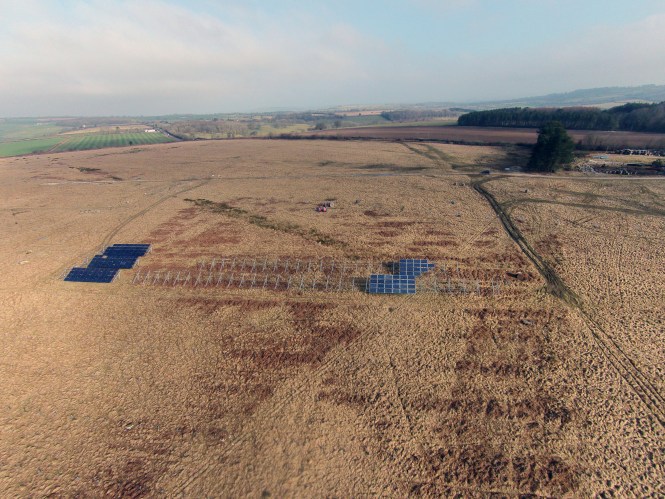
Community Heat and Power (or is it British Solar Renewables?) have kindly published this recent aerial photo of Rampisham Down.

It shows two things very clearly. One is that Rampisham Down is entirely covered by unimproved grassland. The “brown” colour is not related to it being a “brownfield site” despite Local District Councillor Tony Frost’s witty suggestion that it is. It looks brown because the acid grassland plants that grow there have grown ungrazed for a few years (the years during which it has been owned by British Solar Renewables). When grasses and herbs in a wildlife-rich grassland grow without grazing, they flower and then the leaves die back to a brown colour. A grazed grassland would still retain some shades of brown, unless it was so heavily grazed that all the leaves and flower stalks are grazed off.

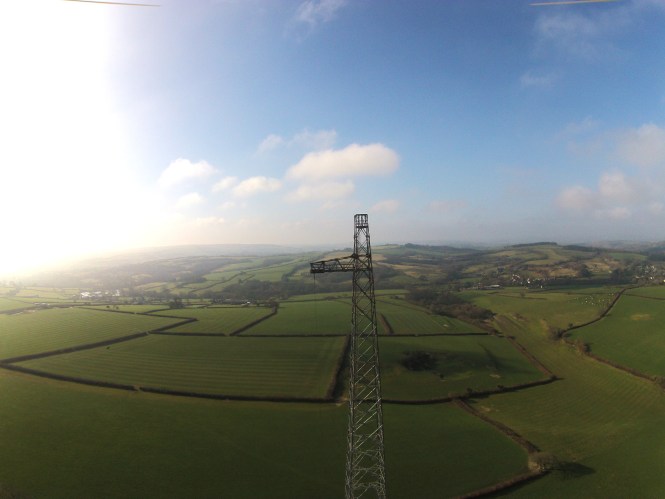
Note in this photo how green are the fields adjacent to Rampisham Down, again taken by drone for BSR.

DCIM100MEDIA

These fields are green because they have plenty of artificial Nitrogen fertiliser applied to them, to make the grass grow more quickly. These are known as Improved grasslands, whereas Rampisham is an Unimproved grassland. Improved grassland sounds like it is better than Unimproved grassland. This is because Improved grasslands can feed more livestock than Unimproved ones.

Unimproved grasslands are much richer in wildlife and archaeology, as well as locking up twice as much Carbon in their soils, helping to clean pollutants from drinking water, and providing homes for pollinators such as Bumble Bees, as well as providing many other benefits to people. More information on the value of Unimproved Grasslands can be found in this report.

The second point is that the drone photo shows clearly that Rampisham Down is not a Brownfield Site. Brownfield, also known as Previously Developed Land is defined by the NPPF as:

Land which is or was occupied by a permanent  structure, including the curtilage of the developed land (although it should not be assumed that the whole of the curtilage should be developed) and any associated fixed surface infrastructure. This excludes: land that is or has been occupied by agricultural or forestry buildings; land that has been developed for minerals extraction or waste disposal by landfill purposes where provision for restoration
has been made through development control procedures; land in built-up areas such as private residential gardens, parks, recreation grounds and allotments; and land that was previously-developed but where the remains of the permanent structure or fixed surface structure have blended into the landscape in the process of time.

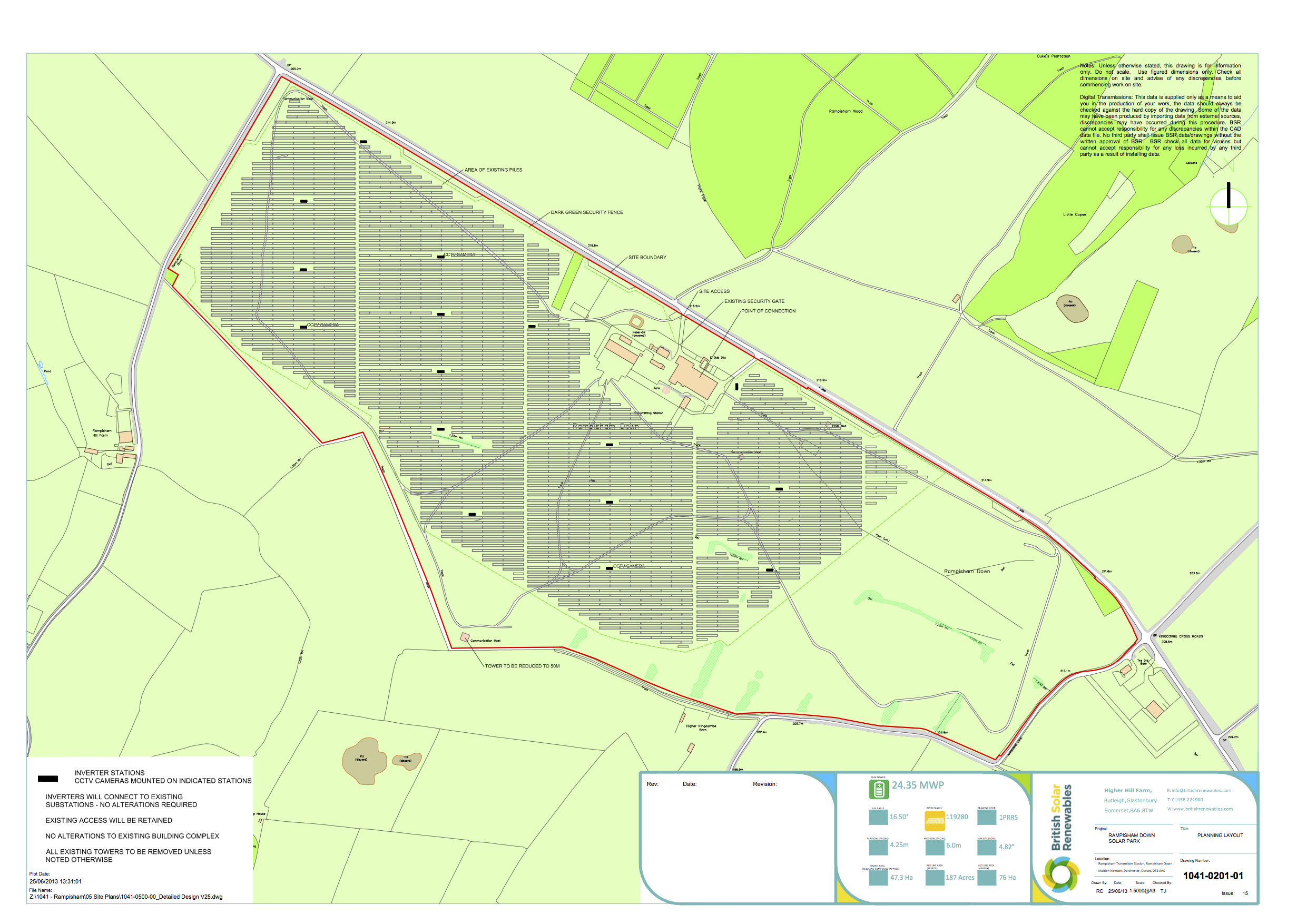
While the buildings at Rampisham are clearly developed, they only take up a tiny proportion of the whole site (and are excluded from the SSSI). The other permanent structures include the concrete platforms for the masts. These are each roughly 10x10m, so for 35 masts the total area is 0.35ha. The ducting which used to take electricity to the masts also occupies perhaps 1 hectare in total.

Rampisham plan jpeg

Now take a look at what BSR intend to do at Rampisham, and compare this with their photo showing their “test solar panel arrays”. The whole area of Rampisham covered by that photo will be covered in solar arrays.

If they get away with it, at that point Rampisham will certainly be transformed into an Industrial Brownfield Site.

Posted in Uncategorized | 2 Comments

National Sheep Association bare teeth against Lynx proposals

Sheep May Not Safely Graze

Sheep May Not Safely Graze


The Farming Community often decry Conservationists for scaremongering. For example on the question of whether  Neonicotinoids are contributing to the loss of pollinating invertebrates such as Bees.

But farmers  are not immune to bouts of hysterical scaremongering either, particularly when it comes to returning extinct mammals.

The latest outburst from Phil Stocker of the National Sheep Association shows how some in the farming community are pathologically afraid of relinquishing the absolute control they have over our landscapes. I think it is a form of megalomania – a phobia of extinct predators. This from Farmers Weekly today:

Plans to release wild lynx into the British countryside have encountered stiff opposition from sheep farmers.

The Lynx UK Trust conservation charity wants to reintroduce the animal into three areas of Aberdeenshire, Cumbria and Suffolk.

It is in the process of submitting an official application for permission to do so to Natural England and Scottish Natural Heritage.

But the National Sheep Association has voiced its opposition to the scheme.

Reintroducing lynx after more than 1,300 years of extinction would pose a real threat to British livestock, said the association.

Even trial work with the wild cat would lead to predation of livestock, in particular, ewes and lambs, it warned.

NSA chief executive Phil Stocker has written to Natural England head James Cross and Defra minister Lord De Mauley over the issue.

Mr Stocker said: “Our primary concern is that the lynx will threaten livelihoods and businesses within the farming industry. Ewes and lambs would be much easier prey than deer because they can’t get away so quickly.

He added: “We were heartened to receive a speedy response from Natural England, assuring us that, if and when it receives an application from the Lynx UK Trust, it will consult ‘all relevant parties’ and consider the socio-economic impacts of the reintroduction, as well as impacts on the environment and the animals themselves.

“This is vitally important, as the project will disrupt vulnerable ecosystems and challenge the viability of sheep farms. This will, in turn, have a damaging impact on farmers’ livelihoods and businesses if the lynx prey on sheep.”

Mr Stocker said believed that the charity hadn’t considered the long-term implications of the project.

“It’s all very well to talk about the release of six or eight lynx, but how do you control them in the years to come when numbers get to a point where they threaten sheep in the area?”

For starters the Lynx Trust is not a charity. I saw something a while ago on its facebook page that it was applying for charitable status, but this has disappeared now. I wonder whether their application for charitable status has been refused. This could be related to the decision by the Charity Commission to refuse to register the The Wolf Trust, as they did not believe that reintroducing the Wolf to Scotland would deliver any public benefit.

Or I may be barking up entirely the wrong tree and setting various Hare’s running (no doubt which will be caught by the Lynx) and the Lynx Trust are just waiting for the Charity Commission to wake up and process their application.

Secondly, a Lynx reintroduction might lead to livestock being eaten. Yes! It might! And….?

I don’t wish to teach sheep farmers to suck eggs, but sheep are bred to be eaten. That is why sheep exist. So does it matter by what animal sheep are eaten?

Bearing in mind that almost all sheep farming (and certainly all upland sheep farming) depends entirely for its existence on public subsidies, through the Common Agricultural Policy, then surely it’s up to the subsidy-paying public whether we mind, that a few subsidised sheep are eaten by Lynx instead of being eaten by people (or dogs).

I would certainly support a programme of compensation for sheep eaten by Lynx, as happens in every other country in Europe where Lynx occur. As I wrote before, farmers complaining about livestock being eaten by savage predators is one of the oldest stories of all.

Finally Mr Stocker is afear’d that returning Lynx to Britain will “disrupt vulnerable ecosystems”. This is hilarious – the idea that the spokesman for the sheep industry, which conducts one of the most damaging activities for nature in the UK, is worried that a handful of Lynx will disrupt anything, really does beggar belief.  The whole point of restoring extinct species such as the Beaver or the Lynx is because we now understand how important these creatures are for the key roles they play in ecosystems. We have a terrible and increasing problem with wild deer in the UK; reintroducing the Lynx is one way of reducing the national deer population.

But there’s a bigger point at stake here. Which is, who decides what happens to nature in the UK? Can we really be held hostage by vested interests such as the National Sheep Association? The fight to stop the River Otter Beavers from being killed suggests that with enough public outcry we can achieve a change in these antediluvian attitudes.

Photo by Graham Horn [CC BY-SA 2.0 (http://creativecommons.org/licenses/by-sa/2.0)%5D, via Wikimedia Commons
Posted in grazing, lynx, National Sheep Association | Tagged , , | 10 Comments

The Nature of God’s Acre

IMG_0667

I’m heading over to Sussex today to launch a new book which I have co-authored. It’s called The Nature of God’s Acre and arises from a project which I have been working on for the past 18 months, exploring the relationship between the spiritual and natural value of churchyards in Sussex. The project was inspired by the work of Caring for God’s Acre, which is an excellent charity working with local communities to manage their churchyards for nature, as well as for history, and of course for people visiting the graves of their loved ones (or ancestors).

Using a paper and online questionnaire, we asked a (mostly) random sample of 40 parishes across the Chichester Diocese (which is the counties of East and West Sussex) if they would like to be involved in the project, most of whom said yes.  In the end we received 175 individual responses from 26 churchyards. We had originally intended for a significant portion of the sample to be from churchyards which had been already identified as being of high value for nature, as Sites of Nature Conservation Interest. In the event only 5 SNCI churchyards elicited responses, so it was a mostly random sample. Indeed, we received several responses from churchyards which weren’t even in the random sample, so they were even more random!

The questionnaire asked local parishioners and members of the local community who used their churchyards about the wildlife they encountered there and how they felt about it. We also asked them why they were visiting the churchyards; and finally we asked them how they felt when visiting the churchyards for different reasons, and whether the nature they encountered there made a difference to the way they experienced the churchyard. Because we included opportunities for people to write about their experiences (as well as ticking boxes), this gave my co-author Revered Dr Mark Betston, the opportunity to consider their experiences from a theological perspective. We also included a page for each parish that took part, showing where they are, and quoting from members of their community who said how they felt about their churchyard and its nature.

Here are the conclusions I drew from analysing the questionnaire data:

Most churchyard visitors who completed the survey were over 56 and this probably accurately reflects the demographic of churchyard users. Most visitors visited at least once a month throughout the year with no particular time of year proving more popular.

The most popular reason given for visiting a churchyard is when visiting the church for religious reasons. A third of visitors stated they visited churchyards to “a peaceful moment” (19%) and “to enjoy nature” (14%). 13% of respondents visited churchyards to “visit the grave of a loved one” and 10% for contemplation/prayer.

We asked people to choose words to best describe how they felt in their churchyards – the overwhelmingly most popular words were peace, peaceful, peacefulness, tranquil and tranquillity. History, contemplation and various words to describe nature in churchyards were next most important for respondents.

95% of respondents confirmed they noticed the wildlife in their churchyards, with wild flowers being the wildlife which most caught people’s eye, followed by birds, butterflies and trees. People also most enjoyed seeing wildflowers and birds in their churchyards, followed by trees and butterflies.

Many people strongly agreed that they felt peaceful, happy and relaxed when they saw wildlife in their churchyard. A large number also agreed having a spiritual feeling, being thoughtful and contemplative when they saw wildlife in their churchyard.

Slightly over half of all respondents felt there was enough wildlife in their churchyards, but 43% felt there was not enough. A very small number (3%) felt there was too much, relating to concerns about untidiness and moles. People who felt there was not enough wildlife, wanted to see more wild flowers, butterflies and birds in their churchyards. Only a third of people with SNCI churchyards thought there was not enough wildlife, compared to nearly half with non-SNCI churchyards.

We asked people whether they valued the presence of wildlife in their churchyards when visiting for different reasons. People felt much more strongly about the presence of wildlife in their churchyards when enjoying for a peaceful moment, than for contemplation/prayer, or visiting the grave of a loved one. 91% of people agreed they valued the presence of wildlife when enjoying a peaceful moment and two thirds strongly agreed. Nearly three quarters of visitors agreed they valued the presence of wildlife in their churchyards when visiting for contemplation/prayer; and two thirds agreed when visiting the grave of a loved one.

Over three quarters of those surveyed agreed that they valued the presence of wildlife in their churchyard, when visiting for these reasons.

Amidst all the talk of ecosystem services, how many tonnes of carbon is locked up in a forest, or how much a bee is worth to the farming industry, it’s vital that we remember that nature provides us with things we cannot and should not put a monetary value on – “a peaceful moment” “a sense of awe and wonder”. And these things can be found in the middle of many communities, hidden away, in our ancient churchyards.

You can get a copy of The Nature of God’s Acre from NHBS, priced very reasonably at £4.99 (plus P and P).

The project was kindly funded by the the Spencer-Wills Trust and CPJ Field Limited.

Posted in books, spiritual value of nature, Sussex, Uncategorized | Tagged , , , | 3 Comments

Invasive Plants caused muddled thinking


IMG_0469

The BBC picked up a story about “invasive plants” yesterday, but didn’t do a very good job of conveying its messages.

The paper just published in Proceedings of the National Academy of Sciences is from Chris Thomas’ group at the University of York. Basically the researchers looked at the occurrence of native and non-native (which they unhelpfully term “invasive) plants in Countryside Survey plots. They found no correlation between declines in native plant occurrences and occurrence of non-native plants; and concluded from this that non-native plants posed no threat to native plant status, and then, in quite a leap, concluded that non-native plants posed no threat to British biodiversity, or even global biodiversity.

The paper has serious weaknesses though; for example Perennial Ryegrass, one of the commonest species in the entire country, is treated as if it were a native plant, while Italian Ryegrass is treated as a non-native. Almost all of the Perennial Ryegrass in the UK originates from agricultural forms, specifically bred and sown: How is that native? Once established agricultural forms of grasses can be very difficult to shift, as anyone who has tried to restore a wildflower-rich grassland from a ryegrass field will know. Often the only way is to herbicide the ryegrass to get rid of it (or through repeated cultivation). The same applies to agricultural forms of white clover, again treated as a native species in the PNAS paper.

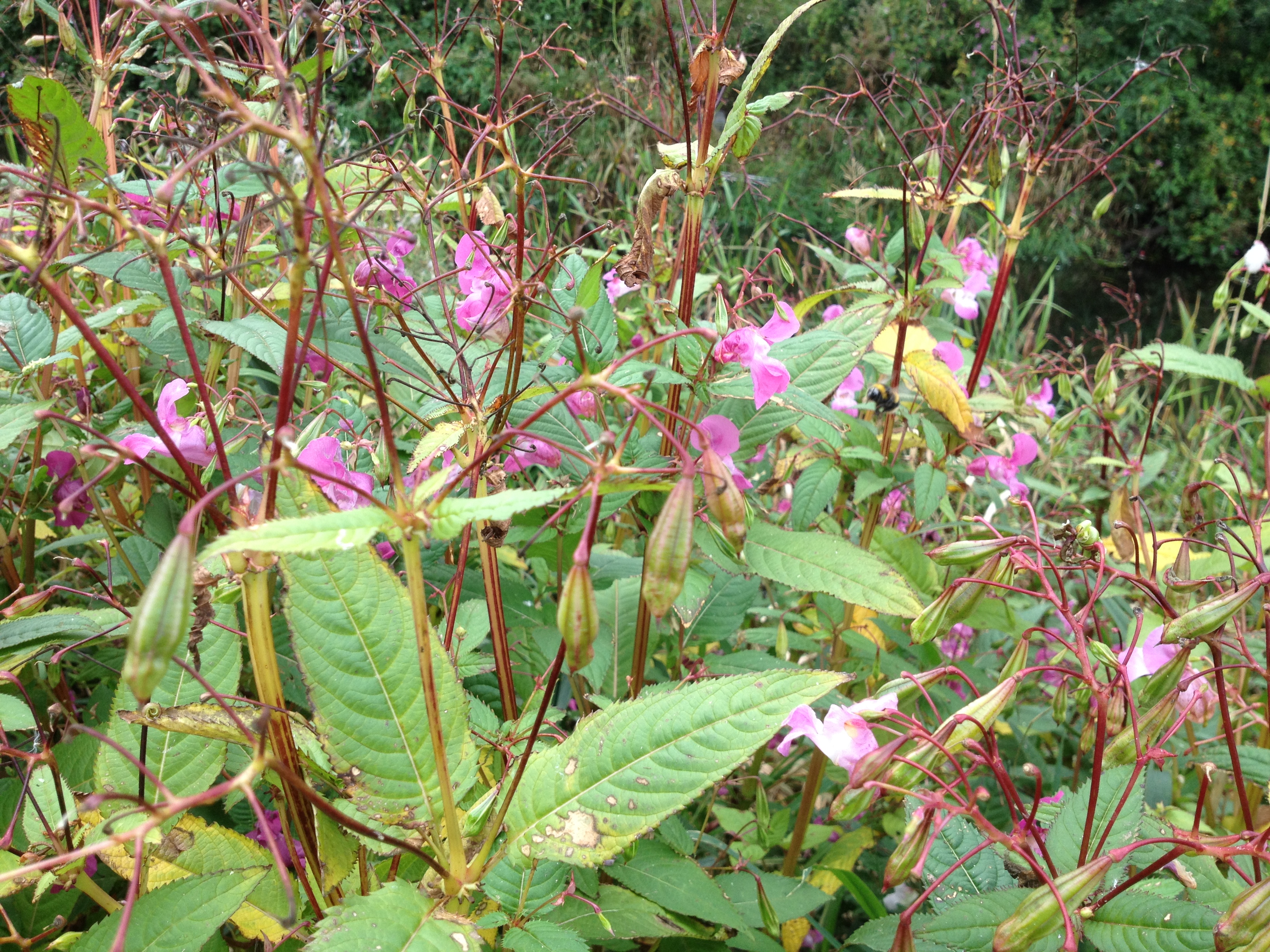
I’ve written before about the exaggerated claims of impending doom resulting from the presence of non-native plants – and was taken to task by some readers for suggesting that Himalayan Balsam wasn’t quite such an ecocidal maniac of a species as has been suggested. But there is evidence for HB that it has an impact in certain places in Britain, albeit not on native plants, but on invertebrate fauna.

Phil Brewin, the Somerset Levels hydrological expert also pointed out that where HB replaces grass on river banks, the banks can lose stability and become vulnerable to “shear forces, slips and frost damage”. Whether this in turns leads to negative impacts on nature is not clear, but it seems akin to me to the problems associated with Japanese Knotweed damaging the foundations of buildings.

One of the best ways to stop HB from colonising river banks is to ensure they continue to receive grazing, but this can also present challenges. The level of grazing, type of animals and seasonality of such grazing needed to control HB (without damaging river banks), may well not fit in with the needs of conventional livestock farmers, to ensure their animals continue to gain condition, weight or produce milk.

While HB clearly does cause problems, it also provides an important late summer nectar source for invertebrates, and this can be significant in landscapes now shorn of their native nectar sources.

In the BBC article,  Balsam was fingered for contributing to the decline of the Tansy Beetle, the argument being that HB has somehow ousted Tansy (on which the Tansy Beetle depends) from its riverbank homes. I find this argument dubious – the distribution of Tansy has not changed, according to the most recent BSBI Atlas; Tansy distribution is complicated by the fact that there was a native population, which has been supplemented over many centuries by escapes from gardens, as it was an important mediaeval medicinal herb. Tansy has a fairly catholic set of habitat preferences and pops in all sorts of places, not just on riverbanks and fens where the Tansy Beetle lives. It’s easy to blame the Balsam invader – but then how many of the Tansy populations on which the Tansy Beetle used to occur were garden escapes?

Perhaps the simplest answer to controlling Himalayan Balsam would be for Beavers to return to a catchment. Evidently they do eat HB. Beavers may consume several kilo’s of herbaceous vegetation a day through the summer, so a family of beavers in a smallish catchment with plentiful Himalayan Balsam could consume the entire population within a few years.  Beavers also eat macrophytes (free floating water plants), and could be a very effective way of removing problematic introduced species such as  Swamp Stonecrop and Parrot’s Feather from water bodies.

I think one of the reasons why Prof Thomas’ researchers found no effect of non-native plants on native populations is that the data set they analysed was far too coarse. The Countryside Survey sample sites were set in typical farmland, not the vanishingly small areas that are now sufficiently high quality habitat to support threatened plant species. It’s hardly surprising the researchers discovered the CS plots supported very few non-native species, as the CS plots only support very common plant species, whether they are native or not. What the CS plots did tell us was about the large-scale changes to the countryside that occurred over the period in which the Countryside Survey was running, although many of the changes that removed nature (especially the declining and threatened species) from our landscapes, had already happened by the time the CS started in 1978.

Does any of this further the debate around the “problem” of invasive non-native species? Perhaps. We need to think again how we view native and non-native. There is a  strong groundswell of support to bring back the Beaver, as shown by the public’s support for the Otter Beavers, and the way that public engagement forced the Government to back track on its goal of removing them.

But how long ago should we look to consider whether a species is worthy of return, or indeed being valued as an authentic member of Britain’s nature. The poor humble rabbit, vilified as a pest, shot gassed and poisoned as vermin, was a native mammal of Britain during previous interglacials.  Rhododendron ponticum and Water Fern, both regarded as serious problems for native wildlife which need to be eradicated, were native species. And Arable Weeds, which were all introduced from the Near East from the Neolithic onwards, are regarded as high priorities for conservation.

Where is the rationale for arguing that a species that has been extinct for 500 years is worthy of restitution, while those that were extinct for a few hundred thousand but returned by human agency, must be extirpated?

Posted in alien invasive species, Beavers, himalayan balsam, invasive species | Tagged , , , | 11 Comments