Sustainable meat: Keeping the hills bald for red meat

The inevitable farming backlash has started, against George Monbiot’s ideas of restoring more natural ecosystems in Britain in his new book Feral.

In an article in Farmers Weekly (where else?) on tuesday a Farmers Union of Wales spokesman drew comparisons between Monbiot’s ideas (which include removing grazing from upland areas in Wales) with the forced removal of native american tribes from national parks such as Yellowstone and Yosemite. This is a bit unfair in my view, as although some Welsh may claim to be native Britons, Monbiot is certainly not advocating forced resettlement into reservations. Nor are Welsh hill-farmers hunter-gatherers in the way that the native Americans of the western USA were.

On the same day an interesting and hopefully influential report was published, from the International Devleopment Select Committee,  on the need to adopt sustainable farming systems  – and in particular the urgent need to reduce the amount of meat consumed, especially in the west. The sensible report promotes the need to switch from cereal-based meat production to pasture-fed systems. You might be surprised at how much cereals are now grown to produce the meat you eat. Welsh hill lamb farmers can at least claim that their meat is mostly pasture-fed.

Naturally the NFU refuted all this – quoted in the Western Daily Press –

Peter Garbutt, chief livestock adviser for the NFU, which itself “believes that red meat has an important role to play in a healthy balanced diet”, said today: “The UK livestock sector plays a crucial role in sustaining some of the nation’s most beautiful and treasured landscapes as well as being the bedrock of rural communities. Almost 60 per cent of farming’s uplands, which is dominated by livestock, is designated as National Park or areas of natural beauty. More than two thirds of the UK’s agricultural area is made up of grassland.

“The reality is that if red meat consumption falls dramatically there would be a very real risk of the most valuable environmental assets being abandoned, and we would see lowland grasslands switched to arable production.”

Of all UK farmland, 65 per cent is only suitable for growing grass – and the rain-fed pasture system means that the UK has one of the most efficient beef sectors in the world. And while this may also mean slightly higher prices over grain-based intensive farming, UK consumers consistently choose grass-fed beef over grain-fed.”

Let’s just tease these  arguments apart for a minute as they are a bit mixed up.

1. If you cut down eating so much red meat, our treasured uplands will cease to be grazed and abandonment will mean we lose treasured environmental assets.

Well for starters, over 60% of welsh hill lamb is exported. official figures from 2011 show that the total value of the sheep sector in wales is £270M. £168M of this was exported; over half of it goes to France.

So it turns out that our French friends are making the most contribution to keeping Welsh hills bowling greens with contours/treasured environmental assets (delete as appropriate).

The NFU should be shouting “Ne quitte pas mange les agneux des collines de Pays de Gaulles!” across the channel. Apologies for my french.

2. More than 2/3 of Britain’s agricultural land is grassland.

Err yes well this is my special subject so I can go on for days about this, but I won’t. Suffice to say that most grassland in Britain is not in the uplands, it’s improved grassland in the lowlands, dominated by one or two, if you’re lucky up to 10 kinds of plants, mostly perennial rye-grass and white clover, often heavily fertilised to make silage.

Don’t get me wrong, it’s still better to buy beef that’s pasture-fed, even if it is only rye-grass, than cereals-fed (but is there a proper labelling system to show which is which?). But the truth is that the average British pasture has less wildlife than the average wheat field. If you really want to eat sustainably grown meat, buy it from farms that have pastures which are manageed with wildlife in mind – at the moment, this is tricky, but they do exist and you will have to hunt around for one near you; don’t expect to find this sort of thing in the supermarket.

3.  UK consumers consistently choose pasture-fed over grain-fed beef. That may be true  when they are given the choice. But UK consumers have been somewhat disappointed to discover recently that what they thought was beef (pasture or grain-fed) turned out to be horse, pork and who knows what else.

And is this the same NFU promoting pasture-fed beef that is also promoting large-scale indoor beef units where animals never get to see any grass, other than of the ensiled variety?  My cognitive dissonance warning alarm has just gone off!
Posted in bees, biodiversity, environmental policy, George Monbiot, grazing, management, meadows, rewilding | Tagged , , , , , , , , , , | Leave a comment

One man went to mow….managing public space for wildflowers

Have you ever been stunned that a nice patch of wildflowers on a road verge, village green or park gets mown down just when it’s at its peak of beauty and utility? Me too.

So I was delighted to see that Plantlife are running an important campaign to highlight the importance of road verges for wildflowers, and the wildlife that depend on them – and how they need the right kind of management. It’s not difficult – just like the linear meadows they effectively are, road verges are best managed by mowing late in the season.

If a verge is already dominated by competitive grasses, then a very early cut is also a useful remediation, as it weakens the grasses and prevents them from flowering, while not affecting the wildflowers.

The main point though is that the arisings need to be removed, to reduce soil fertility – this is especially important if a topper is used to mow, as this creates a thick mulch which smothers delicate wildflowers.

And what’s true for road verges is equally true for any other piece of grassland under public management.

For the last 8 years, I have been working with Dorchester Town Council to manage a local park Maumbury Rings for its chalk downland wildlife. Maumbury Rings is a very important archaeological site (a Neolithic henge, then Roman amphitheatre, remodelled as civil war artillery emplacement). It also supports wide range of chalk downland flowers, including horseshoe vetch and squinancywort.

It’s taken a long time to build a good relationship with the council employees and they have conflicting priorities to balance:  some people want it to look “tidy” rather than have flowers. There’s also an ongoing problem with dog walkers not clearing up after their dogs.

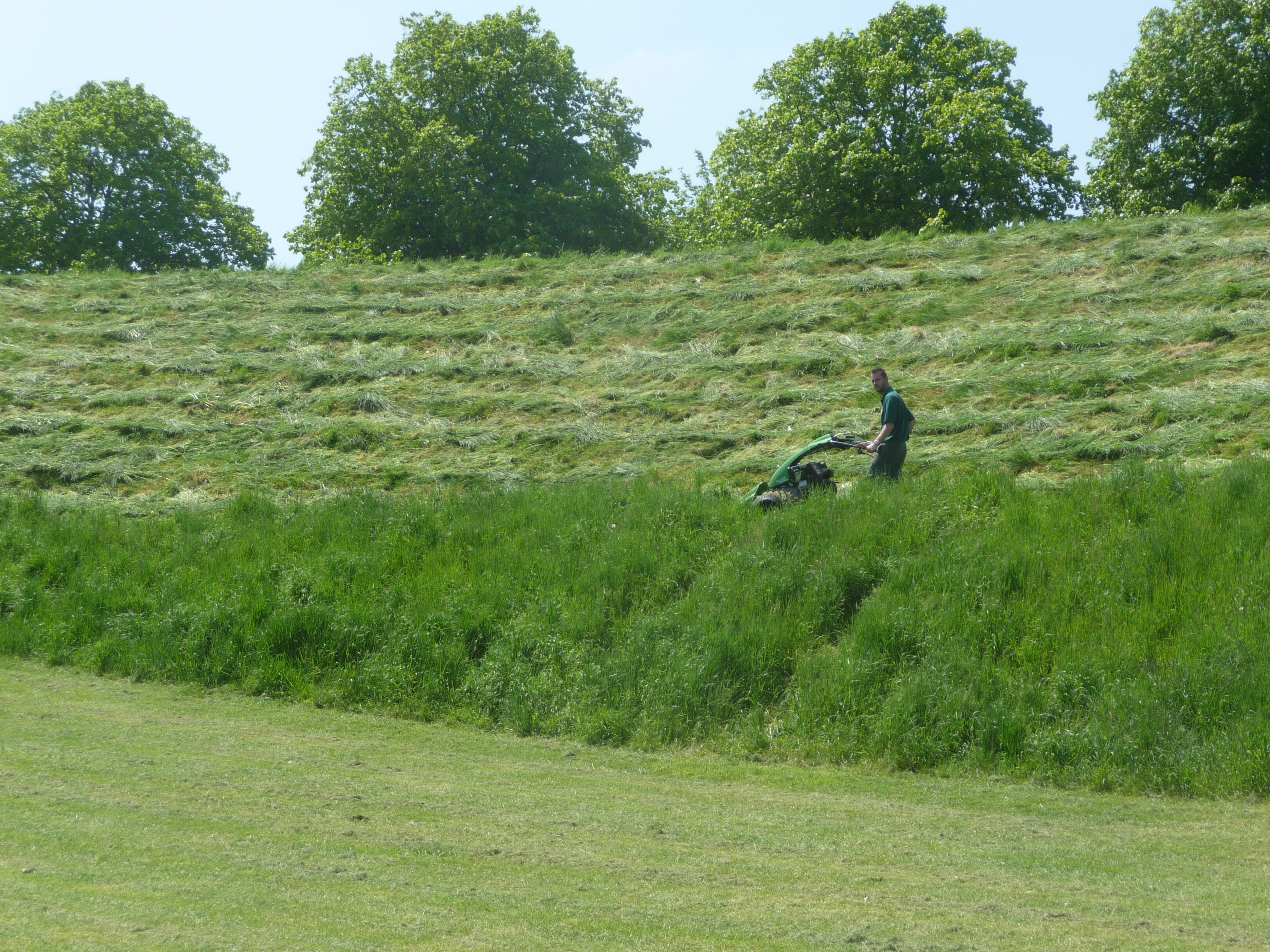
This year the best areas for wildflowers have been left to grow on, while the areas dominated by grass have been cut. We’re fortunate that the Council were able to invest in a mower that can work on steep slopes.

maumbury mower

mowing Maumbury Rings

maumbury 2

The best areas for wildflower are left uncut until September – I  rake off the arisings (I haven’t yet persuaded the council to do this.)

I’ll post some more pics later in the summer to show how great it looks.

While the privately owned countryside continues to leak what little wildlife it has left, public spaces have the potential to be far far better managed for wildlife, plus of course being accessible for people to enjoy that wildlife.

We can all do our bit – so if you have a park, play area or verge near you that could be better managed, get in touch with your council and work with them to achieve that goal.

Posted in bees, biodiversity, greenspace, management, meadows, public land, road verges | Tagged , , , , , , , | 5 Comments

Re-wilding: how do we recreate feral soils?

Having successfully helped my mum pack her house into an articulated lorry, and bring her down here to Dorset yesterday, I have to admit to being a bit knackered.

However I’m looking forward to buying a copy of George Monbiot’s new book “Feral”, and he has been having a fine time this week publicising it, including a piece on Newsnight which I am looking forward to watching on iplayer later.

I commented on a draft of the book for George last year, after we had a lively twitter conversation (or spat as it was also described) on the pros and cons of re-wilding vs conserving semi-natural habitats.  Reading the draft certainly gave me a lot of food for thought and challenged my own preconceptions and accreted dogma around conservation.

Without going into the argument of conserving open habitats vs closed forest cover (for the moment), there is one particular aspect of re-wilding, in the sense of restoring natural woodland to the uplands, which I cannot get past – hopefully you dear reader will be able to help me. Bear in mind my knowledge of soil development is a bit thin.

After the end of the last ice age around 10,000 years ago, there was tundra and soils, such as they were, were not able to support forest cover. Soils then developed very slowly over a period of hundreds, perhaps thousands of years, thanks to plants like Mountain avens and its amazing fungal assemblage.

Dryas octopetala

Mountain Avens growing like a bonsai tree over a boulder in the Burren, Republic of Ireland (copyright Miles King)

Eventually soils developed to the point where forest trees could establish, and the holocene forest was born. This was then slowly removed a few thousand years later through first mesolithic, then neolithic clearance for hunting, grazing, timber/wood exploitation; and crops. Those original soils were lost as a result of this land-use. The consequences were that peat soils started to form in the wet north and west of the British Isles, while elsewhere, different soils developed in response to grazing, cultivation and woodland management. We still have tiny remnants of ancient forest soils in ancient woodlands of varying ages (but I don’t think any have continuous woodland cover back to the original holocene forest)

So we now have in the wet north and west 6000 years of peat growth on top of whatever soil was around at the time that people started to alter the land-use beyond hunter-gathering. There’s a fantastic example of this at Ceide Fields north of Connemara in County Mayo, where the oldest known field system in the world was discovered under thousands of years of blanket bog peat growth.

I was struck by the lack of soil in the Burren last week. Tiny stunted trees peeked out from between the limestone pavements, where it is grazed. Hazel scrub is developing rapidly as grazing pressure decreases, but in the absence of much soil it is a very different beast from the original forest cover – oak and wych elm are almost entirely missing for example.

When the Forestry Commission tried to reforest the uplands in the 1970s and 80s they had to use deep ploughs to break through the peat and then drainage channels to keep it dry enough for trees to grow.

So that is my question – how do we recreate the post-glacial holocene soils that would support something like the pre-neolithic holocene woodland again, regardless of where we find the elephants.

Posted in biodiversity, Forestry, Forestry Commission, George Monbiot, rewilding, soils, Uncategorized | Tagged , , , , , , , , | 5 Comments

Back again – briefly

After a fantastic trip to the Burren in the west of Ireland last week, and a quiet bank holiday weekend, I am now heading off again to help my mum move from London to Dorset.

It’ll be a huge upheaval for her, having lived in the same house for 42 years, and an emotional moment for me as I say goodbye to the house where I grew up. London has changed almost beyond recognition since my mum arrived in 1954, and even since I left home in 1983. I might put down some reflections on this in the blog once I’ve had a chance to think about them.

So I will be away from blogging again for a few days.

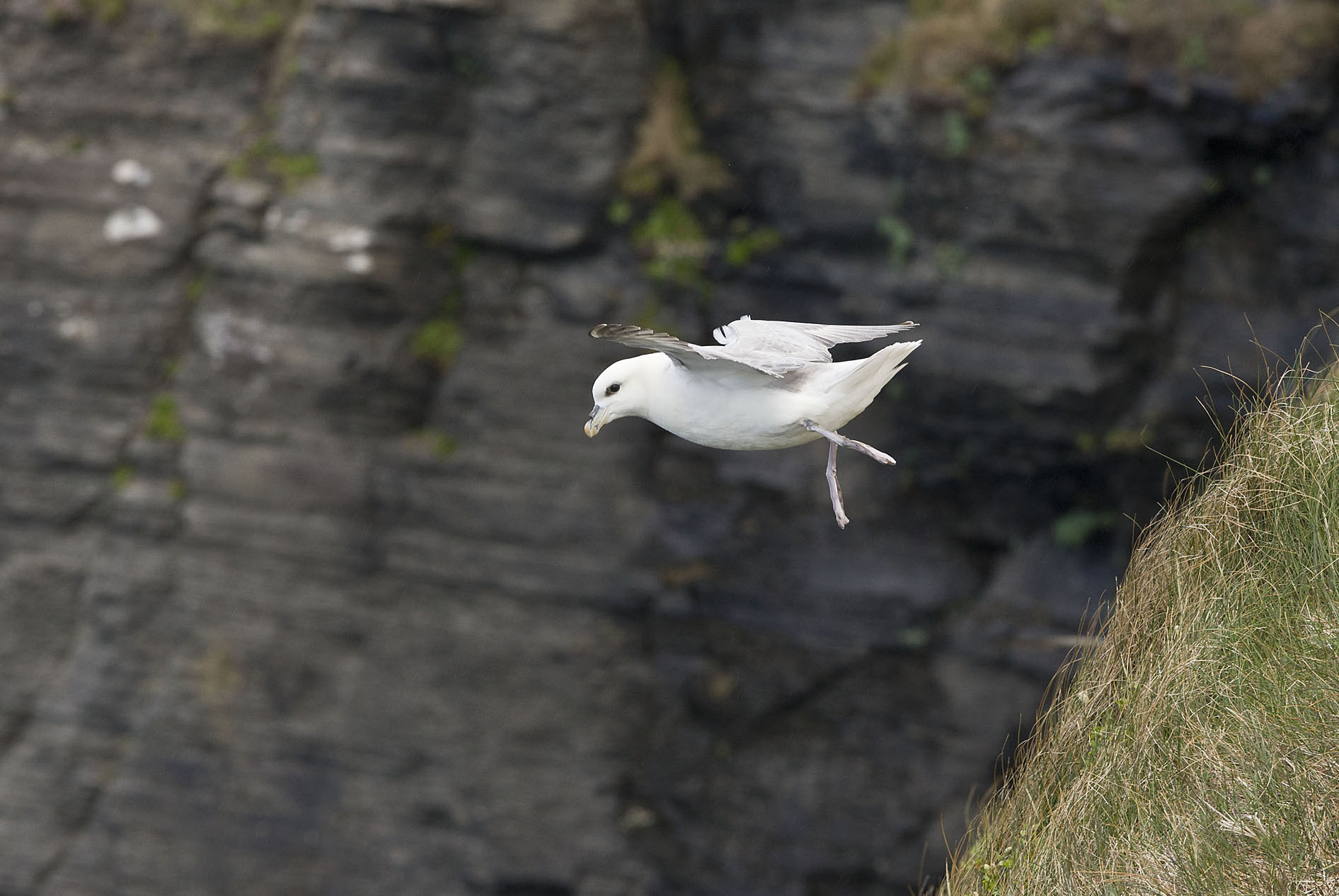
Meanwhile here’s a photo from our trip taken by our excellent tour leader, author and ace wildlife photographer Bob Gibbons.

Fulmar Cliffs of Moher - Bob Gibbons

Dancing Fulmar at Cliffs of Moher copyright Bob Gibbons

Posted in Uncategorized | Tagged , , , , , , | 1 Comment

HS2 or free wifi on every train – which would be better for the economy?

As some of you might have noticed yesterday I have moved over to using wordpress on ipad as I’m on the move at the moment. So I failed to publish my post yesterday until 5pm and I cannot guarantee that this will be fault-free – apologies in advance.

The independent National Audit Office has concluded that the benefits to the economy of HS2 are unclear, according to a report published yesterday. For the NAO DIrector Geraldine Barker to state that DfT “need to do more work” and that the NAO “couldn’t find the detail” to support the Government’s wild claims of economic benefit, speaks volumes in itself. This counts as scathing criticism of the economic case from inside Whitehall.

Naturally the Government has rejected the NAO’s scepticism, based on what evidence I do not know. Perhaps the NAO is now in the firing line to be deregulated.

Transport Secretary Patrick McGoughlin, writing on the ever interesting conservative home website, draws parallels between HS2, the M25, the channel tunnel rail link, the jubilee line extension and great feats of the Victorian era. I’m not sure whether he’s trying to appeal to the “inner engineer” in all of us, but the comparisons don’t stand any serious scrutiny.

While the economic case for HS2 is floundering, what about the environmental impact?
Could HS2 deliver the mother of all biodiversity offsetting projects? I think we should be told.

Anyway back to the economy. More people are using the trains, partly because fuel is now so expensive, and many of them are working on them, using laptops, mobiles, tablets, even pen and paper. So the time they are on the train they are working, contributing however many billions to GDP. I find it hard to believe that reducing the journey time from London to Birmingham by 20 minutes is really going to add anything at all to the economy.

I spend a lot of time on trains (living in the back of beyond) often working. Imagine how gratifying it is to find the train you’re working on has wifi, and there’s no need to struggle to get a signal via a mobile. Unfortunately this seems to be still very unusual and most trains in my experience do not have wifi.

Surely it would be better to spend a tiny fraction of the money that will be spent on HS2 fitting every train and station in the country with free wifi, then with a bit of the rest, increase the frequency of trains on the busiest lines.

The Victorians gave us a world beating rail network. Unfortunately motorway mogul Tory transport minister Ernest Marples used Dr Beeching’s report to justify destroying much of it. We don’t need new expensive and duplicating rail infrastructure, we need to upgrade the existing infrastructure to meet today’s needs.

Posted in biodiversity, biodiversity offsetting, environmental policy, regulatory reform, transport | Tagged , , , , | Leave a comment

More Bad Bees

Following yesterday’s post on thieving Bumble-bees, it has been brought to my attention that Bumble-bees’ degenerate behaviour does not stop at nectar larceny – the bee-equivalent of shoplifting a four pack of lager from the local corner shop.

It gets worse. They have been seen imbibing quantities of cheap high-strength neonicotinoid pesticide. Ignoring the label which clearly states “Not for consumption by bees” these feckless Bumble Bees become highly intoxicated, start picking fights with the local Mason bees and then complain when they can’t find their way back to their nests.

When questioned by journalists (from the Bee BC) the bumble bees claimed they “didn’t know” the neonics were bad for them and that “they tasted nice”.

They should take some responsibility for their actions.

I also hear from UKIP that those defenders of the natural world Natural England are taking action against immigrant bumble-bees. According to their website, bumble bees from “Continental Europe” are coming over here, working in low paid agricultural jobs pollinating polytunnel crops. Jobs which could be taken by our own native bumble-bees if they got off their abdomens, stopped nicking nectar and drinking intoxicating neonics.

Get back to work Bees.

Posted in bees, Uncategorized | Tagged , , , , , , , | Leave a comment

When Bumble Bees go bad

I was shocked to read in the Economist that some of our cherished bumble bees are actually criminals.  Short-tongued bumblebees break into some types of flowers and steal their nectar without having to earn their living by transporting pollen between flowers and growing the natural economy.

This behaviour is known as nectar-robbing. And I want to know what is going to be done about it. I expect Ian Duncan Smith is working on a solution at this moment – devising a new plan to ensure these scrounging shorty bumble-bees do not continue to make off with nectar that should only be available to hard-working long-tongued bumblebees.

I wouldnt be surprised if these shorty-shirkers even have cells in their nests that they don’t use all the time, probably just filled up with ill-gotten gains.

I will be writing to my MP demanding action – please write to yours.

Posted in bees | Tagged , | 2 Comments

Biodiversity Offsetting: replacing the irreplaceable

Image

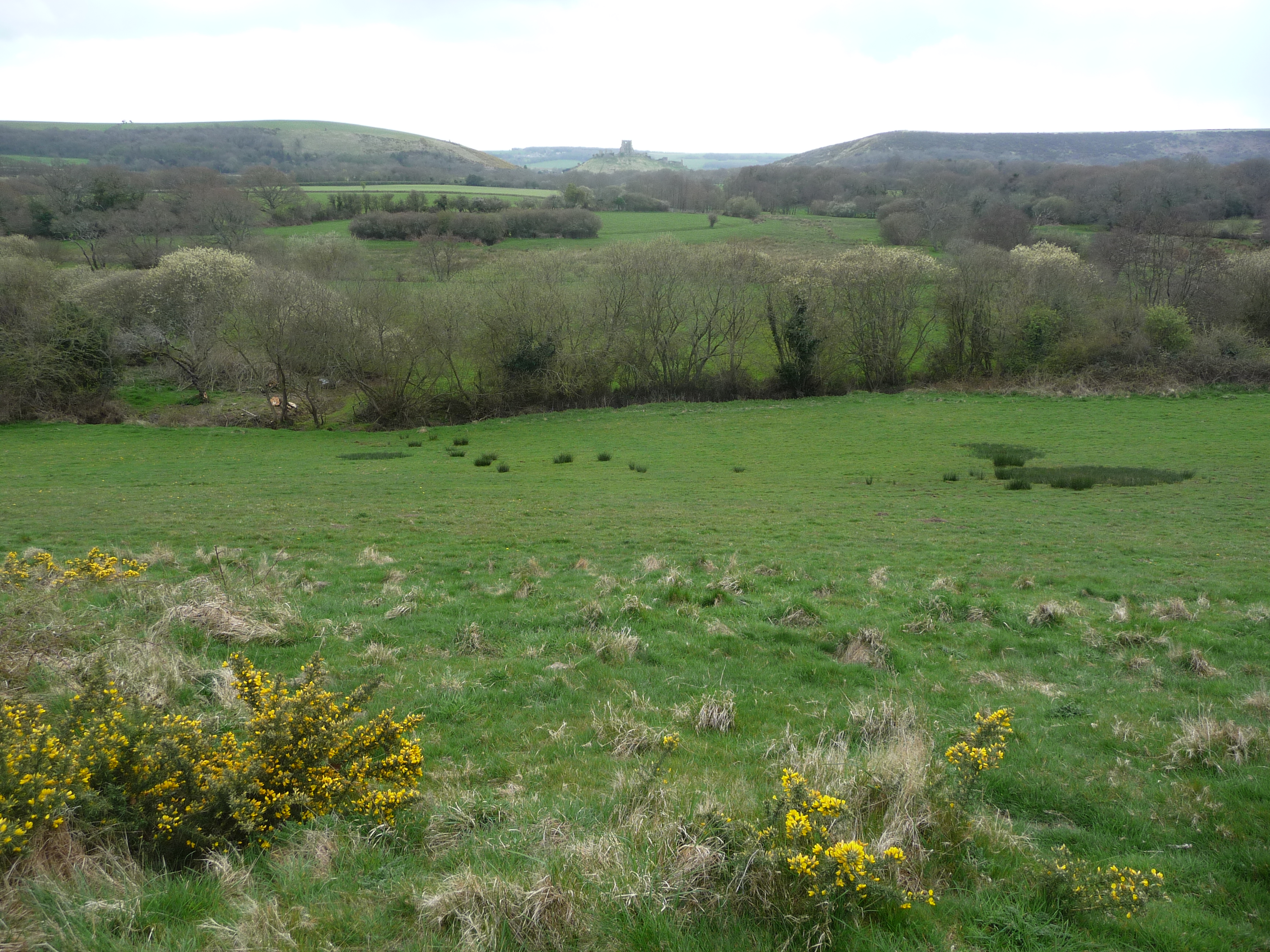
Look at this classic Dorset landscape. In a gap in the Purbeck Ridge, sits the majestic remains of Corfe castle. In the foreground is the shallow valley of the Corfe river,  wending its way to Poole harbour. What look like former water meadows along the river still support a diverse plant community, as does the slope on which we sat, those wild plants supporting diverse insects, our idyllic spot humming with bee and bird song. Enough of the prosaic already! I hear you mutter. We are indeed very lucky to live in Dorset.

With this in mind, I ponder of the latest “Biodiversity Offset Summit” which happened last week. Did you not see it fanfared in the press? No, there was almost no press coverage, the press weren’t informed or invited. The ENDS report did report it – thanks Simon.

Fortunately someone has published a note of the meeting – thanks to BES. Note that almost all of the speakers are pro offsetting and in the business. Why David Hill is described as representing the Ecosystems Market Task Force I do not know – given that he is “offsetting finder-general” in his capacity as chairman and co-founder of the Environment Bank. Or indeed as deputy chair of Natural England?

Anyway I digress, what I am really interested in is what is replaceable – for me this goes to the heart of offsetting.

Is any biodiversity replaceable? who decides and on what basis? Can whole SSSIs be replaceable?

There’s some Defra guidance on replaceability – produced last year, before the pilots started. Appendices A + B in this report .

Clearly a great deal of brain effort has gone into this work. According to the experts who drew it up, it’s highly difficult to recreate calaminarian grasslands, but easy to recreate open mosaic habitat on previously developed land (OMH for short). For those who are wondering what on earth these things are, calaminarian grasslands are grasslands that have developed on metal-contaminated land – metals such as lead, arsenic and so on, which are highly toxic to life, so only a few species can thrive there. OMH on the other hand, also known colloqioally as brownfield land important for biodiversity, was often created as a result of industrial processes – you can see where this is going – that led to the contamination of land by things like – yes you guessed it, toxic metals like lead and arsenic. Indeed there is cross over between the two priority habitats, and calaminarian grassland occurs within a wider mosaic of OMH.

Some habitats are innately irreplaceable – limestone pavement is the obvious one, as it was created as a result of actions that only happen immediately after the end of an ice age. Blanket bog has been oozing across the uplands for millennia following neolithic forest clearance – that’s not an easy one to do again in this interglacial.

Others are clearly replaceable in principle, since they have been created and destroyed, created and destroyed again and again over the 10 millennia since the end of the last ice age, in Britains’ ever-changing landscapes. A mediaeval arable field is abandoned after the Black Death and becomes a piece of chalk downland, surviving for 700 years, only showing us its arable history through the presence of strip lynchets. A heathland is ploughed during the war, and is slowly recovering towards moderately interesting acid grassland 70 years later. The three factors that determine whether a habitat can return to an area are: how much time has elapsed since the last major disturbance; what is the availability of wildlife nearby to recolonise; and is the area being managed in such a way that the wildlife can recolonise.

Now in the Alice in Wonderland world of biodiversity policy it is possible to create new priority habitat more or less instantly: plant some broadleaved trees in the ground – bingo – new priority woodland has been created. Sow some wildflower seeds on an arable field – manage it nicely – hey presto – new priority lowland meadow habitat created – very pretty. The only problem is that nursery-grown trees or sacks of wildflower seed don’t contain the insects, the fungi, or indeed the history of long-established habitats. You can’t sow ridge and furrow or a plague village.

Would anybody with ecological integrity really claim, and keep a straight face while doing it, that these “new” habitats are equivalent in any way, let alone adequately replace, ancient semi-natural woodlands or ancient meadows?

Posted in Uncategorized | 6 Comments

SATS week

It’s SATS week for our eldest daughter. She’s been working hard, doing past papers, mock exams and revision. She’s 11. It’s put quite a bit of stress on her and on the rest of us. For what? So the school can maintain its position in the league tables. I can’t blame the school, especially now they’ve gone to academy status, and reputation is all important. And it does give her some experience of exam pressure and the skills needed to revise effectively.

As vice chair of governors at the first school where our youngest daughter attends, I was lucky enough to attend a small conference last week discussing federation. This is where a number of schools come together (in a federation) and while retaining individual school sites and character, everything else is shared. These federations inevitably become multi school academies. It will be interesting to see which way our first school will be going.

Apparently the Department for Education wants over half of all schools to be academies by the election. You can imagine what this will mean for the education role of Local Authorities, ie there won’t be much of one, apart from competing to provide services to schools. The clear intention is to introduce changes which are effectively irreversible.

I can’t help drawing a comparison with the future of Natural England, Environment Agency and the Forestry Commission – and of course Defra.

We are already seeing plans for even more radical reform of the civil service (http://www.independent.co.uk/news/uk/politics/radical-plans-to-make-top-mandarins-chief-executives-8612465.html) ; merging or closer working of NE and EA (from the triennial review), further deregulation via the Red Tape Challenge; and the little trumpeted  Queens Speech announcement to place a “growth duty” on NE, EA and others.

The Review of Competencies of European Legislation such as the Natura Directives, the EIA Directive and the Water Framework Directive, combined with further pressure to fundamentally renegotiate our relationship with the EU, could also see the emasculation of those European laws that underpin much of our most effective protection mechanisms for the environment.

As with education, it seems to me that changes are being put in place now in  environmental policy and legislation that will be as difficult or near to impossible to reverse as possible.

Posted in environmental policy, regulatory reform, Uncategorized | Tagged , , , , , , , | Leave a comment

A new Beginning

I’ve left Buglife now and am looking for new challenges in the conservation world. I’m also returning to the blogosphere after a stint away.

I’ll be blogging regularly and tweeting probably even more often. I’ve even gone onto Facebook, but I think that will only mirror what’s on the blog/twitter.

I will obviously need to have some sort of income so I’m open to all suggestions and will be also working up some new ideas.

Keep in touch here or via twitter, or my email address, which I’m happy to give out on request.

It’s good to be back.

Posted in Uncategorized | 6 Comments