Goodbye Peter Kendall

Peter Kendall, President of the National Farmers Union, has announced his intention to retire from the role next February. I for one, will miss him – simply because he provides me with so many easy blogs to write. Peter is not a shrinking violet.

When he enters a room, he has real presence – he is a big man, but he also exudes confidence and authority,  before he even says anything. He is persuasive, articulate and knows his brief. I only once had the pleasure of having a debate with him over farming, land-use and conservation – he was a worthy opponent (not sure whethre he felt the same about me as I was the only one there challenging him). He would be an excellent politician, and wasted back on the arable plains of Bedfordshire, where he farms 1500 acres with his brother.

I have blogged about him quite often over the last 3 years of blogging – here, here and here for example I countered his claim there was no biodiversity crisis, but a productivity crisis. Here I explained what he really meant when he said “don’t plough up your old pastures” to farmers worried about new rules from the reformed CAP. Thanks to Peter those same farmers don’t need to worry now about the “greening rules” as they have already been watered down to the concentration of… well, water.

More recently I analysed an interview that the Guardian carried with Kendall – perhaps he had already decided to go by that point and this was his farewell speech.

Peter has been at the forefront of the NFU’s push to change the image of farming to the British public, and this has only been partially successful – particularly now that the NFU and the badger cull are inextricably linked. But first and foremost he has worked tirelessly make sure that the F for Farming looms far larger in Whitehall than the E or the RA in Defra. And he has succeeded beyond his wildest dreams.

This is Peter’s legacy –

Pushed the Environment back into its box, through an effective propaganda war on conservation and environmental concerns;

Focussed political and media attention on intensive agricultural production at any cost, driving forward deregulation in Agriculture. 

Protected the huge Three Billion pounds a year public welfare payments that farmers receive, for doing nothing, through the Common Agricultural Policy,

Destroyed any hopes of a reform process to enable the CAP to provide public services for public goods.

Posted in agriculture, anti conservation rhetoric, anti-environmental rhetoric, badgers, bees, biodiversity, Common Agricultural Policy, deregulation, environmental policy, farming, NFU, Peter Kendall, public goods, regulatory reform | Tagged , , , , , , , , , | 4 Comments

The Eton Ram Hunt and other stories

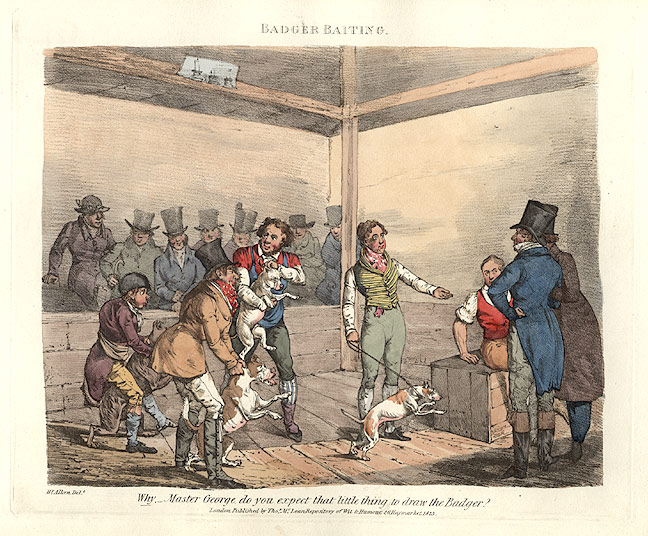
Badger-baiting

Those were the days

Yesterday’s blog showed how nearly half of the current Government’s Cabinet went to prominent Public Schools, such as Eton, Westminster, St Pauls, Radley, Robert Gordon’s, Wycombe Royal Grammar, Charterhouse, Highgate, Nottingham High School and Frances Holland.

Could this private education have skewed their perceptions of what kind of behaviour is acceptable when dealing with wildlife, such as Badgers?

I found an interesting piece from renowned social reformer Henry Salt, regarding the treatment of animals at Eton College in the 18th and 19th century.

“No work,” he says, “was done on Shrove Tuesday after 8 a.m., and at Eton, as elsewhere on this day, the practice prevailed of torturing some live bird. The college cook carried off a crow from its nest, and, fastening it to a pancake, hung it up on the school door, doubtless to serve as a target.”

I can actually visualise this, as having been at Westminster for my sixth form years. I witnessed (but did not take part in) the Greaze , a violent contest between boys, over a very large pancake, as to who could gather the heaviest weight of pancake. The crow would have been ripped to pieces, alive.

Eton also had a Ram Hunt.

“The college butcher had to provide a ram annually at election-tide, to be hunted and killed by the scholars,” the unfortunate animal being hamstrung and beaten to death in Weston’s Yard. Even in the nineteenth century such sports as bull-baiting, badger-baits, dog-fights, and cat and duck hunts, were “organised for the special edification of the Eton boys.”

Now of course these things have ceased to contribute to the education of the children of the Elite. But I wonder whether a memory of them lingers on in the background.

At Westminster, in the middle of London, opportunities were rare to maim or torture wild animals. Even the ancient right to drive a flock of sheep over Westminster Bridge, is rarely employed these days.

Posted in badgers, blood sports, Eton, the cabinet, Westminster School | Tagged , , , , , , , , , , | 1 Comment

Toffs in the Cabinet?

TopHatORGI

“toppers all round chaps”

Have you been following the “toff” debate on Mark Avery’s blog ?

Mark called Richard Benyon a “Toff” and suggested that many of the decisions he took as Biodiversity and Fisheries Minister were coloured by his Toff background, and his liking of all things huntin’ fishin’ and shootin’. I don’t propose to dwell on Richard.  Richard Benyon was a very junior minister in this Government and had remarkably little influence over anything as far as I can see. Even if he is the wealthiest MP in the Commons.

What I am more interested in is the Cabinet and whether it is full of “toffs”. I’m also interested in how rich the Cabinet members are, whether they went to private school, Oxbridge and whether they have had a proper job before going into politics.

I had a look through the biographies of the Cabinet and came up with the following scoring system:

David Cameron‘s personal wealth is £3.2M, not including any inheritance. His father made his money in stockbroking and he is descended from Minor Nobility.  He went to Eton and Oxford, where he studied Philosophy, Politics and Economics (PPE); he has only worked in the media (briefly) and politics.

Toff score 5/5: Wealth Score 5/5: Private school? yes: Oxford/Cambridge Yes: PPE Yes: Job media

Nick Clegg is worth £1.9M. His family made their fortune in Banking and he is descended from European Nobility. He worked as a lobbyist and Eurocrat before politics. Nick went to Westminster then Cambridge, where he studied archaeology and anthropology.

Toff score 5/5: Wealth Score 4/5: Private School Yes: Oxbridge Yes: PPE no: Job: lobbying

George Osborne‘s personal wealth is £4.3M. His family fortune comes from wallpaper and his father is the 17th baronet of a noble Irish family .  George went to St Pauls school then Oxford, where he studied Modern History .

Toff score 5/5: Wealth Score 5/5: private school yes: Oxbridge Yes: PPE no: job: none

William Hague is worth £4.8M. His family made their fortune in the soft drinks industry. William started work there, went into management consultancy before joining politics at a very young age. William was educated at a state grammar school, then Oxford (PPE) .

Toff score 0/5: wealth score 5/5: private school no: Oxbridge Yes: PPE yes: job: management consultancy

Danny Alexander – I haven’t managed to find out what his personal wealth is, but he came from a more modest background. He went to a state high school, then Oxford (PPE). He worked in media and communications before politics.

Toff score 0/5: Wealth score ?: private school no: Oxford yes: PPE yes: job: media

Theresa May is worth £1.7M. She has a modest background, here father having been a CofE cleric. She went to a number of schools, both state and private, before going to Oxford where she studied Geography. She then worked at the Bank of England and the APACS banking clearing service before entering politics.

Toff Score 0/5: wealth score 4/5: private school yes: Oxbridge Yes: PPE no: job: banking

Philip Hammond is the richest member of the Cabinet, worth £8.2M. He has a modest background, his father having been a civil engineer. He went to a state high school and Oxford (PPE). He started his career in medical equipment manufacturing before setting up a property development company, Castlemead.

Toff Score 0/5: wealth score 5/5: private school no: Oxbridge yes: PPE yes: job: property development

I haven’t managed to find anything about Vince Cable‘s personal wealth. He was educated at a Grammar school then Cambridge where he excelled in Economics. He went to do a variety of academic and policy roles before becoming chief economist with Shell.

Toff Score 0/5: wealth score ?: private school no: Oxbridge Yes: PPE no: job: economics

Iain Duncan Smith is worth around £1M though his wife is far more wealthy. His parents were an RAF group captain and a ballerina. He went to a Roman Catholic school before going to a naval school at 14. He then went to Sandhurst and was commissioned into the Scots Guards, where he stayed, as  a first lieutenant, for 7 years. His wife is the daughter of the 5th Baron Cottesloe and they live on the family estate in Buckinghamshire.

Toff Score 2/5: wealth score 3/5: private school no?: Oxbridge no: PPE no: job: army

Chris Grayling‘s personal worth is somewhere north of £500,000.  He went to High Wycombe Royal Grammar School, then Cambridge where he studied history. His pre politics career was in broadcast media (BBC and C4) then management consultancy.

Toff Score 0/5: wealth score 2/5: private school yes: Oxbridge yes: PPE no: job: media

Michael Gove‘s personal wealth is in excess of £1M. He was adopted by a family in Aberdeen, where his father managed a fish processing business and his mother was a university lab assistant. He won a scholarship to a top Scottish private school (Robert Gordon’s College)  before going to Oxford where he studied English. He was a journalist and leader writer for the Times before politics.

Toff Score 0/5: wealth score 3/5: private school yes: Oxbridge yes: PPE no: job: media

I could find no information about Eric Pickles‘ personal wealth. His parents ran a shop and he went to a comprehensive school then Leeds Polytechnic where he studied law but did not complete his solicitors training. He went into local politics almost straight away.

Toff score: 0/5: wealth score ?: private school no: Oxbridge no: PPE no: job: trainee solicitor

Jeremy Hunt‘s personal wealth is £4.8M. The son of an admiral, he was educated at Charterhouse then Oxford (PPE). A successful entrepreneur, he first went into PR, then set up a successful publishing business.

Toff score 1/5?: wealth score 5/5: private school yes: Oxbridge yes:PPE yes: job: media

Owen Paterson is worth £1.5M. He was educated at Radley College then Cambridge, where he read history. He started life in the family tanning and leather business,  becoming managing director of the National Leather Company, before politics. He married former Environment Secretary Nick Ridley’s daughter, herself the niece of the 4th Viscount Ridley.

toff score: 4/5: wealth score: 4/5: private school yes: Oxbridge yes: PPE no: job: agriculture

For the following cabinet members I could find no information about their personal wealth:

Justine Greening went to a comprehensive school then Southampton University where she studied Economics. She went on to gain an MBA, before qualifying as an accountant and worked at Glaxo Smith Kline, Price Waterhouse Coopers and Centrica, for around 10 years before entering politics.

toff score 0/5: wealth score ?: private school no: Oxbridge no: PPE no: job: accountant

Ed Davey‘s parents were a solicitor and teacher. He went to the private Nottingham High School then Oxford (PPE).  He went straight into politics from there.

toff score: 0/5: wealth score ?: private school yes: Oxbridge yes: PPE yes: job: none

Patrick McLoughlin was a farm worker and miner before entering politics.  The son of a miner, he attended a roman catholic school and agricultural college before working on a farm. He became a miner then worked for the National Coal Board in marketing.

Toff score 0/5:wealth score ?:private school no: Oxbridge no: PPE no: job: farming,mining

Maria Miller was educated at a comprehensive school before heading to the London School of Economics where she studied Economics. Then then had a successful career in advertising and marketing including a stint with Texaco, before politics.

toff score: 0/5: wealth score ?: Private school no: Oxbridge no: PPE no: job: advertising, marketing

Theresa Villiers is descended from nobility (the Dukes of Clarendon) and is a qualified Barrister. She was educated at Frances Holland private school, then Bristol and Oxford University. She worked as a Barrister for five years before becoming an MEP.

Toff score 4/5: wealth score ?: private school yes: Oxbridge yes: PPE no: job: law

David Jones is a trained Solicitor. His father was an army officer and he went to Ruabon Grammar School then University College London, to study Law. he had a long career as a solicitor before becoming a Welsh Assembly member in 2002.

Toff score: 0/5: wealth score ?; private school yes: Oxbridge No: PPE no: job: law

Lord Hill of Oareford has a background in PR, lobbying and reputation management, having worked for Bell Pottinger and founded Quiller Consultants, who manage (ie defend) the corporate reputations of large companies. He was educated at Highgate School then studied History at Cambridge.

toff score 0/5: wealth score ? but probably 5/5: private school yes: Oxbridge yes: PPE no: job: PR

Ok what does all this tell us? well, of the 21 cabinet minister listed, 7 have Toff scores greater than zero, either through birth or marriage. That’s a third of the cabinet. Some toff scores are maxima.

Of the 11 cabinet ministers where data are available, 10 have personal wealth of over £1m, and several have vast fortunes of over £4M. This puts half the cabinet in the top 1% probably the top 0.1% of the UK population.

And before you suggest it, I don’t think the figures I’ve found refer to the value of properties they own.

12 out of 21 ie over half of the cabinet went to private schools, many of these being the top Public Schools such as Westminster, St Pauls, Eton, Highgate, Radley and so on.

A staggering 15 out of 21 or over 70% of the Cabinet went to Oxbridge universities. Even more staggering is that 6 members of the Cabinet did PPE at Oxford  – 29%.

Finally, what sort of jobs have they done before entering politics? A few went straight into politics as special advisers, five were in the Media, then PR, lobbying, advertising, marketing, management consultancy, accountancy and economics. A couple have been in law, and one did a stint as a trainee solicitor.

Only 3 Cabinet members have done anything outside this rather restricted range of careers – a short stint in the army (IDS), MD of a leather business (OPatz) and Philip Hammond, a successful property developer.

The only conclusion I can draw from this brief analysis is that we are being governed by a group dominated by private school + Oxbridge educated toffs (who did PPE at Oxford), who have mostly worked in the media and associated industries, before fulfilling their destiny to enter politics and gain executive power.

Does it show?

Update.


Sorry I missed out the new Scottish LibDem Secretary Alistair Carmichael. He isnt a toff and didnt go to Oxbridge. He is a solicitor.

toff score 0/5. wealth score ?. private education no: Oxbridge: no; PPE No: Job: solicitor.
Posted in the cabinet | Tagged , , , , , , , , | 10 Comments

Paterson: Badgers ate my credibility


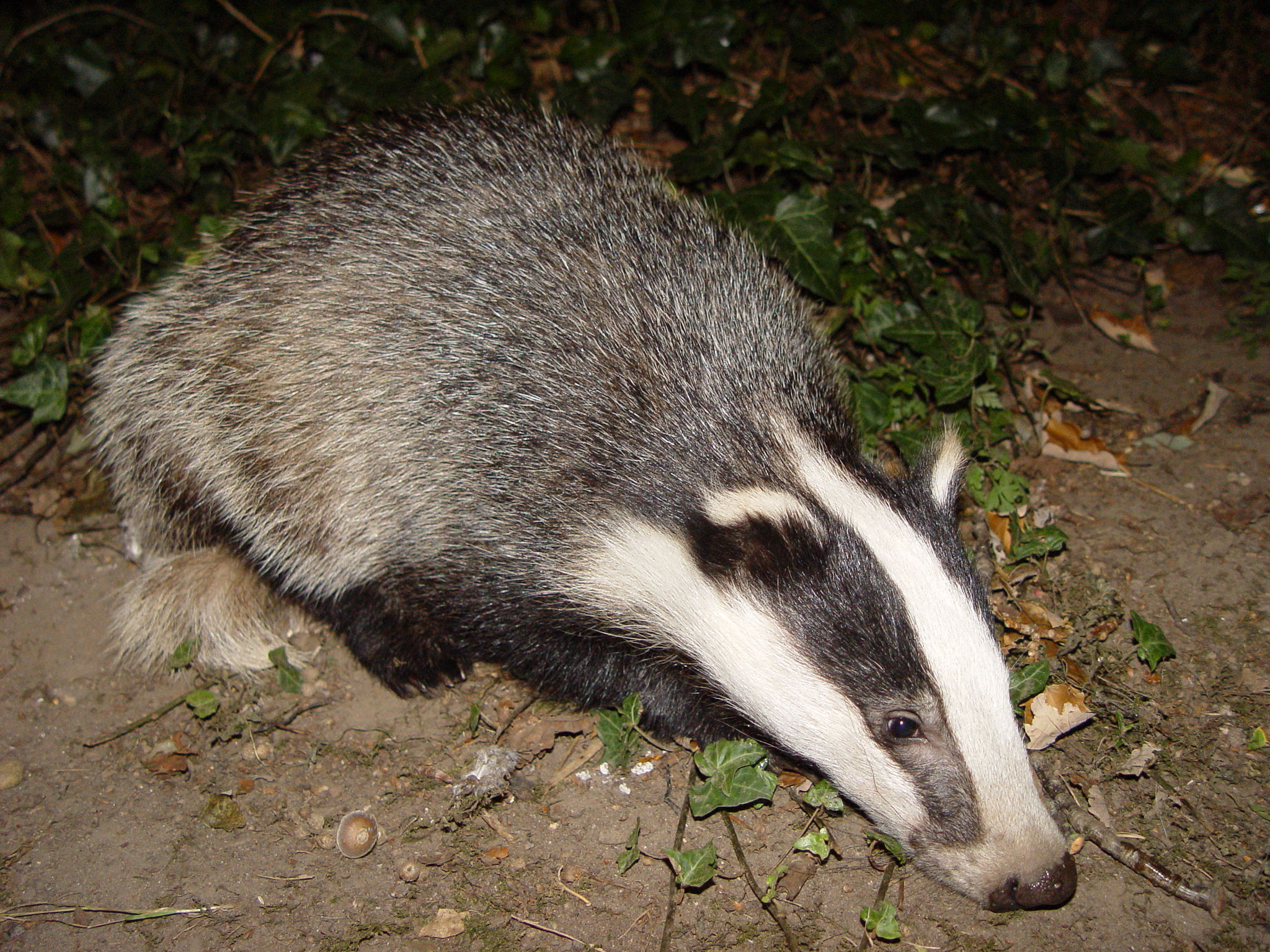
2048px-Badger-badger

By BadgerHero (Own work) [CC-BY-SA-3.0 (http://creativecommons.org/licenses/by-sa/3.0) or GFDL (http://www.gnu.org/copyleft/fdl.html)%5D, via Wikimedia Commons

“It woz the badgers wot dunnit ossifer, honest.”

It’s embarrassing isn’t it, when a Cabinet Minister appears on national TV and makes such crass statements. Owen Paterson yesterday blamed the badgers for the failure of the Badger Cull in Somerset and Gloucestershire to meet its target of 70% kill, because there weren’t enough of them around. He had found out for example, by talking to a couple of his mates, that the reason there were so many less badgers around was because they were diseased. Giving all the more urgency to the cull in this Alice in Wonderland logic – expect a 100% kill rate when the cull goes national.

His phrase “the  badgers moved the goalposts” will now forever be associated with him, as much as Egwina Curry never got over the salmonella scandal, and John Gummer will be remembered for feeding his kids burgers during the BSE crisis, rather than all the good things he achieved later.

But crass though Paterson’s statements are, they underpin a more sinister agenda within the Conservative Party and beyond. This is what really sticks in our craw, because within the environment movement, the environment and nature really are a “Sacred Cow”. We hate being ridiculed for caring about nature.

Paterson and his chums merely see nature as something to be exploited (he is after all a Tanner by trade) or exterminated if it gets in the way. And Badgers most definitely fall into the latter category as far as he is concerned.

Now cuddly Richard “Boy” Benyon and the invisible man David Heath have been removed from Defra, watch out for George Eustice. He is not cuddly and he is undoubtedly on a mission.

For a little light relief I recommend you have a go at this game.

Posted in agricultural pests, agriculture, anti conservation rhetoric, anti-environmental rhetoric, badgers, David Heath, environmental policy, farming, George Eustice, Owen Paterson, Richard Benyon | Tagged , , , , , , , , | Leave a comment

Heath gone too!

My previous post was already dated when I wrote it. I now see David Heath has also been axed, replaced by another SW Lib Dem Dan Rogerson. According to Farmers Weekly, it’s still unclear which new MP will take on which role, or indeed whether the roles will be changed.

I’ll post as soon as I find out.


Posted in Uncategorized | 2 Comments

Bye Bye Benyon

So Richard Benyon, Biodiversity and Fisheries Minister, has gone. One of the innocents sent for sacrificial slaughter yesterday in the first reshuffle run almost completely on Twitter.

Benyon had done nothing wrong, he was just too old and too rich. And possibly not female, though in fact the much vaunted reshuffle to bring more women into the ministerial team seems to have been overplayed in the tory press.

I’m not a tory but I have to say I thought Richard Benyon was a good minister, particularly for his stand on fisheries and the CFP. I also thought he had his heart in the right place on biodiversity, though given the biodiversity process has no teeth, it’s no surprise that it has stalled (again).

Yes Richard was too prone to lobbying by the field sports industry, with Buzzardgate and the Walshaw Moor fiasco being embarrassing episodes. But overall I thought he did a good job and it’s always frustrating to lose someone who has mastered their brief.

George Eustice replaces him. Eustice is Cornish and grew up on a Fruit farm. Why is he not a Lib Dem? In fact he stood for UKIP, but fortunately stepped away from that particular flame. He was Cameron’s press officer and more recently has been a key Cabinet office Energy Adviser. He is known for his anti wind turbine and solar farm views, though is not a climate change sceptic. Surprisingly he also wrote in support of Friends of the Earth’s Bee Cause neonicotinoid campaign. Could this presage and change in position on bees within Defra? Don’t hold your breath.


Posted in bees, biodiversity, climate change, farming, George Eustice, Richard Benyon | Tagged , , , , , , , , | 1 Comment

Party Time 2: Owen Paterson’s Speech at the Tory Party Conference

I don’t have time to write an analysis of Owen Paterson’s speech at the Conservative Party Conference, but you can read it here.

I’ll try and take a look at it this evening.

At a fringe meeting Paterson also appeared to be standing fast against the NFU campaign to reduce the rate at which Pillar 1 funding is shifted to Pillar 2 to support Agri-Environment Schemes, amongst other things.

There’s a classic quote from NFU’s Deputy president Meurig Raymondin Farmers Guardian

“no farmer likes to see their money transferred from Pillar 1 to Pillar 2’ of the CAP. He said farmers were in the best position to decide how to spend their money.”

And there I was thinking it was our ie the taxpayers money!  Silly me.

Posted in agriculture, Common Agricultural Policy, Conservative Party Conference, farming, Owen Paterson | Tagged , , , , , , , , , | Leave a comment

Party Time.

It’s party conference time. Needless to say the environment has not featured prominently among the headlines. But here’s Mary Creagh’s speech.

It’s a bit heavy on the affordable food message, but at least a Labour Government would drop the Badger Cull. It’s worth noting that the previous Labour Govt were moving towards the cull, so that is good news.

There is little about the continuing biodiversity crisis, but good news about more Marine Conservation Zones – though see Dave Dunlop’s comment-  he remains unconvinced..

There is also a clear message that The Coalition’s Red Tape Challenge to cut regulation will be abandoned. Though again the last Labour Government were also keen on cutting regulation or at least ignoring it – as I found during 5 years of trying to get them to effectively implement the EIA Directive for agriculture.

In fact, Labour have a relatively easy time on the environment at the moment as all they have to do is show how much better they would be than the Coalition. Let’s face it they could do nothing and still achieve this, so it’s an incredibly low bar to get over.

Only concerted pressure between now and when the manifesto is written will see anything positive on the environment from Labour, other than them abandoning some of the most destructive Government environment policies and positions we have seen in decades.

Posted in Uncategorized | Tagged , , | 8 Comments

Nature Encounter: Red Squirrel.

1024px-Redsquirrel_eating_2012

By Paul Whippey (Own work) [CC-BY-SA-3.0 (http://creativecommons.org/licenses/by-sa/3.0)%5D, via Wikimedia Commons

It was a week after my brother died, we were in the Isle of Wight, where I was surveying strandline vegetation. I had gained access to a private wood, part of a monastery that had been refounded by french monks in the 19th century. It was a beautiful woodland, very unusual I guess because of it being on the Isle, and so close to the coastline. I had completed my survey work and was wandering back through the wood, in a sombre but contemplative mood, when I was lifted into consciousness by a scolding, churring noise. I looked up to see a rather annoyed red squirrel, clearly objecting to me being in his/her space. It was just ten feet above my head and paying me close attention. I was rapt, frozen, paralysed by the joy of the moment. It hopped about among the branches and ivy, not sure whether to attack or retreat. I took out my camera and tried to get a photo but the light was all wrong and it was moving much too fast, moving in and out of cover. I gave up with the camera and just watched. After a couple of minutes its tone changed and it had clearly decided I was not a threat. Then it just chatted to itself (or me?) for a good five minutes while I watched, enchanted.

Eventually it went off into the canopy and I walked on back to my car. I had been liberated from my personal tragedy for a brief moment, but that moment had stayed with me and remembering it lifts my mood.

Would it have been different if it had been a grey squirrel? Yes – the behaviour was quite different, though also knowing this little arboreal acrobat was now just a ghost in large parts of our mainland woodlands made the moment more poignant.

Posted in Isle of Wight, red squirrel, spiritual value | Tagged , , | 4 Comments

correct link for Memories of Simon King facebook page

I had a feeling I hadn’t got the right link for the facebook page I have set up for my late brother Simon. This is the correct link – thanks to Ella Bellew for posting the correct link.

The funeral’s tomorrow so I will post again probably on saturday.

Posted in Simon King | Tagged , , | Leave a comment