Upcycle Bungalow Land to build more homes

Tiverton_,_Balloon_View_of_Broomhill_-_geograph.org.uk_-_1234159

Bungalow Land (David Hunt [CC-BY-SA-2.0 (http://creativecommons.org/licenses/by-sa/2.0)%5D, via Wikimedia Commons

Britain and especially England needs more houses.

Yes there are a million empty homes  – some of which can be brought back into residential use easily (many cannot). But they aren’t all in the places where housing is needed.

There are certainly brownfield sites which can be developed into residential areas – though not all brownfield land should be developed – Lodge Hill was, after all, classed as brownfield land.

Greenfield developments are always attractive to planners and developers (and of course the owners of the greenfields) because they are easy to develop. But for many reasons (not necessarily wildlife) they are not always the best places to put houses either- unless you’re building an entire new town – or a  large urban extension, like Poundbury, here in Dorchester.

Nick Boles the housing minister has recently suggested he will take “state-owned land” and give it to young people to self-build.The question arises “what state-owned land”? It’s difficult to imagine self-builders wanting to live on a far-flung redundant air base. And who would bear the costs of remediating post-industrial land to make it safe for development. Perhaps Boles is thinking about selling off Local Authority -owned land – county farms, open spaces, municipal parks. He hasn’t provided any detail yet.

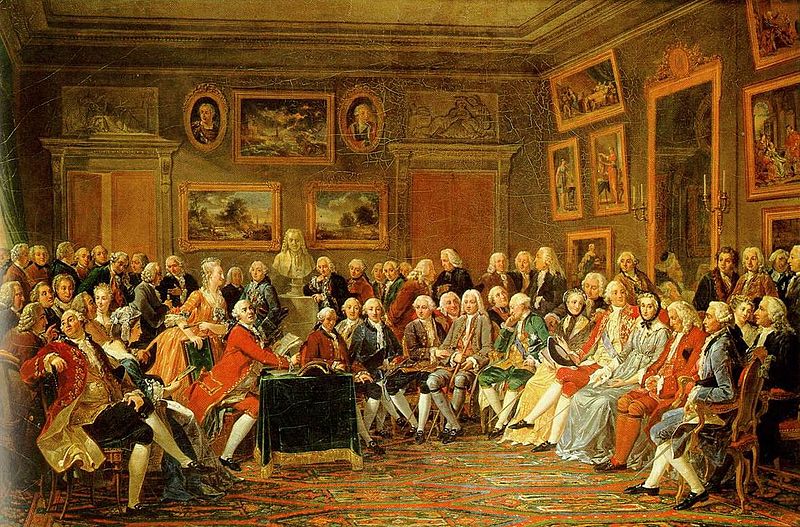
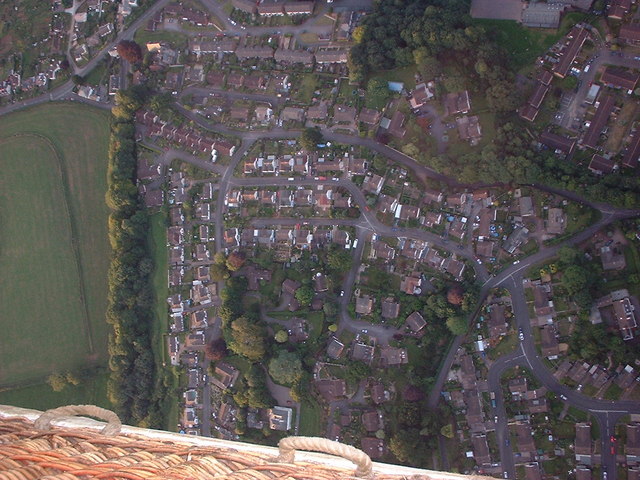
I have another proposal. Let’s upcycle bungalow-land. Bungalow-land is the consequence of lax planning leading to suburban sprawl. There are around 500000 bungalows in the UK27000 bungalows were built a year during the 1980s.

Bungalow land is defined by the very low density of its housing – between 5 and 15 per hectare. Bungalows are also very energy inefficient, as there is no upstairs to recycle the heat generated downstairs.

The Government should compulsory purchase (they are after all happy to do this for HS2, a far less socially essential development) vast swathes of it, and then sell it off to self-builders (as Boles suggests) and not for profit housing developers, like housing associations.

Such an approach could turn 100,000 bungalows into 500,000 self-build plots and housing- association shared equity homes (all highly energy efficient). High quality green infrastructure (including some “wild” greenspace) could also be incorporated into these developments, creating a much better environment for everyone.


Posted in bungalows, greenspace, housing, public land | Tagged , , , , , | 9 Comments

Chairs Past Present and Future

512px-Ivans_ivory_throne

Stan Shebs [GFDL (http://www.gnu.org/copyleft/fdl.html), CC-BY-SA-3.0 (http://creativecommons.org/licenses/by-sa/3.0) or CC-BY-SA-2.5 (http://creativecommons.org/licenses/by-sa/2.5)%5D, via Wikimedia Commons

Following on from Monday’s post, I thought I would look back at who has chaired the Council of Natural England, English Nature, the Nature Conservancy Council and – all the way back to 1949, The Nature Conservancy.

The National Parks and Access to the Countryside Act in 1949. It was one of the many amazing creations of the Attlee post-war Government (not forgetting the NHS, Universal Suffrage and Comprehensive Education). In 1950 the Nature Conservancy was established and its first chair was Sir Arthur Tansley, arguably the father of the science of Ecology and an ardent conservationist.

In 1963 the aristocrat Lord Howick  – Evelyn Baring of the banking family, became chair after a highly distinguished career in the Colonial Service. Howick steered the Conservancy through tough times, when the Natural Environment Research Council was created in 1965, the the Countryside Commission was hived off in 1968. In 1973 conservation was rescued and the NC split into the Nature Conservancy Council and the Institute for Terrestrial Ecology. Sir David Serpell was NCC’s first chair – he had been a Permanent Secretary and used his Civil Service expertise to establish NCC within that landscape – though he will be remembered more for his role in the Beeching railway cuts.

Sir Ralph Verneybecame chair of NCC in 1980 and steered the NCC through the treacherous waters of the Wildlife and Countryside Act 1981, the most amended bill in parliamentary history. He fell out of favour (apparently after the controversy surrounding the notification of West Sedgemoor as an SSSI – when effigies of Verney and NCC officials were burnt on the Levels) and was quickly replaced in 1983. Verney was very enthusiastic about conservation, from an aristocratic land-owners perspective.

Verney was replaced by Sir William Wilkinson – some at the time may have thought Wilkinson was brought in to be “a safe pair of hands”, but they were wrong. Wilkinson had also been a Banker in the City, where he famously stood up to Tiny Rowlands when Rowlands took over LonRho.  Another passionate conservationist, Wilkinson steered NCC through the very dark era when Sir Nick Ridley was Environment Secretary. NCC stood up to the worst excesses of Thatherism (planting forests in the Flow Country, for example), with Sir William at the helm. Ridley – Owen Paterson’s wife’s late uncle, wrought his revenge and killed the NCC, splitting it into English Nature, CCW and SNH.

 English Nature’s first chair was Lord Cranbrook, who had spoken in Parliament in favour of NCC’s creation in 1973. An academic zoologist, he sought t0 re-build EN after the cataclysm of NCC’s dismemberment, though that era may be better remembered for Derek Langslow’s corporate approach to EN’s strategy.

Barbara Young, ex Chief Exec at RSPB took over the chair in 1998, but left quite afterwards, to be replaced by Sir Martin Doughty. Both Young and Doughty had conservation running through their veins, and EN prospered under their chairmanship, as well as a moderately sympathetic Government (and healthy public sector finances.) The CROW Act of 2000 and the NERC Act of 2006 both strengthened EN’s powers to protect and manage SSSIs. Doughty took EN through the sometimes painful merger with RDS and the Countryside Agency and sadly died soon after.

Sir Poul Christensen took over in 2007. Christensen comes from a staunch farming background but during his tenure NE had been prepared to stand its ground against the power of the NFU and the farming establishment, until the Coalition took over and hobbled it.

Christensen has served his 2 terms and we will now have, unless something dramatic happens Edward Andrew Perronet Sells.

What can we tell from this quick look back over the chairs of the conservation bodies? Many of them were aristocrats, some were academics and financiers. Most in the past were Tory leaning (on the wet side of the party), though Young and Doughty were/are clearly Labour supporters. But all of them (perhaps with the exception of Serpell) had a passion for nature conservation.

Posted in Andrew Sells, Natural England, NFU, Owen Paterson | Tagged , , , , , , , , , | 9 Comments

Come in and have a look around

800px-SteacieLibrary

Wikimedia Commons: Raysonho @ Open Grid Scheduler / Grid Engine

This is my 78th post since I started blogging again, in May this year. I’ve  been blogging like mad over the past three or four weeks – thanks to everyone who’s been reading, commenting and tweeting.

There’s plenty of material in here – to be honest I don’t know how easy it is to find things using the search function. I’ve tried to place the posts into categories to help readers find them – let me know if it’s not easy.  You can also find earlier writing here.

I think I should copy across my posts from the Grasslands Trust’s website, as it would be a shame to lose them if that site went down. Any ideas about how to do that easily?

Anyway please help yourself – come in and have a look around.

Posted in Uncategorized | Tagged , , , , , , , , | Leave a comment

The New Natural England Chair: Andrew Sells

The experience of having been present and witnessed a Natural England Board meeting is still fresh in my mind.

I was struck in particular at how important a role the chair, Poul Christensen, played in helping his fellow Non-ex members to reach a fair decision on the notification of Lodge Hill SSSI. The fact that none of these members understood the National Vegetatation Classification, a core principle underlying most SSSI notifications, led me to write to Sir Poul and offer my services to the Board, to provide a short training event for them, so they can understand what the NVC is and how it can be used and abused. I have been using the NVC for 20 years and teaching abuot it for 10 so I have some experience. I have not yet had a reply.

Poul Christensen is a farmer, through and through. He knows farming inside out, and has been a central player in the agriculture industry for decades. He co-founded the Tenants Farmers Association. He clearly also knows quite a lot about conservation (apart from plants), as evidenced by his chairing of the NE Board. He is now leaving the Board as chair after a long stint and he should be applauded for having done a good job in very difficult circumstances (especially the last 3 years.)

Defra has announced that they have chosen his successor – Edward Andrew Perronet Sells, known as Andrew Sells.

The process for selecting and appointing non-exec Board members to Government Bodies is scrupulous – it says so here. 

The process is based on three principles, Merit, Fairness and Openness. Merit is the over-riding principle of the three:

“This means providing Ministers with a choice of high quality candidates, drawn from a strong and diverse field, whose skills, experience and qualities have been judged to best meet the needs of the public body or statutory office in question.”

Fairness: The process must be “objective, impartial and consistent”.

Openness appears to just mean that the post has to be advertised publicly and not confined to cosy back-room chats at Mayfair Gentleman’s clubs.

So who is Andrew Sells? He is an accountant, he worked at a City Investment Bank for 10 years before becoming a venture capitalist. What you may ask is a venture capitalist. These are the people in the Dragon’s Den. They look around for businesses to buy (often with massive loans from Banks) and build, then sell them on for a big profit. Just the sort of thing that would give you the skills, qualities and experience you would need to chair the statutory nature conservation body for England, no?

ok, perhaps he is interested in nature? Yes! He is a very keen gardener and has been treasurer of the Royal Horticultural Society. That experience should serve him. The RHS are a much greener organisation now than they were when I was at Plantlife, and they refused point blank to sign up to anything promoting reduction of peat-use in horticulture. In those days Thorne Moors was still being mined for peat. He is also apparently very interested in growing trees.

Well those are qualities that you would imagine would apply to rather a lot of people who might be interested in becoming Chair of NE. Anything else?

Sells was chair from 2009-2012, of the Garden Centre Group, which owned Wyevale and a number of other Garden Centre chains. And he was in that chair when GCG was sold at a huge loss to the main shareholders, including £100M write off for HBOS, now Lloyds TSB – who funded the expansion of the chain (remember what I said about bank-funded venture capitalists?), before Sells arrived. No blame attached to Sells. The advisers to the sale were Rothschilds.

What other experience might Sells have had to qualify him for the post. Well, he co-founded Linden Homes, a property development business specialising in developing brownfield sites for residential housing. Thank goodness they weren’t involved in the Lodge Hill debacle! Linden Homes had been a public company with shares being traded on the Stock Exchange. Sells, with his business partner Philip Davies, took Linden Homes back into private ownership in 2001 where he acquired a 5% stake in the company.  The buyout was funded by HBOS to the tune of a 35% stake in the company, sold for £73M at the time. Linden Homes did well and Sells and Davies sold the company for a healthy profit in 2006. the adviser for the sale were Rothschilds. Prescient timing given what happened to the housing market shortly after. Sells’ former close partner is now a director and board member of the Homes Builders Federation.

Linden Homes was focussing its effort to develop brownfield sites in the Thames Valley during the 2000s. That should give Sells an interesting perspective on Natural England’s continuing engagements with the house builders adjacent to the Thames Basin Heaths European Sites.

Anything else relevant? Sells is a non-exec board member of a company that runs crematoria for local authorities and was chair of another crematoria company for 10 years previously. That experience of disposing of the remains of dead entities may come in handy if Natural England carry on defying their Government sponsors as they did with the Lodge Hill notification.

Ok, still not a massive amount of experience with conservation, though plenty of boards attended or chaired.

Now going back to the appointment process, it does state very clearly that political activity is not in itself a barrier to appointment, which is reasonable. What sort of political activity might Sells have been involved with?

He is a major tory party donor. He has donated £137,500 to the Tory party. He was also co-treasurer of the No 2 AV campaign. This campaign was ostensibly a cross-party campaign against introducing a bit of proportional representation into the electoral process (was we know now it would let in many UKIP candidates – is that a reason for not having it?). It turns out that No2AV was actually a bit of an astroturfing outfit, as it was principally funded by tory party donors (£25k from Sells) and led by Matthew Elliott, who was “on sabbatical” from the thinktank The Taxpayers Alliance, which is apparently funded by a group of Eurosceptic tycoons.

As well as being former treasurer to the RHS, Sells is also treasurer to the Policy Exchange. The Policy Exchange is definitely a tory-donor funded Thinktank and they generate all sorts of interesting ideas for and on behalf of the more right wing neoconservative end of the Tory party. PE for example developed the ideas of Biodiversity Offsetting now so popular with our Defra ministers. It is therefore not surprising that Sells has also been asked to chair a group to help the Department of Work and Pensions develop “best practice” for The Work Programme.

Perhaps Sells will devise a way to bring lots of unemployed people to NE so they can plant his beloved trees on NNRs: and perhaps a few shrubberies.

If you think Andrew Sells has been recruited in a way that falls short of the standards set out by the Commissioner for Public Appointments, you can complain to Defra. If they fail to satisfy you, you can take your complaint to the Commissioner.


Posted in Andrew Sells, Natural England, neoliberalism | Tagged , , , , , , , , , , | 22 Comments

Set our Landscapes Free

Species need landscape features to shift at differing speeds.

Shifting Patterns in Time and Space

Some species depend on constantly and fairly rapidly changing circumstances such as the creation and loss of bare ground, changes in the inundation status of soils – drawdown zones around ponds for examples, or the slumping of cliffs and landslides. Many insects and spiders are associated with these short cycles of bare ground creation and revegetation – this explains in part why Brownfield sites are so important for invertebrates.

Other species depend on slower processes  such succession from open ground, through scrub to woodland;, slow shifts in salinity at the edge of upper salt marshes, or slow shifts in hydrology as lakes silt up or rivers shift their courses.

Species that depend on a combination of habitat features – for example the parkland specialist invertebrates that need flower rich grassland, decaying wood and flowering shrubs; are of necessity dependant on the processes that enable these features to coincide at a certain time and place. But those processes are also inevitably going to mean that the combination of features will rapidly cease to coincide at a particular time and place, as scrub replaces grassland or the resource of decaying wood disappears.

Accidental Benefits

This can also be the case with the direct impact of human activities. Past industrial activity created habitat features such as bare ground, rocky substrates, temporary inundation features, toxic soils. These are by their nature transient – indeed historic as some of the processes that led to their creation are now illegal!

This human activity (industry, agriculture, forestry, mineral extraction) mimicked to a certain extent the natural processes of habitat dynamics. These human activities provided a constantly changing landscape which species could move within, able to find suitable habitat within their abilities to colonise or re colonise.

Engineered Out
Modern land use has effectively removed the processes which created this dynamic mosaic of constantly shifting habitat features. Landscape ossification would be a good phrase for what we have done.

Modern agriculture and forestry have adopted the philosophy of modern industrial production where efficiency is the primary goal to achieve highest production at lowest cost.

Natural dynamic processes are generally engineered out of the system, to maintain as constant and optimal conditions for product, crop or animal growth.

Natural variables such as soil fertility and hydrology are tightly controlled, and the growth of non-crop/stock biota is minimised as seen as either competing with the crop/stock or a threat to it (as a carrier of disease).

Natural processes such as succession, substantial changes in hydrology (shifting river channels), peat building, the effects of natural pathogens on habitat assemblages (the boom-bust relationship between parasite/pathogen and host populations) are also engineered out of the system for the same reasons.

Agri-Environment Tweaks
Attempts have been made to use agri environment funding to support farmers and foresters to either tweak modern agricultural activities to benefit species, or to recreate traditional pre-industrial agriculture in the belief that these approaches will be able to provide species with the habitat features that they require. These approaches have become increasingly prescriptive, under pressure from auditors and politicians needing to demonstrate value for public money, rather than actual results of increasing populations of species.

CAP rules on eligibility for direct payments explicitly proscribe landowners wishing to allow natural dynamic processes from occurring on land in receipt of direct payments  – through the ridiculous 50 trees rule and ban on encroaching vegetation.

20 years of the BAP

Conservationists have over the last 20 years attempted to identify and prioritise actions based on the identification of priority species and habitats, which has led to a focus on maintaining or creating habitats in what is regarded as an optimal but fixed state for priority species or what are regarded as optimal condition, mostly based on the presence of plant communities that are highly valued for a variety of reasons.

The focus on maintaining habitats or expanding them has also led to landscape ossification in that changes from one priority habitat state to another are prevented rather than encouraged. Again dynamics have been engineered out of the system. This has been reinforced by the overwhelming importance of AE scheme funding to support  conservation management over the past 20 and especially the last 10 years.

So while many hundreds of millions of pounds of public money have been spent on agri environment schemes, the vast majority of species continue to decline or are only kept at levels from which they are vulnerable to stochastic impacts or external effects such as climate change or population growth.

With the new CAP regulation comes a consequent renewal of the Rural Development Plans across the UK and Europe. Do we have an opportunity to incorporate landscape dynamics into the new  schemes? Can we bring landscapes back to life, de- ossify them and enable natural processes to start again.

Certainly much thought has been applied to developing approaches which enable floodplains dynamics to be revived, though this has only been actually applied in a very few places. Equally there have been approaches to developing dynamics in woodlands systems with wild Ennerdale being one example in England, and much more work going on in  Scotland particiularly in the Caledonian pine forests.

Landowners will no doubt argue that money is needed to allow or even encourage landscape dynamics to operate, even assuming any would be sympathetic (well at least one is – the Knepp Estate) . It is more than just a question of money though. There is something intrinsically repugnant to farmers in allowing landscape dynamics to operate, because it is seen as bad farming practice. Education here is key, but also making it a condition of payment receipt will also be needed. Voluntary approaches are unlikely to be effective.

There will also be opposition from the Agro industrial complex as their interest is in maximising profit and therefore food production beyond all other interests. Strong arguments will need to be made as to why it is more important than food production.

The current approach to AE schemes is to pay area and capital payments. Both approaches could be beneficially applied to landscape dynamics. An area payment could be made to encourage processes such as succession, bare ground creation, accumulation of deadwood or wet woody debris, removing constraints on rivers and springs and changing the type, level and seasonality of grazing from year to year.

Capital payments could be made for the removal of engineered controls such as sluices, drains etc or for the creation of substantial areas of new habitat features such as bare ground, rocky substrates, or wetlands which are specifically designed to undergo succession.

However in general the philosophy should be to avoid engineering solutions, other than to set initial conditions, after which natural processes should be enabled to be the primary drivers of change. This is similar to but different from re-wilding approaches because the aim is not to remove human impact or action from the system, but to enable natural processes to operate alongside human activity.

It may be that trying to incorporate landscape change into modern Agro industrial systems is unlikely to be successful at least in the short term, and other land uses may provide more fruitful ground – land currently under industrial use or even land where residential development is going to proceed.

Indeed the valuable brownfield sites of today have developed precisely because once the initial conditions have been reset or enhanced through industrial use, after which natural processes were left in charge due to post-industrial abandonment. Nowadays this is not allowed for various reasons including health and safety, contaminated land rules, pressure to re-use land, and cultural reasons “tidying up”.

Incorporating land where natural processes predominate in new housing developments would also be challenging, as preconceived notions of what constitutes optimal greenspace tend to focus on “we’ll managed” spaces, with mown grass and planted trees. Again this means education both of the house-owning public but also green space and GI professionals.
 

Posted in agriculture, Common Agricultural Policy, conservation, Floodplains, greenspace, landscape dynamics, management, rewilding, scrub | Tagged , , , , , , , , | 3 Comments

Public Goods for Public Money

“Public Goods for Public Money” has become a bit of a mantra, not just for me, but for a wide range of organisations and individuals fed up with one failed reform of the Common Agricultural Policy after another.

I was questioned yesterday by Daye Tucker (@RuralLeader) who argued that farmers provision of affordable food was a Public Good.

Now I am no environmental economist, but I can do no better than quote from a Wildlife and Countryside Link submission to Defra on the New Environmental Land Management Scheme proposals for Pillar 2 funding in the “newly reformed” CAP.

” Public Goods for public funding is a long established principle, and has been adopted by Government as a key guiding principle in its approach to CAP reform. In the context of environmental land management, this principle is inextricably linked to the need for a robust [regulatory] baseline, and the degree to which a certain priority can be described  as a public good will influence the point at which the regulatory baseline is positioned. Biodiversity is often cited as the most unambiguous public good.

Public goods can either be non-excludable or non-rival (or both).

Non-excludable goods are those where one person benefits from something, another is not excluded from the benefits it confers. Non-rival goods refer to a good that if consumed by one person, it does not reduce the amount available to others.

For example, a farm may produce both food and an attractive landscape. The landscape is a public good: anyone can enjoy it, and it does not get used up by people. The Food is not a public good – the farmer can choose who to sell it to and “exclude” other potential customers; once it is eaten it is no longer available to anyone else.

By definition, public goods are rarely marketable – the farmer receives a price for the food, but would struggle to charge people for enjoying the landscape. In fact in many instances market forces will reduce the supply of public goods because land management instead decide to produce marketable goods” – this is called Market Failure.

“There is a clear societal justification to use public funds to support private landowners to provide public goods – both for the societal benefits they bring, but also because normal market conditions will often act against them.”

The other point is that when society invests in public goods provision, this contributes to a sustainable economy – through environmental protection, but also socio-economic benefits for local communities, and production benefits for farmers.

I guess we will have to keep chanting this mantra for the next seven years now…..

Posted in agriculture, biodiversity, Common Agricultural Policy, European environment policy, public goods | Tagged , , , , , , , | 2 Comments

A Robo – Phantasy

ELEPHANT-IMAGOLUTION

This blog appeared on yesterday’s Woodland Trust blog ,  but I thought I would recycle it today.

A new approach to Forest “Management”

The Holocene Forest (which existed from around 10000 years before present to 7000 bp ) was a quiet place. The Wolves howled and the Aurochsen roamed between the trees (with the occasional tap tap of Mesolithic forest management), there was something missing – something really big.  Something that had been present in every previous incarnation of Forest in every previous interglacial period in Northern Europe – Elephants. Straight-tusked Elephants, standing 4m tall at the shoulder and weighing in at 6-7 Tonnes. A monster.

Compare this with today’s African Savannah Elephants – 3.3m and 4-5 tonnes.

What would these leviathans of the Forest done and how would their daily activities affected the forest ecosystem?

Modern day African Forest Elephants (tiny by comparison with their extinct forebears) create permanent forest tracks and large clearings called Bai. Here they congregate for social life and also use them as salt licks where they find essential minerals which are otherwise rare.

Apart from creating forest tracks and clearings, what else might these Elephants have done in the forest. It seems likely that they would have ripped branches off trees and shrubs, to access leaves or fruit. Sometimes trees and small shrubs would have been pulled clean out of the ground or just knocked over, if they were in the way, or again to provide food. Would they have stripped bark from trees to eat in the winter? Without worrying too much about the details, it’s fair to say that Elephants would have made a big mess, knocked down lots of trees and ripped branches off the larger ones.

This might lead on to a debate about how much of the British forest in previous interglacials was kept open by Elephants, and  provided open habitats such as grassland or heathland. But even without this debate, it’s worth considering the action of Elephants on Forest structure.

Our wildlife, including trees and shrubs, as well as species of open habitats, evolved hundreds of thousands or millions of years ago, under selective pressure from animals such as this huge Elephant. These species are still with us, even though the Elephants have gone. They continue to depend on the types of activity which those Elephants previously created.

Historic woodland management from the Mesolithic to the 19th century depended on coppicing, pollarding, hedging and grazing. Woodlands also encompassed muddy, flowery rides for moving animals, people, timber and wood. Together, these created conditions that equated very approximately to the conditions that the Elephants (and other animals) provided previously.

Can we do better at creating these conditions for purely conservation reasons? A machine, such as a digger with a back-hoe, on low pressure tires, could drive around a forest, randomly knocking trees and shrubs over and breaking branches off trees.

But it would not be able to mimic the prolific consumption of herbage by an Elephant, nor the creation of Elephant-sized dung heaps.

While it’s not really feasible (or ethical) to re-engineer a Straight Tusked Elephant from fossilised DNA, an alternative would be to create Robo-Tusker.

This would be superficially similar to the digger, but instead of being powered by fossil fuel, it would have an inbuilt anaerobic digestion/wood gasification plant – to “consume” the material it extracted from the forest. Instead of low pressure tyres it could have legs and slowly walk around the forest (walking robots have come on in leaps and bounds in recent years), until it’s power ran out and it needed to do some more digesting/gasifying. Instead of Elephant Dung it would produce high quality compost, as AD plants already do. It would need no driver – it would effectively be a self-controlled drone. And unlike wild Elephants it would have no desire to leave the forest in which it lived.

That will please the neighbours.

Thanks to George Monbiot for opening my eyes to the impact Elephants had on European Pleistocene Forests.

Addendum:

Rod Leslie formerly of the Forestry Commission left a comment on the WdT blog yesterday suggesting that we already had a good equivalent of Robo-Tusker – a Forest Harvester. But Rod missed the point – a harvester extracts timber. Robo-Tusker would only be a consumer in the sense of any other animal in the forest  – except of course that it would not be able to produce mini Robo-tuskers. Now there’s a thought….

Posted in forest elephant, George Monbiot, Mesolithic, rewilding, straight tusked elephant, wolves | Tagged , , , , , , , , | 2 Comments

The Death of Greening

Remember the European Commission’s much vaunted proposals to “green” the Common Agricultural Policy?

The idea was that, to show the European public (who pay for the farming subsidies the CAP hands out) that their money really was being spent on public goods, such as the environment, 30% of that subsidy would be tied to activities which deliver environmental benefits. What lofty aims, what idealism!

Greening is now a zombie policy, dead man walking. The permanent pasture rule, which was going to prevent conversion of grassland over 5 years old (laughingly called Permanent Pasture by the Commission) from being turned into arable, was a milksop from the word go. Permanent Pasture can mean anything from Alvar which has never seen a plough, through to a crop of stubble turnips. In the UK it’s mostly perennial rye-grass. So preventing its conversion to arable is a landscape-action, little related to biodiversity.

The aim was that this silly rule would apply at the farm level. Now this has been watered back down to its current meaningless level, in that it will only apply at the Country or Regional scale. So all those fields (some very wildlife-rich) that were ploughed by panicking farmers were for nothing. There’s a lesson in there about how to apply a Regulation.

Now we hear that the 3 crop rule will cause farmers no trouble at all.

That just leaves Ecological Focus Areas. These will not apply to farmers which are predominantly pastoral, so that excludes around half the agricultural area in England, and more than half across the UK. If you have more than 15ha of arable, then 5% of the arable area must have some sort of environmental benefit. Expect to see a few strips of bird and bee food along arable field edges.

So after about five years of wrangling and hundreds of thousands of hours of effort from conservation and sustainability groups – the opportunity to convert 30% of the £3Bn a year UK CAP budget into real environment benefits has been comprehensively culled.

There are only two unions operating in England which have any real clout these days – and ironically neither of them strike. The Police Federation and the National Farmers Union. Well done NFU, you’ve more than earned your subs this time round.

Posted in agriculture, Common Agricultural Policy, Greening, NFU, public goods | Tagged , , , , , , , , | 1 Comment

Owen Paterson: Enlightenment Man

800px-Salon_de_Madame_Geoffrin

Owen Paterson is Enlightenment Man in the modern day. OP believes that the environment needs to be improved and repeats this at every opportunity. He also promotes individualism and the public benefits derived from private profit-making. This is his central ethical magnetic pole. He is a neo-conservative, beyond neo-liberal.

Paterson is a natural quote machine. Witness last week’s Today interview, on the day Nature Check was published:

The environment is such a huge, vast, all-encompassing tableau”

“Otters have come back, thanks to water privatisation.”

“Last week I visited a fantastic private nature reserve.”

“These are very active campaigning groups – they have very subjective views [on the Government] which are unfair.”

“We have a long term programme to leave the environment better than before.”

on green belt: “we cannot freeze the country in aspic.”

on biodiversity offsetting: “if an environmental asset needs to be removed, it will be improved elsewhere.”

It’s clear – OP is about Improving the environment, being Objective not Subjective, Progress is all, the Private realm delivers far better than the state.

Paterson reeks of the enlightenment, when men threw off the shackles of superstition and religious hegemony, while transferring the notion of man’s dominion over nature from a religious to a rational basis. He is clearly revulsed by nature – talking of Mycobacterium bovis (cause of bovine TB) as this “disgusting bacterium”, and his portrayal of those opposing genetically modified Golden Rice as “wicked.”

Paterson genuinely believes that the human race can and must overcome everything that nature can throw at us, through Nietzschean force of Will, or through technological supremacy. Nature must be subdued.

He is not alone – look at the RSPB’s TV adverts – we must make new homes for nature (sponsored by Rightmove). It won’t be too long before we see evicted badgers searching on the righmove website  – select “rural or urban”, “one entrance or two”, “inside outside a cull zone”. 

George Monbiot argues nature can look after itself and doesn’t need our help. There is a broad continuum between GM, RSPB and OP –

OP – wildlife must be managed to avoid it going bad/disgusting/wicked

RSPB – Build new homes for Nature

GM – Let Nature Decide.

Where do you Stand?

Posted in agriculture, badgers, biodiversity offsetting, Charities campaigning, conservation, deregulation, enlightenment, environmental policy, ethics, George Monbiot, management, neoliberalism, Owen Paterson | Tagged , , , , , , , , | 6 Comments

dixter meadow 2

vanishing meadows – less than 5000ha left in England


Natural England come in for a great deal of stick from other conservationists – Walshaw Moor is a good recent example.

But I’d like to praise them for some brave SSSI notifications over the past year or so, and for their particular focus on unimproved grasslands.

There are less than 6000ha (probably quite a lot less) of unimproved neutral grasslands left in England – and only about half of them are protected as SSSIs. As there is so little unimproved neutral grassland left in England (and under 10,000ha in the UK) Natural England has a duty to notify all of it that remains, as long as it is over 0.5ha and floristically rich (or supporting other rare species); or over 5ha of one particular NVC type, or over 10ha of a mixture.

I like to think that the work that The Grasslands Trust did in raising the profile of unimproved grasslands, gave Natural England a reminder that there was still much to be done. And, talking to a NE Exec Director on tuesday, he confirmed to me that we did have an impact. Natural England have notified or are notifying quite a few new SSSIs or extending existing ones with unimproved grassland as key interest features – including a number that are controversial:

Chattenden Woods and Lodge Hill is one I have blogged about a number of times now.

Benty Grange in the Peak District was quite a high profile EIA (Agriculture) case which went on to be a controversial SSSI notification, as the CLA objected to the farmer’s Human Rights being infringed. I hadn’t come across the “right to destroy nature for economic benefit” before myself.

Rampisham Down in Dorset (ok it’s acid grassland) was notified to protect it from a Solar Farm development. It’s a massive 72ha.

Clifton Ings and Rawcliffe Meadows  in Yorkshire is an extremely rare Lowland Floodplain meadow – there are just 1000ha of these left in the UK. This one is big at 56ha. It also supports the very rare Tansy Beetle.

Crich Chase sounds like a wonderful place, a 118ha mosaic of ancient woodland, scrub unimproved neutral and acid grassland with rare grassland fungi in the Amber Valley Derbyshire.

Waterfall meadows again in Derbyshire is a large area of unimproved meadow – well, large by today’s standards – 8.5ha.

Holly Rock Fields in Leicestershire – a smaller site (4ha) with unimproved neutral and acid grassland.

in 2012 The Blackmore Vale Commons and Moors SSSI brought together a number of smaller sites into a new site covering 300ha, with many unimproved neutral grassland and fen meadows fields included.

I’m a little disappointed that the wonderful site The Birches has not been notified yet. I visited the site in 2007 when it appeared to be under threat of improvement by the owner – it was amazing. Although the Hereford Nature Trust took out a loan to purchase it, if they cannot raise the purchase price it will go back on the open market. SSSI notification would ensure that even if it did have to be sold again, it would be protected from agricultural improvement.

Natural England in protecting these sites are prepared to stand up to the neocons and neoliberals in the government – those that would de-regulate everything and let anyone do anything anywhere.

Natural England may not have such powers for much longer. The Government consulted earlier this year on making Natural England have a Statutory Duty to have regard to Economic Growth. This would enable any landowner who did not want an SSSI on their land to object on the grounds that it would prevent them from contributing to economic growth.

This would mean the end of any new SSSIs.

Posted on by Miles King | 6 Comments