Great News: Defra decides Neonics are safe to bees after all and allows their use

Neonics are back in the news.

Two days ago the BBC reported on how flea beetles were feeding on the newly planted autumn sown Oil Seed Rape, and farmers were interviewed weeping and wringing their hands, saying the end of food production as we know it was nigh. It sounded very much like it was the NFU that had been pushing the Beeb to run a piece on the flea beetle blighters. It was not a balanced piece – the only person put up to counter the views of the farmers was Dave Goulson, the Bumble Bee man. He pointed out that damage at this time of year cannot be used to predict the success of the final crop.

Today Defra has announced that two Neonic sprays have been licenced for use on – yes you guessed it – Autumn sown Oil Seed Rape.

Anyone who might have been expecting the NFU’s influence at Defra to have been reduced, with the changing of the guard from Owen Paterson to Liz Truss, can relax again. Ms Truss’ constituency is North West Norfolk, with plenty of influential farmers to advise her.

Posted in Uncategorized | Leave a comment

The Matt Ridley Prize for Hypocrisy

Just a short one today as I am away from home on the ipad, which is much more limited for using wordpress.

After being accused of having no sense of irony by a climate change denier on twitter yesterday, I found this extraordinary thing.

Matt Ridley, the Irrational Optimist, has a prize for “writing exposing pseudoscience behind eco-projects” . Sir Matthew is a hereditary member of the House of Lords and brother in law to Owen “Badgers Moved the Goalposts” Paterson, former Secretary of State against the Environment. Ridley, some may also remember, was chair of Northern Rock when it collapsed, leading to the first run on a British bank in over 200 years.

That Ridley should be offering a prize for pseudoscience is deliciously ironic, since he has repeatedly used pseudoscientific arguments to justify his denial of the impact of climate change on humanity and nature, opposition to neo-liberal economics, GMOs, the badger cull, and indeed many other things.

One wonders whether he has a highly developed sense of irony, or none at all.

This could start a whole series of ironic prizes:

The Genghis Khan prize for peace studies

The Owen Paterson prize for badger welfare

Any other suggestions?

Posted in Uncategorized | 8 Comments

Labour commits to building 200,000 new homes a year: Great: where?

At the Labour Conference both Hilary Benn, Shadow CLG Secretary, and Ed Miliband, both promised massive new house-building, up to 200,000 new homes a year by the end of the parliament.

Benn said ” … we will give communities, as Sir Michael Lyons’ report will recommend, the powers they need to tackle land banking; put together the sites; get the design right; put in the infrastructure; and work with small and medium-size and large builders to build the homes that local people need where local people want.

And Conference, we’ll work with councils so that they can build more council houses.”

Ed Miliband in his very long speech yesterday committed Labour to build the houses the country needs, which is a fairly thin promise, but I understand this is due to the fact that the Lyons report has been delayed. He did promise to double the number of first time buyers getting a house. If this was double from now, it would mean a massive 60,000 first time buyers a year, as pointed out in the guardian. There was no similar commitment to the actual number, or proportion, of new council or social housing in the 200,000 figure.

Going back to Benn’s suggestions of giving communities the powers to “put in the infrastructure”, I don’t think this means we all roll up our sleeves and start digging trenches for superfast broadband. It sounds more like giving local councils more powers to require developments that have the infrastructure integrated into the master plan, rather than having piecemeal housing developments, which make an insufficient contribution towards the delivery of that infrastructure, at some unspecified point afterwards.

It could mean Labour return to the new town concept, which they unsucessfully tried to camouflage last time as Ecotowns. They didn’t got down well, despite having some very powerful concepts, such as a high proportion of green space and nature areas. This Government has been vaguely luke warm on Garden Cities, though none have actually come forward. Will MiliLabour actually deliver, if they get in?

As ever with housing, the most important choice is Location Location Location. Even if a development is superbly well masterplanned, all the infrastructure is factored in and paid for up front, the wrong location can still spell disaster. Take Lodge Hill for example. On paper, building 5000 homes, along with GP surgeries, two new primary schools, etc etc sounds ideal. But plonk all that on a 350ha SSSI, with the largest Nightingale population in England and one of England’s largest areas of surviving unimproved wildflower grassland – and you’ve got the wrong place.

Where is the right place?

As with Lodge Hill, all too often, the places housing gets built is dictated by developers buying options to develop private land. This is in part influenced by local plans identifying suitable places for houses to be built (the SHLAA process) – but this process is again heavily influenced by developers. Until this is changed to enable local communities to seriously influence where new housing goes in their area, problems will continue to arise.

Inevitably with such a dramatic change of land-use to housing land, their will be losses of biodiversity, history and community values. How will these be dealt with – will Labour also continue to develop the biodiversity offsetting approach beloved of Owen Paterson? Let us hope not.

Personally I think it makes sense for large scale housing development to take place as new towns or large new extensions to existing towns, such that they benefit from existing transport infrastructure. Placing a new town in a previously undeveloped area with poor transport links requires so much more infrastructure to connect it to other places where people will work and travel for other reasons. It made sense to put Milton Keynes on an existing major train line, for example.

Taking the area of Lodge Hill as an example, building 200,000 homes a year means building on 40 Lodge Hills – each at around 300ha. That is actually only 12000ha a year.

I have already suggested one place which could be used – bungalow-land.

12000ha a year is really not very much land – there is over 9 million hectares of farmland in England, much of it devoid of any wildlife interest, with its above ground historic features long since swept away.  Its not as though we need all of it to feed the world.

Another advantage of developing farmland is that a tax on land value uplift could generate billions of pounds to spend on the infrastructure needed in new and existing towns and cities, including the NHS.


Posted in biodiversity, biodiversity offsetting, bungalows, housing, Labour, Lodge Hill | Tagged , , , | 4 Comments

The CLA in Wales cares more about protecting meadows than CLA in England

dyers greenweed in meadow

a wildflower meadow (c) Miles King

In these days where devolution is in the air, it’s worth considering how differently two UK countries use regulation to protect wildlife.

This press release from the Country Landowners Association Cymru, was picked up by Farmers Guardian.

CLA Cymru reminds members to pay heed to EIA regulations before ploughing or cultivating their unimproved land. 

“We have become aware of members who have been caught out following random inspection visits and who now could face prosecution as a result,” says CLA Cymru Director of Policy Karen Anthony, who points out the regulation has in fact been in force since 2002 and were revised in October 2007.

The EIA – the Environmental Impact Assessment (EIA) – refers to anyone who is thinking about ploughing, re-seeding, harrowing, rotavating or putting in new drainage.

The question you need to ask is “Does the work I intend to carry out require EIA screening?” says Mrs Anthony, who stressed that permission is needed before you go ahead.

Its purpose it to stop agricultural practices affecting the environment especially sites that have significant environmental, historic or cultural importance. It also covers harrowing, rotovating and clearing scrub. 

Ultimately, the regulations apply if you intend carrying out an agricultural improvement project on any uncultivated or semi-natural land ranging from moor to meadowland and where the area has less than 25 percent  improved agricultural species. If you do, you need a screening decision from the Government BEFORE you proceed. 

You will need to submit a Screening Application Form [EIA2(W)] to your local WG Divisional Office and wait for a response which can take up to 35 days. There is no charge and the decisions are valid for three years.

I spent a long time researching the EIA (Agriculture) Regulations, raising concerns with Defra, meeting the Welsh Assembly Government, and ultimately taking a complaint to the European Commission. Sadly, before the complaint could be resolved, The Grasslands Trust went under, so it was never seen through to completion.

Since then Natural England has finally taken a successful prosecution under the EIA regs in England. Whooppee! Sadly, hundreds of hectares of valuable meadows were lost in the preceding 7 years while NE failed to secure any prosecutions and were actively prevented by Defra from pursuing any miscreants.

The situation in Wales has been quite different. The Welsh Government from the beginning took a much more positive approach to implementing the EIA regulations, especially through withdrawing CAP payments. To my knowledge this never happened in England. And this press release from CLA Cymru proves that by applying a regulation, it becomes more effective, through the deterrent effect.

CLA Cymru’s position compares favourably with CLA England’s view of the effectiveness of EIA (agriculture) in England. CLA England support the Government’s deregulation drive, reducing the capacity of public bodies to protect the public interest against private profit. In evidence  to the EFRA committee last December they said “Grassland is sufficiently well protected under the EIA Regulations” (point 46).

This could be translated as “we know grassland isn’t well protected by the EIA Regulations, but that’s fine because other things we think our members care about, such as having the freedom to destroy nationally important wildlife habitats to make more money, are more important”.

I guess CLA Cymru think its members have a different take on what’s more important.


Posted in agriculture, CLA, deregulation, EIA, grasslands, Wales | Tagged , , , | 5 Comments

Director of Lodge Hill Developer Land Securities withdraws from becoming London Wildlife Trust trustee

Here’s an interesting story, just published in the Guardian.

A Director of Land Securities, the FTSE 100 company who are the developers behind the planned destruction of Lodge Hill SSSI, was about to be appointed as a Trustee of London Wildlife Trust. Marc Cadwaladr had been about to be brought onto the LWT Trustee Board for his  “fantastic finance skills along with experience with one of London’s largest property developers”. Financial skills, and perhaps his numerous contacts in the City, who could provide philanthropic support for the charity.

At the last minute he has withdrawn from the appointment saying “it doesn’t feel right to let my name go forward for election as a trustee of the London Wildlife Trust.”

Given that Medway approved planning permission for Lodge Hill SSSI to be destroyed by Land Securities on the 5th September, it does make one wonder why he felt that it was right to become a Trustee of a wildlife charity at that point, and indeed for the preceding period when Land Securities had been planning the destruction of Lodge Hill (about 5 years.)

The article emphasises the fact that Charity Trustees act as individuals and should not seek to influence the work of the Charity to benefit their business interests, and I am sure that Mr Cadwaladr would not have had the slightest intention of doing that.

But there is another prospect: that Land Securities would have benefited from one of their Directors being a Trustee of a prominent wildlife charity. Perhaps it might have put them in a different, more positive light when appearing at a Public Inquiry, defending their “mitigation” proposals for Lodge Hill, for example: or Biodiversity Offsetting as it is also known. Mitigation proposals which include moving Lodge Hill’s nightingales to an SPA salt marsh in Essex, and moving over 30ha of nationally important scrub/grassland mosaic to an adjacent farm.


Posted in biodiversity offsetting, Lodge Hill, SSSis | Tagged , , | 5 Comments

NFU special pleading knows no bounds

NFU President Meurig Raymond’s image is front and centre of the new NFU 2014 manifesto. He appears to have popped up from a hole, perhaps arising from an underground chamber: is this is satirical take on NFU’s relationship with badgers?

NFU pic jpeg

The NFU has 50,000 members. This is 5% of the RSPB membership. CPRE has more members than the NFU. But the NFU members own or have control over most of the farmland in England. They also have a direct line to Defra ministers and Secretaries of State, which gives them unrivalled influence over agricultural and environmental policy forming and making. So an NFU manifesto has real clout.

I had a quick look through the NFU manifesto and I thought I would summarise it for you:

1. Give us more money.

Note that English Farmers receive over £2 billion pounds a year from UK taxpayers, just for owning or renting land. Nothing else.

2. Take away all those pesky rules that stop us from Feeding The World.

Note that it is rules such as the Nitrates Directive that have prevented drinking water from being polluted with cancer-causing nitrates, derived from farm fertilisers.

It is rules that have banned Neonicotinoids (or at least temporarily + on some crops) the evidence now stacking up that these are global  persistent biocides worse than DDT.

If the NFU really cared about the starving millions, why does it lobby for public subsidies for farmers to grow maize to produce biogas, or grow wheat to make ethanol? And why is about a third of English farmland used to grow wheat to feed to cows?

3.Adopt a “science-led approach”

That means give the global agro-industry free rein to determine farm and environmental policy, under the guise of  a “science-led approach”.

4. Farmers are the custodians of the countryside.  

As they are best people to look after wildlife, archaeology history and the other values society places on land, there is no need for things like SSSIs, scheduled ancient monuments, listed buildings or planning restrictions.

After all, who could be more responsible for the state of the English countryside today than Farmers?

plastic fields

The  English Countryside today (c) Miles King


Posted in agriculture, deregulation, Neonicotinoids, NFU, regulatory reform | Tagged , , , , | 8 Comments

Badgers in the mainframe? Defra’s monumental TB data errors

Back in January I wrote about Defra’s revelation that the vet agency AHVLA’s new computer had been spewing out fictitious reports overstating the number of Herd’s which had suffered a bovine TB breakdown. In retrospect it’s amazing that Owen Paterson lasted as long as he did at Defra, given the number of stupendous gaffes that happened under his watch.

This year Defra has decided to continue with its Badger Cull, but without those pesky independent scientists taking a critical overview of its scientific merit, methodology and effectiveness. The Badger Trust are in the courts challenging the legality of this decision.

Meanwhile, and with no fanfare at all, Defra has released the latest data on Bovine TB herd breakdowns. Again they have found more errors and again they have altered the numbers for previous months and years.

The first figures for September 2013 showed 5,961 herds had a TB reactor, out of 79,501 herds in Great Britain. After two revisions to remove bad data, the figures now show only 4,123 herds had a reactor. The first number is a whopping 45% overestimate of the (current) real figure.

The first month where things went wrong was January 2012, according to Defra. I imagine that’s roughly when the new IT system was brought on line. Initial figures for that month were 4372, this has now been revised down twice, to 4292. That is a much smaller error, overstating by only 2%.

The largest number of herds with TB breakdowns reported was April 13 with 6132. This had been revised down to 4958, and then again recently to 4816. That’s over 27% overestimated.

What is clear is that the error had been getting bigger, much bigger, as the months went on. Why did nobody spot this? Did they want to believe that herd breakdowns were really going up so quickly, as this was convenient justification for the badger cull?

These are GB figures and will hide even larger errors at the country or regional level. Scotland is officially TB free. Imagine the alarm Scottish beef and dairy farmers felt, to see TB breakdowns increasing to 42 in September 13. This figure has now been revised to 18, less than half. That figure has apparently climbed up to 42 in September 2014 – or has it? Can we expect that figure to be revised again?

It beggars belief that there could even be a 233% margin of error for such a small sample.

In England, where most of the TB reactors are found, the highest initial figure was 4,821 herds in April 13. That has so far been reduced to 3750. That’s an overestimate of 29%. That month is when the number of reactors peaked. The figure is 3383 for May 2014.

June 2014 shows a further reduction (at GB level) to 4041 herds, from 4266 in May.

Only 256 new incidents were recorded across GB in June this year and only 150 herds where TB-free status has been withdrawn. Now for those 150 farmers, this is disastrous news and I do not wish to downplay their sorry and anguish.

But Defra has been very misleading in the way that it has portrayed the data errors in its official statistical reports.

defra TB graph jpeg

This new Defra graph purports to show what a small difference there has been between previously published herd breakdown data and the current corrections.

WRONG!

They have compared the data after the initial correction, with the data from the current correction. This graph ignores the first correction.

Here’s the graph they produced first time round (Feb 14):

Defra TB 1st revision jpeg

See what they’ve done here? Changed the time scale on the graph. First graph shows a large error but only for a short time, relative to the whole time scale. Second graph shows a much smaller error (because they have ignored the first much larger error) but over a longer part of the x axis. Nifty, but not that nifty.

Two things come to mind:

  1. We obviously cannot believe anything Defra stats say about the extent of Bovine TB breakdowns, or the trend in breakdowns.
  2. Defra are trying to cover up their monumental statistical cock-up.
  3. The very data used to justify the Badger Cull is so badly flawed that Natural England must reconsider whether the Cull can be allowed, given the rules that determine its legality.

No doubt if Owen Paterson was still Secretary of State at Defra, he would be blaming the badgers for uploading viruses into the AVHLA computer system. What will the new SoS Liz Truss say? So far, all she has done is peddle the NFU line. Reported in the Guardian

The environment secretary, Liz Truss, insisted the cull was crucial. “We are pursuing a comprehensive strategy supported by leading vets, which includes cattle movement controls, vaccinating badgers in edge areas and culling badgers where the disease is rife. This is vital for the future of our beef and dairy industries, and our nation’s food security.

“At present, we have the highest rates of bovine TB in Europe. Doing nothing is not an option and that is why we are taking a responsible approach to dealing with bovine TB.”

She clearly hasn’t been told by her officials that the data on which they are basing their decisions is completely untrustworthy.

Posted in badgers, bovine TB, Defra | Tagged , , , , | 4 Comments

A Recipe for Disaster? Take two nature directives, add Malta and Boil until weak and tender.

I was going to write a post about the new European Commission and then I read Martin Harper’s blog and decided it more or less said everything I was going to say. So I’m just reblogging it.

The only thing I would add it this: The Environment in the new Commission has been made a third class topic. Not content with merging the Environment with Maritime Affairs and Fisheries, thus diluting the environmental resource by a third, the new President has also placed it as a subsidiary of one of the new Vice President Commissioners. I kid you not.

It sounds like a parody of a 19th century bureaucracy from Ruritania – “I award you the title of European Commissioner 3rd Class (non Vice President)”.

Why would the European Commission merge Environment, Maritime Affairs and Fisheries, and then place them directly under the management of the Vice-President for Jobs, Growth, Investment and Competitiveness? The President has made clear that the new Commissioner’s first task is to merge and simplify the Birds and Habitats Directives. As Martin explains below, this creates a very severe threat to European wildlife.

I think this is a straightforward attempt to assuage the anti-European right and far-right, by offering up Europe’s environmental protections as a sacrifice of “de-regulation”. It is also a way of appeasing corporate interests and reassuring business that Growth is top of the agenda, Growth at any cost, without the perceived shackles of regulation, regulation which of course provides society (that’s you and me) with benefits, as opposed to big business profits (that just go to shareholders).  And as for the notion of nature having intrinsic value? Sorry, that doesn’t generate jobs or GDP in the mind of the EC President.

To make matters worse, the Commissioner designate is Karmenu Vella, from Malta.

Now I am sure is a lovely country and I have heard that the Maltese people are also lovely. But Malta is not at the beating heart of Europe. Malta actually has a smaller population than Luxembourg, where President Juncker originates. Malta has 5 MEPs out of 736.

Malta also has a very strong hunting lobby. The EC took action against Malta in 2009, 2010, 2011 and 2012 for blatant infringement of the Birds Directive by allowing hunters and trappers to kill European Protected Birds such as Turtle Dove, Quail, Golden Plover and Song Thrush. This spat has been rumbling on for a number of years now and Malta seems not to care a hoot for what the Commission says or does.

Given that Mr Vella was a senior member of the Maltese Government it does make you wonder whether he was given the job specifically in order to eviscerate the nature directives with zeal.

I always wondered why the Maltese trap and kill so many small birds. Now I know. It’s called ambelopoulia. it’s basically boiled, pickled or grilled songbirds and it’s a popular delicacy across the Med, but particularly in Cyprus. Having just returned from a few days in Hong Kong, where I saw shark fins openly displayed for sale, it’s salutary to remind ourselves that eating threatened wildlife is also a European past-time.

Martin’s excellent piece starts here

Why European President Juncker has chosen the wrong path

Being an environmentalist can, at times, feel like being a boxer on the ropes trying to evade punches flying your way.   In recent years, we’ve ducked a few punches (such as the first draft National Planning Policy Framework, the review of the Habitats Regulations and Thames Estuary Airport), but some have landed squarely on our jaw (Lodge Hill being the latest example where local socio-economic development needs threatens to trump nationally important nature).

Yesterday was another tough day and another punch seems to be coming our way.

President of the European Commission, Jean-Claude Juncker announced his new team and set out his priorities for the next five years.  If you care about anything other than economic growth, his agenda makes miserable reading. You can read it here.

He compounds this misery by setting his sights on the two most important pieces of legislation for nature and birds across the EU – the Birds and Habitats Directives.

President Juncker made his intentions clear in a letter addressed to the new Environment/Fisheries Commissioner (here), in which he calls on the new Commissioner (Karmenu Vella from Malta) to focus on assessing the potential for merging the Birds and Habitats Directives into a “more modern piece of legislation.”  Be under no illusion, this is code for weakening the powers of the directives.  Some just hate the idea that legislation might force developers to think about alternatives or that they might have to compensate for any damage caused.

As I have written previously (see here), the directives were not only designed to protect internationally important wildlife, but they were also born out of a sensible desire to prevent any one Member State gain competitive advantage by trashing the environment.

The directives have served us well.  And we have evidence to back this up.

In a ground-breaking paper published in Science (here), my colleague Paul Donald (et al) showed that the Birds Directive has successfully protected those species considered to be at most risk and in need of most urgent protection across the European Union and has made a significant difference in protecting many of Europe’s birds from further decline.

Andy Hay’s iconic image of a bittern – just one of the species that have benefited from protection thanks to the Birds Directive

Any nation that has signed up to halting the loss of biodiversity and beginning its recovery by 2020 should celebrate the role the Directives can play.  It is deeply unhelpful that the European President seems to have forgotten that the EU (as well its Member States) signed up to this commitment.

There is also growing evidence of the benefits to humans that protected nature provides. The EU Nature Directives are responsible for the UK’s modern SSSI system – 80% of which underpin and are essential to the effective management of Natura 2000 sites.  Evidence suggests that SSSIs generates benefits 8 times the investment in maintaining them.  Such sites makes an immense contribution to the wellbeing of the millions of people who visit them each year.

There is, however, no evidence that they place a “ridiculous cost on business” as George Osborne infamously said in 2011 and no evidence that economic prosperity has been damaged by the Directives.  The fact that some companies have failed to respect the Directives but then failed to get what they want is no reason to unpick them.

RSPB’s experience on the ground is that businesses that take the time to respect and understand environmental legislation experience little or no impact on their activities. Indeed CEMEX, a global leader in the building materials industry, has publicly stated (see here) “The EU Birds and Habitats Directives provide an appropriate and effective legal instrument for the conservation of biodiversity in Europe and an appropriate framework for the development of extractive activities in harmony with nature.”

The Birds and Habitats Directives together represent perhaps the best tests of genuinely sustainable development. They are effective at protecting Europe’s threatened wildlife, they are flexible, they have public support, and smart businesses have learnt to respect them. Yet it seems that Jean-Claude Juncker wishes to ignore this by attempting to merge the Directives.

We fear that, in the current economic climate, a merger would result in lesser protection and the time it takes to negotiate new laws would be a terrible distraction from implementing the existing laws so that nature begins to recover to favourable conservation status – the original aim of the legislation.

Our challenge to the new Environment/Fisheries Commissioner is not to play around with a merger. Instead, he should obsess about meeting the 2020 target, recognise that the Nature Directives offer the best legislative tool to achieving that and use his voice for nature across the Commission.

There is a lot at stake.

Get it wrong and the EU’s credibility on the global stage as a world leader in environmental protection would suffer.

Get it wrong and public support for the EU itself could also erode. Recent polls show that 95% of Europeans feel the environment is important to them, and 77% agree that EU legislation is necessary to protect the environment. Public reaction to scrapping effective protection for nature is likely to be extremely negative.

And, get it wrong and Europe’s prosperity could be at stake.  We know that a healthy natural environment underpins our economy – a degraded environment would diminish the quality of life for Europe citizens and would be a betrayal of our children’s future.

The good news is that the environment sector intends to behave like Mohammed Ali in his rumble in the jungle with George Foreman.  We might take the odd punch, but we will not be floored and we will come out fighting.

That fight-back started yesterday when the ten large European NGOs (including Birdlife International) shared their anger in a letter to President Juncker (see here).  He would be wise to heed our words, or he could have civil society on his back for years to come.
Posted in European Commission, Malta, Nature Directives | Tagged , , , , , | Leave a comment

55 Tory MPs believe human-induced climate change is “environmentalist propaganda”

NCDC MAATand3yrAverage Global NormalisedFor1979-1988

what’s happening to global temperatures?

Sometimes you read a news article and you think “that can’t be right” and it is. Yesterday was a case in point.

We now know  that CO2 levels have increased at their fastest rate for 30 years this year, with speculation among climate scientists that the biosphere may no longer be able to absorb as much CO2 as it has been doing. Radiative forcing, that is the combined effect of all the greenhouse gases, increased by by over a third between 1990 and 2013. And while the oceans are able to mitigate the impact of all these extra greenhouse gases, reducing the temperature increase, the cost is acidification and that means losing coral reefs and everything that goes with them.

These are all scientific statements – not my personal point of view. It’s just scientists developing hypotheses, collecting data, writing peer-reviewed papers and getting them published. All straightforward stuff.  This process has produced many thousands of scientific papers on climate science, of which 97%  concluded that Climate Change is human-induced.

A recent YouGov poll found that of the general public 80% agreed the climate was changing, and 60% thought this was due to human activity. But when a similar poll was conducted of our parliamentarians, a very different picture emerged. The poll found that just 51% agreed that the science conclusively showed Climate Change was human-induced.

Looking more closely at the figures, of Labour MPs nearly 3/4 agreed about the human impact on Climate Change and over 2/3 of LibDems. This is interesting in itself, that the “greener” Libdems have more doubters.

The most shocking figures are for the Tory party. Just 30% believed that the case had been made for human-induced climate change. That’s 91 of the 304 Tory MPs believe that the science is now irrefutable. 53% or 161 Tory MPs believe the science is inconclusive. Even a quarter of Labour MPs believe this, and a third of Lib Dems.

Finally, and perhaps most disturbingly – 18%, that’s 55 Tory MPs, believe that GLobal Warming is “environmentalist propaganda”. And 5 Labour MPs share this view. I imagine many of these will be on UKIP’s defection hit list.

Now if, as some might think, our MPs are in Parliament to represent their constituents views, then quite a large number have views on Climate Change well at odds with their constituents. And the 60 deniers are particularly vulnerable to this criticism.

The interesting PR Week special article on Climate Change seeks to identify why there is so much scepticism and denial amongst MPs and places some of the responsibility with the PR industry. The key section for me is here:

According to an analysis of climate change rep­orting in six countries by the Reuters Institute of Journalism and Birkbeck College, ‘deniers’ are almost exclusively represented in the US and the UK. This may explain why in Ipsos Mori’s Global Trends, a survey across 20 countries, the US, UK and Australia are at the top of the list for the percentage of people doubting global warming is man-made.

The analysis also found that in these countries a particularly high proportion of climate coverage consists of opinion pieces rather than news content. This creates the impression that the scientific community is divided. It also transforms science into politics, a PR tactic used in the past against regulations on smoking, acid rain and the ozone layer, argue Naomi Oreskes and Erik Conway in their 2010 book Merchants of Doubt.

Concern about the ability of deniers to confuse the debate has become so acute that over the summer the US-based Climate Investigations Center decided to research the role of PR agencies in climate policies. Of 25 PR agencies contacted, fewer than half (Weber Shandwick, Waggener Edstrom, Text100 Corporation, Finn Partners, Qorvis Communications, Ogilvy Public Relations and the ent­ire WPP group, and later Edelman) said they would not take campaigns that deny man-made climate change or hinder regulations to limit carbon pollution. These campaigns would breach the codes of conduct of business associations such as the International Public Relations Association or, in the UK, the Chartered Institute of Public Relations.

In part this merely reflects the weakness of industry codes – since there is no enforcement, they can be ignored, and frequently are.

While the article rightly identifies the denier locus in the UK, US and Australia,  I think also the article misses a crucial factor – Think Tanks. Think Tanks of the Right are also peculiar phenomenon of these three countries. In the UK, Think Tanks (or Astroturf outfits) like the IEA the CPS and obviously the Global Warming Policy Foundation are overtly denialist. These are helped along/work in concert with high profile journalists such as Christopher Booker, Simon Heffer, Richard North and James Delingpole, who are all given inordinately large quantities of airtime by the BBC and other mass media outlets.  The Think Tanks and journalists of the right also have very strong links to the Right of the Tory Party. It is therefore no real surprise that so many Tories are sceptical or paranoid about Climate Change – as they are being drip fed toxic anti-environmental rhetoric on a daily basis.

What can be done? Well, there’s a general election coming up. If the 60% of the electorate who accept the Climate Science were to ask their MPs what their views on Climate Change were, and vote accordingly, we could get rid of these people from their positions of power within the Parliament. It’s just a pity the same cannot be done for the Lords, where Lord Lawson sits and wields considerable influence along with other denialist Peers, such as Viscount Matt Ridley.


Posted in climate change, the far right, Think Tanks, UKIP | Tagged , , , | Leave a comment

Mark Reckless MP: destroying Lodge Hill will undermine national SSSI protection across the country

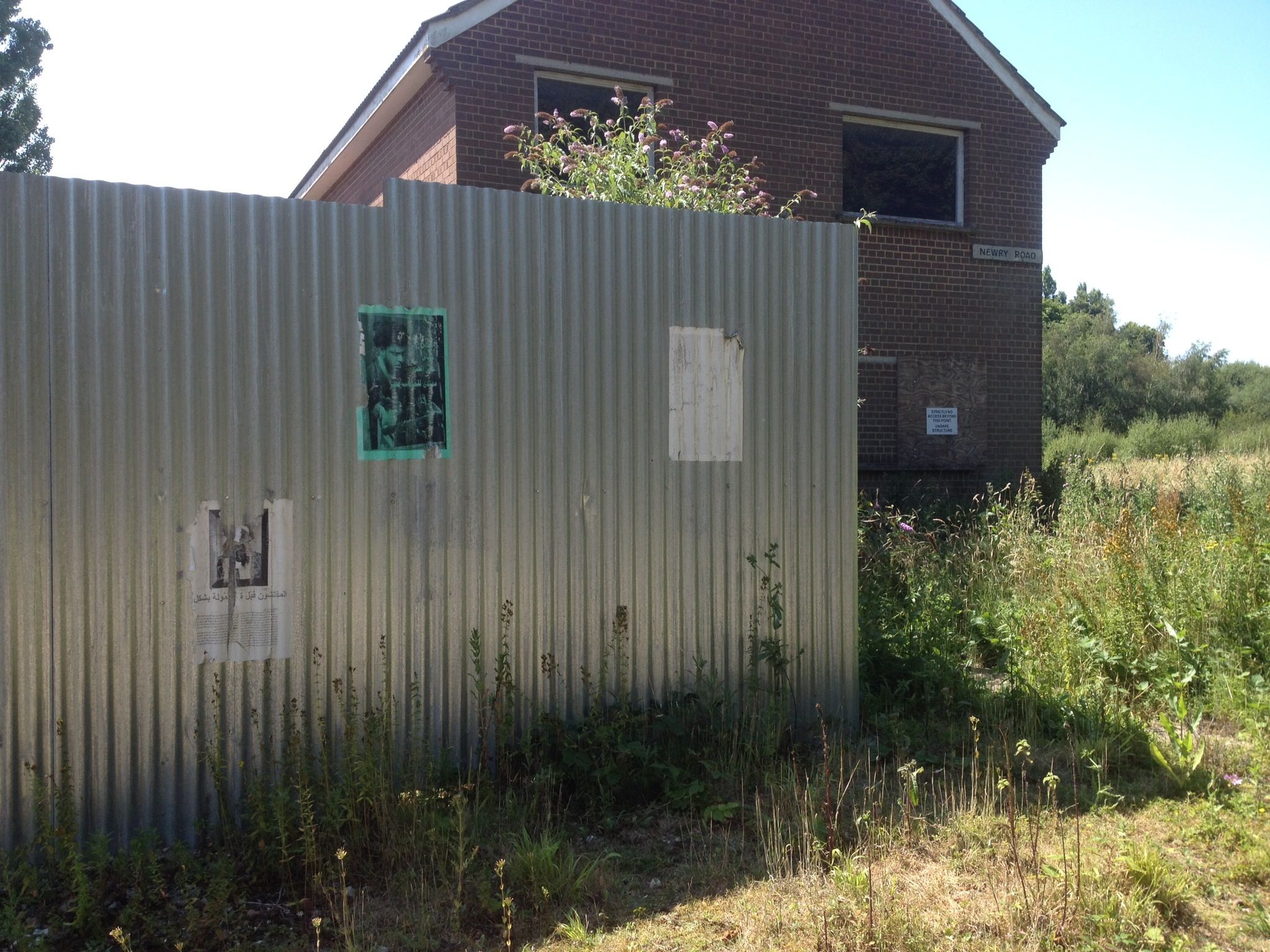
Lodge Hill Newry Road

Part of Lodge Hill’s military past: a fictitious Newry Road with Iraqi posters (c) Miles King


Rochester and Strood MP Mark Reckless is nobody’s fool. You may remember that earlier this year I wrote about his tirade against coastal vegetated shingle in a parliamentary debate in March 2013. He strongly argued that Local Authorities should be given the freedom to over-rule national bodies such as Natural England, and ignore national or international wildlife designations. The then planning minister Nick Boles, agreed with him and implied that Natural England would be “taken care of” mob-style.

After Medway Council planning committee unanimously agreed to approve the planning application which would destroy Lodge Hill SSSI and all the military and cultural history the site encompasses, I was interested to see if Mark Reckless had made any congratulatory statements. I had an inkling that his position had changed, and this was confirmed when he made a statement on his website. This is what he says:

“I am appalled that Medway Council’s planning committee chose to ignore the clear message from local residents and their elected representatives that this development should not proceed, particularly following the very welcome decision earlier in the week ruling out a Thames Estuary Airport. Having reviewed the environmental evidence following the independent inspector’s findings in relation to Lodge Hill, and further considered the impact which this would have on our local infrastructure, I am bewildered by the committee’s decision to give Lodge Hill the go ahead.

I shall be consulting with local residents in coming weeks as to how best to stop this development and to ensure that the residents whom I was elected to represent have a voice on this issue, which many feel they currently do not.”

Reckless had indeed campaigned tirelessly against “Boris Island”, the Airport which would have destroyed many hundreds of hectares of European protected wildlife in the Thames Estuary. He said, in a letter to David Cameron that Boris Island would “devastate an area of global environmental significance.”

The Airports Commission report into Boris Island concluded that the environmental costs were so great as to make the proposal untenable – specifically:

the scheme’s very significant impacts on protected habitats which, as well as  being a substantial disbenefit in themselves, would present, under Article 6(4) of the Habitats Directive, a high legal hurdle to be overcome;

the scale of provision of new habitat required to compensate for the scheme’s impacts on protected sites, which would be unprecedented in the UK and in Europe and whose deliverability remains uncertain.

It  is difficult to resist relishing the irony of a campaign at least in part led by a fiercely Eurosceptic MP which has used the Habitats (and Birds) Directive to counter a development proposal in his constituency. Reckless seems to be near the top of a list of Tory MPs UKIP is trying to persuade to defect.

Reckless used the wildlife argument against Boris Island, while railing against the power of Natural England (and presumably the European Commission) to protect Lodge Hill as a SSSI, and of course the European protection afforded Dungeness, on account of if coastal vegetated shingle.

If you look at the letter Reckless wrote to Rodney Chambers, leader of Medway Council, about Lodge Hill, things become a little clearer. Reckless chides Chambers on a number of matters:

His first concern is that Medway are setting housing build targets above the level set in the local plan and by other neighbouring administrations. He particularly criticises their population size assumptions, which he slates them for assuming “unrestricted EU immigration”, despite his firm belief that we will be out of Europe after a 2017 referendum.

Secondly he criticises Medway for incorporating an assumption of 25% affordable housing in each large development – he states that Conservative members (presumably of Medway) had agreed that this should be cut to “10-25%” of each development for affordable housing. His language is interesting here – likening the 25% commitment to affordable housing as “the owner gives away at least a quarter of their site.”

Thirdly he attacks Medway for not promoting the development properly – criticising them for not including it in the 2003 Local Plan.

Finally he chides Medway for failing to “challenge the legality of Natural England including it in an SSSI.”

To be fair to Medway they and the developer’s ecological consultants did try to challenge the legality of the designation. But Lodge Hill was so obviously a nationally important wildlife site, Natural England had no choice but to designate it.

On his website he states that development of Lodge Hill SSSI will “have serious repercussions not just for residents living in Strood and on the Hoo Peninsula but also in terms of potentially undermining SSSI protected sites across the country and the government’s own National Planning Policy Framework.”

Does he believe, as he said so eloquently in the house in 2013, that the quangocracy has too much power, as he urged the minister to end the ‘absurd situation” where Natural England can dictate to local councils “how to run things.” Or does he believe that the SSSI protected site series is needed and development cannot ride rough shod over it?

It is possible that Reckless has had a Damascene conversion and now understands why places like Lodge Hill are so important to Society and for their own sake, and why organisations such as Natural England and the statutory protection afforded to wildlife sites that they implement through legislation, are so vital for protecting those values.

Does it matter? Reckless is evidently a highly effective advocate (as a trained barrister) and he will be able to bring a significant degree of clout to the campaign against Lodge Hill. In these circumstances, Amicus meus, inimicus inimici mei definitely applies.

Welcome on board Mr Reckless.

Posted in biodiversity, grasslands, Habitats Directive, housing, Lodge Hill, Mark Reckless, SSSis | Tagged , , , , | 4 Comments