Somerset Levels Update: Reflections on Flooding

It’s not just “You forgot the birds” who have been attacking RSPB recently.

Earlier this year, they were blamed by a number of people, for causing the flooding in the Somerset Levels and Moors. Christopher Booker, in the Telegraph, was particularly venal in his accusations that RSPB had been the criminal mastermind behind the flooding. Others joined in, including local Tory MP Ian Liddell-Grainger.

The RSPB have sought to counter this by releasing a studied, thoughtful and balanced report on flooding, specifically on the Levels, specifically last winter, but also more generally. There are pieces from Somerset Levels farmers and residents, academics, Paul Cobbings from the National Flood Forum; and David Thompson, Adaptation sub-committee, Committee on Climate Change. He noted that

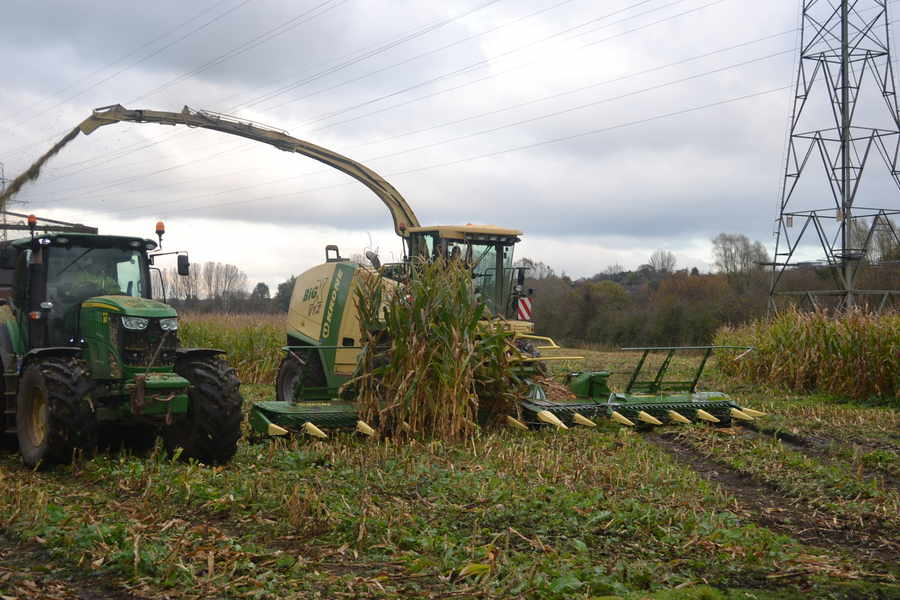
every 10 hectare block of damaged land under maize will shed over a million litres of silt-laden, muddy water, which clogs rivers downstream.”

Just the other day, a river charity called for more action to be taken against farmers who leave Maize fields that wash soil away when it rains.

RSPB now believe that dredging the tidal Somerset Levels rivers was the right thing to do; and it hasn’t had any impact on the bird value of the levels.

The Levels flooding was disastrous to the people it affected, though it appears not all the flooding was accidental. In one case a farmer, apparently concerned about his village flooding, broke the locks on a sluice and opened it, then vandalised it so it couldnt be closed. Of course, it’s difficult to tell how much difference one sluice gate would have made, with so much water  – but several residents think it led to their houses flooding, unnecessarily.

Some have argued that the introduction of Raised Water Level Areas (RWLAs) in the Somerset Levels in the 1990s contributed to the increase in flooding problems experience since then. The Somerset Levels Drainage Boards commissioned the Centre for Ecology and Hydrology to investigate whether there was any evidence to support this view. Their conclusion was that the RWLAs made no contribution to flooding events.

Local Natural England manager Mark Jones said

” Raised water level areas have been a part of conservation management of the wetland wildlife interest of Somerset since the early 1990s. These schemes are funded through the agri-environment budget and as well as underpinning the conservation of the wetland they reduce flood risk by providing farmers in some of the wettest areas with a diversification opportunity. All of the raised water level area schemes were subject to a flood risk assessment prior to being implemented.

Due to concerns raised during last winter’s flooding, the Somerset Consortium of Drainage Boards commissioned the Centre for Ecology and Hydrology to undertake a full review of the Flood Risk associated with water level management for conservation and agriculture. The assessment concluded that winter raised water level areas have only a very minor impact (0.6%) on large flood events. Water levels for agriculture in summer occupy larger volumes (3.5%), but these are still small compared to volumes of water stored on the moors during major flood events. The report has been reviewed by the Local Authority Community Scrutiny Committee which resolved that “the research sponsored by the IDB, …shows that prolonged winter penning levels have miniscule impact on the potential for flooding.”

It is useful to note that the raised water levels areas, some of which were underwater for the longest periods, were least damaged by the prolonged flooding and recovered fastest.”

Others suggested that the flooding of the Somerset Levels last winter had a catastrophic effect on the wildlife of the Levels as well as flooding farmland and people’s homes. Another recently published report from Natural England has undermined this suggestion. Research carried out after this winter’s floods found that

  • The ancient wildlife-rich wet meadows and pastures of the Somerset Levels and Moors recovered quickly from the flooding and showed little impact.
  • The very important wildlife associated with the ditches had been unaffected.
  • there was no overall effect on the number of wintering water birds and waders.
  • There was a slight dip in the number of breeding waders in Summer 2o14.
  • There was no impact on the soil and earthworm numbers had recovered quickly.
  • there was anecdotal evidence that some widespread small mammals had been affected; and insect numbers were down.

In a way, this is what you would expect with a winter flood. The wildlife of the Levels is adapted to wet conditions and winter flooding has little impact on these species because of their adaptations. Plants of wet meadows and pastures do not do anything in the winter, so they are not affected even if under water for weeks at a time.

On the other hand, intensively managed improved grasslands dominated by one or two species like rye grass and white clover, neither of which are adapted to the wet, died off across hundreds (thousands?) of hectares. This will have been very expensive for those farmers on the levels who have agriculturally improved their pastures, but not affected those who hadn’t, which is a strong argument for restoring intensively managed land on the levels to its former extensive state.

Where does this leave the people and the wildlife of the Somerset Levels?

Hopefully the dredging that has happened this year will have reduced the chances of the months long flooding that happened last winter. Only time will tell on that.

Nothing has happened (that I can see) to reduce the continuing intensification of the farming in the catchment of the Levels. While the soil flowing off the maize fields of Somerset will not find its way into the tidal stretches of the Parrett and the Tone, it will continue to silt up the upper stretches; and calls for more dredging will continue. The area of Maize in Somerset continues to grow. In March the Adaptation Sub-Committee of the Committee on Climate Change called for detailed mapping of land-use in the Somerset Levels catchment as a starting point for addressing the impact of intense landuse on flooding. Has this been done?

People who have been flooded out have still not returned to their homes, while insurance companies quibble and then refuse flood insurance, even after flood defences have reduced the risk. Talk about adding insult to injury.

The wildlife of the Somerset Levels survived the flood, pretty much intact, but intensive agriculture there took a beating. This may cause farmers to consider which route to adopt for the future, given that climate change is here and these events are likely to get more serious and more frequent.

In the long term, there may be no choice but to retreat from the Levels. If that happened, the justification for continuing the expensive, centuries old water level management, may be lost; and it would be time for beavers to return to the Somerset Levels.


Posted in agriculture, flooding, Maize, Natural England, RSPB, Somerset Levels, Uncategorized | Tagged , , , , , | 1 Comment

Forget Biogas, we need Hydrogen from Solar

With 2014 looking like it’s going to be the warmest year since records began, in 1880, but probably much longer ago than that, we need to take collective action to reduce greenhouse gas emissions. I have already explained just recently why things like maize biogas are such a bad idea,  so I was disappointed to read, in a report from Forum for the Future, that they thought planting 240,000ha of farmland to grow biogas crops was the way forward.  I asked FfF report writer, Iain Watt, which crops they based that figure on, but I haven’t received an answer yet. According to FfF that 240,000ha of land would produce just 1GW of energy per year. Even the NFU are only aiming for 100,000ha of biogas maize, and that’s 100,000ha too many.

Solar farms have sprouted up all over the place recently, thanks to generous feed in tariffs. Now the Government is slamming the industry into reverse by stopping subsidies for farms over 5MW, and reducing the feed in tariff. This means the absurd proposal to build a solar farm on Rampisham Down SSSI is unlikely to be repeated, at that scale anyway.

While terrestrial Solar and Wind can produce significant amounts of our energy needs, they won’t deliver everything. And there is a big problem with electric energy production. Transmitting the energy from where it is produced (solar or wind farm) to where it is to be consumed, has a big energy cost. In the UK its estimated to be around 8% but in other countries it can be as high as 35%. Now if every (appropriate) roof of every building in Britain had solar panels, that could provide electricity directly to places where it is used, avoiding transmission losses. But it still wouldn’t provide all our energy needs.

Another approach to reducing these transmission costs is to convert the electrical energy from the sun into a fuel which can be stored and moved without the transmission losses (though obviously with transportation costs.) If solar energy could be converted into hydrogen, for example it could be moved (by gas pipes) efficiently to places where it was needed, just as the fossil fuel Methane is moved (as natural gas). Burning renewably produced hydrogen is a “clean” fuel because it only produces water when burnt.

Could it be possible to use solar panels to produce hydrogen? Yes it could, easily. Electrical energy can be used to produce hydrogen from water, through electrolysis. Where is there a an abundant supply of water? the sea.

Is it beyond our human capability for ingenuity to produce a large scale solar powered hydrogen plant. If we could produce very large arrays of solar panels, floating on the sea, producing hydrogen, this fuel could then be transported around the world, either in submarine pipes, or using large tankers, such as the 235 massive Liquid Natural Gas tankers that already ply the world sea lanes. I’d go for the pipeline option myself, to reduce the risk of calamity.

It’s the sort of megascheme that could go wrong for all sorts of reasons. But it seems that this is an option worth exploring, as the technology is practically already available. Scottish chemists have recently increased the efficiency of the hydrogen production process by 30 times. At least it would be worth exploring, as an alternative to things like Nuclear Fusion, which may not happen in time to ward off the impacts of Climate Change.


Posted in biofuels, biogas, climate change, Rampisham Down, Solar Farms | Tagged , , | 5 Comments

Paterson-watch update OPatz fires off a salvo at the PM

No sooner had I posted my first Paterson-watch piece yesterday, when the man himself has surfaced and fired a salvo for Atlanticist free-market fundamentalism, in the direction of none other than the prime minister.

Paterson will today say that the UK should give notice to the EU of our intention to leave in a couple of years time, unless those Brussels Eurocrats get off their damn gravy train and jolly well do as we say! OK I paraphrase, but that is the gist of the latest  outputs from the OPatz policy generator. I assume this is one he has been gestating for a while, and not the work of his new policy generator at UKIP2020.

Paterson is reported saying this (in advance of actually saying it) in the Tory press this morning, in the Torygraph while his mates are supporting him elsewhere. Tim Montgomerie gives him a free ad on conservative home while brother in law (and the man who previously did his thinking for him) Viscount Matt “Northern Rock” Ridley, thunders in the Times (paywall). Expect to see more supporting pieces from Brooker, Delingpole and the other usual suspects.

Of course there are plenty to disclaimers littered about these pieces – Paterson has no interest in leading the Tory party etc etc. Don’t believe a word of it. Paterson may see himself leading a coalition of hard right Tories and UKIPpers, or UKIP or the Tory party sensu lato. The latter is impossible to conceive unless very strange things happen after the election. The other two are conceivable.


Posted in Owen Paterson | Tagged | Leave a comment

Owen Paterson – watch

It may not be what normal people think of first on a damp grey November Sunday morning, but I wondered to myself

“what’s Owen Paterson up to?”

I’ll phone my therapist later.

Paterson has launched a “think tank” called UK 2020, but I think it would be more suited to be called UKIP2020, given Paterson is so close to UKIP on so many things. I say things rather than policies, as I hesitate to use the words policy and UKIP in the same sentence, for the obvious reason that they have almost none.

Paterson has apparently already raised a six figure amount to fund his thinktank; that sounds like a lot but I can tell you £100,000 will not get you terribly far if you want to be influential.

I have already written about Paterson’s plans to run Britain on power from nuclear submarines , but what about the economy?

In his speech launching UKIP 2020, OPatz said he wants to raise the threshold for paying 40% income tax  – to perhaps as high as £75000. He wants to reduce taxes for corporations, and reduce inheritance tax and stamp duty.

And in a typical neocon magic trick, he will reduce the deficit and compensate for this loss of tax income, by slashing public spending. He is calling for £170 billion of public spending cuts. UK public spending this year is £720 billion. Can you imagine what public services would be like with a further 25% cut. And all to reduce taxation on corporations and the wealthy.

He wants to get rid of the business department BIS (bizarrely, as they are there to support business), DfID, presumably because he doesn’t think we should support other countries much poorer than ourselves, DECC because he doesn’t believe in climate change and DCMS, because he isn’t interested in culture or heritage.

He didnt mention axing Defra. I can only assume this is because he is content Defra is doing the bidding of his chums at the NFU.

Paterson, in typical neocon fashion, wants a low tax, low spending economy. In his speech launching UKIP 2020 he cited that astroturf corporate mouthpiece The Taxpayers Alliance, more than any other organisation. He also quoted that great statesman and thinker Ronald Reagan. If ever there was a sign of Paterson’s neocon principles, there it was. Paterson is another Atlanticist, pushing for greater links with the US and leaving Europe behind. He wants us to forge closer links with the “Anglosphere”  ie Canada, New Zealand and Australia too; the Old Empire friends – and, apart from the US, where Climate Denial is at its most pernicious.

Paterson’ other main theme was Climate Change. He wants the UK to drop its commitments to reducing greenhouse gas emissions, because he doesn’t believe that human activities produce climate change. And he wants a Shale Gas boom, especially in poor, remote parts of England.

And just in case you thought  the High Priest of Badger Cult had forgotten about the countryside, he’s joined the call to repeal the Hunting Act. He argues that the Act was more about class war than animal welfare. As the man dubbed the founder of the UK Tea Party, he should know all about class war.

Paterson has been very quiet on the bacbenches since he was sacked. He has only made one intervention in the Commons, and that related to his time in Northern Ireland. He has been praised by Global Warming Policy Foundation founder and arch climate denier in chief Lord Nigel Lawson, and was lauded by another climate denier the bizarre Ian Liddell-Grainger MP, in a debate about the Somerset Levels. He has asked no questions on behalf of either his constituents or groups who may have approached him. In comparison, former Biodiversity minister Richard Benyon has asked six questions since September.

Is Paterson a threat? Does anyone care? He may believe he is carrying the torch for true conservatism, which he sees as neoconservatism. He may well believe he has a chance to run the Tory party, once Cameron has retired to his estates. And he may well be keeping a very close eye on what’s happening at UKIP party HQ, preparing to be invited to a coronation if Farage stumbles, or is stabbed in the back.

I will be keeping an eye on him and provide updates now and then. If anyone sees Paterson on manoeuvres, please let me know.


Posted in Neoconoids, Owen Paterson | Tagged | 4 Comments

Rochester byelection Labour Candidate linked to Lodge Hill Developers

IMG_0316


Lodge Hill Brownfield Land? (c) Miles King

While both the UKIP and Tory candidates for the Rochester and Strood byelection have changed their minds in dramatic fashion, I was curious to know more about why Labour is supporting the development of a new town of 5000 houses on Lodge Hill SSSI.

I noticed a reference in the press to the Labour candidate Naushabah Khan working in public relations. I looked a little further and found that she was an account manager at Curtin & Co, who specialise in doing PR work for housing developers. Imagine my surprise when I looked up who Curtin’s clients were – they include Land Securities, who are the developers at Lodge Hill.

Khan was forced to defend Labour’s housing policies (such as they are) from her own firm, who had been commissioned to carry out a survey of public views on Labour’s policies of, for example, taking land off developers who have land-banked it. It’s not clear who commissioned Curtin to carry out the survey (which was actually carried out in February) but presumably it was a housing developer.

Curtin don’t currently have the contract for doing PR and “community engagement” on Lodge Hill for Land Securities. This contract is, at the moment, with PPS under Andy Martin. Martin has a long standing involvement in local politics with the Liberal Democrats. The Lib Dems on Medway Council support the Tories on the Lodge Hill development. Curtin has recently taken on former Cambridgeshire County Council leader Martin Curtis as a Director of their “community politics” team.

PPS has just been taken over by Porta Communications and Merged with Newgate Communications. Porta and Newgate were both created by David Wright, who founded Citigate communications. Citi is a top Lobbying firm owned by Lord Chadlington, John Selwyn Gummer’s brother, who I have written about before. Small world, eh? Citi are also long standing advisers to Land Securities.

Curtin ousted PPS as the PR Agency Land Securities are using for their 15000 house Ebbsfleet development, just down the road from Lodge Hill. PPS has a long history and expertise in the use of subterfuge, or dirty tricks, to get developments through planning. Take a look.

Khan has evidently done a good job promoting the development of Lodge Hill to the constituents of Rochester and Strood, while standing as the Labour candidate. She may have made some headway by claiming that the site is 80% brownfield – this is a convenient mistake, given Labour’s policy to increase the focus of development on brownfield sites. The Planning Inspector who rejected Medway’s core strategy concluded it was closer to 15% brownfield, than the 53% Land Securities claimed. In any case, it’s irrelevant how much brownfield the site is, as it’s an SSSI. Something Khan has been keen to avoid talking about.

After the byelection tomorrow, when it seems very likely that UKIP will win, the Government will have to decide whether to call in the Lodge Hill planning application to be subject to a Public Inquiry. We can expect Land Securities to be lobbying furiously behind the scenes (with some suitably worded articles in the media placed by their PR consultants) to make sure that the hard-won planning permission is not called in. Land Securities will no doubt be looking very carefully at their current consultants PPS, and considering whether they want a new bunch to take over, at this critical juncture. Perhaps they’ll decide to take on Curtin and Co.

It can sometimes be very difficult to differentiate politics and business can’t it, whichever party you look at.


Posted in Labour, Lodge Hill, PR | Tagged , , , , , | 4 Comments

The Great Biofuel Maize Scam

B2O82R5CAAAnSDQ.jpg_large


I was drawn back into the muddy world of Biofuel Maize by reading an article in the Western Morning News entitled planting right variety of maize boosts AD Output.

The piece was a bit of puff for the AD industry, and while packed with statistics, the one piece of information I was looking for was missing. And it was this – how much methane does a hectare of biogas maize produce? It’s not a difficult question, but one that I had to do a fair bit of delving to find out.

Here is where I started.  Burning a tonne of methane releases 2.75 tonnes of CO2 so every tonne of methane produced by biogas maize “saves” a tonne of natural gas (which is methane) from being burnt. Methane weighs 0.8 KG per cubic metre, so a tonne of CH4 is 1250 M3. So for every 1250 M3 of methane, 2.75 tonnes of CO2 is released. From the WMN article we learn that the rule of thumb is that each tonne of dry matter (DM) maize produces 210 M3 of CH4, so each DM tonne of Maize “saves” 0.46Tonnes of CO2.

A hectare of biogas maize produces 9 – 15 tonnes of DM per hectare (at 30% Dry Matter) so a hectare would save 4.14 – 6.9 tonnes of CO2. This is equivalent to (divide by 3.67) 1.1- 1.9 tonnes of Carbon per hectare.

Now on the plus side, Maize absorbs CO2 as it grows. Again it’s a difficult figure to track down but from what I have read it appears that a tonne of live (wet) maize absorbs half a tonne of CO2; and biogas Maize produces between 30 and 5o Tonnes of fresh Maize per Hectare, giving 9-15 Tonnes of Dry Matter  per hectare. So for every hectare of biogas Maize produces, there is a saving of between 15 and 25 Tonnes of CO2, or between 4 and 7 Tonnes of Carbon.

But there are signficant costs too. Maize is a very hungry crop and a hectare can easily need 250kg of NPK fertiliser or equivalent. Producing this fertiliser takes a lot of energy, but the main negative factor is that it produces the highly potent greenhouse gas Nitrous Oxide. 1kg of NPK fertiliser produces the equivalent of 6kg of CO2. Added together the footprint of fertiliser for a hectare is about 12kg per hectare. So a 250kg dose has a cost of about 3 Tonnes of CO2 per hectare.

You may be surprised to know that cultivating a field has a cost of 150kg CO2equivalent per hectare, but this is relatively small compared to the other big cost. The other big cost associated with biogas maize (as a very low density product) is transport, from the field to the clamp (where it has to dry) then from the clamp to the AD plant.

A tractor towing a trailer over public roads has a high carbon footprint. I have calculated that it could be 1.5kg CO2 per kilometre towing 15 tonnes of DM maize, ie 100g CO2 per tonne per kilometre. If the total journey from field to AD via the farm (plus the return journey) was 50km that would add 50kg CO2 per Tonne and up to 750kg CO2 per hectare.

At this point the cost is up to 3.75 tonnes of CO2 per hectare. If you added in all the little carbon footprints of other things that are part of the process of producing AD Maize (eg transporting the seed, the surprisingly large footprint of pesticides and herbicides, including the fuel used to deliver them to the farm, then spray them on the fields) I think we could easily see that “cost” figure head towards 4 tonnes CO2e per hectare.

So going back to where we started, the article in WMN comes into focus. Because at the lower end of AD Maize production efficiency, the net CO2 saving is only around 11 tonnes CO2 per hectare per annum. This is equivalent to 3 Tonnes of Carbon per hectare per annum.

When I was at the Grasslands Trust I was very keen to promote an unrealised value of species-rich grasslands: they are very good Carbon sinks. The general figures bandied around for Carbon sequestration when converting arable land (a Maize field) to grassland was around a Tonne of Carbon per hectare per annum. That is, left to its own devices, with a bit of light grazing, an arable field on its own will absorb a tonne of Carbon per hectare, as it naturally develops into grassland. But some research has indicated that far higher rates of sequestration can be achieved. One particular experiment found rates as high as 3 Tonnes of Carbon per hectare absorbed. And Species-rich grassland have around twice as much Carbon in their soils as arable fields do. So a grassland will continue to absorb Carbon for decades after it has reverted from arable.

In other words, some biogas Maize production is no more efficient at reducing Greenhouse Gas emissions than letting an arable field revert to species-rich grassland. And the more intensive the production, the more the cost increases – at 500kg of fertiliser per hectare that carbon footprint shoots up to 6 tonnes of CO2 per hectare.

And that’s not even taking into account the external environmental costs of  Maize production, which I have written about before. Maize is simply the most environmentally damaging crop grown in Britain and possibly in Europe. And while farmers and AD plant owners may are generating a healthy return on their investments, not only are we paying them through the subsidy, but we are also paying through damage to watercourses, increased flooding, contamination of drinking water supplies and the continuing loss of wildlife from the countryside.

It’s another example of how serious can be the unintended consequences of subsidies for supposedly good causes. In this case, the Feed in Tariff for biogas is so generous and has so few restrictions on it, that AD plants are paying as much as £500 a hectare to farmers to produce biogas Maize. No wonder the area of farmland under AD Maize is growing exponentially.

Posted in agriculture, biogas, climate change, Maize | Tagged , , , | 11 Comments

Beavers: Common Sense may have broken out at Defra

The Beavers of the River Otter in Devon have been under threat of being “rehomed” in a zoo, thanks to pressure from The Angling Trust (no beavers do not eat fish). This was partly due to paranoia that the beavers may harbour a very nasty parasite called Echinococcus multilocularis. This was used previously as an excuse to evict the beavers.

However, it later emerged that Public Health England had already advised Defra that there risk of human infection was so low as to be discounted.

Now Defra is visibly shifting its position, under pressure from Friends of the Earth who are threatening legal action, and Devon Wildlife Trust who have applied for a licence to monitor the released Beavers. The landowner on which the Beavers live, the local community and the public at large all want the Beavers to be left alone.

Defra has now stated that

Our priority has been to ensure humane treatment for the beavers while safeguarding human health, so we’ll be testing the beavers close to the River Otter which will be better for their welfare than moving them elsewhere.

“We have a licence to capture the beavers, which we need to do to test them humanely for the disease EM (Echinococcus multilocularis) which has the potential to be very harmful to human health should it become established in the UK.”

She said that the government agency Natural England was “expected to make a decision soon” on an application by Devon Wildlife Trust for the beavers to be released if clear of the disease.

Judging by correspondence released following an FoI request, it seems that Defra is happy for the Otter Beavers to be tested for EM at AHVLA’s labs in Weybridge, rather than being taken to their HQ in York. Even so, this is likely to place the animals under considerable stress. Let us hope that they are not too traumatised by the experience.

Could we be seeing Defra take some sensible decision-making about wild mammals in England, thanks to the high priest of the badger sacrifice cult, Owen Paterson, being removed? Hopefully. But let’s not get too excited.

New Defra boss Liz Truss may like bees (up to a point) but she also supports the Badger Cull, though only tacitly it would seem, given her relative silence on the issue.

Posted in angling, badgers, Beavers, bees, Defra, Liz Truss, Owen Paterson | Tagged , , , , | 3 Comments

Rampisham: BSR antics force council to defer planning decision

Today was decision day. The culmination of nearly two years work; West Dorset District Council were finally going to decide whether to give planning permission for a 40ha area of over 100,000 solar panels to be constructed on a Site of Special Scientific Interest.

I had been preparing for a while, honing my 3 minute speech, practising for time (I think they turn off the microphone after 3 minutes exactly) honing, revising, adding in bits, taking others out. I was ready to say my piece, on behalf of Dorset Wildlife Trust.

We gathered outside the planning committee chamber in the new West Dorset District Council Offices. There was quite a large group sitting with the owner of British Solar Renewables (BSR), Angus McDonald, including Professor Ghillean Prance, who I discovered was to be speaking immediately before me, in favour of the application. Professor Prance was formerly Director General of the Royal Botanic Gardens Kew; he and BSR’s ecological consultant John Feltwell are both trustees of the Brazilian Atlantic Rainforest Trust. Neither of them know much about British wildlife-rich grasslands. I didn’t see Feltwell in the group.

We were called in to the chamber and there was a really good turnout; hopefully plenty of members of the public had decided to attend to see that the planning process was carried out properly. As well as the applicants, Natural England were present to answer any questions from the planning committee members about the impact of the Solar Farm on the SSSI. Dorset Wildlife Trust and CPRE were also there.

Only 9 out of the 12 planning committee members actually turned up for the meeting, but the committee was quorate so the meeting went ahead. I would have thought if you were a member of a planning committee making decisions that affect people’s lives, as well as things like the future of nationally important wildlife sites, you really should turn up to the meetings. I am sure they all had good excuses though.

The meeting began and the chair asked the committee members to confirm that they had not been lobbied by anyone with an interest in the application, and that they had not already made their mind up before the meeting (predermination). Anyone who had given an affirmative answer to either of these questions, would have had to withdraw from the decision making process, but no-one did.

The Planning Officer in charge of the case then explained that two days ago, he had received a report from the applicants. In that report, BSR had provided an update on the monitoring programme they had started earlier in the year. I have already explained why this monitoring programme is meaningless in an earlier post. Nevertheless, based on a bit more data, the applicant apparently sought to claim that they now had proof that the solar panels with windows would do no harm to the SSSI. I say apparently because I have not seen the report. Neither has anyone else, except BSR, the planning officer, oh and the members of the planning committee. For when the Planning Officer asked them whether they had received and read the report, several of them waved it in the air to confirm they had it. BSR (or someone on their behalf) had sent, by post, to each member of the planning committee, a report introducing new information about the application.

At this point the Planning Officer explained that, if the Councillors took a decision on the application, taking this new evidence into account, they would be in direct contravention of Regulation 22 of the EIA (Town and Country Planning Act) Regulations. This states that any additional information provided by an applicant has to be publicised such that all interested parties are able to read and comment on it before the application is determined. When asked how long it might be before the application is reconsidered, the planning officer indicated it would be January at the earliest. Despite being told that it would be illegal to consider the application in light of this, 2 planning committee members still voted against deferring the decision. Now whether these 2 were keen to see the planning application thrown out at this point, or not, is unknown. Let’s hope so.

At this point most of the audience trudged out of the meeting. Angus McDonald BSR’s owner was seen to have his head in his hands as if wondering, “oh my god what have we done?” For in order to qualify for the solar subsidy the solar farm will have to be up and running, generating electricity on March 31st next year. This seems much less likely now.

But the whole thing is so ridiculous, because there is an alternative site, just across the road from Rampisham, with no biodiversity interest, where BSR really could create some “biodiversity gain”, and be far more likely to get their planning permission. Natural Engand has already indicated that, assuming conditions are met, this would be an acceptable site for a solar farm.

Let’s hope BSR finally see sense, withdraw the Rampisham Down application, and apply for planning permission on this alternative site.

The whole affair also reminded me that our European environment directives are useful in surprising ways. If it hadn’t been for the EIA Directive’s publicity requirements, developers could sneak in controversial and unchallenged evidence at the last minute, to influence planning committee members, without allowing objectors any chance to challenge it. The Government is working to increase the threshold at which EIA can apply, to 5 ha, from 0.5ha, for developments of urban housing and industrial estates. But they would like to increase the urban development threshold to 30ha! This would exclude practically every urban development site in the country, from the requirements of the EIA Directive and transposing Regulations, including the requirement of developers to not slip in last minute unchallenged evidence.

Posted in EIA, grasslands, Rampisham Down, Solar Farms | Tagged , , , , | 2 Comments

Rampisham Down SSSI Solar Farm bid: Tomorrow is decision day

Shelby_Farms_Solar_Farm_Memphis_TN_2013-02-02_014


Solar Farm developers British Solar Renewables have their day in front of West Dorset District Council Planning Committee tomorrow, when their planning application to build a massive Solar Farm on one of the most important grassland wildlife sites in the country, will be decided. As I have written the story here and here, Rampisham Down will be irretrievably damaged if BSR get their permission.

But the implications are even more serious than that. Because if West Dorset give permission to build such a large industrial structure on a SSSI, this will undermine the status of the entire protected area system. There are obvious parallels with the Lodge Hill case. As Martin Harper Conservation Director of the RSPB has said, development at Lodge Hill “would also seriously undermine the Government’s flagship planning policy – the National Planning Policy Framework”. The difference is that Medway has already given permission for Lodge Hill New Town, and the decision now lies with Mr Pickles as to whether to call in the decision and hold a public inquiry.

The papers for the Rampisham Down application have now been published. Rampisham is item 1. For those who are interested in the detail I recommend you read the Senior Planning Officer’s report. To summarise, the Planning Officer recommends refusal of the permission, mostly on grounds of damage to wildlife and landscape.

Coincidence?

It may well be complete coincidence, but I couldn’t help noticing this article in my local newspaper the other day.

Solar farm could play a part in stopping the decline of bees

A DORSET solar farm could play a part in a national strategy to support bees and other pollinating insects, it is claimed.

The 10-year bee and pollinator strategy was announced by environment secretary Liz Truss and includes ‘Countryside Stewardship’ subsidies to farmers to maintain hedgerows and wildlife-friendly ground round the edges of fields.

British Solar Renewables, which constructed the 5MW Crossways Solar Farm on a 30-acre former quarry site, claims that while the environment secretary is not in favour of large-scale solar parks she should acknow-ledge the role they play in providing bees and other pollinating insects with excellent accommodation.

It says the solar farm boosts diversity and offers important areas of protected, friendly and long-term habitat at a time when bee populations are falling dramatically both in the UK and worldwide.

The pollinators are indispensible for food production and their work is valued at £430m.

The strategy states: “Without them not only would our parks, gardens and countryside be much more drab places, our food could well become less varied and some of it more expensive.”

The bee and pollinator strategy looks to champion a plan to revive traditional meadows that give the most fertile habitat for pollinators and encourage the restoration of wild flower rich grasslands, 97 per cent of which have been lost since the Second World War.

A spokesman for British Solar Renewables commented: “Striking a balance between generating clean energy and showing sensitivity for land and conservation is central to the approach of farm-based British Solar Renewables.”

He added: “If Defra are really serious about saving pollinators it should be recognising the importance of solar farms in their role as nature reserves, free of pollinator-harming pesticides, acting as safe havens for bees, as well as providing much-needed, carbon-free energy, both of which will deliver a better future.”

Clearly, when it comes to building Solar Farms on sites with national wildlife designations, “striking a balance” means something quite different to the good people of British Solar Renewables, from what it means to the rest of us.

I will be at the Planning Committee on Thursday It’s open to the public and starts at 215. If you’re in the area, please come along.


Photo By Thomas R Machnitzki (thomasmachnitzki.com) (Own work) [GFDL (http://www.gnu.org/copyleft/fdl.html) or CC-BY-3.0 (http://creativecommons.org/licenses/by/3.0)%5D, via Wikimedia Commons
Posted in Rampisham Down, Solar Farms, SSSis | Tagged , , | 6 Comments

Remembrance Day

IMG_0529


Remembrance Sunday Dorchester

We went to the Remembrance service in Dorchester on Sunday. I never used to go as a child, or as an adult, until the last few years. I suppose my own experience of mortality, losing my dad then my brother in the space of a few years, has made it more meaningful for me. And in particular, since my mum has come to live near us, she pays her respects and remembers her dad who was gassed in the First World War, and her eldest brother, who was killed in the Second; along with her many cousins and uncles who had served, survived or died.

It was a large crowd, and many poppy wreaths were placed on the war memorial. The names of the men from Dorset who had lost their lives in the war in 1914 were read out. I thought, this is going to take quite a long time in two years time when we get to 1916 and 100 years since the Battle of the  Somme.

There was a very distinct shared feeling of caring in the crowd. A heavy shower appeared and rained on us during the service and we had all forgotten umbrellas, but people shared and a young man next to me gave his coat to an old lady who was getting wet.I huddled over my mum and daughter to take as much of the rain as I could and save them getting wet.

It occurred to me that this was a key moment in every year when a large part of the community comes together and shares an experience; and how few of these shared moments we have now. I was also thinking, I really hope UKIP don’t try and exploit this particular social ritual. And of course they did – though not in Dorchester. In Chatham Kent UKIP laid a politically branded wreath.

But it also occurred to me that the most powerful symbol we use to remember the dead of wars (and indeed remember all our own dead) is the poppy, a wild flower. Poppies are probably the most recognised wild flower in Britain, because of the association they have with the fallen soldiers (and others) of the First World War.

We have a small flock of white doves in Dorchester. During the 2 minute silence, the white doves flew up and wheeled around behind the war memorial. These semi-wild birds are a potent symbol for peace; and I couldn’t help but think of the symbolism. I know it sounds corny, but it is true.

Nature has so much meaning to us, we use the poppy and the dove, and other elements of nature to signify deeply important moments, events and meaning in our individual and collective lives.

We need to remember that, and not let it slip away.


Posted in remembrance day, spiritual value, symbolism | Tagged , , | Leave a comment