Farm based inspiration out of the Westminster Bubble: guest blog by Vicki Hird

too hot in London ©Vicki Hird

Policy work these days can be stifling; keeping you stuck to a desk, locked in meetings and shuffling around Westminster. It is only a matter of time before we hear news of Brexit fatigue or even burn out. The sheer volume of news and Bills and lobbying requirements makes it hard to go out and see what is happening in the field and talk to ‘real people’.

Quite understandably too, we get accused of being in a London bubble… often by farmers (in their farming bubble I could add) and not really understanding the realities of the food system.

With this stricture in mind, I happily accepted three farm based invitations recently: to a meeting and farm walk on a wholly pasture fed livestock farm; an organic farm and garden meeting organised by the Sustainable Food Trust; and to attend and moderate sessions at a conservation, no-till farm-based and farmer-led conference called Groundswell. Collectively, they filled my brain with new understanding and my senses with great food and visions of farm loveliness.

To distil the learning down would be impossible but I can outline three key thoughts which are top of my mind after these visits and which will inform our lobbying (apart from the pleasure of visiting such great farms and talking to the farmers):

Issue 1. The role of farmers in delivering food is utterly poorly recognised and it is not clear how that will change unless something radical happens. Greater social media activity, Open farm Sundays and facetime a farmer and so on are all great but they are no counter to consumers’ confusing dilemma of seeing quality, environment or animal friendly food costing far more than cheap, filler-filled junk. Marketing and costing and valuing of food are badly misaligned and as Tony Allen put it at the Politics of Food session I moderated at Groundswell we are producing “underpriced food for underpaid people“. And often those underpaid people are the food workers… We need farmers work valued more and that means new, better routes to market (supported by public as well as private investment) with local infrastructure (abattoirs, processing, storage) to support it as well as more and better PR. And trade negotiations must put farming and food standards first.

Issue 2. The new Gove-inspired farm policy is feared. This is a tipping point as one speaker put it – a new agriculture policy designed by us and new trade deals – so it’s a shame that farmers have low expectations. I was surprised when questioning farmers on whether they want outcomes or prescription based approaches to farm support – that most preferred prescriptions – being told what to do when (as long as it is ‘simple). They felt being paid for outcomes were too risky – e.g. a bad bit of weather and you’ve screwed your water catchment outcomes and so may not get paid. Most were happy with a whole farm approach which was positive – this favours systems-based thinking and considering in-field and cultivation issues not just edge of field and separate areas for nature. It feels like the land sharing vs land sparing arguments don’t work so well in this crowded isle and we need a bit of both.

Issue 3. The farm community is changing by networking which maybe bodes well for a new farm support and wider system based on delivering public goods especially at landscape or catchment scale. The industry is sadly still averse to cooperating, with farm coop numbers dropping for the fifth consecutive year* and it still loves big machinery but farmer-led learning is around and growing. I’ve seen more exciting ideas, schemes, sharing and networking approaches than ever before working on farm policy. Soil health is a big driver. and the organic movement have been collaborating on this for years. I also hear much talk about new metrics and (simple always simple) on-farm measurements needed to help both drive innovation and monitor delivery of public goods. Mistakes will be made but I hope seen as developmental not disastrous (RPA aside). But we must keep faith.

If change is happening, will the new farm policies being developed be fit for purpose? The hugely enlarged Defra team delivering the new Agriculture Bill have had a major consultation response to trawl through but still suggest that the Bill will be published any day now. It will be very top line but we very much hope it supports the genuine culture change I’ve witnessed, good health outcomes and deals with supply chain and trade issues.

A recent report by MPs on the Environment, Food and Rural Affairs Committee – the result of a rapid inquiry into the Defra Health and Harmony consultation on future farm policy – came out in June. The MPs had valuable overall conclusions including the need for the government to:

  • provide thorough sectoral assessment of impacts to identify support for small and medium-sized farms and ring fencing funds to fund the rural economy and environment;
  • address the barriers to productivity and so will not support the Government’s ambitions for farming in England;
  • consider wider food policy with public impact such as reducing diet-related diseases, support healthy food in payment models to farming, and bring forward changes to Government buying standards and ensure use of healthy, affordable and British food in Government procurement;
  • assess which public bodies can coordinate the environmental land management system; and
  • ensure that trade agreements always prevent agri-food products that do not meet our environmental, animal welfare and food standards from entering the country.

Sustain welcomed that report as it reflected the multifaceted and multifunctional roles of farming. Sustain’s wide membership reflects that complexity too and works to ensure that policy delivers for all issues of public interest and not merely a single issue. Our response to the Defra consultation reflected that. Meanwhile Westminster and devolved administrations remain crazily busy with the eight other Brexit Bills being rushed through…

Finally, a warm and profound thank you to the farmers allowing folk like me to prod inexpertly at your soil and ask silly questions. I salute your perseverance, flexibility and forward thinking. We will need it.

Vicki Hird, Food and Farming Campaign Co-ordinator.

Sign up for updates on our work here.

*this is in marked contrast to the rest of Europe where cooperatives dominate (UK’s farming co-operatives have 6% of market share, Germany 45% and France 55%). Could this be why they show far higher growth in total factor productivity?

 

Posted in Agriculture policy, Brexit, guest blogs, Vicki Hird | Tagged , , , , | 3 Comments

Saddleworth Moor: the burning issues

Grouse moor burning at Saddleworth Moor. ©Vanessa Whitfield

In this – the most glorious hot, dry summer we’ve been enjoying in the UK – it might be timely to recall that 10 years ago, we saw the most significant piece of environmental law enacted in the UK for many years. The Climate Change Act was made law in 2008, led through Parliament by the former Labour leader Ed Miliband, when he was Secretary of State for Energy and Climate Change.

Yes, back then we had a Cabinet minister tasked with leading action on Climate Change. How things change.

The Act required that administration and all subsequent Governments to take the necessary actions to achieve an 80% reduction in climate change emissions, from 1990 levels, by 2050.

Ten years later, the Committee on Climate Change – that lean but effective organisation created to keep the Government’s feet to the fire on climate action – is not happy. It has  just released a report warning the Government that is it falling behind in its actions. Although overall emissions are down 43% since 1990, the Committee, chaired by former Conservative Environment Secretary John Gummer (now Lord Deben) notes that actions have stalled, especially over the last five years. Perhaps this is not so surprising, given his successors included Owen Paterson, who was not convinced climate change was even happening, or – if it was, it wasn’t a problem. Since leaving the Government, Paterson has been involved with a post-Brexit project called Clexit, which aims to get the UK to withdraw from taking action on Climate Change, including revoking the Climate Change Act.

One action the Committee has identified as needing urgent action, is to first identify emissions of greenhouse gases from UK peatlands; and then decide what actions that need to be taken to reduce these emissions.

There is a lot of peatland in the UK – mainly in the form of blanket bog which covers the upland landscapes of all four UK countries. Peat forms our largest Carbon resource – far bigger than carbon stored in forests, for example. Our peatlands need to be protected, otherwise they degrade and, as they slowly decompose, release carbon dioxide, nitrous oxide and methane.

Degraded blanket bogs are found across much of our uplands, which have been damaged by centuries of industrial pollution, acid rain, as well as overgrazing and drainage for agriculture. It is, to me, astonishing that we still do not know the extent of greenhouse-gas emissions from UK peatlands, though the Government has committed to completing this analysis by 2022.

Probably the single most effective way of reducing emissions from peatlands is to restore their hydrology, that is the way water flows through the peat. Peat forms when Sphagnum moss (or less often certain grasses and sedges) grows and dies. The dead plant material does not break down (because oxygen is not available), but rather is converted into peat. This peat is then covered by a new layer of plants, and the cycle continues. The peat underneath the live vegetation is protected by its ‘skin’ of plants, and retains water like a sponge. And over centuries, or even millennia, peat can develop to a depth of many metres. But when it is damaged by pollution or agriculture, the vegetation dies. The peat is exposed, starts to dry out and then breaks down, once in contact with air.

A damaged, dried out peatland is vulnerable to fire. And this is exactly what happened on Saddleworth Moor (historically in Yorkshire, but now part of Greater Manchester) last week. It’s not entirely clear what caused the fire to start, though there have been suggestions that it was caused by some trespassers, either deliberately or by accident. Either way, the exceptionally hot and dry weather, and a vast area of damaged dried-out peat, created the ideal conditions for a large moorland fire which,  at the time of writing, has already covered around 1000ha of moorland. Some have claimed that the Saddleworth fire started on RSPB-managed land nearby, owned by United Utilities. The RSPB have studiously avoided using fire to manage this particular upland site, where they have been working to restore the blanket bog, and point out in this blog that the fire started elsewhere but spread on to their site.

What has also been noted is that the area where the fire spread was an area of moorland being “restored” to Grouse Moor. Grouse Moor management involves deliberately setting fire to areas of moorland to encourage the growth of new heather, which Red Grouse, (whose numbers are artificially boosted for shooting), like to feed on. Many thousands of hectares of Moorland are burned for Grouse Moor management every year. In a 2015 report the Climate Change Committee noted “the damaging practice of burning peat to increase Grouse yields continues.”

I don’t think it’s too surprising that the Saddleworth Moor fire has become a microcosm for a wider debate about the future of our uplands. While such a large area is still managed for Grouse shooting – Moor burning is also used more widely to encourage grass growth for sheep farming. Those in the shooting community claim they have evidence on their side that controlled burning is environmentally beneficial – even “natural”. A few academics support this position, notably Prof Rob Marrs. But Marrs is also President of the Heather Trust, a charity which is closely aligned with and run by the Grouse Shooting industry. Then there’s the Countryside Alliance, who never miss the opportunity to capitalise on a story and attack their opponents  – this is no exception, though we were treated to CA’s head Tim Bonner claiming that there had never been trees on the upland peaks, despite all the evidence to the contrary.

Perhaps one of the more interesting suggestions coming forward as a solution is the reintroduction of  Beavers to upland sites, to speed up re-wetting of damaged, dried out blanket bog. Beavers do not necessarily need trees to survive, and there is plentiful vegetation on a blanket bog (especially one that hasn’t been burnt.) It’s definitely worth someone doing a trial, given the great expense of mechanically filling in peat drains.

As the impacts of climate change become more severe in the UK, we can expect to see more hot, dry summers which will make our peatlands ever more vulnerable to fire yet, as  the Climate Change Committee notes, we are already lagging behind on our actions to tackle climate change by reducing emissions.

The Saddleworth Moor fire shows that we also urgently need to take action to restore the hydrology of our degraded peatlands, both for their wildlife (and archaeology), their bleak beauty, and because they are our biggest Carbon store.

And we need to ask ourselves whether managing Moorlands intensively to create Grouse for shooting, can possibly be compatible with this? Protecting the Carbon resource must come above every other priority.

this is an updated version of an article which first appeared on the Lush Times.

Posted in climate change, grouse shooting | Tagged , , , , , | 5 Comments

Hollow Promises: A Brexit impact assessment

Can it really be two years since the Earthquake struck and the UK voted to leave the EU? It seems both much longer, and no time at all. So, on this anniversary, I thought it would be timely to explore what has happened, and what might yet happen, with a particular focus on the impacts on the environment.

Back in 2014 I was looking at what a vote to leave the EU might mean for things like environmental protections, our wildlife; and the future of our farming system. I was pretty sceptical in the run up to the Referendum, about whether things would improve at all for Nature or the Environment as a result of the vote, whichever way it went. This didn’t seem likely, when Defra minister George Eustice talked about the  “spirit crushing” EU directives for nature protection, (he was clearly proposing that the protections afforded by the EU would disappear, were we to leave the EU.)

So what do we know so far? Well, thanks to last week’s clowning around in Parliament, and the Remainer Rebels failing to push through with their rebellion, we know that the EU Withdrawal Bill has now, after some major wobbles, passed through Parliament and will very soon become law. This includes a very modest improvement to the proposals for a new Green Watchdog. As I wrote recently, the original proposals were utterly toothless and an embarrassment. They had completely failed to deliver on the Government’s promise that the environmental protections afforded by being in the EU would be maintained, or even strengthened, once we had left. Thanks to the House of Lords amending the original proposals, this forced an amendment, which has improved on the original proposal, but it is still a very weak affair.

Environmental law expert Ruth Chambers, who is lobbying for stronger environmental laws as part of the Brexit process, commented: “The withdrawal bill missed out crucial elements of the EU environmental law framework and did not address the need to carry across provisions from EU directives that are not transposed into UK law.”

Thus far then, on the protection of sites for Nature, The Government scored nul points.

What about farming? The notorious Common Agricultural Policy (CAP) of the European Union has done untold damage to the UK environment – the latest figures on Butterflies show farmland populations have declined by three quarters since 1976. Brexit supporters have always said that, were we to leave the EU, we would be able to design a new farming support policy which would be much more environmentally friendly. I was deeply sceptical about this, knowing how powerful vested interests like the National Farmers Union and National Sheep Association can wield extraordinary influence over our politicians. So you can imagine my surprise when Environment Secretary Michael Gove stated that he wanted to take on these vested interests!

Could we really see a new approach to farm support, where farmers and other landowners are paid to provide public benefits, such as managing farmland with wildlife in mind; helping to clean up our rivers and seas; reducing the amount of fertiliser and pesticides used on farmland; helping to reduce the climate change impact of farming, and other benefits? Because this is what is being proposed.

The Health and Harmony public consultation has asked these questions, and over 40,000 people responded. Now we understand that an Agriculture Bill will be tabled before Parliamentary recess  – that is within the next month. So it remains to be seen what will be proposed, but I get the feeling, from my friends who are much closer to the politics of this than I am, that some form of system to pay farmers to produce food and provide public benefits, will be put forward. So, tentatively, the Government gets a small hooray, on reforms to farm payments.

Naturally the National Farmers Union is working behind the scenes as much as it can to try and persuade Mr Gove that what we really need is for lots of money to be ploughed into helping farmers grow more food, which doesn’t do any environmental damage anyway.

But, what is interesting about this current debate, is that they are not being joined by the other big farm lobbying organisations, that is the Country Landowners Association (CLA) and the Tenant Farmers Association. The CLA really does seem to have got the message that the public will not stand for £3 billion a year being handed over from the ever dwindling public coffers, without anything being returned. And the Tenant Farmers have long bemoaned the fact that under the old scheme, the subsidy was paid to the landowner not the tenant, either directly, or indirectly through increased rent.

Of course all the good ideas being considered for a new farm support system could easily be torpedoed. If Trade Secretary Liam Fox succeeds in persuading the Cabinet that we have to sign trade deals which allow cheap, poor-quality (and potentially unsafe) food imports from elsewhere in the world, especially the USA, that will signal the end for large parts of the UK farming industry. Even the current proposals, which mean the UK leaves the EU single market and customs union, will be disastrous for some sectors – the sheep industry in particular.

A final thought on Climate Change. Will the UK move forward more quickly on Climate Change action outside the EU, than we would have inside it? Progress has already slowed dramatically under the Coalition and then subsequent Conservative Governments. Those on the extreme fringe of Brexit (UKIP, Farage, Arron Banks) have always denied the existence of Climate Change. They would love to see us align with the odious neo-Fascist President Trump, not just on trade, but on climate denial too. Meanwhile the EU continues to push for more action on climate change, recently committing to even tougher targets.  Perhaps the European Union will be able to forge ahead now, without the UK dragging them back.

In conclusion then, two years on from the Referendum vote, it’s a mixed scorecard. Promises to maintain or strengthen protections for the environment have proved hollow. But plans for radical reform of farm support, to create more environmentally friendly farming, may just happen.

this post first appeared on the Lush Times website.

Posted in Agriculture policy, Brexit, Common Agricultural Policy, European environment policy | Tagged , , , , | Leave a comment

Brexit – Two Years On.

Brexit – the Big Lie

Two years ago today – that fateful day when the UK voted, by the slimmest of margins, to leave the EU. I’d loved to have gone on the People’s Vote march in London, even though I’m ambivalent about whether there should be another vote. But domestic circumstances, which I won’t go into, mean I’m here in Dorset instead – beautiful sunny Dorset.

I just re-read the piece I wrote a day after the vote result was announced, an angry piece called Turkeys have voted for Christmas. It was far and away the most widely piece I’ve written on here – a fact which does, on reflection, provide no solace to me. I talk about the older “working class” voter and how they wanted to leave the EU in order to rekindle some notion of past British glory. I haven’t changed my views in the intervening 2 years.

Sociologists have looked in detail at who voted to leave and why – yes, fears of immigration played a part, as did “taking back control” from supposedly unelected Brussels bureaucrats. Vote leavers were also older and less-well educated than the average. But aside from these (which are easily influenced by the media and propagandists) the strongest correlate with voting leave was supporting the reintroduction of the death penalty. and to a lesser extent corporal punishment. According to one sociological theory, this desire to beat and kill people who transgress the law identifies the Right Wing Authoritarians among us. Not much a surprise there.

What I hadn’t appreciated at the time of writing (no-one had) was the extent to which both the official Vote Leave campaign; and the unofficial Leave.EU campaign, cheated. Vote Leave, led by the execrable Dominic Cummings, deliberately flouted the rules on funding by creating a fake campaign called BeLeave, then channelling over £600,000 through it to an obscure Canadian company called AggregateIQ, who used it to help target social media ads towards voters, to sway them to vote Leave. This was illegal and the Electoral Commission will publicly confirm this in the next couple of weeks. In fact there is plenty of evidence that Vote Leave broke electoral law, presumably knowing that even if they were eventually caught, the Referendum vote would not be overturned. There’s also the small matter of another £435,000, which was channelled to AggregateIQ via the party in power, the DUP. It is still a mystery where this DUP dark money originally came from and both the DUP and the Government have moved mountains to keep this a secret. Why?

And then there’s Leave.EU – the rival campaign set up by UKIP donor Arron Banks, with Nigel Farage. The stories swirling around Banks and Farage have darkened with each passing month since the referendum. Leave.EU has already been heavily fined by the Electoral Commission for cheating. It now seems pretty clear that Banks and Farage were working both with the far and libertarian-right in the US – think Steve Bannon, Robert Mercer; and also with the Russians. And of course it’s perfectly possible that those are in fact one group working together (who helped install the deranged puppet Donald Trump in power.) It’s still unclear exactly how much influence the Banks/Farage campaign had over the poll result, but does that really matter? That both external malign influences from the US and Russia deliberately worked to sway the poll, using methods Goebbels would have been proud of (and indeed Banks’ wingman Andy Wigmore specifically referenced the “very clever” Nazi propaganda machine). I could go on, but one thing which is still a mystery about leave.EU is where the money came from. Banks poured millions into it, but has never given a straight answer as to where that came from. And his claims to be a multi-millionaire also face some very serious questions.

UPDATE: this morning (monday 25th), Bloomberg is running a story claiming that the EU Referendum results were used by Hedge Funds, some close to Nigel Farage, to make millions by “shorting the market,” and in particular Farage’s bizarre concessions that the vote had been lost, on the night.

What of all those promises made by the various leave campaigns? We now know the £350M a week for the NHS on the side of the bus was a fiction. There is no Brexit Dividend and the NHS has been starved of cash since 2010, for ideological reasons. Now the tap will be turned on a bit, though it won’t make up the big shortfall of underfunding. And taxes will rise to pay for it.

What about “taking back control” from the hated EU and giving it to the Mother of Parliaments? well that hasn’t worked out so well either. Far from taking back control and giving it to Parliament, this Government has taken control away from Parliament in Westminster, as well as grabbing powers that had previously been devolved to Edinburgh and Cardiff. As for the devolved Parliament of Northern Ireland – conveniently, that collapsed thanks to the DUP running a renewable heating scam for their members. As the ongoing car crash formerly known as the EU withdrawal bill crawled through the Houses of Parliament, it became increasingly clear that Parliament would be prevented from having any meaningful say on the Brexit negotiations outcome. Parliamentary conventions have been thrown away, debating time has been curtailed and rebels bought off with hollow promises. Thanks to Brexit, our Parliamentary democracy has been badly wounded, while the devolved administrations are seething with anger at the betrayal.

The big concern of many leave voters was immigration. And how that has played out – stoking the flames of anti-immigrant sentiment has also fuelled the return of the far-right, only this time they are adopting the tactics of terrorism. EU nationals are now afraid to speak their mother tongues in public lest they be verbally or physically attacked. It is no surprise really that they are leaving in droves, leaving holes in our society and economy. Farmers (a significant chunk of whom voted leave remember) are now crying out because key workers in the food industry, from fruit pickers, to meat packers, to vets, are leaving. Who can blame them? Being offered “settled status” ie second class citizens – at best (assuming a deal can be done with the EU)  – what would you do?

Interestingly, with Sajid Javid, the son of an immigrant now in charge at the Home Office, the tone is changing. And that’s hardly surprising after the Windrush scandal. But of course it’s too late. Anti-immigrant sentiment was whipped up by the leave campaigns (especially the hateful quasi-fascist Nigel Farage) and once that Pandora’s Box has been opened, it’s very difficult to close again. The truth is we need people to come to the UK to contribute to creating a thriving society and economy.

Quite apart from any ideas about being an open outward-looking society, it’s simple demographics. The post war baby boomers are retiring, and by 2030 around a quarter of the population will be over 65. Meanwhile the birth rate for white British people is declining. Ergo, if we reduce immigration (from wherever) to the “tens of thousands a year” which Theresa May continues to cling to, presumably to appease the Right Wing Authoritarians in her own party, then who will look after the elderly? Perhaps Mr Farage will propose a scheme to forcibly pair up suitably white young people, to produce copiously large families. It’s been done before; and there are plenty of eugenics advocates around.

Finally, let’s look at the Economy. Brexit was going to free us from the chains of the Single Market and the Customs Union. We were assured that The Good Ship Britannia was going to sail away onto the Oceans of Free Trade; we could do new deals that were far better than the ones we had within the powerful EU bloc. The USA for example. Just one problem – Trump the protectionist. Trump isn’t interested in free trade. He wants America First. This means we have to buy chlorine-washed chicken and whatever else the US decides we need, if we want the City to carry on making money from arranging mergers between US-based multinationals. Suddenly the idea of getting a great Trade Deal with the USA doesn’t seem quite so alluring, unless you’re the Atlanticist and disgraced former Defence Secretary Liam Fox, who’s leading our charge on Trade. Actually there’s a much bigger problem in the way of these great new trade deals – the Northern Irish Border. What no-one seemed to realise at the time was that a Free Trade Brexit would mean breaking the terms of the Good Friday Agreement.

Meanwhile, as we lurch from one Brexit-crisis to the next, with no clear end point in sight, the Economy is struggling. Brexit caused a big devaluation in the pound, boosting exports. That boost has now gone. Now we just have uncertainty. And, as we move ever closer to  Brexit day, that uncertainty will magnify and multinational businesses that need to be in the EU, will leave. Airbus might stay, but plenty of others will go. Brexit also creates domestic uncertainties. It’s no surprise that High Street, Britain is in trouble. Who wouldn’t put off those big purchases, or think twice about going out for a meal, if you don’t know if you will have a job, or reduced hours/pay in a few months time.

I won’t dwell on things like Brexit’s impact on the Environment -as I have a piece on that particular aspect on Lush Times today.

Where does this leave us? Yes Brexit was a con trick. David Cameron sealed our fate, I guess in the hope that he could go down in history as the Tory leader who lanced the Europe Boil that had festered in his party for the past 50 years. Others then stepped in to exploit the situation, the Vulture Capitalists like Jacob Rees-Mogg. Neo-Libertarians from the shadowy world of Think Tanks – the IEA, Tax Payers Alliance, Legatum Foundation and the rest. They saw, and see, Brexit as a great opportunity to deregulate Britain – effectively creating a “free-market paradise” otherwise known as an Offshore Tax-Haven/dark money laundromat, on Europe’s doorstep. Sell off what’s left in public ownership; turn us into a small version of the states. A new version of Airstrip One, as Orwell called it.

I applaud all efforts to try and reverse Brexit, but I think it’s going to happen. And I think we all need to prepare for it. Without wishing to be alarmist, I am worried. I am thinking about getting solar panels and a generator. We will definitely be stocking up on food staples (and firewood) well ahead of Brexit day. I wouldn’t be surprised if, given Theresa May’s authoritarian streak, there is some sort of martial law imposed, or Parliament and elections suspended.

Bloggers such as myself may find we are not able to publish what we want any more. What do we do then?


Posted in Brexit | Tagged | Leave a comment

Quoth the Raven: Never More.

On Friday last week Defra announced that Natural England chair Andrew Sells would be standing down in January 2019, a year earlier than had originally been planned. Sells joined the Natural England board in 2014 on his first 3 year stint and I wrote about him back then.

During his time at Natural England, the total number of staff working at NE has declined dramatically, as has its operational budget. So while he may have felt he had influence (as an influential Tory) over Natural England’s Defra overlords,  he did little to prevent its shrinkage. Would things have been worse under another chair, without the political links Sells has? We will never know.

Under Sells Natural England has presided over the Badger cull, which has seen a native mammal slaughtered under the dubious justification of reducing TB in Cattle. While few of us knew Natural England’s role was to protect domestic cattle from disease, we might have expected them to protect wild species and habitats. But the continuing programme to protect our finest wildlife sites, as Sites of Special Scientific Interest (SSSIs) has slumbered under Sells’ watch. At least he was there to support the protection of a few sites, including Rampisham Down, which I was involved with.

The fate of Lodge Hill, on the other hand, still lies in the balance, and Natural England have not been able to influence Defra, let alone the Ministry of Housing, to abandon their efforts to destroy this amazing place.

And, as Mark Avery has written about exhaustively, Natural England, under Sells, has been craven in its refusal to challenge the damage by Intensive Grouse Shooting in England’s uplands.

I wonder whether it is a coincidence that on the same weekend that Sells’ retirement was announced, an article in the Sunday Times revealed that Natural England has issued licences for the culling of Ravens in England. There is already a judicial review underway in Scotland, to challenge Scottish Natural Heritage’s decision to introduce Raven culling. The justification, in as much as there is one, is that Ravens kill or injure newborn lambs.

I remember seeing a story a couple of years ago, about sheep farmers in Dorset complaining that Ravens were attacking their lambs and something must be done. Well now, apparently, something is going to be done. Looking a bit more closer, the Sunday Times article quotes a National Sheep Association committee man, Martyn Fletcher, who looks after a sheep flock for a local estate, owned by the aristrocratic Dineley family – who apparently owe their good fortunes (in part) to the manufacturing of weapons for use in the Film industry. Not surprisingly, they support the local Wilton hunt. They also receive £127,000 a year in public subsidies. Some of this is to fund agri-environment schemes, totalling £247,000 over ten years. They also sold off some land to the owners of the Daily Mail, Lord Rothermere, who is, presumably, their neighbour.

Ravens were persecuted for centuries, and their numbers are slowly starting to increase. Being very long-lived birds this recovery will take a long time. It is always exciting to hear them, when they occasionally fly over the house, or in the countryside. They are inextricably linked to people, and there is a deep-rooted emotional relationship between us – perhaps love/hate is not quite the right phrase, but they both evoke excitement and fear, and always have. For those who don’t know it, here is Poe’s Poem.

Once again the question arises – who decides which wild animals are allowed to live alongside ourselves and our farmed animals. There are an estimated 7400 pairs of Ravens in the UK. This compares with 16 million sheep in England alone last year. Farmers receive financial support from the taxpayer, including people like the Dineleys, who I imagine are not short of a bob or two.

Is there really no quid pro quo – that in return for that money, some wildlife is allowed to return to the land? Michael Gove has stated time and again that in future farmers and landowners will only receive funding in return for “public goods”. Do those public goods include animals like the Raven (the Beaver, the Otter etc etc), or not?


Photo by Andreas Eichler, CC BY-SA 4.0, https://commons.wikimedia.org/w/index.php?curid=64187377

Posted in Andrew Sells, National Sheep Association, Natural England, Ravens, Sheep | Tagged , , , , | 2 Comments

Green Alliance brief on the EU withdrawal bill Green Watchdog amendment

Since I wrote the earlier piece on moves to strengthen environmental protection via the EU withdrawal bill, Green Alliance has produced this very useful briefing note. MPs vote tomorrow, so I am posting this now so you can draw your MPs attention to it via twitter, facebook or any other route.

In summary the amendment which Sir Oliver Letwin has put forward is considerably weaker than Lord Krebs’ amendment which the Lords voted for. Here is brief, produced by the excellent Ruth Chambers.


Alternatively you can download the brief here

Labour environment audit committee chair Mary Creagh has put forward a much stronger amendment which better reflects the Krebs amendment.

Please do get in touch with your MP either this evening or tomorrow morning & ask them to support either the Krebs amendment or Mary Creagh’s amendment.


Posted in Brexit, EU withdrawal bill | Tagged , , , | Leave a comment

Will Gove get his way, for a toothier Green Watchdog?

The Brexit train continues to head towards the buffers. Today sees the EU Withdrawal Bill (aka The Big Brexit Bill) return to the House of Commons, where MPs will consider what to do with its tattered remains, after it received a thorough mauling at the hands of the “Traitors in Ermine” (™ Paul Dacre, editor of the Daily Mail), otherwise known as the House of Lords. The Lords inflicted 14 separate defeats on the Government during the passage of the Bill, including a significant one for the Environment.

Lord Krebs (an eminent ecologist, who led the research project investigating the effectiveness of Badger Culling against Bovine TB) introduced an amendment (no.58), which greatly strengthened the powers of the Green Watchdog, which I wrote about in a previous column. The amendment received widespread support in the Lords and passed with a healthy majority. Although it could still be rejected in the Commons, the message that the Lords sent to Environment Secretary Michael Gove, was a powerful one; and that message was echoed by commentators and environmental NGOs.

And the Government clearly does not have an easy job of rejecting these amendments to its flagship Brexit legislation. It seems quite possible that the Tories will split along Brexit lines, with the hard Brexit European Research Group (led by the subject of my previous column, Jacob Rees-Mogg) on one side, and a smaller but just as significant group of soft-Brexiteers led by MPs including former Attorney General Dominic Grieves and former Education Secretary Nicky Morgan, on the other. Equally, Labour could also succumb to factionalism, with some back benchers supporting Lords’ amendments which bring the UK closer to the EU, including into the European Economic Area (as Norway is).

It is in this context that Michael Gove made some very telling comments at an event at his favourite right-wing Thinktank, Policy Exchange, on the 6th June. Having given a very wide-ranging speech about the need to reinvent capitalism (which could arguably be seen as part of a nascent leadership campaign), Gove, in response to questioning, recognised that the Lords’ amendment was a significant moment, and that he would need to respond to it.

It seems pretty clear now that it was the Treasury, who spiked Gove’s guns and prevented him from bringing forward stronger proposals before, using the tired old argument that regulations to protect the Environment would just add up to Red Tape throttling economic development. Intriguingly, yesterday’s Farmers Guardian suggested that it was the useless former Environment Secretary Liz Truss, who is proving to be a blockage to Defra ministers access to the Treasury. Could she also have been doing the Chancellor’s work, blocking proposals for a stronger environmental watchdog?

Bearing all this in mind, it was with some surprise to see my MP Sir Oliver Letwin (chair of the Red Tape Initiative), helped by Gove’s old friend, Zac Goldsmith MP (and former editor of the Ecologist flagship website) table an amendment to the EU Withdrawal Bill. This seeks to give that Green Watchdog more teeth, without agreeing to everything proposed by the Lords.

It remains to be seen whether Letwin’s amendment will be sufficiently toothy to satisfy all groupings within the Commons. Indeed 20 Labour MPs subsquently tabled an alternative, stronger, amendment (see both here, pages 31 and 32.) Whatever the case, it is clear that the argument is now shifting away from Hammond and towards Gove.

While the UK continues to struggle with the many consequences of Brexit, the European Union Court of Justice continues to make decisions that impact on the way the UK protects its own environment. A recent case known as “People Over Wind”, has put the cat amongst the pigeons. Based on a complaint about the impacts of building a wind-farm on a population of a very rare Freshwater Pearl-mussel in Ireland, this Court decision is already forcing councils to change the way they deal with developments which affect nature sites. While the details of the decision are quite technical, relating to how impacts on European designated nature sites are considered in the planning process, and at what stage mitigation of those impacts can be considered, the implications are significant. Housing developments and Local Plans are already being delayed as Councils come to terms with the new legal judgment from the European Court. There is more information about it here.

And the real point of all this is that a group of concerned citizens, like “People Over Wind”, in an EU country, can take their Government to the EU Court of Justice, challenging decisions by the Authorities. This route to environmental justice will be removed when we leave the EU; and Gove’s original proposal for his toothless Watchdog would have done nothing to remedy that loss of access to justice.

There is no small irony in the unelected House of Lords challenging the Government to restore that access to justice and it is now incumbent on MPs like Zac Goldsmith, who recognise how valuable that access to justice is, to ensure that the Government does fill the gap, by creating a powerful new Environmental Watchdog.

This is an updated version of an article which appeared in Lush Times.

Posted in Brexit, EU withdrawal bill, Michael Gove | Tagged , , , , | 7 Comments

Jacob Rees-Mogg and his fantasy Scrublands


Juniper Scrub, Old Winchester Hill © Miles King

You would have to be a hermit to be unaware of the housing crisis which grips towns and cities across England. Homeless people line our high streets and occupy shop-fronts. But the housing crisis is far wider than that most obvious representation of homeless people, because it flows all the way through to sofa-surfing, and families living in damp, decaying flats, paying exorbitant rents.

The gap between older people who bought their homes when property prices were much lower, and young people who now only dream of buying a home, is stark. That pressure may well be starting to create fissures in society – fissures of resentment. Governments of all stripes have wrung their hands and made grand plans to address the problem.

I remember working on proposals for Eco-Towns about 10 years ago – remember them? They were going to be new Green New Towns in various places around the country. No, almost all of them didn’t get built. Then the Coalition Government decided the best way to put a rocket under the house-building market was to relax planning laws, which they did in 2012. House-building rates didn’t budge. So they relaxed the planning laws more and more – and now you can convert an office into a residential flat without planning permission. Result? Lots of low quality housing, but big profits for developers.

Then there is the ruse of allowing developers to avoid having to build, or even pay for, affordable housing, as part of new developments. Developers have to write Housing Viability Assessments, explaining why it wouldn’t be economic for a development to take place if the affordable housing obligation was included. But the assessments are kept secret, so nobody can object to the dodgy maths on which they are based.

This happened where I live in Dorchester, when the old prison was sold off. The developers argued that they couldn’t afford to incorporate any affordable housing, or even make a contribution to it being built elsewhere, but kept the viability assessment report a secret. Despite the Council’s reluctance, they were, in effect, forced to allow the development to go through, knowing they would lose at an Appeal, and then have to pay the developers’ massive legal bill.

But there’s an even bigger prize, on which Mr Rees-Mogg has his eyes. And that is the Green Belt. The Green Belt is one of the very earliest pieces of environmental legislation, its origins dating back to the end of the 19th century, when large-scale suburban housing development really started to take off. It was in the 1930s, when suburban sprawl threatened to destroy the rural hinterlands around the great urban conurbations of London, Birmingham and Manchester, that the idea of containing this sprawl with a Green Belt became a real prospect. The idea was that the Great Metropolis’ needed “green lungs” for people to escape the dirt and pollution of city life; to breathe freely, partake in various recreational activities; and enjoy nature and beauty.

The 1947 Town and Country Planning Act – yet another of those monumental Acts created by the post-war Labour Government – enshrined these ideals in law and statutory Green Belts, with real powers to protect land from development, were created over the following 20 years or so.

Now, 1.6 million hectares of England falls within a Green Belt, most of this being around London, the West Midlands, Yorkshire and the North-West conurbations. That’s about 12% of England. By coincidence, most of Mr Rees-Mogg’s constituency of North-East Somerset is covered by the Bristol and Bath Green Belt.

Green Belt designation makes it much harder for housing to be developed, but the belt is already fraying at the edges – data released last week showed that new housing in the Green Belt had doubled over the last year, from 2% of all new builds, to 4%.

For those of you who also adopt hermit-like behaviour when it comes to politics, Mr Rees-Mogg, famous for being described as the “Honorable Member for the 18th Century”, is the Leader of the ultra-hard Brexit group of Tory MPs the European Research Group. He is also immensely wealthy, thanks to his investment group Somerset Capital Management, which was recently criticised for its Russian investments, especially in Russia’ largest bank, Sberbank, which is subject to EU sanctions.

Rees-Mogg is regarded (very seriously in some quarters) as a possible leader of the Tory party.  As well as his rather 18th century views on social issues (gay rights, abortion etc.), he has little time for environmental protection either, having argued that we should adopt the same level of regulation for the environment and workers’ rights, as India.

Rees-Mogg, in an interview broadcast on the Conservative Home website, argues that the 1947 Planning Act was a “Socialist Act” which enabled bureaucrats to decide what was best for people, and that it has created the housing crisis by restricting the supply of land for housing. He argues that while there is genuine Green Belt, there is also much that is “poor quality scrub land that could easily be developed.” Rees-Mogg’s view is that natural beauty should be protected (via Areas of Outstanding Natural Beauty or AONBs) but that villages within AONBs can take “5 or 10 more houses” without risking any adverse impact on ‘natural beauty’.

Others are also banging the same drum – The Landscape Institute is calling for a strategic review of Green Belt policy.

In truth very little of the Green Belt is covered in scrubland (it’s such a small percentage it’s not even included in the statistics) – and what if it was? Scrub is a very valuable wildlife habitat, and one of the richest in terms of overall diversity of plants and animals, as well as supporting many rarities. Lodge Hill – the abandoned army camp in Kent made famous for the ongoing battle to stop it having a new town built on it, supports England’s largest Nightingale population, precisely because it has a large area of Scrub.

The notion that our housing crisis can be solved by building houses on the scrub-covered Green Belt is a fantasy. And Mr Rees-Mogg’s fantasy scrublands only exist on those sunlit Brexit-uplands, grazed by Unicorns, which occupy his dreams.

this article first appeared on the Lush Times website.

Posted in Green Belt, housing, Lodge Hill, Lush Times, scrub | Tagged , , , , | 1 Comment

The Nitrogen Dilemma

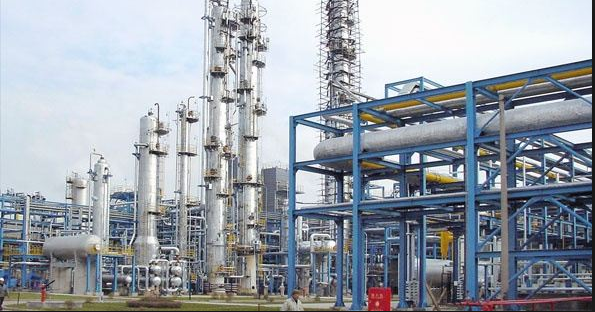
The Haber-Bosch process has transformed global food production

Are humans, and everything we do, part of nature? Or have we evolved to the point where what we do is no longer considered “natural”? This might seem like a philosophical question, but the answer to it has a great bearing on our future, as individuals and as a species.


Geologists are already talking about a new epoch created by humans – the anthropocene. And, as an illustration of that, a piece of research that’s just been published calculates that farmed poultry makes up 70% of all the world’s birds, and that only 4% of all the mammals on the earth now are wild – ⅔ are livestock and ⅓ humans.

One the biggest factors that has helped drive this transformation is our ability to break out of our ecological niche. Every species has a niche which determines how and where it can live. That niche includes things like the ideal temperature and how much water we need to survive, plus what we use for food, and how we interact with other species.

Growing our own food (farming) instead of collecting it from wild sources certainly was a big step towards that break-out  -al though a few other species also carry out forms of farming – ants manage aphids to produce honeydew in a similar system to dairy farming, and also cultivate fungus gardens.

Perhaps the biggest step out of our niche in recent times, has been the ability to directly create reactive Nitrogen. Nitrogen is one of the fundamental building block elements of life – without Nitrogen there would be no protein, no DNA. Life, as we know it, wouldn’t exist.

Where there’s Life – there’s nitrogen

And Nitrogen is all around us – 78% of the planet’s atmosphere is Nitrogen, so every breath you take is basically Nitrogen, though you wouldn’t know it. That’s because it’s bound up in an inert form of two Nitrogen atoms joined together – sometimes called di-Nitrogen.

In order to be available for life, di-Nitrogen has to be split apart to create reactive Nitrogen atoms – which are chemically unstable. These atoms want to form stable molecules so will very quickly combine with other atoms to form things which are very useful for life – things like Nitrate and Ammonia.

Before life evolved, and even now, a great deal of Nitrogen in the atmosphere is broken up into reactive Nitrogen as a result of Lightning, where very high temperatures break apart those inert Nitrogen molecules. And this is where the first life forms got their Nitrogen.

But very quickly this source was not enough to feed life, which then evolved the ability to mimic lightning’s effects, through the creation of a special protein (or family of proteins) called enzymes – we call them Nitrogenases. The bacteria (and similar microbes) with Nitrogenase are known as Nitrogen-fixing bacteria. Without them life would not have evolved to the point where humans appear. Fast forward a few billion years to the 19th century: Human populations had grown vastly, but were struggling to produce enough food to feed all the human mouths.

Farming was still dependent on those N-fixing bacteria, especially the ones living in the roots of particular plant families – like the pea family (legumes). Farmers realised that legumes like clover had a special property which made soils richer, allowed more crops to grow, and more animals to feed from them. And chemists were starting to identify the atoms and molecules at work under the surface.


Nitrate Wars

As the British and Spanish Empires expanded across the globe, Explorers in the 1830s discovered that there were a few very special islands which were incredibly rich sources of Nitrogen. These were the guano islands – found in places where deep ocean current brough Nitrogen-rich matter up from the ocean floor, which created massive numbers of fish, which were eaten by sea-birds, who created islands, literally made up of their own excretions. Guano islands were discovered off the coast of South America, Southern Africa, in the Caribbean (including the lair of the James Bond villain, Dr No)  and in the Pacific.

Realising that this resource of Nitrogen could provide the answer to increasing food production back home, these islands were mined, and the guano sent back to the homeland for use in farming.

Descriptions of these places suggest they were hell-holes, with bonded labour or slaves used to mine the stinky bird pooh – but they were also extremely lucrative, with fortunes quickly won and lost.  A few decades later, deposits of Nitrate-rich rock (Caliche) were discovered in Chile, and this led to a Nitrate boom with Chilean Nitrate exported across the world. It also ignited a Nitrate war between Bolivia, Peru and Chile.

By now there was a new but also big demand for Nitrate – to create explosives for use in warfare. Saltpetre (Potassium Nitrate) is one of the three compounds which form gunpowder, but it was hard to make. Gunpowder was originally invented by the Chinese, but the technology arrived in Europe during the late Middle Ages, transforming war.

In England from Tudor times onwards, Saltpetermen (from the Worshipful Company of Salters) were tasked with collecting it from places where it “grew” – cellars, pigeon-houses and stables – the terrestrial equivalent of those guano islands. The Saltpetermen had special powers to enter private property and collect the saltpeter, and this created all sorts of problems, including possibly contributing to the reasons behind the English Civil War.

The Chilean Nitrate became more important as the guano deposits were exhausted, and the race was on to find some other way of producing Nitrogen usable for farming. During the First World War, Germany’s imports of Chilean Nitrate (needed for their armaments industry) dried up, as the naval blockade of their few sea-ports really took hold.

During the first years of the 20th century, Fritz Haber, a German Chemist, had developed a process to create Ammonia from Nitrogen and Hydrogen, without the need for N-fixing bacteria or rare mineral deposits. This was then transformed into an industrial process called the Haber-Bosch process, allowing Germany to manufacture Nitrate for explosives and the war to continue, killing millions more. Haber went on to become the father of chemical warfare, developing poison gases. Such is the two-edged sword of chemistry.

Capturing Fertility

Even more significant than his military discoveries, was the fact that the Haber-Bosch process suddenly removed the natural limit on available Nitrogen for farming. It wasn’t until after the Second World War that artificial Nitrogen fertilisers became widely available, but once that moment arrived, farming was utterly transformed (and overnight the Chilean Nitrate boom was dead.)

Without too much thought for the consequences (other than increasing food production), Nitrogen fertilisers, were used everywhere they could be used. Food production shot up, to the point now where it is estimated that half the global food supply is produced using N fertilisers. It’s arguable that Fritz Haber is the person whose discovery had the biggest influence over the human population explosion of the 20th and 21st century.

But there’s been another consequence, one which is now among the greatest environmental problems facing us and the Planet – there is now too much reactive Nitrogen swilling around. For the past 60 years farmers have been putting on more Nitrogen than the crop plants can take up. The excess ends up in soils, in water and in the air. The problems this excess cause are collectively called Eutrophication.

Nitrates from fertilisers leach through the ground ending up in human water supplies – a serious this problem as Nitrates cause cancer. But this leaching can take decades so the fertiliser applies in the 1970s might only now be reaching the underground aquifer which provides water to your tap.

And Nitrate fertiliser, slurry or manure applied to fields ends up in rivers causing wildlife to die. Poole Harbour – the Dorset home of Lush HQ – is suffering from too much Nitrogen flowing down the rivers which feed into it; the excess N causes ‘mats’ of algae to form, which has knock-on effects on plants, invertebrates and the internationally important populations of birds there.

Nitrates in the soil encourage plants which benefit from high Nitrate levels (called Nitrophiles) to take over, replacing the vast majority of wild plants which prefer very low Nitrogen levels. This is why our road verges and field edges are now dominated by nettles, cow parsley and hogweed; and one of the reasons why so many wild plants are disappearing from the countryside.

Ammonia, which is a reactive gas, is released from intensive farming practices – dairy farming, the use of fertiliser on fields, plus pig and poultry units, all contribute to Ammonia in the air. This causes air pollution, sometimes a long way from where the Ammonia has been emitted.

And there are other sources – Nitrogen Oxides are also very toxic and formed by both industrial processes and vehicle exhausts.

Some efforts have been made to tackle these widespread problems of too much reactive Nitrogen. The EU introduced a Nitrates Directive 27-years-ago, but all its good intentions have done little to tackle the problem.

Kicking up a stink

The UK Government has been taken to court repeatedly over its failure to tackle air pollution, which is reckoned to cause 40,000 premature deaths in the UK every year. Not all of these are due to Nitrogen – but a combination of Ammonia from farm sources, and Nitrogen Oxides from Industry and Transport, are very significant contributors.

It is this context in which Michael Gove made his latest of the many announcements of the changes he wants to make to the UK’s environment – a Clean Air Strategy. The Strategy includes proposals which would limit the total amount of Nitrogen a farmer could apply to their fields; introduce a requirement to cover all slurry lagoons and manure heaps (to prevent Ammonia escaping) and also introduce a permit system – which currently only applies to Pig and Poultry farms – to large Dairy farms. These are welcome moves, particularly the limit on total N applied across all farms. Will it be enough? Of course not, but these are steps in the right direction.

In truth, the problem is now so great that, combined with the other global threats to our future, we need to recognise some home truths. The reactive Nitrogen genie is well and truly out of the bottle. And even if everyone stopped creating new reactive Nitrogen, it would take decades, centuries, perhaps millennia for equilibrium to return (think of those Nitrogen-rich deposits at the bottom of the ocean and how long it took to create the Guano Islands).

While some farming systems are able to grow food without artificial Nitrogen (Organic and other forms of Regenerative Agriculture) we have to start developing systems which actively remove all that excess Nitrogen, which is so damaging for nature, and for our own health.

Given that half the world’s food is grown using artificial fertiliser, can we sustain our current human population without using artificial Nitrogen? This will be one of the greatest challenges of the future.

this article first appeared on the Lush Times website.

Posted in Agriculture policy, agrochemicals, eutrophication, No Tern Unstoned | Tagged , , , | 37 Comments

The GDPR

The snowstorm of emails asking your permission to stay on mailing lists has finally abated. If you, like me, have also noticed that some of the websites you previously visited are no longer there, that’s also because of GDPR – the General Data Protection Regulation. Mind you, it hasnt stopped me receiving spam about how I can make a fortune from bitchain, or whatever it is (I never read them.)

GDPR is the EU law which will make it more difficult for companies like Facebook, to weaponise your personal data. Sadly it may have been too late to prevent your data from being used to sway the result of the EU Referendum and the US election, which saw President Trump elected.

I for one am a great supporter of it, and of what it illustrates. Which is this.

The EU creates laws to protect its citizens. That is a good thing. Some might argue that the GDPR is just another unnecessary piece of Red Tape – though in truth I have heard few of those siren calls that we all come to expect emanating from the free-market de-regulatory nexus. Perhaps they are waiting to pop out today.

If you signed up to receive an email telling you I have written a new blog, I have not asked for your permission to continue to contact you when I write that blog. This is because I had to read quite a lot about the GDPR recently  – mainly because I wanted to make sure People Need Nature complied with the new law. And it seemed to me that an awful lot of organisations, mostly charities, were panicking and asking people to resubscribe unnecessarily.

This blog is a purely personal matter, there is no money involved and no organisation. It’s literally me (and some guest bloggers) writing about stuff I’m interested in – I’m not providing any form of service and there is no contract between me and you. You’re here because you want to be. And you can unsubscribe from the mailing list any time you want to.

If you’re one of the fantastic people who leave comments on here, then, again, that’s your choice. And if you want all your comments erased now or any time in the future, just let me know and I’ll remove all traces of you from my blog. I don’t do anything with your data, and I won’t do anything with it in the future. It’s saved here on wordpress so you don’t have to fill in your details each time you leave a comment.

Thanks very much for reading this blog, and all the other ones.


Posted in Europe, GDPR | Tagged , | 7 Comments