Owen Paterson embraces Re-wilding.

BebWjXfIAAA7k_b.jpg large

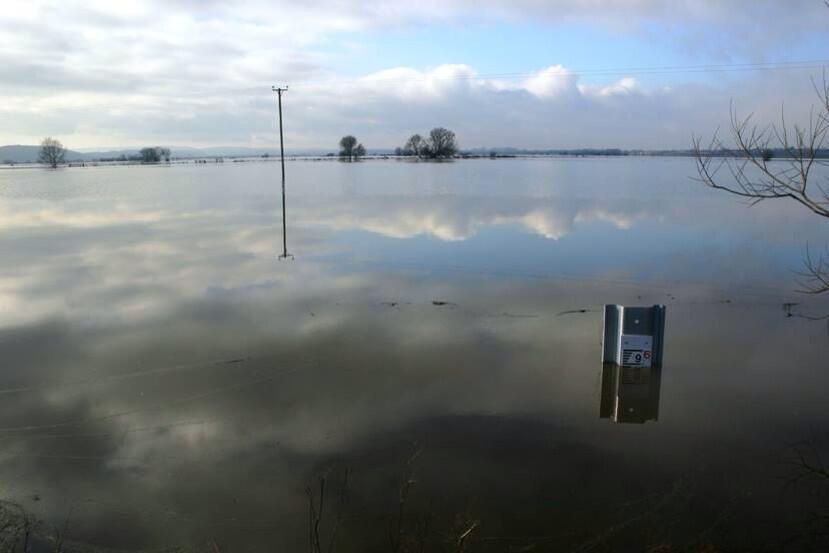
Thanks to Phil Brewin (@waterlevels) for the photo of flooding on the Somerset Levels.

It was only a couple of months ago, that Owen Paterson gave his most significant speech since he became Environment Secretary, to the Tory’s favourite Think Tank the Policy Exchange. You will remember the new chair of Natural England, Andrew Sells, was Policy Exchange’s Treasurer.

Paterson spoke passionately and enthusiastically about Biodiversity Offsetting, privatisation and the joys of killing furry animals, I mean necessary wildlife management. But amongst these familiar tropes, Paterson railed against Rousseauism.  Rousseaism, at least according to Opatz, is the practice of abandoning the land and losing its vital utilitarian values.

Paterson criticised the previous Labour Government for “a blind adherence to Rousseausim”, for not managing rivers properly, which led to flooded farmland and lost crops. Paterson announced he was already slashing up red tape which has prevented farmers from dredging their ditches and streams, to speed water off the land.

How long a few months are in politics.

Gone is the golden glow around Paterson’s pate. Now he is mired in the charnel of the badger cull, he has alienated countryside lovers with his crass remarks about replacing ancient woodland with tree-planting; and he is the arrogant face of the Government in the midst of the floods which have affected so many across the UK.

Meanwhile George Monbiot published his seminal piece in the Guardian where he brought together his own visions of rewilding the uplands, and the relationship between land-use practices, rain-water retention and flooding. Monbiot’s article was published verbatim in the Mail on Sunday, and even gained plaudits on the right of the Tory Party’s organ Conservative Home.

Now former Environment Minister Lord Rooker has publicly supported the notion of reforesting the uplands as a flood prevention strategy. Rooker summed it up thus “We pay the farmers to grub up the trees and hedges; we pay them to plant the hills with pretty grass and sheep to maintain the chocolate box image, and then wonder why we’ve got floods,” he said.

And in the same article Roger Harrabin reports that Owen Paterson “would seriously consider” re-wilding as an innovative solution to the problem of widespread urban flooding.Harrabin is still trying to get Paterson to give an interview to the Today programme on the floods.

I don’t know whether it’s a coincidence, but the Government did announce just two days ago that they have funding to plant 2000ha of trees this year. It doesn’t sound a lot, but they could be coming to an upland near you. The Woodland Trust were unimpressed. Of course it’s possible Paterson thought he heard reforesting, rather than re-wilding.

Have we seen a Damascene conversion of Paterson, from the New Enlightenment Man, to a follower of Rousseau and the Noble Savage? Or has he had a phone call from number 10 telling him he has one last chance to save his political career? You decide.

Posted in badgers, flooding, Forestry, George Monbiot, Owen Paterson, rewilding, uplands | Tagged , , , , | 4 Comments

What is a life?

sunset winterbourne

What is a life? This is a question I found myself asking (to myself) as we collected my late brother Simon King’s possessions from his flat.

I went through the vinyl records, LPs, 45’s, some I recognised from our childhood, others he had collected after leaving home. It was and is an extraordinarily eclectic mix – but also a bit like archaeology, there are strata. There were records collected when Simon first became interested in music, starting around 1972 I reckon. These included David Bowie, Pink Floyd, Led Zeppelin, Emerson Lake and Palmer, then Rush, ACDC. Then in the early 80s, after punk and as the new wave started to appear, the collection reflects this, particularly with his favourite band of that time (perhaps of all time) Wire.

By then Simon was playing guitar in bands – firstly the “school band” Flashman, followed by The Walking Floors. They produced a record and Simon played many gigs with them, even while holding a job in equine insurance in the City. After that Simon joined the Keatons and toured even more, played even more gigs, ultimately supporting Blur before they made it big. After so many years of playing, Simon became disillusioned with music and left it behind. His records (and CDs) reflect the time when his passion for music overflowed.

Simon’s book collection reflects his interests and how they changed too. Simon loved Spike Milligan and the Goons from the beginning, with the Marx Brothers providing strong competition. There is a dark side to the humour, and in Simon’s film collection, much Film Noir and black comedy. David Lynch films figure quite strongly in the collection.

Simon was always interested in wildlife and his earliest books are ones I recognise from childhood, a fantastic book on dinosaurs, a surprisingly technical book on spiders (for a 10 year old). He won prize book from the RSPCA “Mammals of the World” for writing an essay aged 11. Later, themes appear – science fiction and fantasy. All of the Thomas Pynchon’s are there. There is some philosophy: I noticed Kant and Nietszche, but no doubt there are others. And a great section of books dedicated to reptiles and fishing.

Looking back, I think I can divine a life long fascination with snakes, fish and reptiles. So it was no surprise that Simon would evolve into an expert on snakes and reptiles, and a highly respected angler. This reflects Simon’s total commitment to something once he had a taste for it and liked it. Simon started working in other people’s exotic pet shops, and learnt a great deal from them, enabling him to open his first, in Parkway Camden about 20 years ago, shortly after leaving The Keatons. When Palmers closed, Simon opened King’s Reptile World in Mornington Crescent. This shop became well known in London amongst both the reptile keeping community, but also more widely. Film and photo shoots were a regular feature of Simon’s life there and I think this income helped keep the shop going through difficult times. One time Simon had to provide 200 goldfish so Penn and Teller could make them disappear.

You might be surprised at the number of celebrities who keep exotic pets, and they often popped into Simon’s shop for a chat.  Ronnie Corbett was in the shop when the phone rang. Corbett said to Simon “shall I answer it?”, to which of course Simon said yes. “King’s Reptile World” said Corbett using his most thespian vowels, before passing the phone to Simon. They both collapsed in laughter. People came to Simon’s shop because not only was he an expert, but he was also more than happy to help and advise people. He became an authority. He successfully bred some snakes and reptiles that were very difficult to breed in captivity – for a long time Simon’s flat was full of vivaria with various snakes and lizards in them. He developed friendships with the reptile department at London Zoo and there was a great deal of mutual respect between them.

Simon was in many ways quite a libertarian. He believed that as long as he wasn’t doing any harm to anyone else, he should be allowed to do what he wanted to do. He was very involved with the reptile trade and their ongoing battles with animal welfare and animal rights organisations. As a nature conservationist I can remember having some interesting conversations with Simon around these subjects. Simon had very high standards when it came to his personal relationship with animals. He would simply refuse to sell reptiles to customers if he didn’t think they were prepared to put in the time to learn of those animal’s needs and care for their welfare. I think this is why he was so infuriated by the “anti’s” who he felt had no right to claim to be the sole defenders of animal welfare. Simon was quite prepared to stand up and act as a spokesman for the reptile trade and became quite a regular feature in the media and on TV.

I am not going to say anything about Simon and fishing, because others have written a great deal and know far more about it than me. Suffice to say that now, after Simon’s untimely death, I understand far better how much fishing meant to him. Not because of how many pounds this Chub weighed, or how long it took to catch that Mirror Carp, but because of the amazing friends he had and the wonderful times (and stories) they shared.

 So, returning to my original question; what is a life? Simon was devout atheist. He knew there was nothing after, except a return to the earth, where our constituent parts find their way into new life – a fish here, an insect there, maybe even a human, or an alien on some far distant planet. The other way we live on is in our family and our friends, and what we give to society. And Simon gave a lot.

Posted in Simon King | Tagged , , , , , | Leave a comment

Paterson latest: Badgers stole my bovine TB data

Opatz

Owen “goalposts” Paterson. (photo by US Department of State [Public domain], via Wikimedia Commons)

Here’s an interesting take on the latest Badger Killing machinations from The Ecologist (is it owned by Zac Goldsmith?). They suggest Owen “Goalposts” Paterson may be being lined up for his own personal cull by Number 10. Who would cry?

After the extraordinary shambles that was the 2013 “Pilot” (pilot in name only) Culls, Natural England, keen to get all the paperwork done in advance this time, is inviting other contestants to sign up to this surreal game of “Find the Goalposts”.

One of the tests that contestants must pass before they can get their blood-soaked tickets to play, is that each county within the Badger Kill Zone (BKZ – that’s Bee Kay Zee) must be currently certified by Defra as requiring a 12 month TB testing regime.

Defra calculate which Counties need to be within 12 month testing using statistics on herd bTB infection. It has now been discovered that these statistics have been “faulty” since October 2011 and that the numbers of herds with TB have been overstated for the last 27 months.

Natural England can quite reasonably ask Defra whether the map showing the counties subject to 12 month testing (which is predicated on data on herds that were infected with bTB) needs to be reviewed in light of this dodgy data.

No doubt our Environment Secretary will blame the usual suspects. Not content with moving the goalposts, Opatz will now claim the Badgers have been hacking into the AVHLA IT system and moving the data.

Posted in badgers, Owen Paterson | Tagged , , , | 2 Comments

Welcome to your new job Mr Sells

Andrew Sells starts as Chairman of Natural England on Monday (20th). If we could wave our magic wands and appear in his office that morning, what would we suggest to him as his top priorities?

Some might suggest the Badger Cull, which Natural England is responsible for regulating. The Badger cull cost over £4000 per badger killed, plus over £1300 per badger on policing. That’s well over £5k per badger; and the culling targets were missed. Perhaps Natural England can come up with some better ideas.

What about Biodiversity Offsetting, which is Opatz’ latest wheeze? Sells might suggest that his mates the housing developers will be laughing all the way to the Environment Bank on this one.

Then there are the “gold plated” European nature directives and their pesky SPAs and SACs. The Chancellor has already made these into political footballs and their protection is being weakened, as they are seen as “barriers to economic growth”.

And of course not forgetting the flooding, both from rivers and coasts. Will Sells support Paterson’s approach to tackling flooding ie let farmers dredge their own land to the max, speeding water downstream into towns and villages.

What about the New Common Agricultural Policy, the much vaunted “Greening” measures and the new Environmental Land Management Schemes? There’s plenty more horse trading to be done here, with a much reduced budget, thanks to the NFU successfully lobbying Defra to reduce modulation from 15% to 12%. Mind you we were lucky, Northern Ireland had a 0% modulation rate forced on them after a court challenge.

Not forgetting SSSIs, implementing the 2020 England Biodiversity Strategy, Nature Improvement Areas, Coastal Access and hundred other priorities.

No, I don’t think he should be thinking about any of these just at the moment. I think he has to do two things, quickly.

Firstly reinvigorate Natural England’s Board, both exec and non-exec. It’s time for a big clear out. There’ll be a new Chief Exec, new Exec Directors and lots of the Non-Execs are up for renewal. So Mr Sells, please select your Board carefully. It should have the right combination of nature experts, business experts and advocacy experts. These people should have serious standing in Whitehall and Westminster.

Secondly Mr Sells you need to be making yourself very well known in Whitehall (not just Defra, which seems to be dying on its feet) and Westminster. You need to have the ear of the Environment Secretary – he may actually listen to you. Or perhaps just talk to Matt Ridley and let him explain it to Opatz. Regular visits to give evidence to the EFRA and EAC select committees and a good working relationship with Professor Helm at the Natural Capital Committee should be obligatory; and I am sure you would alreays be very welcome at the Biodiversity APPG.

You already have very good links into the Tory party- use them ruthlessly to benefit nature and Natural England. You need to be lobbying vociferously in public and behind the scenes – to make Natural England relevant and valuable. But don’t forget to foster links with Labour – they could well be in power (or part power) in just over a year’s time.

NE needs to be at the top of its game in the next few years (back to where English Nature and FRCA were in the early 2000s), to make the most of the new NELMS, to better protect sites, and to quietly but effectively kill off loony policies coming up from the Think Tanks (about which you know a great deal.) That means an increased budget and taking on more staff again.

Good luck Mr Sells.

Posted in Andrew Sells, badgers, biodiversity offsetting, Common Agricultural Policy, flooding, Matt Ridley, Owen Paterson | Tagged , , , , , , , | 1 Comment

Floods and SUDS

As the flood waters recede they reveal that the “Greenest Government Ever”‘s environmental credentials have finally all been washed away.

The idea of Sustainable (Urban) Drainage Schemes, or SUDS has been around for a long time. I can remember arguing for a floodwater storage area or swale (which also had wildlife benefits) as part of a development on the edge of Aylesbury 20 years ago.

The idea is to make developments such that when there is high rainfall, the water takes a path, either returning to the local groundwater or to the nearest river, without flooding properties or infrastructure. This means allocating part of a development to the Green Infrastructure needed to enable the water to do this.

Now we hear that after four years of wrangling, the SUDS requirements in the Flood Act 2010, have been shelved. The developers don’t want to lose land to green infrastructure including SUDS – land that could be built on. The Home Builders Federation said “If you are forced to put in a large pond, that means you can’t build homes on that, so there is a cost involved.”

What the HBF mean is that they would have to reduce the massive profit they make on developing land for housing. That is not the same as, say, a cost to taxpayers, or the emotional and psychological cost of living in a flood-prone property. The HBF would rather be left to decide how best to reduce flood risk on new developments  – and look how well that has worked in the past.

New Natural England chair Andrew Sells has friends on the board of the HBF – perhaps he can have a word.

But I digress.

So while new developments fail to receive the flood-reducing SUDS green infrastructure, at the other end of the catchment, Owen Paterson is encouraging farmers to speed the removal of water from their land – so it can – yes you guessed it, arrive all the more quickly in those towns and cities that  are so commonly sited on large rivers.

There are some great examples of imaginative approaches to reducing downstream flooding including farmers willingly changing their land-use management to help reduce flooding in nearby villages and towns.

This Government seems much more interested in appeasing housing developers (who provide very large donations to the Tory Party); big industrial farmers who just want the water off their land; selling off publicly owned land for private profit; and cutting the budgets of the department (Defra) and its agencies (EA and NE) and the Local Authorities who have responsibility for sustainable management of our rivers, wetlands and greenspaces.

Of course, Green Infrastructure is not just there to reduce flooding – greenspaces near your house help improve mental health for people living in local communities and that improvement is sustained in the long-term.

National planning policy doesn’t really care about the mental health benefits of local greenspace though – after all, where’s the profit in that? The NPPF is designed in such a way as to allow developers to completely ignore local views, if the Local Planning Authority has not managed to get their Core Strategy past a Government Planning Inspector, especially on grounds that they have not allocated enough land for housing. This is the Pandora’s Box that was highlighted in the campaign on the NPPF two years ago, and is now being opened.

So enjoy your local greenspace for all its values, before it’s sold off to developers to build flood-prone houses.

Posted in Andrew Sells, flooding, Floodplains, greenspace, mental health, Owen Paterson, SUDS | Tagged , , , , , | 4 Comments

Have we reached Peak Paterson?

sunset winterbourne

is the sun setting on Owen Paterson? ((c) Miles King)

Some say we have seen Peak Oil, but are now witnessing Peak “Owen Paterson”? After yesterday’s performance in the Commons, where Paterson repeatedly failed to respond to questioning on his climate change denial, criticism is (finally) increasing.

Even the Tory loyalist chair of the EFRA committee, Anne McIntosh is now concerned; “Recent flooding events reinforce our concerns about cuts to the Defra budget. It is a small ministry facing massive cuts,”she said – only 3 years late Anne. How is it that the previous massive cuts to Defra didn’t have these effects? Or perhaps Anne is now very worried that she is going to be deselected as an MP and is seeking to gain some publicity.

Paterson visited a flood defence project yesterday, as if to say “look I really do care about all you people who have been flooded”. What they may not realise is that Paterson has already caved in to farmers wanting to take farmland flood management into their own hands, by relaxing the rules on dredging watercourses on farmland, against the advice of the Environment Agency. Paterson apparently said “the purpose of waterways is to get rid of water”.

Paterson clearly sees the word as a small set of large lego bricks which either fit together or don’t. What he failed to realise is that getting rid of water in one place means it arrives more quickly at another place. So getting rid of water from flooded farmland means it arrives (with silt mud and other debris) in the next town, flooding properties.

There are a wide range of land-use actions that can reduce farmland and downstream flooding, but of course using them would require a) boots on the ground from agencies such as NE and EA who are rapidly losing those boots due to funding cuts b) moving more money from Pillar 1 to Pillar 2 in the Common Agricultural Policy (which would upset his chums in the NFU) and c) more regulation, which is of course anathema to neo-conservatives like Paterson.

Paterson is already tainted by the charnel emanations arising from the rotting remains of the Badger Cull fiasco. Each killed badger cost £4000, with 80% of this being paid by the taxpayer. Somerset Badger Group vaccinate each badger for £25. Perhaps Paterson is doing his bit to grow the economy, by inflating the costs of killing wildlife. Even the Tory Spectator is spreading rumours of his imminent departure in a Spring reshuffle.

With his latest “off the wall” pronouncements on Biodiversity Offsetting creating waves of repulsion all round, it must be time for him to go.

I have to say I cannot remember as awful a Secretary of State for the Environment  in 30 years, with the possible exception of his uncle-in-law “Old Nick” Ridley. But then that may be the problem, as Paterson clearly gets all his advice from his brother-in-law Matt Ridley, the climate change denialist and anti-environmentalist. Policy Exchange has recently appointed Matt Ridley, a hereditary Peer in the Lords, as a visiting scholar.

Posted in anti-environmental rhetoric, biodiversity offsetting, climate change, flooding, Floodplains, Matt Ridley, neoliberalism, Owen Paterson, Policy Exchange | Tagged , , , , , , , | 15 Comments

Paterson fails to see wood, only trees

Happy New Year everybody. Let’s hope 2014 is better than 2013.

I was wondering what to write for my first blog post of 2014 when my usual supplier turned up. Yes, you’ve guessed it – Owen Paterson Secretary of State for the Environment. Or is he in fact the Secretary of State against the Environment?

OPatz was quoted in the Times then other places as saying that planning authorities could allow developments which destroy Ancient Woodlands, because a thousand trees could be planted elsewhere for every tree that was lost in the ancient woodland. He went on to suggest that the biodiversity offsetting should take place “within an hour’s drive” of the place of destruction. Paterson returned to his favourite theme, arguing that Offsetting “deliver a better environment over the long term”, though accepted that the trees would only really be appreciated by subsequent generations.

Commentators and NGOs have been up in arms at this latest Opatz pronouncement. The Woodland Trust is seething, not surprisingly as they use ancient woodland as a totem to justify their existence. They have some fantastic campaigners, but in truth most of their work is unrelated to ancient woodland conservation, and indeed much closer to Paterson’s tree planting panacea.

From my perspective the Ancient Woodland issue is a red herring.

royal wedding and other may 11 032

Ancient Woodland – very few trees ((c) miles king)

The trees currently existing there are only a small part of an ancient woodland’s overall value. Trees grow and die – even a mature oak tree only lives a couple of hundred years at best. Managed as coppice or pollards individuals can live over a thousand years. A very few of our Ancient Woodlands may have direct linkages back to the Wildwood and we can trace woodland cover thousands of years back.

But the other components of an ancient woodland are as valuable as the standing trees, or even more – the ground flora and epiphytes, the invertebrate communities, the fungi which pull everything together, the birds and mammals; the deadwood, the rides, glades and ponds that provide open areas upon which so many “woodland” species depend. Then there are the unploughed soils which tell us of environments past and the amazing wealth of archaeology within them – below, and above ground – the wood banks, holloways, saw pits and lost buildings. And the history of woodlands, as told in estate maps and deeds, and in oral history of communities struggling, flourishing, mourning and celebrating.

Ancient Woodlands are in that sense not much different from other ancient habitats and landscapes – Downlands unploughed since the Black Death, ancient parklands and wood pastures such as the New Forest, formed in the 11th century, or ancient heathlands created in the Neolithic.

Somehow ancient woodlands speak to us in a different way – perhaps this is some long forgotten cultural memory from our Saxon ancestors remembering the Great Teutonic Forests. This seems more likely to me than a connection back to Ancient Britons and their forests, though these links are undoubtedly far stronger in Wales and perhaps Scotland?

None of this is of any interest to Owen Paterson of course – he is a utilitarian neoliberal, who is under the guidance of his brother-in-law the rational optimist Matt Ridley. Ridley is a passionate anti-environmentalist, disguised as a rationalist. He was also chair of Northern Rock bank when it collapsed, contributing to the global financial crisis. Presumably he still looks back on his role their with optimism, now he has entered the House of Lords. Ridley’s family made their fortune in Coal in the 19th century, so it is no great surprise that he is an arch climate change denialist. Ridley like Paterson both believe the environment is there to be improved, the plaything of an autocratic ruler, who believes himself to be benevolent, even though he is not.

For me, the most enligthening aspect of this start to 2014, is that Defra is supposed to be considering the responses to the consultation on biodiversity offsetting that took place at the end of 2013. Paterson has clearly already made his mind up – or rather has decided to go ahead with the proposals presumably laid out for him by brother Matt.

Posted in Ancient Woodland, anti-environmental rhetoric, banking crisis, biodiversity offsetting, enlightenment, Matt Ridley, neoliberalism, Owen Paterson | Tagged , , , | 9 Comments

Merry Christmas

christmas tree jpeg

Merry Christmas

Thanks to everyone who has read my blog over the past 6 months or so. Thanks especially to those of you who have left comments, either here, on twitter or Linkedin. Top wordpress commentator prize goes to Dave Dunlop with 22 comments, followed by Mark Fisher with 17. Thanks very much for your insights Dave and Mark.

It hasn’t been the easiest year of my life, but it has been one of those pivotal years when things change a lot and I am feeling that slowly things are getting better. Blogging has helped hugely.

I have posted 92 posts since May and you have made over 15000 page views from 7077 individual visits. I would never have dreamed of getting so many people having a look at my random musings – I am thrilled.

The most popular post (with 931 views so far) was on the new Natural England chair Andrew Sells, followed by my homage to my late brother Simon (who will be very much missed and remembered at our christmas lunch).

Rest assured I will continue to blog in 2014 – who knows what exciting things there might be to write about!

Merry Christmas.

Posted in blogging | Tagged , , , , , , , | 6 Comments

Biodiversity Challenge 4: Broken Dreams

Queensland_State_Archives_1615_Public_Instruction_Activities_at_the_Teachers_Training_College_the_College_Council_April_1951

meetings meetings meetings

((c) By Agriculture And Stock Department, Publicity Branch via Wikimedia Commons)

Todays blog completes my series this week of blogs looking at what Biodiversity Challenge achieved, looking back with the benefit of hindsight 20 years on.  Biodiversity Challenge achieved a lot but also ultimately failed to achieve what it set out to do. This is no great criticism as the aims of Challenge were incredibly ambitious. Setting out a new way of doing nature conservation is one thing, actually successfully doing it is quite another.

One of the biggest failures of Challenge was the assumption that a national top down approach to targets and priorities would be accepted by everyone. David Goode then head of the London Ecology Unit and urban conservation pioneer, clearly resented the idea of local biodiversity action being driven by top down national targets. He persuaded the Dept of the Environment that Local Biodiversity Groups were the best way to deliver the BAP on the ground (especially in urban areas which did not have much of the priority speces or habitats that the Challenge approach identified).

Thus the great schism was created in about 1996 and to this day this schism has not been closed. For many years, LBAPs went their own way, deciding their own priorities, either at odds with or in line with national UK BAP targets. This led to absurdities such as LBAPs not including targets for shortlisted BAP priority species in them, because the LBAP groups were unaware that their area supported these priority but obscure species, while every LBAP seemed to have a plan for Barn Owls or Great Crested Newts.

As a member of the top-down target driven cadre known as Biodiversity Challenge, I was unsympathetic to the local perspective. WIth hindsight I can see why the LBAPs came into existence and can well imagine how it must have felt back then to be told what should be done locally, by some ivory-tower inhabiting wonks.

Devolution was not kind to the BAP process, killing the overarching UK biodiversity group, just at the time when it was starting to operate quite well. The country groups never attained the degree of political leverage the UKBG had done, especially England Biodiversity Group, which suffered from its parent dept the new Defra having both the UK and England remit, and thereby ignoring the England bit. And the jelly blanket of bureaucracy inevitably started to slither over the BAP process.

The original dream of Challenge, achieving fundamental policy reform across sectors was just a dream. Even when MAFF/DoE were enthusiastic about the BAP (95-99 or thereabouts), very few other government departments were at all interested, with the exception of the MoD who saw the opportunity to get kudos for the responsibility of looking after such as large amount of SSSI land. No-one else in Whitehall was remotely interested in joining this game (were the Treasury even aware of the BAP back then?), which meant there was little or no chance of achieving wholesale changes in the culture and practice of Government in its relationship with nature.

After much resistance from the statutory agencies, English Nature finally adopted the BAP enthusiastically and this led to what could be one of the best things to come out of the BAP – the 2003 public service agreement target to get 90% of SSSIs into favourable or recovering condition by 2010. OK English Nature then Natural England had to fudge the results to achieve the target, but nevertheless a great deal of time money and effort was spent improving SSSIs for wildlife during those 8 years. Sadly the rest of the priority habitat outside SSSIs (about 40%) continued to be lost or lose quality during that time.

Ultimately though the dreams of Challenge were strangled by the inexorable decline into bureaucracy that killed the dream and the BAP process.


Posted in biodiversity, biodiversity challenge, bureaucracy, LBAPs | Tagged , , , , , , , | 4 Comments

Revealed: who pays for the corporate lobbyist Think Tanks?

A little while ago (back in August) I asked readers of this blog to write to Chloe Smith MP, who at the time was guiding the Lobbying Bill through the House of Commons. This Bill was going to curtail all political activity by charities a year before a general election.  Shortly afterwards Ms Smith resigned her ministerial post – I don’t know whether she had an ethical crisis: let’s hope so.

The Lobbying Bill moved smoothly through the Commons but the Lords got their teeth stuck into it and forced the Government to pause for 3 months and carry out the consultation it should have carried out in the first place. So all of you who wrote to Chloe Smith can feel rightly that you played your part in a democratic process. Here is the Consultation Document – please – respond to it.

Hopefully one outcome of the consultation will be to expose the murky web of politically partisan thinktanks (almost wholly on the hard right), their intimate links with Corporate lobbyists, which I blogged about last week. Because these “Thinktanks” are registered charities. It would actually be a good thing if the political activities of these dummy thinktanks were curtailed, but I doubt very much whether that was the intention of the Bill and I am sure they would find a way to work around the legislation.

One of the main gripes with Thinktanks, especially those that masquerade as genuine third sector (“grassroots”) groups – this is known as astroturfing, is that their funding is secret. The Tobacco Industry funds astroturfers like The Institute for Economic Affairs, The Cato Institute and The Democracy Institute to oppose regulations that would reduce the number of people killed by smoking. Major Tory Party donor and Hedge Fund supremo Michael Hinze funds Nigel Lawson’s Global Warming Policy Foundation, oh and also funds the IEA. Hinze is also linked to Adam Werrity and disgraced former Defence Secretary Liam Fox’s vehicle Atlantic Bridge. Hinze’s Hedge Fund CQS is very successful – what does it invest in? Who knows. The actual industries it invests in are deeply camouflaged by modern financial wizardry. You can bet your farm though that fossil fuels will be in there; and probably tobacco.

I wrote last week and the week before about new Natural England chair Andrew Sells and his being a major Tory party donor and treasurer of The Policy Exchange, another hard right thinktank with roots far into the Tory party and its corporate friends. Sells promised he would cease all political activity on taking the Chair of NE and announced his resignation of the PE Treasurership. He also stated that he would continue to support his favourite charities. The Policy Exchange is, like all the other Thinktanks, true or dummy, a charity. So can Sells truly say he has ceased political activity while continuing to be a major donor for a charity which has more influence over the Conservative Party policy development machine than most cabinet ministers?

There are still many mysteries about who does fund these Thinktanks. However, one thing we do know. Charities benefit from gift aid. That is when a taxpayer donates money to a charity, the Government kindly donates the tax that that individual had paid on their income, back to the charity. So if I gave £10 to Plantlife, the Government would add £2.50 as a refund on income tax.

If you earn a lot and pay tax in the higher income tax rates – it’s even better. Let’s say I’m Andrew Sells and I want to give The Policy Exchange a £50,000 donation. The Government adds on £12,500 Gift aid, and I can also tax relief of £18750. The total cost to me is only £31250, while the Policy Exchange gets £62500 ie I give double what I have paid out. This tax revenue is lost to the Exchequer – that means it’s not available to spend on public services; or it has to be found from some other tax revenue source. You can play the same game here

It’s now clear to me who is a major donor to these secretive corporate lobbyist Think Tanks – it’s you and me, the taxpayers.


Posted in Andrew Sells, Astroturfing, Charities campaigning, Charities Commission, corporate lobbying, George Monbiot, Policy Exchange, Think Tanks | Tagged , , , , , , , , , | 2 Comments