This article was in yesterday’s Farmer’s Weekly. As there is a partial paywall on that website now, I am copying in the article so you don’t have to go the FW website to read it.

Stop using our fields as a ‘dog toilet’, urges farmer

Wednesday 14 May 2014 09:40
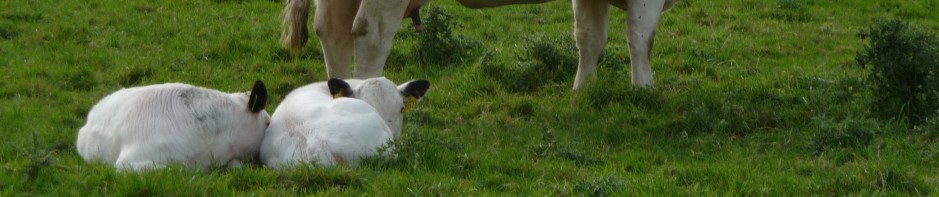
Dog watching cows in field through fence

A dairy farmer who lost an estimated £250,000 in cattle due to the dog parasite neospora is calling on dog owners to stop treating the countryside like a “dog toilet”.

Yorkshire farmer Jonathan Sharp spoke out after he saw the story in Farmers Weekly of farmer Alan Brunt, who built a 300ft-long industrial fence around a public footpath to keep dog walkers off his land .

“Personally, I’m not really in favour of Mr Brunt’s fence, but what people need to realise is that they cannot keep using the countryside as a dog toilet, which a minority still do,” said Mr Sharp.

He said the neospora parasite affected his farm business for 12 years, costing his business an estimated £250,000 in lost revenue due to infected cows’ aborted pregnancies.

“Neospora started infecting cattle on my farm in 1995. Back then it was not widely known, but a young vet spotted the disease on my farm,” said Mr Sharp.

Read also: Avoid the risk of dogs spreading neospora in your herd

“We fenced the two major footpaths that we had an issue with and overnight we went from 12% abortions to zero.”

Mr Sharp, who farms 128 pedigree Holsteins at Tewitt Hall Farm, Oakworth, paid roughly £2,000 to fence off two fields at the farm, using a standard fence with barbed wire and netting.

But he said he understood why Mr Brunt went to the extremes of putting up an industrial fence in his field.

“If he had put up a barbed wire fence then someone could have cut it,” he explained.

“It’s clear to me that local dog owners treat that field as common land, when clearly it isn’t. People forget the countryside is a workplace for food production.

“When there is 20, 30, or 40 people walking dogs and they don’t clean up after their dogs it can become a big problem.”

Mr Sharp said neospora was not just a problem confined to aborted pregnancies in cows.

“Neospora can occur in successive pregnancies and pass down through the generations. Once you have a cow that gets infected, it is pretty much written off,” he added.

“If it’s a pedigree cow, it can get very expensive.”

So if industrial fencing of farmers’ fields is not the solution, what does Mr Sharp suggest?

“When someone takes a dog for a walk, they have to pick up the mess and get rid of it responsibly,” he said.

Recent studies carried out by Moredun and Scottish Agricultural College detected neospora in 22.9% of abortion cases. And within these positive samples, 35.2% of the pathogens present were neospora.


The one point worth raising is that the farmer is implying that it’s ok for dog walkers to use Common Land as a dog toilet. Clearly this is wrong on a number of counts:

Commons are generally far richer in wildlife than general countryside.

Commons often struggle to find grazing, which is essential to maintaining their wildlife cultural and community values. Dog walkers, especially those that let their dogs run free among grazing animals, and those which don’t pick up their dog poo, are actively discouraging graziers from putting grazing animals on commons. There is no common right of dog walking or dog toileting.

Posted on by Miles King | Leave a comment

Dog Wars 2: the battle for Rodden Meadow

Image

who could have done that? It wasn’t my dog…..

Following Sunday’s dog blog, as if on cue, this story pops up, albeit in the Mail.

A retired haulier and beef farmer bought a 29 acre meadow in the middle of Frome, Somerset, which had evidently been an unofficial public open space for many years, used by the local dog walking community amongst others. A community group had attempted to have it declared a Site of Community Value, but failed. The field has a public footpath running through it.

After purchasing the field for £230,000, the farmer has erected a metal security fence on either side of the footpath; he was quoted as saying:

“they allow their dogs to mess everywhere and me and my staff have to work in it. ‘I thought, “They don’t look after it, so I will.” I went to the footpath people and asked if I could put a fence up and they said it was my right, so I did.” In an interview with Western Daily Press he also said “the dog mess creates germs which get into the cattle and abort the calves.”

“The dog mess creates germs which get into cattle and abort the calves, I don’t want that happening. I need to get the land clean for six months before I can graze cattle so it needs to happen sooner rather than later.”
Read more at http://www.westerndailypress.co.uk/Heavy-metal-strikes-discordant-note/story-21081979-detail/story.html?utm_source=twitterfeed&utm_medium=twitter#Wk9VhO8FCrBPcBvG.99
“The dog mess creates germs which get into cattle and abort the calves, I don’t want that happening. I need to get the land clean for six months before I can graze cattle so it needs to happen sooner rather than later.”
Read more at http://www.westerndailypress.co.uk/Heavy-metal-strikes-discordant-note/story-21081979-detail/story.html?utm_source=twitterfeed&utm_medium=twitter#Wk9VhO8FCrBPcBvG.99
“The dog mess creates germs which get into cattle and abort the calves, I don’t want that happening. I need to get the land clean for six months before I can graze cattle so it needs to happen sooner rather than later.”
Read more at http://www.westerndailypress.co.uk/Heavy-metal-strikes-discordant-note/story-21081979-detail/story.html?utm_source=twitterfeed&utm_medium=twitter#Wk9VhO8FCrBPcBvG.99The fence is very ugly, and it splits the field in two, which will also make it more difficult to graze. I don’t know whether the meadow is a wildlife-rich one, the photos were ambiguous. Either way, the owner has a point. Who would allow dogs to poo in their garden? Unless it was your dog, and even then I suspect plenty of dog owners deliberately take their dogs for a walk so they don’t poo in their own garden.

The vox pops in the Mail are from local community members –  all up in arms at this ugly fence spoiling the view and restricting their access. None of them own up to allowing their dogs to poo in this local beauty spot of course. But as 25% of households own a dog and evidently many don’t pick up (and then there’s the wee of course) some of them will be culprits.

One old lady who lives next to the field was quoted in the Mail as being delighted with the fence.

“Jean Dredge, 80, whose garden abuts the entrance to the path, said Mr Brunt was a ‘saviour’ who had restored peace to the area.

She said: ‘It’s been lovely to walk out of my door these past few weeks and not be confronted by piles of dog mess.

‘Neither are we woken up at 6am by people slamming their car  doors and shouting good morning to each other.’”

photo (c) Miles King
Posted in dogs | Tagged | Leave a comment

Gone to the Dogs

I grew up with dogs. We had a succession of Welsh collies. Kirsty was a family pet before I was born, but sadly died young. Meg accompanied me through childhood into teenage years – I will always remember going up to the green with my dad and him letting Meg off the lead. She would immediately run off as if she had seen some phantom errant sheep. And he would be shouting “MEG!!!!” at the top of his (considerable) voice, trying to get her to come back. How embarrassing our parents can seem, until we in turn become embarrassing to our children.

After I had left home my dad had Darcey, who was beautiful and saw my brother and I as part of the pack, but didn’t like many other people, and in particular did not like children. This was tricky when we visited “home” with our girls when they were very young.
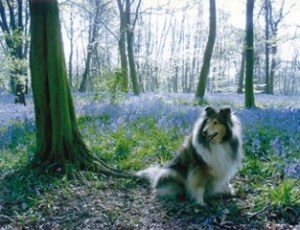
Darcey, Wanstead Park bluebells

Darcey (c) Peter King

The relationship between Canis lupus familiaris and Homo sapiens is a long and fruitful one (arguably for both species). The oldest known evidence for domestication goes back to 33,000 years ago in the Altai mountains, though this did not lead to modern dogs. The science is still developing but current estimates for the domestication which led to all modern dog breeds are pretty broad: 14,000 years ago seems to be a middle estimate. This would tie in pretty well with the development of agriculture and settlement, across the world.

For our paleolithic predecessors, wolves, from which domestic dogs evolved (if that is the right word) must have been one of those things which were feared and awed, but also useful. People would have been able to follow wolf packs and steal their kills, while wolf pelts would have been valuable for keeping warm. Wolf teeth do turn up occasionally in palaeolithic jewelry. Equally, Wolves may have stolen into camps and taken food, even occasionally children. This could be the ur-memory which lingered into folklore and gave us stories like Little Red Riding Hood, though of course these are stories from the Forest cultures of Northern Europe, not Britain. Even now, most imagery associated with wolves is negative – only this year the latest offering from Disney, “Frozen”, depicted ravening wolves attacking the heroes and their reindeer. Positive images of Wolves do occasionally crop up, such as Akela in the Jungle Book (although this is more than counter-balanced by the “bad” young wolves falling under the influence of Shere Khan); and the Roman creation myth where Romulus and Remus are suckled by wolves.

Reading a fascinating book about Ice Age art recently, I was surprised to find no depictions or sculptures of wolves in the book. It appears that depictions of wolves in the Palaeolithic are really quite rare  – here is one.  They must have been very well known to Palaeolithic peoples – so this is a bit of a mystery. Although most depicted animals are prey (Mammoth, Horse, Bison, Deer, Aurochs), large cats are depicted quite regularly  – such as this “panther” at Chauvet , Lions, and the remarkable feline head from Kostienki. It’s also difficult to believe Wolverine or Cave Bear were prey, but they were hunted for fur, and are also depicted in Ice Age art. Where are the Wolves?

As I have previously written, dogs became extremely useful, for around 14000 years, to protect livestock from their wild cousins. And of course the dog/human interaction created another type – the feral dog. These would not have “belonged” to anyone, served no direct function as hunting dogs, sled dogs, guard dogs or sheep dogs. They naturally form packs, can carry nasty diseases (rabies) and are good food thieves. It is easy to imagine, during the decline of one civilisation or another, that as buildings decay, people move out and the feral dogs move in. Feral dogs generally have a bad name and we don’t really encounter them in Britain these days – they are different from strays or abandoned pets, which elicit great sympathy on the part of society, even though their existence is due to the callous attitudes of another part of society.

I recently encountered a more sympathetic relationship between people and feral dogs, in Istanbul. We saw many cats and dogs in the old city, and they looked like they just lived on the street. We discovered from our excellent food tour guide Ugul, that the City Authorities had planned to round them up and get rid of them but the local communities protested and formed a community group/charity to pay for them to be cared for.  Now feral cats and dogs in Istanbul are rounded up annually, given a health check and vaccinated, then returned to their patches. They are not spayed. Cats are welcome and often found sleeping in shop windows on killims and carpets. Dogs are less frequent but we noticed about 6 lying around in Gulhane park in front of the gate into the Topkapi Palace. People evidently feed these animals and treat them well. Ugul told us keeping dogs as pets is becoming increasingly popular in Istanbul, though still not that common.

Our modern relationship with wild Wolves is also interesting. It’s now so long since Wolves were wild in Britain that they no longer exist even in our deep cultural memory.

Elsewhere the Wolf is symbolically found quite often to be associated with violence  – returning to Turkey, The Grey Wolves is a shadowy fascistic militant organisation created at the outset of the Cold War, as part of the Gladio underground resistance network. It would appear to be still functioning and have very significant influence in that country even now.

Just recently in Ukraine an old  Wolf-related image re-appeared  – the Wolfsangel

Wappen_Pleidelsheim

the Wolfsangel as a heraldic symbol.

It re-appeared as the symbol of the neofascist Svoboda party daubed on the door of a Kiev synagogue. The Wolfsangel, before it became a fascist symbol, originated as a wolf trap, the wolf hook. The symbology is powerful, as usual with fascist politics, and both implies superiority over the predator, and respect for/identification with it.

Still, our domestic dogs are a million miles from all this darkness aren’t they? Perhaps not. Incidents of domestic dogs “worrying” livestock are causing a great of anguish amongst the naturally dog-loving, farming community. In Cumbria alone last year, there were 113 “worrying” incidents reported, including 49 resulting in livestock deaths. Just this week in Dorset, an incident where a lurcher had chased and fatally wounded a deer on National Trust land was reported. The dog owner, who witnessed the attack, seemed entirely unconcerned saying “these things happen” before walking off.

But I don’t want to over-egg this issue of dogs killing livestock – there are 8.5 Million dogs in the UK, and 25% of households have a dog. I’m more interested in another issue – what happens to all their poo and wee?

People like taking their dogs for a walk in nice places, like the local park, a local greenspace, a heathland, a nature reserve. Footprint Ecology, where I work, is the leading expert organisation assessing the impact of visitors on high value wildlife sites, particularly heathlands. The evidence from Footprint’s research (and others) is clear that dogs disturb ground-nesting birds like Nightjar and Stone Curlew.

What is less clear is what impact all the dog emptying has – the research is almost non-existent. One site where some research has been carried out is the wonderful Burnham Beeches in the Chilterns. Research there indicated that 50 tonnes of dog poo and 30 tonnes of dog wee were deposited on this Special Area of Conservation, per annum. This is an astonishing figure by any reckoning. Although it’s very difficult to know exactly, and it’s not the sort of research many people would wish to carry out, estimates suggest only about a third of poo is picked up by dog-walkers, and obviously no wee.S ome like to bag their dog’s poo and then leave it somewhere, or throw it in a tree.

IMG_0069

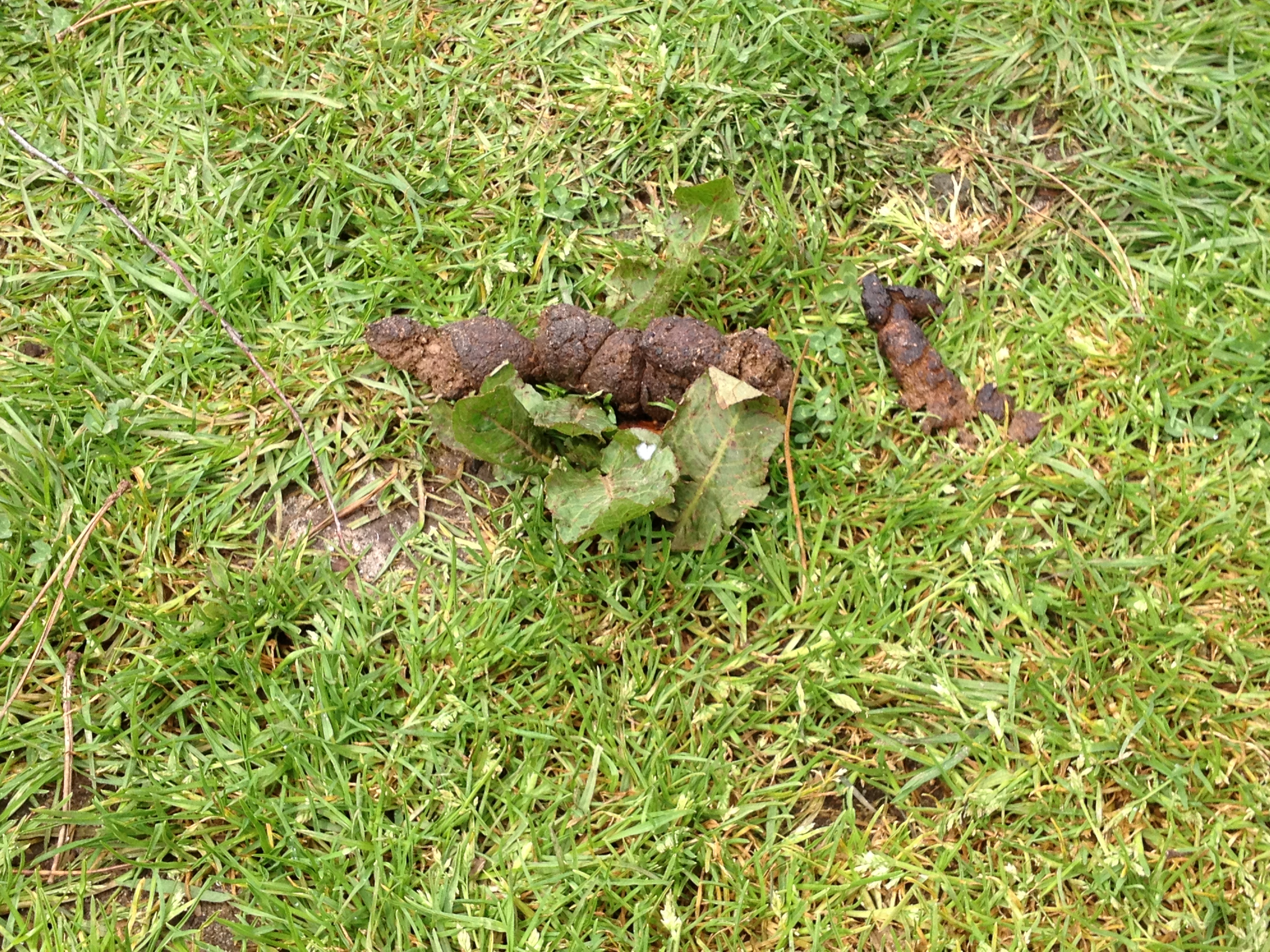
dog poo deposited next to dog poo bin (c) Miles King

As dog poo is around 0.7% Nitrogen (N) and 0.25% Phosphate (P). Roughly 250kg of (N) and 100kg of (P) are deposited on Burnham Beeches every year, just from dogs, concentrated in a relatively small area around the car parks and honey pots.In the New Forest, it was calculated that 7,500 tonnes of dog excrement was deposited per annum (roughly half poo and half wee) – and that was 10 years ago; I expect that figure has increased substantially.  Still that equates to 25 tonnes of N a year, concentrated into the popular dog-walking areas.

Critical loads for N in lowland heathland and semi-natural woodland are between 10-20kg/ha – that means above this N deposition above this figure starts to affect the quality of the habitat, or lead to it becoming something else (less valuable for nature). Phosphate is a limiting factor in heathland and any additional P can hasten a change to other habitats including birch woodland. In the New Forest the dog poo would need to be spread evenly across 2500ha or more to avoid exceeding the critical load.
 

IMG_0066

bagged and flung. (c) Miles King

While some sites important for nature can have moderate levels of N and P, in most cases the opposite is true. Excess N and P shift the balance in soils from fungal dominated soils (such as mycorrhizae vital for plant and tree health) to bacterial dominated soils, where only a small number of plant species, that can take advantage of the extra nutrients, can thrive. In forest systems trees are totally dependant on mycorrhizal symbionts for tree health and nutrients can affect tree health by damaging these fungal interactions.

In Scotland farmers are now becoming so concerned about dog poo that they are campaigning to call for the power to impose fines on dog owners who allow their animals to poo on farmland and not pick it up. Presumably this does not relate to dog poo’s fertilising powers, but other issues such as spread of disease.

Another related problem associated with dog poo on high nature value sites is the excretion of veterinary medicines. Frontline is probably one the most successful and popular vet medicines, due to its effectiveness against fleas and ticks.  The active ingredient is Fipronil which is also used as an agricultural insecticide. It’s not a neonicotinoid but it has similar effects and is implicated in pollinator decline to the extent that the EU banned it for use on certain crops last year; it has quite a long half life once in vegetation (months). It isn’t much used in UK agriculture.

Fipronil is applied as to topically to dogs (and cats). Although I couldn’t find data for dogs, goats excrete 25-50% of  active Fipronil metabolites through their faeces. Let’s be cautious and assume for dogs it’s 25% excretion. If every dog has a dose of Fipronil every month (as recommended by the makers), and each dose is 10% fipronil and a dose is weight dependent but let’s say an average of 2ml, then every dog is excreting 0.6ml of pure fipronil per year into the environment.

That doesn’t sound like much does it? Scale that up to the dog population of 8.5 million and doggies are leaving 5000 litres of fipronil wherever they go. Of course quite a bit of this will be in dog-owners  back gardens (so much for gardens being good places for pollinators). This is because fipronil is incredibly powerful. 0.004 microgrammes will kill 50% of bees that ingest it: so each dog is excreting enough fipronil to kill 200 bees per day, more or less. And that’s not even taking into account the other mega powerful insecticide, methoprene, in Frontline.

I’m not singling out Frontline for criticism – other products are available. Advocate for example contains the neonicotinoid imidacloprid, while anti-worming medicines such as Avermectins are known to affect soil fauna.  Also, it’s never the dog’s fault whatever it does, and we all make choices – whether to have a pet or not, whether we feel it’s our right to let the dog run free, worry livestock, flush birds from their nests, and poo where it likes; and whether to use vet medicines to keep our pets free of fleas and ticks. And I honestly couldn’t tell you whether the level of Fipronil (and other pet insecticides) deposited into the environment is having a significant effect on our wildlife, though I suspect they are – and in any case shouldn’t we be concerned enough to find out?

In some ways it would be better if dog-walkers took their dogs on intensively farmed land where there are already plenty of nutrients and pesticides. But dog walkers do tend to like going to nature reserves, open spaces and the like, because they are nice places to go for a walk. Yet these are the very places where this deposition of N, P and insecticides is going to have the most serious effect on wildlife.

Clearly one big step forward would be to make sure that all dog owners pick up their dog’s poo. This will have to be through a carrot and stick approach (as opposed to the stick and flick approach, which just moves the problem off the paths), but doesn’t address dog-wee.

One could argue that dog-owners are taking private benefits from the environment (their and their dog’s pleasure and toilet activities) at the cost of public environmental goods (environmental damage and loss of pleasure from non-dog-owning walkers). Unless of course you believe dog health and wellbeing is an ecosystem service that should sit alongside human health and wellbeing. I haven’t heard that argument used – yet.

Assuming ecosystem services for dogs is not yet an accepted principle, should dog-owners have to pay to offset the public cost of their private actions? Or should dog-owners be restricted in their access to some land, based on the damage done? The CROW act allows grouse-moor owners to ban dogs from grouse-moors without compensation for up to 5 years at a time, at their discretion. It’s odd that this facility is not available for owners of SSSIs or nature reserves. Or is it?

Access (with or without dogs) can be restricted for nature conservation purposes, but it must be applied for and can be turned down. Natural England have recently made all National Nature Reserves open access land.  Have they thought about the implications of more dog poo and wee (and insecticides) on these National Natural Treasures? They didn’t even think it worth carrying out a Habitat Regulations Assessment on the many NNRs that are European Sites such as SPAs and SACs, to see if the increased level of access could cause disturbance to European protected species and habitats.

It does seem as though our conflicted relationship with “man’s best friend” is a truly bizarre one. On the one hand, the idea of re-introducing a native mammal (the wolf) that plays a critical role in ecosystem dynamics and was persecuted and hunted to extinction in Britain, creates a tide of invective that would make it unlikely any time soon, outside some heavily fenced enclosures in the middle of nowhere. On the other hand we cherish millions of its domestic relatives which we take to the countryside, where they are allowed to kill and disturb wildlife,  while freely spreading fertiliser and pesticide in our most treasured natural places.

Perhaps the wolf/dog has come out on top after all.


Posted in agricultural pests, bees, dogs, ecosystem services, eutrophication, Neonicotinoids, Uncategorized, wolves | Tagged , , , , | 21 Comments

Boris talks up HS2, pretends he doesnt “get” Ancient Woodland.

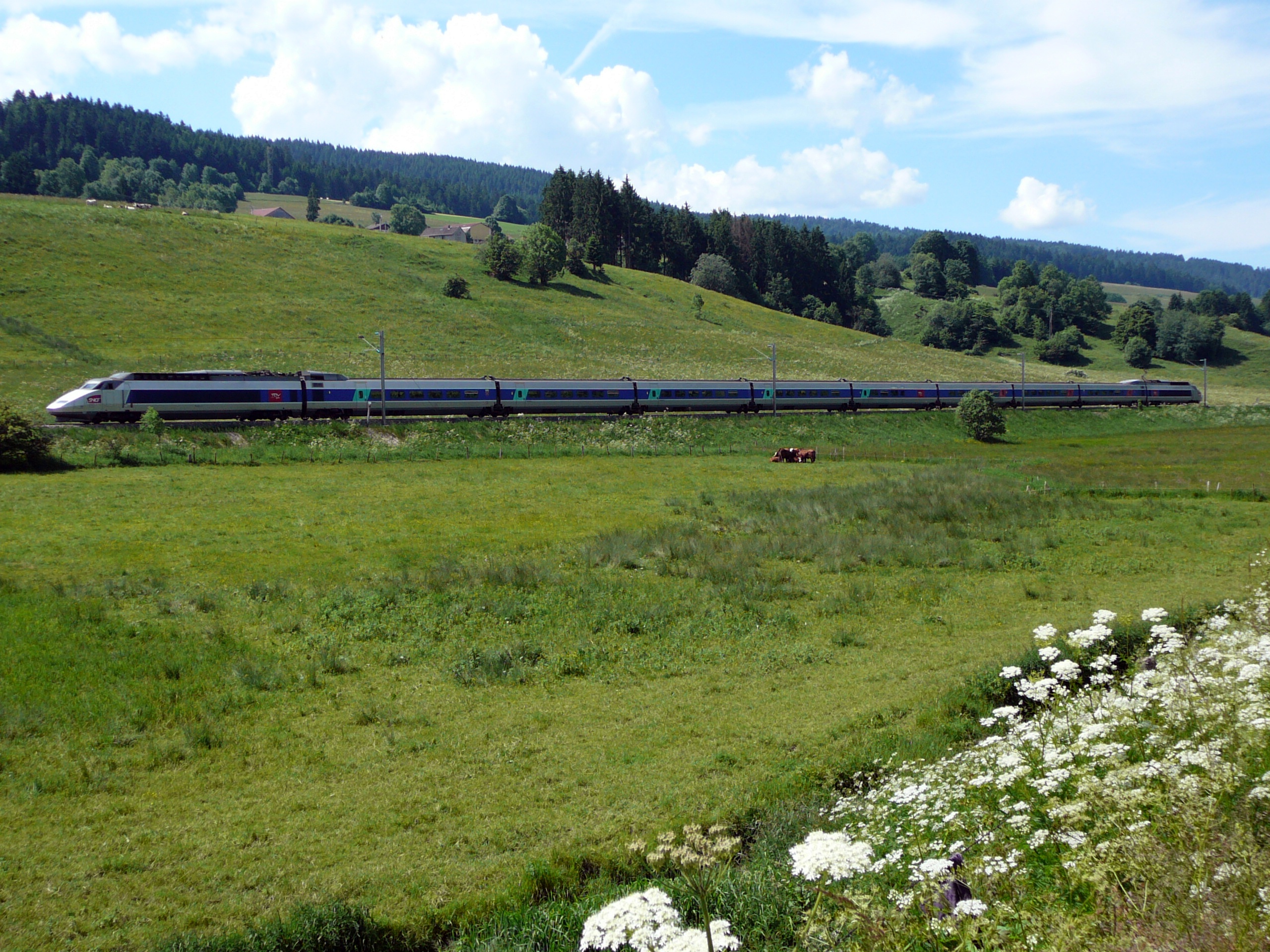
TGV_Paris-Berne_près_de_la_frontière_Franco-Suisse

French High Speed Railway

By VincentdeMorteau (Own work) [GFDL (http://www.gnu.org/copyleft/fdl.html) or CC-BY-SA-3.0-2.5-2.0-1.0 (http://creativecommons.org/licenses/by-sa/3.0)%5D, via Wikimedia Commons


Last week Mayor of London Boris Johnson had an extended and I have to say very interesting interview published in Total Politics magazine (thankfully still free online). I recommend you read it – or at least skim it  – as it gives an insight into the man who could well be the next leader of the Tory Party and/or future Prime Minister.

One particular comment he made about HS2 (about which I wrote about last Sunday)  has landed him in hot water with the conservation lobby. Boris was complaining that HS2 was being opposed by people using the environment as a false flag for their real objections, which related to fears their land or houses would lose value.

“People are in the humiliating position of having to pretend that there’s some environmental objection that they have, that the great crested grebe is going to be invaded or whatever,” Mr Johnson said.

“What they care about is their house prices. It’s tragic we have protest groups talking about ‘this ancient woodland’ when actually there’s no tree in this country that’s more than 200 years old…most mature trees die at about the age of my age, the average life expectancy of a tree can’t be more than about 60 years. There aren’t that many ancient woodlands around is the point I’m trying to make.

“It’s b******s. They’re not campaigning for forests, they’re not campaigning for butterflies. They pretend to be obviously, but what they’re really furious about is that their house prices are getting it.”

He said that the Government should handle the project “in the way they do in France” by going to every household on the route and paying “top dollar for all their property”.

Naturally the Woodland Trust were seething. They had seen Boris as their friend, with his plan to plant millions of trees in London. How could he be so ignorant – dissing ancient woodland in such a fulsome way?

In some ways Boris is right – the trees in an ancient woodland are often not as old as the wood itself – most standards and maidens are no older than 150 years. He exaggerates for effect of course, and ignores the ancient coppice stools many hundreds of years old, with 70 or even 100 year old stems on them. He is not a woodland geek. Most ancient trees are in wood-pasture, parkland, cemeteries or occasionally standing alone in fields or on hillsides.

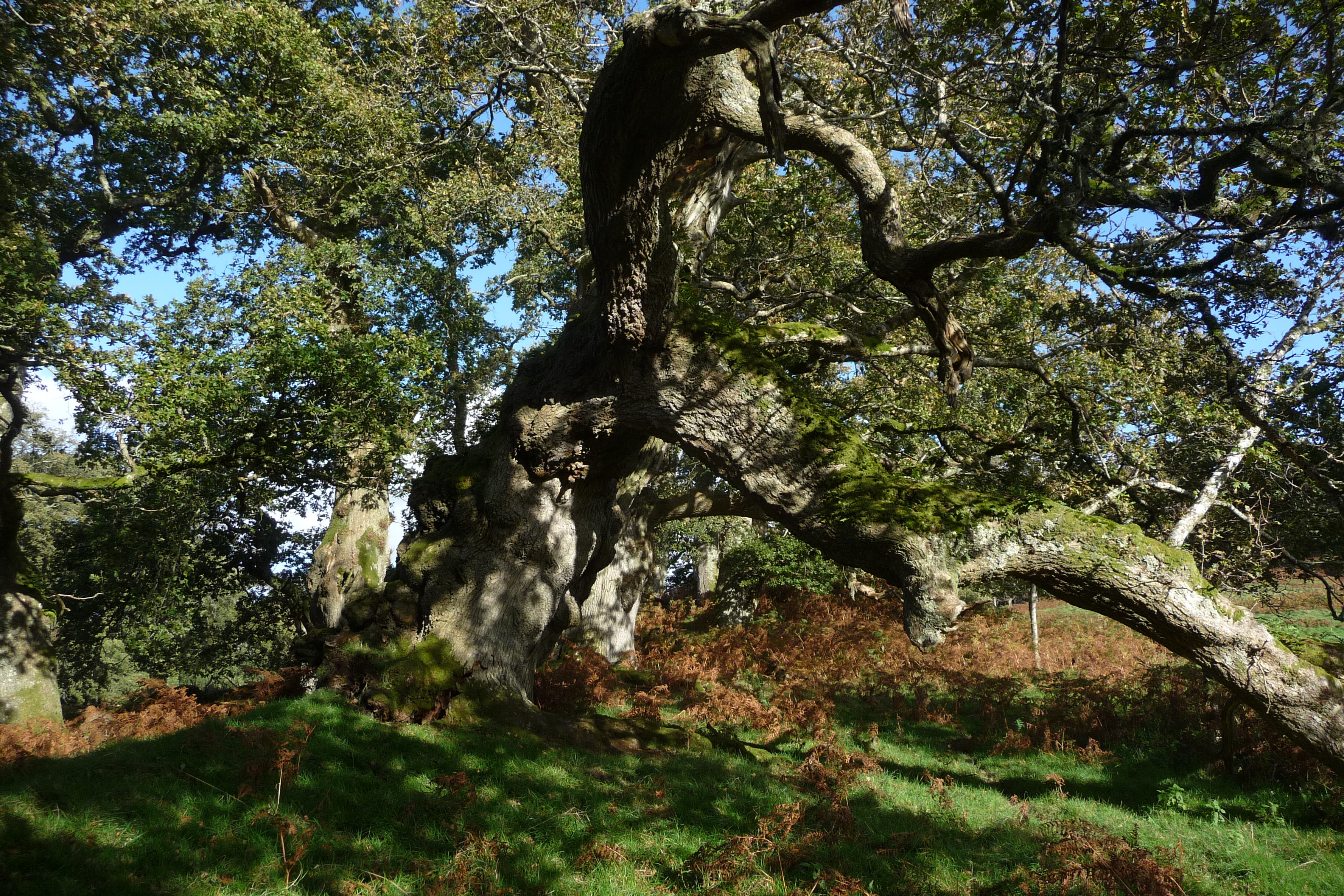
UKGF ancient tree

800 year old oak tree – but it’s in a park, not ancient wood. (c) Miles King

There is also a problem here. The Woodland Trust and others have sought to create a Totem of Ancient Woodland; something that must be sacrosanct. This is a risky tactic, because ancient woodlands will continue to be lost, though the rate of loss has slowed to a snails pace since the dark days in the middle of the 20th century when many large woods were grubbed out for agriculture.  I would suggest that other habitat loss – ancient grassland for example – continues to happen at a far greater pace now, with little fanfare. Although of course I was pleased to see The Wildlife Trusts raise this in their recent mini-campaign. Ancient grasslands (and others of great value which aren’t as old) still have no functional inventory, when we know the location of every ancient woodland, practically down to the smallest fragment – even ones which have been comprehensively transformed, but still sit on their ancient footprint. I digress.

The Wildlife Trusts were less inclined to unleash the attack dogs and as far as I can see made no comment. After all, they agree with Boris that a cycle superhighway should run alongside HS2.

Boris, beneath his shambling bumbling image, is an arch, some might say Machiavellian, political operator. He is certainly no fool – he knows perfectly well that trees can live longer than him. His father was the architect of the Habitats Directive – and that type of knowledge slips seamlessly, unconsciously, from one generation to another.

His aim was clear –  “divide and rule”. Drive a wedge between those who do fear their houses will be worthless, or their farmland will start to come down in price from it already astral levels; and those who fear for the environmental damage that HS2 will inevitably cause.

I think the ancient woodland/ old trees issue is not the important point. In France they have a large network of HS2’s right across the country (run mainly on nuclear generated electricity), along with a large network of 2 lane motorways. There is very little opposition from landowners to this infrastructure, because they pay very generous compensation for loss of land or amenity.

Taking this approach would take the “nimbys” as he calls them (not my phrase) out of the equation, they being the objectors who are motivated by financial values. That would leave the “environmental” objectors.

As I said last week, I think the opportunity to create  a large area of contiguous wild land along the route of HS2 will not come along again for a long time. If HS2 does go ahead, then it is right to make the best of the opportunity, accepting that there will be environmental costs.


Posted in Ancient Woodland, Boris Johnson, HS2, Uncategorized | Tagged , , , , , , | 6 Comments

High Speed Wild: The case for a new Wild Landscape through England

HS2 is about to be given a big push forwards tomorrow when it will receive its second reading – and former Environment shadow Mary Creagh, now Shadow Transport SoS is supporting it. She will be eyeing a cabinet position after next May if the polls are right. I thought she was good at the Environment brief and I was sad that she left, but it was obviously a promotion to go transport. I have previously written about HS2 and am still unconvinced about the economic case, but if it is going to happen then it should be done as well as it can be.

Creagh, on behalf of the Shadow Cabinet, has come out in favour of HS2 in today’s Independent. She has also expressed support for a proposal published by The Wildlife Trusts, to create “The mother of all green corridors” alongside HS2. They are calling for a 1km wide zone either side of the rail route which would be newly created habitat. This would partly be to compensate for their estimate of 2,500ha of good quality wildlife habitat that will be lost during the construction of HS2. They want to see 15,000ha of new habitat created. They have also commissioned some costings – £78 million to create the habitat, £10.2M per annum to maintain it.

There is very little detail about what habitats would be created, other than headlines figures of 60% woodland, 25% grassland and 15% wetland.

I think this is great – The Wildlife Trusts operating in unison calling for something ambitious which could deliver a significant positive change for the environment. But I would like to suggest something a bit more radical, a bit more imaginative. Instead of paying for trees to planted, seed to be sown and so on, to create the habitats we are all familiar with from the past – wildflower meadows, oak woodlands, reedbeds for Bitterns, we need to think ahead about what the future countryside of England will look like under Climate Change.

We also have the opportunity to do some large-scale re-wilding across lowland England.

I would see the High Speed corridor as a core wild area and make a deliberate decision to not take an agricultural (modern or historic) approach to habitat creation or management.

Let’s re-introduce key ecosystem engineer species into the corridor – wild boar, beaver, lynx, elk, even Wolves. As Aurochs and Straight-tusked elephants are extinct, let’s see Przewalski’s horse and ancient breeds of cattle roaming wild (eg Chillingham White Cattle). As the climate does warm in the 21st Century, introduce African Forest Elephants (if there are any left by then.) when the climate is good enough for them (they made need a bit of help through the winter).

Planting trees is generally a waste of money – let the ancient woods within the corridor naturally spread out (one of my favourite Ancient Woods – Finemere Wood, lies immediately adjacent to HS2 and is now just a third of its former size in 1810.)

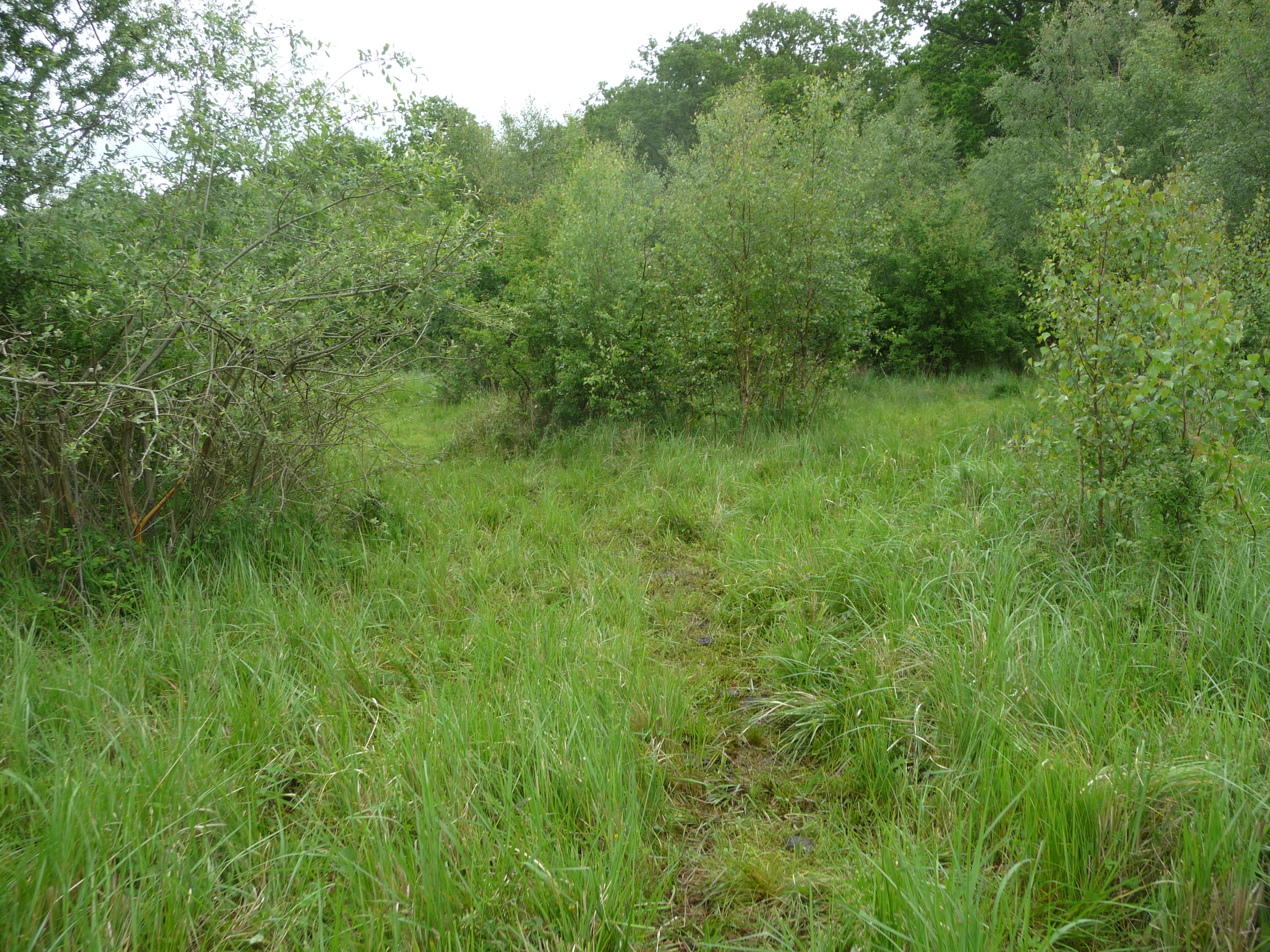
Finemere meadow

ancient meadow clearing at Finemere Wood (c) Miles King

Though it pains me to say so, not continuing to manage historic habitats such as wildflower meadows within the corridor means that they will change  – but it’s a small sacrifice to make. They will act as sources of plants which can naturally colonise open areas maintained by the wild graziers.

It would be a great opportunity to take a Knepp Approach and let the system develop without any preconceived notions of what it should become.

The Core area could be connected to a wider network of wildlife areas in the surrounding countryside, but connections may need to be only semi-permeable, as the adjacent landowners may not wish to have their maize crops trampled by elephants.

HS2, if it does go ahead, will provide us with the greatest opportunity to give something back to Nature in a very long time. Let’s use that opportunity to help the Nature of the future.


Posted in Ancient Woodland, biodiversity, HS2, rewilding | Tagged , , | 11 Comments

A political blog: the unholy alliance between UKIP and the Marxist Libertarians

Nigel_Farage_Autumn_2008

the cheeky chappy


Last week I forced myself to watch a Channel 4 documentary “Nigel Farage: who are you?”, made by self-styled “fashionable left-wing film-maker turned wicked libertarian” Martin Durkin. He has previously made such edifying and entertaining pieces as “Against Nature” and “The Great Global Warming Swindle” and regularly accuses greens of being fascists.

Durkin used to be a member of the Revolutionary Communist Party, founded by University of Kent radical academic Frank Furedi. As society changed, the RCP morphed into the magazine Living Marxism, until that was forced to close – having accused ITN of faking coverage of the Trnopolje concentration camp during the Bosnia war. I think the idea was that the plucky Serbian holders of the Socialist flame could not possible have been to blame for such outrages – and anybody who suggested they were were labelled fascists, in time honoured Trotskyite fashion. ITN successfully sued LM for libel and it closed down. Almost immediately, the RCP grew a new excrescence called Spiked Online, which continues to exist – using much the same approach as the RCP and LM (Trotskyite entryisim and contrarianism)- but with an apparent radical change in political position. Spiked Online is now a mouthpiece for right-libertarian commentary having seemingly lost its communistic shackles. Irish online Magazine Forth is another outgrowth apparently. Where the LM network gets is funding is as transparent as any other right wing thinktank but corporate funding has been linked to them. Of course this could all be a very long game being played and they are in fact still marxists – it wouldn’t be the first time the RCP have worn reactionary clothes to discredit their competitors and confuse their enemies. For me though, that’s a conspiracy theory too far (even for me) and I think they have ended up believing their own false flag propaganda.

In the Documentary, Durkin seemed a bit disappointed with Farage – complaining that Farage’s anti-immigration stance was mistaken, as the free movement of people was as important as the free movement of capital in this best of all possible globalised market-driven world.

But then again they are different aren’t they? While capital can flow (fly) to tax-havens like the Turks and Caicos, or out of Russia, people cannot or choose not to. Farage (and the far right of the Tory party) through that organ of the outraged right, the Daily Mail, and fellow travellers, raised the spectre of millions of Romanians and Bulgarians arriving in our island in January. Could they come? yes they could. Did they come? No they didn’t. Decisions taken by individuals as to whether to move from their home country to another one are not taken lightly, and not necessarily driven by pure economic necessity. I know this: my mum emigrated to England in 1954, from Australia.

Farage sought to portray himself in the doco as a man of the people, a defender of what used to be known as The Man on the Clapham Omnibus. We followed him back to the village in Kent where he was born, brought up, and still lives today. He visited the local pub where he was regaled by his locals. The image of Farage with pint of beer and fag in hand is now well-embedded in the media and it is a familiar trope.

The plan is clear and I guess being led by UKIP’s media expert Patrick O’Flynn: represent Farage as normal, friendly, up for a good laugh and a chat about politics down the local. He is portrayed as a pub politician and we were treated to seeing his public verbal assault on The President of the European Commisson Herman Van Rompuy. We were also witness to Durkin and Farage running around The Strasbourg European Parliament like a couple of naughty schoolboys, sniggering as they filmed where they weren’t allowed to, and catching journalists asleep at their computers. This I imagine was supposed to reflect Farage’s “naughty but nice” cheeky-chappy persona. It appealed to my sense of the absurd, but that was about it.

This image is of course a sham. Farage was born into privilege. His father was a stockbroker and Farage went to a top public school, Dulwich College. At the time a teacher had attempted to prevent Farage from being made a prefect on account of his “racist” and “neofascist” views; he was made a prefect though.

Of course we all do and say silly things when we are teenagers and he may have grown out of these views. Farage went on to make a lot of money in the city, as a metals trader before turning to politics. Consequently Farage has many friends in the city, as the film showed. He loves the City of London – he believes it is a force for good.

Durkin called a number of witnesses to attest to Farage’s character and influence. Right Wing/libertarian commentators Simon Heffer and James Delingpole were both happy to shower him with praise, among many others. Only Yasmin Alibhai-Brown was an opposing journalistic view, while former Labour leader Neil Kinnock was wheeled out and portrayed as a straw man to knock down from his Euro-pedestal (after failing to beat John Major in 1992 he went to Brussels to be a Commissioner.)

I suppose it should not be that surprising that the libertarians are warmish fans of UKIP. While Durkin’s hagiography of Farage is well-timed in advance of the Euro elections, there are other connections. Another member of the Living Marxism network, Ben Pile, who writes an anti-environmental and climate change denial website, is also UKIP’s climate change advisor.

It is no surprise that the now exiled Godfrey Bloom was the UKIP climate change leader – either someone in UKIP has a sharp sense of irony or more likely it illustrates their utter contempt for environmental concerns. Bloom is out, now Roger Helmer is at the err Helm on climate change and Pile is his “expert.” Pile has a BA in Politics and Philosophy from the University of York. Helmer who is now positioned as the leading UKIP MEP after Farage, has in the past been funded by the Oil Palm industry to lobby Brussels to reject criticism of this industry which has to clear rainforest to grow the palms, attack climate change “alarmism” – but counter-intuitively, help portray Oil Palm as a carbon sink – as if that would matter if there were no climate change!

Climate Change denier Helmer is also happy to take public funds to put up solar panels.

Helmer’s climate denier wingman Pile is a regular contributor to Spiked Online, as well as running an Oxford Salon, and speaking at various LM events such as the Institute of Ideas. The LM network has a number of these fronts – the Battle of Ideas, Intelligence Squared, Science Media Centre, Sense about Science and so on. If you look carefully you can see other LM network members turning up in the media on a regular basis, such as Claire Fox on the Moral Maze and Timandra Harkness who turned up as resident reporter on social psychology prog “the human zoo” on Radio 4. Next time you hear see or read something that sounds a bit libertarian or anti-environmental – check out the journalist – you might be surprised how often they turn out to be LMers.

Delingpole in a recent interview with Conservative Home talked about the continuing fight against Cultural Marxism, and included climate change and other environmental regulations in that all encompassing term. Water-melons is another favourite phrase of the far-right – because they are green on the outside but red on the inside (geddit?). I didn’t realise I was a Marxist. Interestingly other fellow-travellers of the LM network include arch climate change sceptic and self-styled “rational optimist” Matt Ridley and anti-green re-wilding advocate (huh?) Peter Taylor.

After the programme ended, I wondered to myself “is UKIP racist”? The party does not officially espouse racist policies in the way that the NF or BNP did (I grew up in East London in the 1970s). But it seems unthinkable that UKIP has not attracted in many who previously supported or were active in those extreme and fascistic parties.

I think UKIP has been clever to focus in on Europe because the issue of skin colour is more nuanced. Those of a certain generation (and most UKIP support comes from the over 50s) will recall that the Brits (or should that be English) had highly derogatory terms for every conceivable ethnicity in Europe. The phrase “w….s start at Calais” I am sure still has a certain appeal to that generation.

This cultural superiority, or perhaps a festering nostalgia for such superiority and a burning resentment at its loss, is a malevolent flame burning inside the popularity of UKIP. No wonder the Romanians and Bulgarians (and of course the Roma) are the target of invective (and hatred from some.) Remember the Roma was as comprehensively exterminated in the second world war as the Jewish peoples.

All this must be further confirmation (if any were needed) amongst mainland Europeans, that we Brits (though in truth it is the English who have the problem) are a very weird lot. We just have no idea that people have been moving around the continent for millennia and that it is nothing unusual for ethnic Germans, Poles, Hungarians, Romanians, Russians and other Slavs, and others to happily/unhappily co-exist with each other, recognising their differences but also sharing their commonalities. When we forget about our similarities and focus on our differences, this is when the problems arise, whether in Nazi Germany, or post-Tito Yugoslavia. We the “native” English are, after all, mostly Anglo-Saxons – Angles from north Germany/Denmark, Saxons from Saxony. Perhaps what UKIP fears most is recognising our European, Germanic roots.

For some, UKIP are the pantomime clowns of British politics, not taken seriously. This is wrong. They are likely to do well in the European Elections next month, they could even win the popular vote. Their views on Europe may be offensive, but their anti-environmental anti-climate change views are more damaging. And the unholy alliance between UKIP and the libertarian movement, under whatever guise, is something to watch and expose.

photo by Berchemboy [CC-BY-SA-3.0 (http://creativecommons.org/licenses/by-sa/3.0)%5D, via Wikimedia Commons

Posted in anti conservation rhetoric, anti-environmental rhetoric, Astroturfing, climate change, Living Marxism, Matt Ridley, UKIP | Tagged , , , , | 12 Comments

Mapping local greenspace: will it help protect these green lungs?

trees

moody greenspace (photo Miles King)

As some of you may have guessed, I’m not the biggest fan of Policy Exchange. This is the think tank the Tories love most – its ex-treasurer is the new Natural England chair, Andrew Sells, about whom I have written a number of times. It has made a “visiting scholar” of climate denier and general anti-environmental pundit (and former chair of Northern Rock, at the time when its demise helped trigger the longest recession in a century) Matt Ridley, who is also brother-in-law and personal think tank to “get rid of all this Environmental crap” Secretary Owen Paterson.

This is the think tank that told Owen Paterson about Biodiversity Offsetting. So I was pleasantly surprised to see PE making sensible suggestions about urban greenspace late last year. In their report by Kat Drayson entitled “Park Land” they call for a national urban greenspace map, and point out the barriers to using existing data sets such as OS Mastermap or CEH’s land use cover map. I do find it a bit ironic that the PE uber-neoliberals are calling for the Government (CLG and Defra) to lead on this initiative, rather than business; maybe that’s why I like its proposals.

I do quite a bit of GIS work now in my job at Footprint Ecology. I have been learning how to use the free GIS system QGIS. I used to use Mapinfo (badly), which was very expensive to buy. I have to say QGIS is easier to use, albeit it has more limited capacity for spatial data analysis (or so I am told by people who know.)

I have just finished work on a contract for Natural England, where we surveyed and mapped vegetation communities on strandlines and shingle around the Solent. I was mapping polygons down to just a few metres (using handheld GPS), as the vegetation was patchy at an extremely small scale. Natural England had provided Mastermap data for us to use. It is also extremely expensive to buy – as Park Land points out. Actually it was pretty useless on the shoreline because it’s such a dynamic system. So I used Open Street Map instead. Open Street Map is a free map to use with GIS. It’s the wikipedia of maps. People just update it so it is getting better and better. Using Open Street Map, handheld GPS and QGIS together, the public could create a very good quality national urban greenspace map for all to use.

One of the other things Kat Drayson recommends is a standard typology for such a map; and using green flag style quality assessment, combined with a tripadvisor approach, getting the public to score their local greenspaces. It’s an interesting idea. Another area which Footprint does a great deal of work in is around visitor pressure on high quality nature sites (such as heathlands.) Getting the public to use openstreetmap to mark areas where dog-walkers empty their dogs in urban greenspaces and high quality nature sites could be really interesting and a valuable source of evidence for policy makers. There is also a risk that by publicising some greenspaces, the map may inadvertently increase visitor numbers and cause a higher level of disturbance to their wildlife. But I can see such a map being used to show  which greenspaces have exceeded their wildlife’s carrying capacity, providing information that car parking spaces are being reduced, so discouraging visitors from going there.

Urban greenspace isn’t just about parks: it’s also areas of encapsulated countryside, nature reserves, post-industrial sites that have developed important wildlife habitat; and a whole host of other stuff, including back gardens, road verges and greenspace within housing and industrial estates. It all adds together to create Green Infrastructure.

An ever stronger base of evidence is pointing towards green infrastructure and greenspace specifically, as having a major positive effect on people’s health. Just yesterday the BBC reported the President of the Royal College of Physicians stating how important greenspaces, with biodiversity, are for both mental and physical health.

What I do not see (yet) is the link between mapping greenspace and protecting it. House-building is continuing to see the loss of urban greenspace as local plans identify greenspace areas for new housing within their areas. How would a wiki-greenspace map feed in to Core Strategies? Green Infrastructure Strategies are not regarded as especially high priority within the Local Development Framework.

Perhaps when the public can easily access a local greenspace map which shows which greenspace areas are included in the strategic housing land allocation area (ie targeted for housing), they might start getting on the backs of their local councillors.

Posted in biodiversity offsetting, greenspace, housing, Policy Exchange | Tagged , , | 10 Comments

Feed the World….. sugar till we are all obese.


We are told that Fat is the new normal and this is undoubtedly true. It’s another example of shifting baseline syndrome, also known as the “frog in the saucepan“. I have noticed my own waistline expand over the years – not just due to middle age spread; as my lifestyle has become more sedentary.

One theory why obesity is such a massive global health and environmental problem is that we live in an obesogenic environment. It’s amazing that more people in the world are now overweight than are hungry and obesity kills three times as many people as malnutrition.

More concrete evidence points towards the addictive properties of sugar, while Global food corporations derive their profits from food consumption, whether healthy food or not (and generally not). Whatever the cause, the problem is a real one and must be tackled.

Yet we are still implored  in this country to grow more food. Time and again the High Priests of food production – the NFU being the Archbishopric of the cult of obesity. The outgoing Pope of agricultural Production NFU president Peter Kendall pushed this particular point at the Oxford Farming Conference in January as he looked forward to “The EU [getting] back to agreeing policy in-line with …the massive challenge of global food security.” Kendall is now president of the World Farmers Organisation. Will Peter be standing up for the small subsistence farmer in Africa, or the global agro-industrial complex? Watch this space.

This means farmers rich and not rich alike get £200 per hectare per annum from us the taxpayer, for whatever they produce from their land. It could be wheat, to feed cows to produce milk to sell to China. It could be oil seed rape to make into biodiesel. It could be maize to feed an anaerobic digester to make biogas. In theory it could be used for public goods such as providing wildlife habitat, storing carbon or preventing flooding. Thanks to the power of the ag-elite, EC rules generally prohibit this sort of useful contribution to society and the planet, unless under very strict controls, for limited periods of time, through agri-environment schemes.

A small cadre of agriculturalists are still obsessed with the UK running short of food. I call this the “U-boats in the channel” syndrome. The last time there were U-boats in the channel, with 70% of our food imported  (from the Empire or Commonwealth) the spectre of a hungry nation (who needed to be fit to work in war factories and fight) led to Dig for Victory, The Great Harvest driven by the the War Ag committees – and generous farm subsidies. Food production soared, although arguably it was rationing that made the key difference, not only in terms of food availability, but also health. Rationing produced a healthier population than before, or arguably since.

This mentality continued after the war, across Europe, until we were swimming in butter lakes, with wheat mountains looming over us.

Thanks to the power of this clique and their political connections, we still pay over £3 billion a year in benefits to farmers to overproduce food in this country and trash the environment. The CAP system doesn’t discriminate, it’s not means tested. If you have more than a few hectares of land, kerching! In 2011 the Duke of Westminster (net worth £7.4Bn) was paid nearly £750,000 for his farms. By 2013 the Ag-elite were a bit miffed that their little (large) scam had been revealed and successfully lobbied the EC to stop publishing data on which farms recieved how much welfare payment.

Now all we can tell is that companies like “Meadows Food” (ah the irony) received 171 Million Euros in farm welfare payments while the biggest corporate recipient was …….da da da daaaa…..Tate and Lyle who received a whopping 600 Million Euros during the noughties.

To grow sugar and make very healthy profits in that decade.  Now they have sold their sugar refining business to American Sugar, they are in financial trouble.

Meanwhile the Government takes benefits from people on their deathbeds and forces the poor to move homes or get into serious rent arrears to save a questionable amount of money – at what social and psychological cost?


Posted in Common Agricultural Policy, ecosystem services, farming, public goods, Uncategorized | 10 Comments

A Lenten Story: The Gamekeeper’s Gibbet, Biodiversity Onsetting and Confirmation Bias

longshot

spot the badger

The Gamekeeper’s Gibbet

Not so long ago, a walk in the country would entail this scene – a gamekeeper’s gibbet. Vermin would be presented by the estate gamekeeper, neatly strung on fences or hung from trees, as this one does. Presented to – well to whom?

Some might suggest this was merely the gamekeeper showing his prowess, showing the Master that he is doing a good job keeping all those pesky stoats, crows, buzzards, kites, foxes, badgers, pine martens, beavers, wolves, bears, wolverines and elephants, in check, so they don’t compete with us for food.

I think it goes much deeper. I think this is primeval, it is about both sacrifice, abeyance and defiance. On the one hand, humans have always made sacrifices to appease our gods  – I have written about this elsewhere. Sacrificing something valuable gave it extra meaning, and the bigger the request or plea for a deity to intervene, the more valuable the sacrifice needed – Abraham was prepared to sacrifice his own child to appease Yahweh.  There is a direct line from Abraham to giving up Facebook for Lent.

Reverse Sacrifice

Stringing up furry animals and birds on trees is also a way of signifying that we can overcome nature, that we rail against the power of the nature gods: a kind of reverse sacrifice. Instead of giving something precious – we take something away from nature. Festooning special trees with talismanic objects is also a ritual that  has very deep roots (sorry for the pun.) Wishing trees, like wishing wells have long been decorated with votive objects of significance to the decorators, as gifts to nature gods or spirits. They continue to play an important role in modern day Britain.

wishing tree

wishing (rag) tree at the fulacht fiadh (holy well) Slieve Carron, The Burren. (c) Miles King

Of course it could just be a simple economic transaction – you eat my crops (or game animals) and I will kill you.

What has this got to do with the Badger Cull I hear none of you asking. Well I think it has quite a lot. On this day when we will (?) hear that the pilot Badger Cull was a resounding success and it will be rolled out to Dorset for this year’s summer butchery, it occurs to me that this is about a reverse sacrifice, thumbing our noses at nature. The badger as scapegoat – Owen Paterson as high priest of a badger death cult.  They may not be publicly strung up in trees – but who knows what happens in the deep privacy of the land?

Biodiversity Onsetting

I was talking about Biodiversity Offsetting last week and one of my critiques of the Government’s approach is that it only applies to development. Why? Here are the figures:

    • 9% of England is developed.
    • 69% of England is agricultural land, increased by 1% from 2012 to 2013.
    • 10% of England is forested.

Agriculture is the principal cause of biodiversity loss. It has been, is and will continue to be so. Why then is it not included in biodiversity offsetting?

If Agriculture were included in BO, the badger cull would be liable to offsetting, as the only (official) argument in favour of the cull is an economic one – cattle die of TB costing farmers money. Badgers cause cattle to get TB ergo kill badgers to save farmers money.

If the mitigation hierarchy was applied to the badger cull, the first step would be avoid damage. This would be through things like better TB testing, restricting the ability for TB to pass from cattle to cattle (the main transmission route) and introducing vaccination for cattle and badgers. Once all these measures have been thoroughly implemented, the next step is mitigation – this means minimise the impact of an action on biodiversity or in this case minimise the impact of the badger cull on badgers. Ah. we seem to have hit a problem. Anyway let’s move on.

Next is offsetting – this means replacing the lost biodiversity, or badgers, by creating new biodiversity, or badgers, or improving degraded biodiversity, or badgers, somewhere else. Could Dorset’s badgers be replaced by badgers elsewhere?

Perhaps there are areas of Britain which are currently under-badgered where special badger breeding programmes could provide guaranteed TB-free (GM?) badgers to be reintroduced there. Perhaps badgers could be captured, vaccinated and returned to those areas where they have recently been exterminated? Perhaps – instead of killing the badgers of Dorset (most of whom are TB free) they could be captured, checked for TB, vaccinated and released back into their former areas straight away?

But no. Instead what we have is Biodiversity Onsetting for badgers. This is where farmers are mostly paid by us, via the Government, to go and kill biodiversity (badgers), for their own economic gain. Yes – work that you and I do, to earn money, is used (transferred via taxation from your pocket to farmers) to kill biodiversity, for the farmers economic gain.

This is biodiversity onsetting in action and it’s been going on for decades.

Confirmation Bias

Clearly this is not being driven by any rational consideration either of science or economics. I think it is being driven by an atavistic need to make sacrifices. There is also something called cognitive bias which I am sure is in play here.  One such cognitive bias is Confirmation Bias. Effectively this means you look for the evidence to support the argument you already know instinctively to be true; and ignore any evidence to the contrary. Politicians do it all the time.

What can we do to counter the innate drive to satisfy our atavistic urges and feed our cognitive biases? Are we slaves to our palaeolithic brains?

Dorsetshire-1024x679

Dorset Badger Cull Areas – apparently, the North sacrifice will take place this Summer

Posted in agricultural pests, animism, badgers, biodiversity offsetting, blood sports, Defra, Owen Paterson | Tagged , , | 8 Comments

Humans as Deicides – we killed our original gods and we have forgotten them

Image

Straight Tusked Elephant

I had been thinking about writing about this again and George Monbiot spurred me to write this, following another eloquent, passionate but depressing counsel of despair in the guardian yesterday.  George argued that hominims had been driving megafauna to extinction possibly for more than a million years, and drew parallels with modern day elephant slaughter in Africa.

I would look at it another way, as I have previously eg here, here and here. Straight-tusked Elephants were the major ecosystem engineer animals in Europe (alongside rhino, hippos and other smaller mammals like Beavers) over a period of several millions years. Ancestors of modern elephants appeared in the middle miocene about 15 million years ago and returned after each cool phase right up until the previous interglacial to this one, the Ipswichian.

This fascinating paper by Gary Haynes lays out what the impact on landscape and ecosystem may have been from such elephantine giants. Massive long distance trails worn smooth by elephant feet, trees pushed over, bark ripped off. Special clay deposits are sought out by modern elephants (creating Bai in the process) and palaeological evidence indicates the giants of the past did the same, and where large number of animals died, created “Beast Solonetz”  sites which attracted human hunters, scavengers and artists. Mammoth bone was extensively used to create talismans, artwork and jewellery going back at least 40,000 years and some of it is staggeringly beautiful.

I was wondering how many straight tuskers there might have been in England in the Ipswichian. It’s difficult to be sure but the best estimates for african forest elephant density are 0.5 to 1 ele per km2 and they weight on average just over 2 1/2 tonnes.  Straight tuskers grew to 10 tonnes and 4.3m high. Savannah elephants occur at a higher density (having engineered their ecosystem to provide for them) and can occur at up to 6 per km2. on this basis, I would give a conservative estimate of 1 straight tusker per 1km2 for Ipswichian England. That would mean there were about 250,000 straight tuskers in England, assuming the were able to survive across the whole of England, which this map indicates they did.

Image

Distribution map of Palaeoloxodon antiquus finds by DagdaMor (Own work) [GFDL (http://www.gnu.org/copyleft/fdl.html) or CC-BY-SA-3.0-2.5-2.0-1.0 (http://creativecommons.org/licenses/by-sa/3.0)%5D, via Wikimedia Commons

Modern elephants deposit up to 200kg of dung per day, so scaling up, Straight tuskers deposited 500kg per day, perhaps in 15 piles of 35kg. That would explain why the pleistocene was a paradise for dung beetles. As this recent research shows, the pleistocene dung beetles were species of mosaics of forest and open habitats.

I don’t think it’s too fanciful to wonder whether humans evolved into the species we are, because elephants and their like created and maintained the african savannahs, the mammoth steppe and the open mosaic of Ipswichian Europe that were such fertile hunting grounds for our ancestors. So they were our gods; they created the earth and the landscape early humans depended on and created the habitats for the animals and plants which humans used for all their needs.

It may be true (and from my reading of the literature it’s not quite a clear cut as George suggests) that Cro Magnon people extirpated the Straight Tuskers from Europe during the last Ice age. If they did, then it was people who created the dark (foreboding) Holocene Forest some people call the primeval wildwood.

In which case the semi-natural was born in Britain long before the neolithic; and we killed our original gods millennia ago, then forgot about them.


Photo by PePeEfe (Own work) [CC-BY-SA-3.0 (http://creativecommons.org/licenses/by-sa/3.0)%5D, via Wikimedia Commons

Posted in Ecosystem Engineers, forest elephant, Pleistocene, straight tusked elephant, Uncategorized | Tagged , , | 11 Comments