Tomorrow sees an event to bring together organisations and individuals who are very worried and angry about Biodiversity Offsetting.
The Forum on Natural Commons event “Nature is not for sale” is taking place tomorrow evening in Regents Park, London. This is directly opposite the venue for a big conference on biodiversity offsetting called “To No Net Loss of Biodiversity and Beyond” which I found amusing, because to my mind what lies beyond No Net Loss is…well, Net Loss. I guess they were thinking about Net Gain. I really a half glass empty sort of person.
I’m not going to either of the events, though I would certainly liked to have gone to both. Work intervenes though.
Hannah Mowat at FERN is helping organise the Natural Commons event and she is also working on getting the press interested. She pointed me towards a very recent case involving Biodiversity Offsetting which I found particularly worrying and I thought I should share it with my readers.
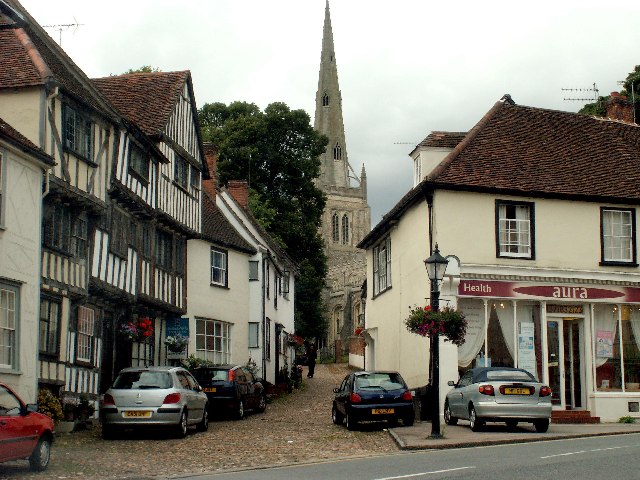
I know the lovely village of Thaxted in Essex from my childhood. It’s famous for its church with a spectacular spire which looks like a space rocket (I was a child of the space age) and lovely half timbered buildings. Not surprisingly housing developers want to build lots of new homes around it.
One such developer successfully gained planning permission for a development on a greenfield site off Wedow Road in 2012. an ecological survey concluded that this was a mosaic of unimproved grassland, scrub and woodland, but the permission was granted. If the link doesn’t work, go via the Uttlesford Council website here and open the document called “appellant ecological appraisal.”
As a condition on this development, slow-worms were translocated onto the adjacent pasture, which was noted as being particularly rich in wildlife; a planning condition stated that this field be protected as a slow-worm refuge until 2017 and that some scrub management be carried out to maintain open areas for the lizards. Some plants were also translocated onto the adjacent field as well as the slow-worms. As there were 77 pyramidal and 102 bee orchids on the adjacent field, it was decided not to bother to translocate the single bee orchid found on the development site.
In March 2013, the developer then applied for permission to build another 47 homes on the field where the slow-worms had been translocated to, which had been already identified as being rich in wildlife. This also despite the fact they had already signed up to keeping it for the slow-worms until 2017. Another ecological survey confirmed that the field was unimproved neutral/calcareous grassland supporting a range of wildflowers, including several species of orchid, common knapweed, agrimony and field scabious.
Because it had not been managed for quite a while, it was about 2/3 grassland and 1/3 mixed scrub, with large ant-hills. The consultants adjudged it to be MG1e, which sounds sensible to me, based on the description. The developers proposed applying biodiversity offsetting to the application and promised to provide “no net loss” or even “net gain” or biodiversity enhancement, as they styled it, as a result of the development.They indicated that their proposals would lead to a gain of 2.9 conservation credits above the value they had assessed the site as having (20 credits.) In the world of biodiversity offsetting that is a 10% net gain. The Environment Bank, owned by Natural England deputy Chair David Hill, provided the technical advice on offsetting to the developers; Essex was one of the locations where the Defra Offsetting Pilot was running.
The applicant’s consultants assessed the site against Essex Wildlife Trust’s Local Wildlife Sites selection criteria and decided that it didn’t qualify for LWS status. Essex Wildlife Trust had not designated it as a Local Wildlife Site at that time. It does not appear that Essex Wildlife Trust objected to the application at the time. Natural England certainly didn’t – they sent one of their standard letters.
Nevertheless, the Council rejected the planning application, partly on the grounds that the site was unimproved grassland, partly because the applicant was going to trash the mitigation site for the previous development; and partly because the council felt that because this was important habitat it shouldn’t be subject to offsetting.
This is what they said:
The proposed development would result in the loss of unimproved grassland/lowland meadows. Although the grassland matched would fall under the MG1 type grassland, this is a MG1 species-rich sub community which is transitional to MG5, i.e. this site could be reverted to MG5 with the correct management and therefore the development proposed would result in the loss of high quality grassland.
The proposed development would result in the loss of the mitigation site and measures approved under condition 15 of planning permission reference UTT/1562/11/OP. The mitigation approved under condition 15 requires the management of this site for a minimum of 5 years until 2017 however the loss of this mitigation has not been adequately addressed by the applicants in the submitted documents for this proposal.
The applicants have proposed biodiversity offsetting as part of the proposed development. The Council’s retained Ecologists have raised concerns regarding biodiversity offsetting in their letters dated 6 June 2013 and 24 July 2013 and have questioned whether this approach is appropriate for this site. In addition, the biodiversity offsetting calculations have been queried as the distinctiveness of the unimproved grassland is considered to be high and not medium which was used for the calculations.
The applicant appealed. They got a legal opinion which challenged the council’s ecologist, picking holes in their argument, pointing out inconsistencies. They picked up on the knotty question of the MG1 vs MG5. MG1, regardless how close to MG5 it might be (and this one was fairly close by the looks of it) is not a priority habitat in our dotty conservation world. Never mind that it is stuffed full of bee and pyramidal orchids, never mind that it has lovelies like common knapweed, field scabious and agrimony. never mind about all the ant-hills. It hasn’t been managed for long enough for false oat grass to replace crested dog’-tail as the main grass in the community, so it falls out of protection and into the abyss. How mad is that? It only takes a couple of years management to get it back into MG5. In any case – it’s obviously important wildlife habitat, everyone agrees it’s unimproved neutral grassland. But that is where the lawyers can have a field day. As the lawyer says “There is no means to compel such management” so the fact that this habitat could easily become one that is give some sort of protection holds no weight. The lawyer looks at the Essex Wildlife Trust Local Wildlife Site selection criteria – again there is no mention of MG1.
Finally the lawyer makes reference to Biodiversity Offsetting and when it should and should not be used. He talks about the mitigation hierarchy and the need to avoid damage first, but then suggests that this only applies to sites with statutory protection eg European Sites and SSSIs, not Local Wildlife Sites. I think is a bit of a stab in the dark to be honest because it doesn’t take into account the replaceability issue. Old grasslands such as this one at Thaxted are not replaceable and this is part of the Biodiversity Offsetting test, where if irreplaceable habitats are to be destroyed, they by definition cannot be offset.
At the planning Appeal Essex Wildlife Trust informed the Inspector that they believed the field was sufficiently important to be designated as a Local Wildlife Site and they were in the process of doing this. However the Inspector last week gave his decision and has allowed the appeal. So this little Essex field, full of wildlife, will be lost to development.
The Inspector concluded that the Council has messed up by failing to provide a sufficiently large 5 year housing supply (that is had identified land which could be developed) and this triggered a clause in the NPPF which means that land outside the current development boundary ie greenfield sites, can be given planning permission, when it would not otherwise have done (I think – this is a bit outside my comfort zone).
From our perspective the more ominous conclusion the inspector came to was this: as the planning obligation requiring management of the site ends in 2017, there is no future for the wildlife on the site. The new “offset” site will be larger and management will be guaranteed for 25 years. On this basis he accepted that the “potential grassland” on the offsetting site will have a higher value than the existing appeal site; and this will therefore deliver environmental gain.
This is truly an Alice in Wonderland world where existing high nature value areas are deemed of lower value in the planning system than non-existent potential wildlife areas, because the management needed to maintain or restore the wildlife value of the existing one is deemed impossible to achieve, while the management/funding associated with creating the future wildlife area is assured.
I think this sets a very worrying precedent and is exactly the sort of consequence of adopting a biodiversity offsetting approach.
photo by Robert Edwards [CC-BY-SA-2.0 (http://creativecommons.org/licenses/by-sa/2.0)%5D, via Wikimedia Commons



 a new nature blog
