Sells brings Cross to NE Board. Goodbye Doug Hulyer

The white smoke has appeared from the Natural England papal chimney – we now know who the new Natural England Chief Executive is – James Cross. He has arrived fresh from being the second CEO of the Marine Management Organisation (MMO). Before that he was Assistant Chief Inspector of Courts for England and Wales.

Cross has sat on a number of Defra Management Boards as well as his MMO role. As this biog from the MMO website says Cross excels in “business diagnostic and turnaround skills.” He is particularly proud of his work with the Northern Ireland Coroner’s service following the Good Friday Agreement; and also his investigation into a tragic case where a defendant was released from custody by mistake at Leeds Crown Court when an arrest warrant was already in place for them, and they went on to commit a murder that same day. It’s worth noting that the Justice Minister that Cross worked to as Assistant Chief Inspector of Courts was Maria Eagle, now Shadow Secretary of State for the Environment. Before his 5 years at the Courts Inspectorate, Cross spent 4 years developing his management skills at HM Revenue and Customs.

Hopefully with that background he will be quite interested in Natural England’s legal role and regulatory functions.

However, the marine environment is unlikely to welcome Cross to Natural England, since he has resided over 4 years of inaction, delay and “unhelpfully moving the goalposts” according to a very critical report from the Environmental Audit Committee over the implementation of the Marine Act for Marine Conservation Zones. Only 27 Marine Conservation Zones have so far been declared, and even these don’t have management plans yet.

The committee’s chairwoman, Joan Walley, said: “Marine conservation zones can protect our seas from over-fishing and give species and habitats space to recover, ultimately benefiting people whose livelihoods depend on healthy seas.

“But the Government has been too slow in creating these zones, and it has failed to get coastal communities and fishermen on board.

“It is now well over four years since the launch of the programme, yet only 27 of the 127 sites recommended by independent project groups have been designated.

“The Government must stop trying to water down its pledge to protect our seas and move much more quickly to establish further protection zones and ensure they can be enforced.”

Now it may be that Cross was working away feverishly in the background to get more of a commitment for MCZ’s out of the Government, and actually if it hadn’t been for his superhuman efforts there would only have been 3 MCZs declared up until now. That is quite possible, given the appalling record on the environment from the Coalition. I guess we will have to wait and see on that one.

In other Natural England Board news, NE has announced new appointments to its Non-Exec Board. First of all it’s worth noting who has left the Board – Doug Hulyer – a great conservationist with a depth of knowledge of the sector second to none, who has achieved a huge amount both at NE and as an HLF trustee. He was also an English Nature board member since 2002 so he knows how the organisation has changed and understands its history. He will be seriously missed.

A whole load of Non-exec directors are up for reappointment or for leaving in September and it remains to be seen who will stay on. David Hill, chair of biodiversity offsetting vehicle The Environment Bank has been on the Board since 2006 and I would be surprised if he stayed on; Professor David McDonald of the Oxford university Wildcru and badger expert may well have been given his marching orders as another 2006 appointee; the others were appointed in 2009 or 2011 so may well stay on for another stint.

New appointments include

  • Andy Clements BTO Chief Executive. This is an excellent choice (though his knowledge of wildlife beyond birds may not be as strong or deep as Doug Hulyer’s);
  • Simon Lyster – another strong voice for nature and ex Trustfinder General for The Wildlife Trusts.
  • Teresa Dent Chief Exec of the Game Conservancy – clearly a nod to the huntin shootin and fishin brigade. Not good news for Hen Harriers.
  • Julia Aglionby, Chief Exec of the Foundation for Common Land. This is an interesting appointment as FCL are relatively new and still finding their role. But I hear good things about FCL and I think she will bring a different perspective for the uplands and commons issues that NE has to address.
  • John Varley of Clinton Estates. Varley has held a number of senior non-exec roles including on the Lawton panel and the forestry panel. Varley has first hand experience of the tricky balance between conservation and recreation as a trustee of the East Devon Pebblebed Heaths conservation trust.


Does it matter who these Non-Exec appointments are? How much influence do they really have?

I have written at length about the new Chair Andrew Sells. Bear in mind the Board appoint the Chief Exec (with a final sign off by the Secretary of State). And they set the tone for the staff, particularly the Exec Board Directors. And they decide on policy. And they decide whether SSSIs get confirmed or not. And they have a great deal of influence in the wider sectors, through their networks of contacts.

NE non-exec board members can be apostles for nature conservation broadly and NE specifically, or they can be apostates, and everything in between. So getting the right board is absolutely critical. At least the new appointments could not be said to be Defra place-men and women, which must be good news.

Who knows, perhaps Mr Sells read my advisory post to him?


Posted in Andrew Sells, Natural England, Uncategorized | Tagged | 7 Comments

Farmers flout TB rules and campaign against loopholes which let TB spread

You really would think that Britain’s farmers would all be on-side supporting whatever actions are needed to reduce the scourge of Bovine TB, wouldn’t you?

‘Fraid not.

Last week I explored Defra’s latest proposals to reduce the spread of bTB from cattle to cattle. One of the proposals was to remove the loophole which allowed cattle farmers to apply for partial de-restriction of their holdings. This means that a farmer with a TB reactor in their herd can still move cattle off their farm either to market, or onto other farm holdings. Unsurprisingly Defra report that

there is evidence that holdings that have been partially de-restricted have a disproportionate number of further TB breakdowns“.

Who would have thought it?

The main reason for this is that the standard test for bTB is not that accurate – about 60%.

You wouldn’t think that this would be a particularly controversial proposal, given the obvious loophole it creates. Think again. The Tenant Farmers Association is objecting to the proposal. They say it will drive cattle farmers out of business. TFA chairman Stephen Wyrill railed against the new proposals. While he agreed the Government should continue to kill badgers, when it comes to more controls on cattle he said “such measures must respect the need for trade to continue within an appropriate risk based system.”

In other words trade is more important than disease control, when it comes to tackling the disease in cattle.

Meanwhile in Cornwall two brothers have been fined (only £6000) for illegally destroying and replacing cattle ear tags (which are used by a vet to label cattle who have a positive TB test reaction), in order to claim TB compensation on an uninfected but injured animal. The judge lambasted one of the farmers for his “old-fashioned views, anger, contempt and disdain for vets and inspectors”. The inspectors found a further 24 cattle whose tags had “disappeared” so there was no way of knowing whether they had TB or not.

With farming organisations like the TFA actively campaigning against the closure of loopholes that even Defra can see are allowing bTB to spread, and individuals like the Collins brothers who are actively abusing the TB control system, is it any wonder that they need a scapegoat like the badger to blame.

Posted in badgers, bovine TB, farming | Tagged , , | Leave a comment

How the Beaver got its name.

Following saturday’s blog on Beavers, I was curious to know how the Beaver got its name.

Apparently it has a very long history. A long extinct language has been reconstructed from existing languages,  called Proto Indo European. This language is thought to have been spoken around 5500 years ago.

The word babhrús still exists in the ancient Indian language Sanskrit. This over time became Beaver.

The word has a number of meanings. It has become the word for bronze-brown, which may reflect the amazing colours that can be found in beaver pelts. Another meaning for the word is Ichneumon. When I saw this I wondered what Beavers had to do with parasitic wasps. So I was surprised to read that Ichneumon is the ancient Greek name of a mythical beast. This beast was the legendary deadly enemy of the dragon. The Ichneumon (which in Greek means tracker), on seeing a dragon, covers itself in mud (to create armour), covers its nostrils with its tail, at which point it attacks and kills the dragon. The story has obvious similarities with the mongoose/snake story retold by Rudyard Kipling as Rikki Tikki Tavi . The Romans called the Ichneumon Calcatrix, which became the legendary Cockatrice.

It seems to me that our ancestors with their limited zoological knowledge combined the behaviour of the Beaver with the Mongoose to create the legendary Ichneumon. Either way, the Beaver held a very important place in the spriritual world of these prehistoric societies.

That may explain why it elicits such strong reactions (for and against) in these modern times.

Posted in Beavers, Uncategorized | Tagged | Leave a comment

Angling Trust calls for Beavers to be shot: Defra Evicts Beavers from Otter

beaver

As some of you may know  a Beaver family has been spotted on the River Otter in East Devon.  A lone Beaver was seen last Summer, and this year, it appears that there is a family. How did that happen? Nobody knows.

Should we welcome the reappearance, after a few centuries of this native mammal, this ecosystem engineer? I would say yes, this is fantastic news. Beavers didn’t become extinct in England because their habitat disappeared, they were hunted to extinction, like that other welcome returner, the Red Kite.

Why would Beavers on the Otter be a problem? Do they eat fish, competing with the local anglers? No, Beavers are vegetarian.

Is the landowner, Mr David Lawrence, concerned about the Beavers? No he welcomes them.

Mr Lawrence seemed relaxed about the idea of having wild beavers breeding on his land: “We might have to go in one day and clear some of the felled trees so they won’t be a nuisance downstream in Tipton if it floods. But it’s all very interesting – my wife has just started a holiday business with a safari tent and this will give people something extra to look at.”

But wait:  The Angling Trust says its members need more beavers “like we need a hole in the head” and maintains that its members have the “right” to shoot them as an invasive species. Mark Lloyd, the body’s chief executive, said: “The release of these beavers has not been formally sanctioned and they should be removed.”

The Angling Trust has been err Angling to have Beavers exterminated for the past two years. I think their argument is that beaver dams stop fish from reaching their spawning grounds, which begs the question, how did the fish manage for the previous 200,000 years of Eurasian Beaver existence, or indeed their evolutionary precursors.

I find it hilarious that Anglers, of all people, using the “unapproved introductions are wrong” argument against an extinct native species, when they have been responsible for repeated and continuing introductions of native and non-native species of fish to the UK’s waterways and waterbodies. Where did the Zanders, the Mirror Carp, the Wels and all the other exotic fish, with their exotic diseases come from?

My knowledge of the angling fraternity (via my late Angler brother Simon and his expert friends) suggests the Angling Trust do not speak on behalf of the Angling community. I suspect most Anglers would be delighted to know that Beavers had returned to the British countryside, and would even be thrilled to see one; certainly, compared to that other watery returner and ravenous fish-killer, the Otter.

Defra take another angle – “Beavers have not been an established part of our wildlife for the last 500 years. Our landscape and habitats have changed since then and we need to assess the impact they could have.”

Sorry? Defra are suggesting that a once ubiquitous native mammal, which was hunted to extinction, might not fit into our modern landscape and habitats. Surely that’s a problem with our perception of landscape, not an argument for removing a native mammal. As for habitats, look at the equivalent habitats in Europe with beavers and compare them with the UK habitats without, then tell me we will be better off without them, making their pesky dams, chopping down trees that might belong to someone, holding water back to reduce peak flood flows.

The point is that Beavers create habitats and public environmental goods that we have missed for the last 500 years; habitats that support a whole range of other species. Is it better to create a pond with a Hy-mac, or have a beaver create one?

One argument used against the re-introduction of Beavers is that they carry a parasitic tapeworm Echinococcus Multilocularis (EM) which might spread to other wildlife, or even humans. The tapeworm is carried by a wide range of other wildlife and is widespread across the Northern Hemisphere. Beavers introduced in formal programmes for example on the Tay have been screened for it but it can be very difficult to find. Beaver experts believe it is highly unlikely that the animals introduced in Devon are carriers.  As the Indy article stated,

Roison Campbell-Palmer, who is part of a Royal Zoological Society of Scotland team running a five-year long trial to reintroduce beavers to the Scottish Highlands, added that there was only “a very small chance” that the animals Devon had been imported from high-risk EM areas, while other environmentalists point to a 2012 Defra report which found the risk of transmission of the parasite to UK wildlife was “very low”.

Asked by the Shadow Secretary of State for the Environment Maria Eagle, what plans Defra have for controlling the Beavers of the Otter, Defra Minister George Eustice said last week that

“We intend to recapture and rehome the wild beavers in Devon and are currently working out plans for the best way to do so. All decisions will be made with the welfare of the beavers in mind. There are no plans to cull beavers.”

If you’re wondering why Labour asked a question of the Government about controlling the Otter Beavers, as opposed to what their view of an unsanctioned introduction was, then look no further than the Angling Trust’s blog, by former Labour MP and Angling Trust Campaign Chief Martin Salter. Angling is Britain’s most popular past-time and no doubt a rather larger proportion of anglers will vote Labour than Tory.

And so, once again, following my previous blog about the power of the Kennel Club, we see recreational interests with political clout take precedence over nature, the wishes of the public and landowners.

Photo – many thanks to Peter Cooper for spotting the wrong photo and providing the right one!


Posted in angling, Beavers | Tagged , , , | 25 Comments

Kennel Club challenges Corporation of London over Burnham Beeches Dog Control

I recently wrote about Dogs and nature. Dogs undoubtedly have a fantastic social value, but also a large environmental footprint, not least in areas valuable for their nature. This causes some interesting tensions to arise, as dog-lovers also tend to be interested in nature, and to care about animals, wild and domestic.

As I wrote before, Burnham Beeches is a fabulously valuable site for nature on the outskirts of London. It is also a mecca for dog-walkers, including professional dog walkers. The Corporation of London, who own and manage Burnham Beeches, have become increasingly concerned about the impact of dog-walking on the nature of the Beeches, specifically the 50 Tonnes of dog poo and 30 tonnes of dog wee deposited every year from dogs. Also, CoL has re-introduced livestock to the Beeches for the benefit of the species and habitat there, and they have experienced problems of stock being disturbed by out of control dogs. The Corporation have spent years trying to use voluntary approaches to limit the impact of dog walkers at Burnham Beeches. They have used signage, introduced dog bins, increased the number of wardens and carried out surveys. All those voluntary avenues have been used and the problem has not gone away. With a recent change in the law which enabled Dog Control Orders to be applied to private land such as Burnham Beeches, The Corporation has decided to take the regulatory path.

Last year the CoL surveyed the opinions of visitors to Burnham Beeches, including how they felt about dog-walking. They put forward a number of proposals to the public, concerning the introduction of restrictions on what dog-walkers could do, and asked for the public’s views. The public were supportive of introducing some restrictions, and the comments received were taken on board by CoL who amended the proposals.

These amended proposals are now out for public consultation – here is the link.
The proposals would enable Burnham Beeches staff to require dog-walkers to put their dogs on a lead in part of the site, and to ensure that dog-walkers have their dogs under close control (off the lead) on the remaining 220 acres (this is 3 times the area that a typical dog walker at BB requires and more than sufficient to ensure the mental health and well being of even the largest dog). It would also enable staff to require dog-walkers to pick up their dog’s poo (only about 30% do at the moment); and require people to limit the number of dogs walked per individual to four, so as to try and control the increasing number of professional dog walkers who walk more dogs than they can control.

Please do respond to the consultation and provide comments back to Burnham Beeches – this applies whether you use the site or not. I think what CoL are proposing at Burnham is sensible and measured and what happens at Burnham will have a bearing on whether other sites in a similar situation can effectively use Dog Control Orders to limit the impact of dog-walking. Please give them your support, if you agree with what they are proposing.
Not surprisingly the proposals have met with stiff opposition, from the Kennel Club. The KC is an interesting beast – it is literally a Mayfair gentleman’s club – it was founded in 1873 by 13 gentlemen who were concerned that the new fashion for dog shows and dog field trials was becoming a free for all. It was mostly interested in pedigree dog breeds until very recently. It now styles itself as representing all responsible dog-owners. It still has its Mayfair club headquarters in Clarges Street Mayfair.

Does the Kennel Club really represent all responsible dog-owners? They came in for severe criticism for supporting the breeding of pedigree dogs that were so inbred as to have major health problems. This led to the BBC stopping the broadcasting of Cruft’s dog show. Under severe public pressure, KC has brought in an accredited breeder scheme, though there have been accusations that the KC is judge and jury for breeders, since the KC is essentially a dog breeders club. Perhaps KC are trying to reinvent themselves as the “champions of the normal dog-owning public” to draw attention away from this unsavoury history.

The KC has issued a press release. The KC is against the proposal to introduce Dog Control Orders at Burnham Beeches. Their arguments are:


  • Restricting dog-walking (especially off-lead) at Burnham Beeches will displace dog-walking to less suitable places elsewhere – they mention “recreation grounds and playing fields” – which will be a bad thing.
  • Restricting off-lead dog-walking to areas that are grazed by livestock will be dangerous for dog-walkers.
  • Restricting off-lead dog-walking to areas with unsuitable terrain will make it difficult for older and disabled dog-walkers.
  • Dogs need regular off-lead exercise. Restricting the area available to them will threaten dog welfare.
  • Restricting the number of dogs walked by any one person to four is at odds with Defra guidance who advise that six dogs can safely be walked at a time.
  • The KC agree with encouraging dog-walkers to pick up after their dogs (but not to require it).
  • The KC quoted a local professional dog trainer Lorraine Gibbons who was worried about elderly and disabled dog-walkers “it is unrealistic to expect them to travel miles to other suitably large open areas for their dogs to get off-lead exercise”.
  • Gibbons goes on to suggest that the DCO will cause environmental damage by forcing dog-walkers to use their cars more.

The KC arguments seem, to me, to be based on their belief that there is a fundamental human right for dog-walkers to walk their dogs where they liked, on or off the lead, regardless of the impact of their behaviour on anyone or anything else.
They clearly feel a sense of entitlement. That they use elderly and disabled dog walkers to bolster their arguments does them no favours and smacks of opportunism even exploitation. They are all for responsible dog-walking but only on their terms.


They use veiled threats – that controlling dog-walking at Burnham Beeches will displace dog-walking to playing fields and recreation areas. Now why would that be a problem? Presumably because dog owners might not pick up their dog’s poo, or because there might be a danger that a dog attacked a child for example. As if that was ok at Burnham Beeches, or anywhere else.

Their attitude to livestock is very informative. They apparently support better practice for dog-walking and livestock; yet they clearly regard off-lead dog-walking as a higher priority than livestock grazing at Burnham Beeches. Guidance is clear, that dogs must be kept under control around livestock – livestock take precedence, not dogs.

In a briefing the Kennel Club have produced to help their members lobby against the Dog Control Order, they make a breathtaking claim  – that “the Kennel Club strongly opposes Schedule 2 as it is more extensive and restrictive than any other dog control order, national law or local bylaw in the UK, including on sites with much higher levels of nature conservation designation than Burnham Beeches. “

Just for the record, Burnham Beeches is a Site of Special Scientific Interest, a National Nature Reserve and a Special Area of Conservation under the EU Habitats Directive. It is simply not possible for a site to have any higher level of nature conservation designation. Perhaps the Kennel Club have got this Burnham Beeches mixed up with another site of the same name? Or perhaps the Kennel Club have absolutely no idea what they are talking about.

The Kennel Club goes on, in its briefing, to say

In addition, Burnham Beeches site is primarily designated for its ancient trees, which the Kennel Club does not believe are threatened by off-lead dogs. On other more sensitive sites, restrictions are timed to coincide with the nesting season, and not year round as proposed in Burnham Beeches. The Kennel Club would support targeted and proportionate restrictions.”

Now leaving aside whether trees have nesting seasons or not, Burnham Beeches SSSI is designated for its mature woodland, scrub and heath, including veteran trees. The Special Area of Conservation, whose considerably stronger protection drives the decision making process at Burnham, is designated for its Atlantic acidophilous Beech Forests.

The current, extremely brief, Conservation Objectives include maintaining or restoring “the supporting processes on which qualifying natural habitat and habitats of qualifying species rely.” Healthy soils devoid of nitrate, phospate and veterinary pesticides from dog excreta would, to my mind, fall into this category.

The KC has produced an audaciously biased online survey for dog-walkers to complete. Have a look at it here and compare with the methodology of the visitor survey conducted by the Corporation. It’s worth pointing out that this survey was conducted by Footprint Ecology, my current employers; I wasn’t involved in that particular contract.

I thought about filling the KC survey it in, but there are no options available that disagree with the KC’s position, only whether you agree with them strongly, or rabidly. No doubt the KC will spin the results of this survey to show how much support they have for opposing the Dog Control Order.


The Kennel Club delight in quoting from a letter from Natural England, who have not provided specific support for the Corporation of London’s proposals for Dog Control Orders at Burnham Beeches, because they felt the evidence was not strong enough. Of course the Kennel Club have turned this round and are erroneously claiming that Natural England are not supporting the DCO on doggy grounds.


I find Natural England’s position here highly dubious. Natural England has a duty to ensure that SSSIs and Special Areas of Conservation are in favourable condition. Natural England also has a duty to promote responsible access to nature. The Stanford Principle, which puts priority for nature over access, still stands, as far as I know. Natural England appear to have forgotten about this though.


NE has cosyed up to the Kennel Club and it appears are now frightened of upsetting them. This again illustrates the political influence the KC wield; and of course the dog-breeding fraternity are closely aligned with the hunting and shooting fraternity. Although NE is not actively supporting the introduction of DCOs at Burnham Beeches, they have introduced them to National Nature Reserves that they manage themselves, including Castle Eden Dene NNR in Newcastle.

Amazingly, Natural England does not consider the impacts of recreational behavior such as dog-walking on the condition of SSSIs or European Sites. So Burnham Beeches is still assessed as in favourable condition despite having 50 tonnes of dog poo deposited on it every year, as are many lowland heathland SSSIs where ground-nesting birds are regularly disturbed from their nests by dogs off leads. So that would explain why NE could find no evidence to support the introduction of DCO – because they are actively not looking for it!

This is typical byzantine logic.

1. NE: Let’s not look for evidence of the impact of recreation on wildlife.
2. Having not looked for it, NE hasn’t found it.
3. Not having found it, NE decide the site is in favourable condition.
4. NE is asked to support actions that will limit the impact of recreation.
5. NE says “we can’t support these proposals, as there is no evidence.”

Is Natural England running scared of the Kennel Club and their powerful political friends?

One of the opponents of the Corporation of London’s proposals is Alex Deane. Deane is Head of Public Affairs at Uber lobbyists Weber Shandwick. He was David Cameron’s first chief of staff, was Director of  Big Brother Watch – an offshoot of the Tax Payers Alliance, which has been widely regarded as an Astroturf outfit; and is a Common Councilman of the City of  London. This means he has been elected as a politician in the City. The City is a very odd place from a democratic perspective, because only a very small number of people can vote in Council elections; Deane was voted in by 236 votes, his opponent got 221. Uniquely, in the City residents (are very few) have votes but so do businesses, the number of votes available dependent on the size of the company.

Deane opposed the DCO proposal from the very beginning, from within the City. He has offered to help the Kennel Club fight the proposal, and we can assume that he is doing exactly that. Expect to see questions in Parliament and a lot more besides – no doubt there will be much lobbying in the background to see of this proposal.

Although all this is happening in a leafy corner of South Buckinghamshire, the ramifications are far wider. If the KC is successful in persuading the Corporation not to introduce the Dog Control Order, this will send a strong message out to other local authorities and statutory bodies, that they will not be able to restrict the activities of the dog-walking public through regulatory means. And once again a powerful politically connected vested interest will hold sway over the rights of society to protect public social and environmental goods such as nature, or even just enjoying a walk on a nature reserve or in the countryside – without a dog.

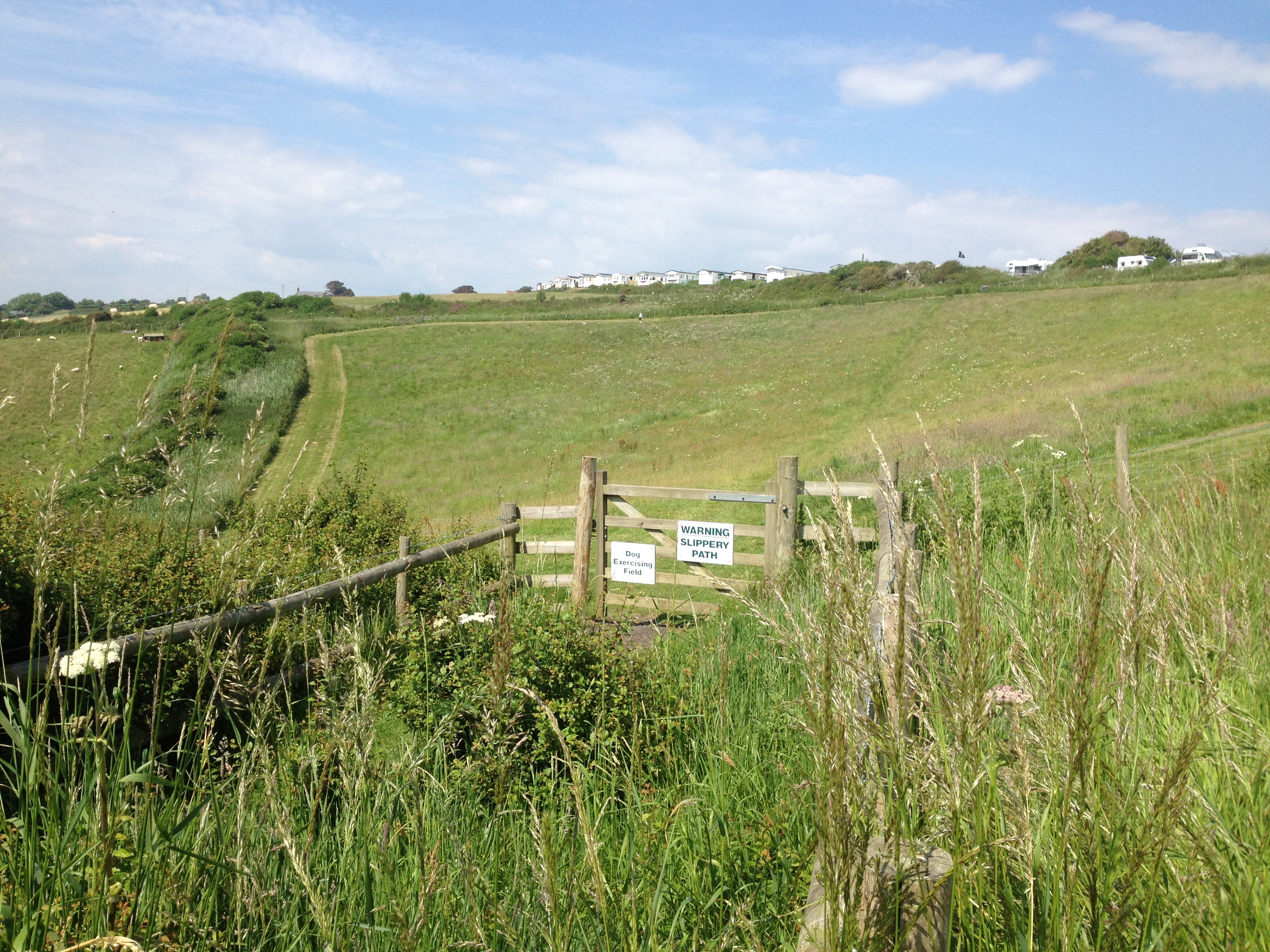
But there is an alternative. If dog walkers want to exercise their dogs off-lead and not pick up their poo, why don’t they band together and buy land where they can do what they like? Yesterday we went for a walk and I saw a field specifically set aside for dog-walkers staying at the local holiday park.


IMG_0197

Highlands Park Dog Meadow ((c) Miles King)

It is managed as a hay meadow with paths around the edge kept mown short. Other people can use it, on the understanding that it is there primarily for dog-walkers. Now there is still plenty of dog poo on the surrounding network of paths, including the coast path, but the holiday park is doing its best to cater for its dog-walkers. I’m not suggesting dog-walkers shouldnt be able to use public spaces or private land, but if they do, then they must abide by the law and show respect for other users, by picking up all their dog poo and keeping their dogs under close control.


Posted in corporate lobbying, dog poo, dogs, greenspace, Uncategorized | Tagged , , | 22 Comments

Inside the murky world where climate denial, social media and industry propaganda converge

After an unedifying and ultimately pointless dialogue with Richard AE North on the Conservative Home website, relating to the badger cull yesterday (see yesterday’s post), I was drawn to his blog to see what he was fulminating about there.

I discover, not really to my surprise, that he is a comrade in arms of Christopher Booker, that renowned global warming denier, Europhobe and anti-environmentalist. North mentions a recent article by his mate Booker, on global warming, in the Telegraph.

Booker barely strings an article together from a blog written by an American, Steven Goddard (not his real name). Goddard claims that the National Oceanic and Atmospheric Administration, NOAA, have been deliberately manipulating data from the US historical climatology network, to make previous decades look cooler than they actually were. This is what NOAA say about the USHCN and the data adjustments they have made.

I took a look at Goddard’s blog. Look, but be prepared. It’s the usual hotch potch of pseudo science, supposedly independent and expert critique of climate data, cuttings from old newspapers. Just what you expect from the denialist blogosphere.

I looked into Goddard – he has a BSc in geology but does no research himself. It turns out he has joined Screaming Lord Monckton, yes Christopher Monckton the fake Sheikh and Ukipper, at the Science and Public Policy Institute. The SPPI appears to be an offshoot of  Centre for the study of Carbon Dioxide and Global Change, the key players being Robert Ferguson and the Idso family. Ferguson shared a billing with UKIP climate-denial spokesman Roger Helmer where they both spoke to the American Legislative Exchange Council, a lobbying outfit funded by big Oil and big Tobacco donations. ALEC are also funded by the Koch brothers, notorious for their funding of climate denial front organisations.

So what we have is a climate denier blogger, reporting on a climate denier “journalist”, reporting on some made up stuff from another climate denier blogger, who is working for a front organisation, which is a front for another front organisation, ultimately funded by the Oil industry and some extremely dodgy American multibillionaires.

Why does the Telegraph publish this stuff when it is so obviously blatant propaganda?


Posted in anti-environmental rhetoric, climate change, corporate lobbying, the far right, Think Tanks, Uncategorized | Tagged , , | 3 Comments

Defra slams stable door shut long after cattle bTB infections have bolted.

Your favourite politician has been at it again explaining why it is so important to sacrifice, I mean, cull scientifically, badgers. He, or at least one of his minions, has written a piece on Conservative Home, of all places, seeking to justify the continuation of the badger cull this year in Gloucestershire and Somerset. Why would he feel the need to justify what is just a continuation of Government policy?
Curious about the timing of this briefing – it reads like a Defra information note, I looked at the Farmers Guardian website. Coincidentally, Defra has just launched a consultation on introducing more stringent TB testing for cattle.

These are measures that have already been announced:

Defra will remove, from October, the ability for farmers to partially derestrict their holdings following a TB outbreak. Amazingly, at the moment, when a TB outbreak occurs on a farm, the farmer can continue to move cattle from the herd without premovement testing, if it was from a different part of the farm, from where the TB outbreak is taking place. As Defra stated “there was evidence that holdings that have been partially de-restricted have a disproportionate number of further TB breakdowns, while it is also difficult for buyers and the authorities to audit movements between different groups.”

So Defra have finally spotted a route for TB to be spread, without any involvement from badgers. Still, Defra have offered farmers a get out clause – if they have separate cattle management groups, they can register them until different holding numbers (CPH) – I am sure bTB will respect this administrative nicety and promise not to stray from one CPH to another, on the tyre of a landrover, or welly.

Secondly, Defra is going to introduce a fine (well a reduction in subsidy anyway) for farmers who do not test when they are required to. Let’s just look at that one again – currently there is no sanction for farmers who do not test their cattle for bTB. Still, if the farmer can provide a good reason why they haven’t tested, they wll be let off.

Defra is now consulting on the following:

Sole Occupancy Authorities (SOA) will no longer be exempt from testing in annual testing areas. This means at the moment, that a farmer who has registered their holdings as an SOA, does not need to test cattle for bTB before moving them around the countryside, even in high bTB risk areas. Now it may well be that movements within an SOA do not mean that cattle from one holding are liable to infect cattle from another holding (though it may) but it will certainly mean that cattle from one holding can infect previously uninfected badgers in another area. And, as we know, cattle give badgers bTB just as badgers give cattle bTB (though only 6% of cattle infections are directly caused by badgers remember.)

But hold on, another get out clause has been inserted. If all the land within the SOA is within 10 miles of the main farm, then testing is not needed – even in a high risk area. I didn’t realise bTB had some sort of in built GPS system that enables it to know how far it has travelled inside a cow, or on a tyre or welly. Good work Defra.

Defra is also proposing to require cattle sellers to provide information on testing and infection within their herds when selling their cattle. Thats right, until now, it has been entirely voluntary. And, surprise surprise, some sellers have been less than forthcoming with that information. Who would have thought it? Could there be a correlation between those selling from unreported infected herds, and the paucity of information about testing and infection history. You decide.

Finally Defra is consulting on introducing mandatory post-movement testing in England. Scotland already has it. But they are only proposing post movement testing where movements originate in high risk areas. Defra say Post movement testing will ‘strengthen our intention to secure Officially TB Free status for the Low Risk Area’. In other words Defra know perfectly well that new bTB outbreaks in low risk areas are happening because infected cattle are being moved around the country. Badgers don’t tend travel hundreds of miles.

Had a more stringent regime of testing pre- and post- movement, been in place for the last 20 years, we would not be in the position we are now. Still, it’s good to see Defra seeking to tighten up some of these loopholes, even if it is still creating new ones.

No doubt NFU will be lobbying furiously over the summer to ensure that these proposals are further watered down; while continuing to blame badgers (the victim) for the spread of this appalling disease.

Still, blame the victim seems to be the trope of choice these days, as we see the return of the “feckless poor” into political culture.

Posted in badgers, NFU, Owen Paterson | Tagged , , , | 2 Comments

The CAP no longer fits

If there was any doubt before, the Local and Euro Election results indicate there is no doubt that the future of Britain in the EU and perhaps of the entire EU project, now hangs in the balance. Euro scepticism has shown its face, both the right and left side, though the right is getting most of the media attention.

One of the central policy planks of the EU, from its very first days, has been the Common Agricultural Policy. Its original purpose was to ensure that the starvation and food shortages which haunted post-war western Europe would never happen again; and also perhaps created as a means of quietly allowing Germany to pay war reparations to France without anyone else noticing. But from such arguably rational beginnings, a monster was born.

By the 1970s and 80s overproduction was the target, and this created the milk and wine lakes, the butter and cheese mountains of legend. Intervention buying guaranteed a very good price for farm products regardless of the laws of supply and demand, and encouraged ever greater production and overproduction. In the uplands, headage payments encouraged farmers to put far too many sheep on the hills grazing them even barer than they already were.

Despite some efforts to reverse the effects of such powerful policy drivers – such as Agri-Environment Schemes, the CAP continues to encourage farmers to produce food intensively. In 2003 agricultural payments were “de-coupled” after threats from the WTO that fines would be imposed on Europe for providing state subsidies to agriculture. The decoupling has not led to lower levels of production, indeed production intensity has continued to increase, farm size has continued to increase and the number of people employed in agriculture has dwindled further.

The CAP and all its accretions have broken free from the constraints of rational decision making. The European Commission’s Directorate General Agriculture, the once mighty pre-eminent DG in Brussels, has lost its grasp of the leash. Subject to efforts to pull the CAP monster in a number of different directions at once, it has responded by developing an absurdist approach to policy development. It may have been a collective act of psychic defence on the part of the Eurocrats involved.


CAP Madness

For example there was the 50 trees rule, dreamt up in 2003. The problem? Farmers were claiming CAP payments on land which could be classified as forestry. This would not do. Forestry was dealt with under a separate EC directorate. Forestry was not agriculture. Nobody at DG Agriculture had heard of Agro-forestry, let alone silvopastoralism. Habitats such as Scandinavian wooded meadows or Iberican Dehesa, landscapes that were a thousand years old and more, could not exist. So a rule had to be invented to abolish them, exile them from agricultrural support. The 50 Trees rule was born. Any land which had more than 50 trees per hectare on it was instantly not agricultural land, and could not receive single farm payment. What happened? Small family farmers in Scandinavia, desperate to receive some support, started chopping down the ancient trees in their wooded meadows, destroying a Natura 2000 Habitat. Weeping as they did so I would imagine.

Then there was the GAEC 12 (Good Agricultural and Environmental Condition) about removal of encroaching vegetation. After farm payments were decoupled from production in 2003, farmers could in theory do nothing to their farmland and just receive the farm payment. This was deemed to be unacceptable; and verging on fraud. Why should hard working taxpayers pay farmers to not grow food? It was a return to the world of Catch 22, where Major Major’s father made a fortune being paid not to grow alfalfa. So DG Agriculture developed another cunning rule. Any field where vegetation was seen to be encroaching on the farmland (sounds sinister) would be potentially refused farm payments. This led to the absurd situation where a CAP inspector found a single stem of wild rose in a Bulgarian meadow and rejected the farmer’s claim for CAP support. In other places, farmers had to “top” fields that were not being grazed, mown or cultivated. Topping in this context means cutting vegetation down just while it’s flowering, which is not very environmentally friendly.

Concerned that farmers in France and Germany were overenthusiastically converting grassland to maize production, DG Agriculture brought in the Permanent Pasture rule. This rule stated that each member state must map its permanent pasture and ensure that, over a 7 year period, the total area under permanent pasture did not fall by 10%. But just to make it a bit easier for farmers to comply with, they defined permanent pasture as anything from fantastically wildlife-rich unimproved grassland that was centuries old, through to stubble turnips; and everything in between. It was fine for a farmer to cultivate and re-seed a field with ryegrass every year; that still made it Permanent Pasture, as long as it wasn’t converted into an annual arable crop. A centuries old pasture could be converted to intensive rye grass, and it would still be “protected” by the permanent pasture rule. Suggestions that this rule might be tightened up led to large scale ploughing in 2011-2013, including losses of wildlife-rich grasslands. This rule is now being challenged, though not for environmental reasons.

The final stop on our whistlestop tour around the Absurd CAP rules theme-park (CAP-orama perhaps) concerns eligible land. As the problem of fraud continued to bedevil the payment of farming subsidies across Europe, The European Court of Auditors started to lean hard on DG Agriculture to get a bit stricter about what land qualified for farm payments. By using the 50 trees rule and the encroaching vegetation rule, along with some nifty new rules, it became a cinch to exclude millions of hectares of low intensity, infrequently grazed farmland across Europe from farm payments, while golf courses and airports remained eligible, on account of their being regularly mown.

This developed into an entire sub-industry of defining and mapping temporary or permanent ineligible features (TIFs and PIFs). Hedges were only allowed to be 2m wide, or 6m in exceptional circumstances and anything like a pond or a patch of scrub had to be less than 100m2 or it would be excluded. With the advent of accurate satellite imagery and aerial photography, DG Agriculture required member states to embark on a mass digital mapping exercise to hunt down every aberrant patch of land and banish it from the farm payments system. Mapping is now done annually, so creating many jobs for people sitting in front of computer screens, remapping farmland.

Greenwashing

The latest wheeze to persuade the increasingly sceptical European public and politicians that the CAP really was delivering public goods and wasn’t just a generous welfare payment to wealthy landowners, was greening. Greening – the word has so many connotations. Greenwash also comes to mind. The idea behind greening was that a fair chunk of Single Farm Payment, would be paid on condition that Farmers delivered some environmental benefits in return for their subsidy. This might include, for example, retaining areas supporting wildlife or creating ones if there weren’t any. It might include attempts to protect high nature value landscapes beyond the farm scale, helping farmers to co-operate to maintain the fabric of the landscape, for example. Or it might include helping to deliver related objectives such as protecting the Natura 2000 network, or the Water Framework Directive.

But, thanks to the usual highly effective lobbying by the Agro-industry, the greening measures have been watered down, watered down again and amended until they have reached and exceeded the absurdity threshold. I can only assume the plan was to amend and weaken the rules until they become patently absurd, so that they are either abandoned or ignored. We now have a 3 crop rule which requires arable farmers to plant at least 3 different arable crops on their land each year. This has minimal environmental benefit but is creating a great deal of animosity among arable farmers. Another rule relates to Permanent Pasture, which must be retained, but only at the Member State level. This is the same as it was previously, providing no environmental benefit. Finally Ecological Focus Areas will have to cover 5% of their land. In practice this will probably just be the areas that have been deemed ineligible for single payment, so no environmental benefit there either. A very recent paper has concluded that greening will achieve nothing and could be regressive in its impact for nature.

Defra with no fanfare crept out some rules for Greening on Monday. By yesterday there was uproar when it became clear that Defra has decided that Ecological Focus Areas can include Field Beans, Peas and even Soya Beans, on the justification that they are good for the soil. Owen Paterson then gave this announcement confirming that Soil Protection Reviews were being abandoned and GAEC rules were being simplified, while fines for non-compliance would be reviewed to make them more proportionate (ie reduced).

Andrew Clark at the NFU explained why including peas which are subject to a barrage of insecticides to create that perfect little frozen green jewel we all love, was such a good move for nature and the public.

“Comparing nitrogen-fixing crops with permanent pasture, obviously the pasture will have greater biodiversity,” he said. “But we believe a range of options should be available to farmers. Anyone with broad beans in their garden will see they are full of pollinators at the moment.

“Wildflower meadows tend to have quite a limited flowering season but some legumes are flowering from April to June, and others much later in summer. We think including this measure is very positive for the environment.”

I know and like Andrew and I am sure he had a wry smile on his face as he trotted out this classic piece of CAP doublethink. The clue is in the name “ecological focus areas”  – that they should be areas on a farm where the focus was on its ecology. Oh well – more CAP collective psychosis.
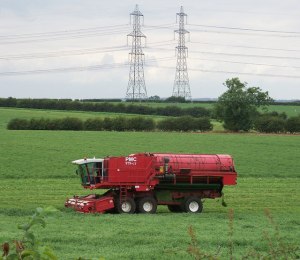
 

Harvesting_Peas_near_White_Hart_Farm_-_geograph.org.uk_-_1393419

A Pea Viner with Ecological Focus Area

(Photo: David Wright [CC-BY-SA-2.0 (http://creativecommons.org/licenses/by-sa/2.0)%5D, via Wikimedia Commons)

If there were transferable biodiversity obligations, The Lincolnshire Pea Farms could sell their entire area of peas as EFA and make a whole load more money.

The Green Box

And so, with every turn of the CAP cycle, one set of absurd rules is replaced by another, rules accrete on rules, but actually very little changes. A disproportionate amount of CAP subsidies go to the big farms, while the small farms especially small holders, are either excluded from the club altogether or fall foul of the rules in one way or another. The CAP continues to support and encourage intensive farming at the expense of extensive production methods. The Hey Day of Agri-environment schemes are over, and the budget for these schemes in the coming CAP round is smaller than the previous one.

The first skirmishes to reform the CAP took place at least 20 years ago, with the proposed MacSharry’s “green box”, which was originally a way of protecting farm subsidies from the rules of the General Agreement on Tariffs and Trade (GATT). Since then the green box (think of it as a cardboard box if you will), has grown, changed shape, been sat on, set fire to and dropped in a large puddle. Each time, some new sticking tape has been applied to hold it together, it’s been put on a radiator to dry out. And it’s had a new lick of paint every seven years. But the reality is that the green box has been sitting in the back of the CAP Land Rover for 20 years now, being gnawed at by the farmers dog, with various members of the CAP farming family looking at it askance, trying to work out why it’s there, what it’s for and what’s in it.

Broken CAP

Perhaps it is time to throw the green box away. I don’t mean get rid of the environmental benefits derived (often unintentionally) from the CAP. I mean get rid of the CAP itself.

There is such a thing as the sunk cost fallacy. Because we have invested a great deal of effort, money, emotional energy and personal credibility in a project, despite all the evidence that the project failed long ago, we continue to think, just one more go, it’ll work this time. It’s a flaw in human psychology – I suppose it could be related to optimism bias.

This is the case with CAP and environmental benefits. We have tried and tried – some people have worked on this their whole career. Of course they’re not going to want to stop. They would lose their jobs for a start. One could argue there is a whole CAP reform industry which has grown up around the semi-theological belief that the CAP can be reformed to deliver public environmental goods.

But it can’t. It’s been tried – again and again – and every time, the powerful Agro-industrial lobby prevails. That lobby operates extremely effectively, here in the UK, in France, Germany and other members states, and of course the lobby at Brussels. The innately pro-CAP eurocrats at DG Agriculture are cut from the same cloth, indeed I suspect there is as much of a merry go round between the EC, the agro-thinktanks and the Lobby as there is in Westminster.

The CAP swallows 40% of the EU budget – down from 70% in 1984. That 40% equates to £4 billion a year spent in the UK – £4Bn given to farmers (the majority in the UK goes to farmers with large landholdings) with practically no requirement to provide any sort of public environmental or social goods in return. It’s a welfare payment to some of the richest people in the UK.

An Unholy Alliance?

Opposition to the continuing CAP welfare payments has come from unlikely sources. The Libertarian right objects to all forms of public subsidy or support. George Eustice, now Defra junior minister, was once a UKIP candidate for the European Parliament. He has called for the CAP Single Payment to be abolished and replaced with “transferable biodiversity obligations”. This would have the effect of focusing subsidy onto areas with high biodiversity. The logical consequence is that it would lead to a market in tradeable biodiversity obligations – or biodiversity offsets as they are also known.

While UKIP is itself clearly intent on removing the UK from the EU and therefore the CAP, it is actually still very supportive of farm subsidies. The Greens support CAP reform and a move towards a system which supports small farmers and the environment. The mainstream parties continue to talk about CAP reform. Within days of becoming Secretary of State for the Environment, Owen Paterson stated that he would like to see farm subsidies abolished, though he has softened his rhetoric since then. Paterson has appeared to join in with the “Public Goods for Public money” chorus which has been heard quite loudly in this round of CAP reform, not least from EC Commissioner for Agriculture Dacian Ciolos. The reality though is that Paterson, Eustice Ciolos et all have again caved in to the overweaning power of the Agro-lobby. The public goods produced from CAP funding are far outweighed by the public bads of support for intensive farming and everything that does to the environment and communities.

It is possible to see a way forward to slay the CAP beast, bringing together an unlikely alliance of Eurosceptics, free marketeers, libertarians, agrarians and environmentalists. Of course it may happen anyway if the EU implodes, or for the UK, if we leave the EU. While the neoliberal right may argue for the abolition of CAP and nothing in its place, this is based on valuing the provision of goods and services to society either at zero, or only a value that a market could determine. What value can a market place on hearing a cuckoo in Spring, or seeing a hawthorn bush in flower? This is the fundamental concern over Biodiversity Offsetting, another neoliberal panacea beloved by Secretary of State Paterson. The alternative to a market-based “payment for ecosystem services” approach, would be public funding for public goods.

Public Goods for Public Funds

Landowners who managed their land in such a way that it provided public goods, such as clean water, flood prevention, carbon storage (and reduced GHG emissons), healthy pollinator populations, biodiversity and so on, would receive recompense for so doing. I would avoid the profits foregone approach enshrined in the CAP payment calculations, but I am no economist and am not going into the details of how best to “price” such things, many of which are intangible anyway. Applying the mitigation hierarchy to land management would also seem like a sensible approach. Landowners who avoided doing any environmental damage through their farming activities and actually contributed to environmental restoration or maintenance would be rewarded. Landowners who chose to use farming operations that caused environmental damage would have to do as much as possible to avoid that damage, and where there was damage, to pay compensation to mitigate the damage. A robust but fair set of regulations would provide the baseline of environmental protection. Implementation would need to across Europe, but whether it needs overarching European legislation rather depends on what state Europe, as a political framework, finds itself in. A European framework directive for land use could set the terms of payments for public environmental and social goods at the member state level; or the whole thing could be devolved to member states. The mitigation hierarchy would have to be a central plank within such a Directive.

So, for example, regulation would ensure that it would no longer be possible for farmers to plant large areas of maize in a vulnerable catchment, and no maize could be grown on sloping land. Where maize was grown, a compensation payment would be made, to fund land management operations which mitigated the environmental impact of that maize. If the impact could not be mitigated, then it could not be grown.

There would have to be a lot of metaphorical nose-holding for the different political tendencies to work together on this, but it could be done.

An edited version of this post appears on The Green Alliance Blog today.
Posted in agriculture, Common Agricultural Policy, farming, neoliberalism, Owen Paterson, Uncategorized | Tagged , , , , | 4 Comments

The CLA reacts hysterically to ideas of removing farm tax-exemptions ; the dependency on state handouts is akin to drug addiction.

I’m tempted to emulate the satire of Tom Pride’s Pride’s Purge with this story, but in truth it needs no satire.

Apparently a “leaked document” purports to suggest that Labour are thinking about removing business rate exemptions on Agricultural Land, which could raise £500M.

Farmers are perhaps the most subsidised and tax-exempt of all industries, with the possible exception of the Fossil Fuel industry. Farmers can gain Capital Gains Tax exemption, Inheritance Tax exemption, Corporation Tax exemption, Business Rates exemption and receive at least £240 per hectare per annum for every piece of land they own or rent. Imagine being given £25,000 a year just for owning or renting a house?

The report, in Farmers Guardian calls it a “Farm Tax”. Removing an exemption is not a tax.

The CLA president Henry Robinson reacted by claiming it “If this report turns out to be true, it would mean the end of British agriculture as we know it, the abandonment of much of the countryside, and less money to spend on the environment.” I’m surprised he didn’t mention plagues of frogs, so apocalyptic was his hysterical response. yet its Environmentalists who are regularly accused of exaggerating the threats to the environment.

He went on (now metaphorically foaming at the mouth)

“Most farms are barely viable as it is; requiring them to pay business rates will tip most of them over the edge. Farmers will have to give up their businesses and it is unlikely there will be anyone willing to take them over,” he said.

“This could result in a move to more industrial scale farming on a scale that would be completely unacceptable to the industry and to the British public.”

So on one breath the CLA are saying this business tax exemption removal will cause

  • Abandonment
  • Industrial scale farming;
  • The end of British Agriculture;
  • Less money to spend on the environment

Planning Minister Eric Pickles weighed in claiming it would push food prices up and threaten the farm sector. Interesting that Owen Paterson the Farm Minister didn’t provide a comment – has he already heard he’s for teh chop; is Pickles now angling for the Farm Brief after his magnificent performance during the floods?

This total dependency by the farming sector on state welfare hand-outs, either via farm subsidies, or via a complicated network of inter-related tax breaks, reminds me of drug addiction. While the addict can continue to gain access to their drug, they can just about function in their daily lives. If that supply is  disrupted, the addict will lose all sense of rational purpose and focus entirely on regaining access to their drug. They will take whatever action is needed to protect that supply, including hysterical pleading, stealing, lying and cheating. The solution is that they need to be helped to stop using. Help that includes incentives and sanctions. Help that is supportive but firm.

We as society need to help wean our farmers off their dependency on the benefits derived from subsidy and tax breaks; and only support them where they provide public goods, such as clean water, carbon storage healthy pollinators and wildlife.

Posted in agriculture, CLA, farm tax breaks, farming, Uncategorized | Tagged , , | 9 Comments

Paterson – climate change will increase crop yields: Govt Scientists -Climate Change will cause crop failure

David Cameron may or may not be preparing for a major cabinet reshuffle following the Euro and Local Elections – and my favourite blog fodder Secretary of State against the Environment Owen Paterson may or may not be looking to show how much he is on top of his brief, following the floods debacle.

He really doesn’t help himself though does he?

Anti-fracking campaigner Vanessa Vine sought his views on agriculture and climate change at the South of England show last week. Here’s her transcript.

Did Opatz have a dream of a panglossian future – a wonderful balmy warm Britain under climate change – days of wine and roses, warm beer, sunny sunday afternoons at the village cricket ground? The sound of willow on leather (he is a leather man after all)….

No – he’s been listening to his brother in law Viscount Matt Ridley “the rational optimist” who Paterson regularly turns to for advice eg on GMOs. Note Ridley’s irrational outbursts.

Ridley claims, based on no evidence whatsoever, that climate change will lead to a better world where crops yields increase. Ridley, trained as a geneticist and strongly pro GMO, dreams of new varieties of maize that can take advantage of the warming climate and be grown in ever new places. Great – the crop that is the most environmentally damaging one in Britain (and I would suggest probably Europe), being genetically modified to be grown in more places. That sounds like a good answer.

But wait a minute – Government Scientists at the Rothamsted agricultural research station, have concluded the opposite, that cereal yields will drop dramatically in light of climate change. This is because of predicted extremes of drought, flood, winter warmth and so on, creating stresses that cause crop death. No panglossian vision of warm beer here. And predicted? Or is this what we are now observing?

So – will Paterson finally start listening to his own scientists, or continue to follow his aristocrate bruv in law? Cameron may be taking an interest in his decision

In some ways at least UKIP are honest in their lunacy.

Monckton of Arabia 2 CFACT

UKIP’s Screaming “Lord” Monckton at the Doha climate summit dressed as a Qatari giving out climate change denial leaflets. Shortly afterwards he was thrown out of Qatar, presumably for bringing fossil fuels into disrepute.

Posted in agriculture, climate change, Matt Ridley, Owen Paterson | Tagged , , , | 7 Comments