Rampisham Factcheck #2: Democracy

Magna_Carta_(1297_version_with_seal,_owned_by_David_M_Rubenstein)


It seems appropriate in this, the 800th anniversary of the Magna Carta, that the question of democracy and what it means in the 21st century, should be alive and kicking.

The Magna Carta was a huge turning point in British and world history. For the first time the Executive Authority of the King was challenged and he was brought under the rule of law, law created by people.

In the same way, while we may vote for elected politicians, they are still required to act within the law: otherwise we are left with elected dictatorships. This is why the Chilcot Enquiry into the Iraq war is so important – because it is investigating whether the Executive (ie the Government of the time) acted illegally, that is outside the rule of law, when invading Iraq in 2003.

What has this got to do with Rampisham, you might ask?

Today, The Dorset Wildlife Trust were accused of acting undemocratically by challenging the decision of West Dorset District Council, in giving planning permission to build a Solar Factory on Rampisham Down SSSI. According to the Bridport News, British Solar Renewables Director Giles Frampton said

“The democratic process had already spoken when the planning committee voted to support the facts.”

In the Dorset Echo today, an article suggested that Dorset Wildlife Trust had acted “undemocratically” in opposing the Solar development, apparently because some DWT members supported the development.

Taking the second issue first, this isn’t about democracy because DWT has very strict Charitable Purposes, which they are legally bound to work to achieve. Their purposes will be to further nature conservation, not promote renewable energy, so clearly there is no question of the members being able to excercise any democratic rights that are odds with their charitable aims.

The first issue is more interesting. Going back to Magna Carta again, we can say that the West Dorset District Council are the Executive power  – they are equivalent to King John. DWT (and RSPB et al) are in the position of the Barons – they are saying –

“no WDDC you cannot place yourself above the law of the land”.

The law of the land in this case is the Wildlife and Countryside Act (as amended), and the National Planning Policy Framework. These are laws and legal instruments which the Executive are bound by, just as you and I are. It certainly appears from here that WDDC ignored their obligations to consider the law regarding the protection of SSSIs when approving the planning application.

If the Executive decides to ignore those laws, it is the democratic right of individuals and organisations to challenge decisions made by the Executive which flout the law. And this is exactly what has happened. DWT have used the legal mechanisms available to them to challenge what they regard as a decision which ignores the rule of law.

The National Planning Casework Unit, which is part of the Department for Communities and Local Government, will review the evidence of the case before recommending to the Secretary of State whether the planning permission should be called in. This is all part of the complex set of checks and balances which comprise democracy at work.

Far from acting undemocratically in challenging the legality of the planning decision at Rampisham, those 7255 people (to date) who have  written to Eric Pickles asking him to call it in are acting in the deepest traditions of democracy in this country.

photo of Magna Carta (1297 version with seal, owned by David M Rubenstein) by Uploaded by J.delanoy. – http://www.rarebookreview.com/wp-content/uploads/2007/09/07-magna-carta_for-email.jpg.. Licensed under Public Domain via Wikimedia Commons
Posted in Rampisham Down | Tagged , , | 7 Comments

Rampisham: Kicked into the Long Grass?

long grass


The Long Grass (c) Miles King

Today West Dorset District Council informed various people (including myself) that the Secretary of State for Communities and Local Government (CLG), the Right Hon Eric Pickles, has directed West Dorset District Council “not to grant planning permission” for the Solar Factory at Rampisham Down SSSI “without specific authorisation.” This means that nothing can happen at Rampisham until Mr Pickles decides whether to call-in the planning permission for a Public Inquiry. Here’s the letter.

153001_Rampisham_Art25


What is particularly interesting is the speed with which CLG have acted – they sent their decision last Friday. Also of note is the speed with which West Dorset have publicised the announcement.

CLG have not waited until the end of the three week “cooling off period” following the permission being granted on a SSSI, before acting. We do not know  yet whether Natural England has written to CLG asking for the permission to be called in, although to my mind it would be inconceivable that they would not make this request, bearing in mind the strength of their objections to the planning application.

Similarly the Dorset Wildlife Trust, RSPB, Butterfly Conservation and presumably many other NGOs will still be preparing their submissions, so CLG will not have acted in response to their submissions. It is of course fantastic that, at the time CLG were writing to West Dorset District Council, 4000 people had already written to Mr Pickles asking for him to call in the permission. And though I am sure he is a champion of community engagement in planning, I still doubt that these swayed their decision to act so quickly.

I suspect the real reason why CLG acted so quickly was to avoid more embarrassing publicity around the weaknesses in the planning system and particularly the enthusiasm with which Two planning committees have ignored expert advice and approved developments on SSSI. Having been through what must have been a very bruising period last Autumn with a high profile campaign to get CLG to consider calling in the Lodge Hill planning permission, Pickles et al will have wanted to avoid a re-run, and decided to kick the Rampisham decision quickly and firmly into the long grass.

As to West Dorset – I can only assume the officers were keen to get the information out there locally, as a damage limitation exercise. To have a planning permission crunched so quickly and so unceremoniously from on high will be very embarrassing for West Dorset (a staunchly Tory council and home to Cabinet Office Minister Oliver Letwin) and I imagine the Planning Committee member Councillors will now be getting quite nervous about the implications of their actions.

It seems inconceivable that CLG will decide whether to call in this planning permission or not, before the General Election. In which case the decision may be made by a different Secretary of State, even a different Government.

Anyone reading this who hasn’t signed up to the E-action at the Wildlife Trust website  – please do sign up. Even though the holding direction has been issued, we still need as many names as possible to have written. So far, it’s up to 6287 – let’s try and get to 8000 before the deadline on Friday.


Posted in planning, Rampisham Down | Tagged , | 5 Comments

Super-Ridley blats the Bat-people: But will the evil Raccoon win out?

Raccoon_getting_in_trouble


“Escaped pet raccoons are beginning to establish themselves in northern England with potentially devastating consequences for native wildlife.” Viscount Matt Ridley

Viscount Matthew White Ridley is many things. He is a very rare beast: a hereditary peer in the House of Lords; he is the Rational Optimist, he is Former Secretary of State against the Environment Owen “badgers moved the goalposts” Paterson’s brother in law; he is the former chairman of former bank Northern Rock, which crashed spectacularly through mismanagement; he is the new King Coal, producing 1% of the UK’s entire annual greenhouse gas contributions all on his own; he is P0licy Exchange’s visiting Scholar; and he is of course the most well-known apologist for climate change denial, attempting as he does to exploit his scientific education to give his pronouncements more credibility. His doctorate was in pheasant mating behaviour.

Ridley has now become an expert on nature conservation, apparently. In his latest Times article (reproduced for us plebs to read for free on his website) is about Bats. Ridley rails against Bat Conservation and their volunteers: I was surprised at how rude he was – given his own claims about how reluctant he is to use ad hominem attacks.

I have a rule that I do not go ad hominem, unless attacked myself.

Ridley describes the behaviour of conservation volunteers working for the Bat Conservation Trust as

“officious bullying by amateur and self-trained busybodies from the Bat Conservation Trust”

“amateur bat policemen”

Now it may be that a bat warden was very rude to Viscount Ridley once and therefore he feels justified in attacking the entire bat volunteer movement – but then he hasn’t mentioned any specific experience of such. Therefore the only word that seems appropriate to use to describe Ridley is Hypocrite. But then he does have form in this regard having launched a prize for “people exposing pseudoscience behind ecoprojects”. Talk about pots and luke-warm kettles.

Ridley makes so many ridiculous claims in this article it would take me all day to dissect it and I have better things to do. But what is clear is that he has been listening to some very disgruntled characters in the Anglican Church – who would like nothing better than to poison all bats in all churches. Not exactly in keeping with the Christian Ethos but there you go.  I have come up with my own suggested solution to this particular conflict, but I don’t think its been taken up yet.

Having launched a tirade against bats and bat wardens in churches (with a few pops at Europe along the way), Ridley expounds on his favourite subject, how everything is getting better and the solutions are all really terribly simple.

According to Ridley the greatest threat to nature is from invasive species. He doesn’t explain which invasives are threatening our bat populations, but he does cherry pick a few examples to support his argument (he’s good at doing that). From the well known though more complex that he would know examples of Water Voles/Mink and Red Squirrels/Grey Squirrels, he leaps to the extraordinary conclusion that

the urgent conservation priority in Britain is the eradication of invasive aliens, not the officious preservation of habitats for species doing just fine.”

and ZOOOOMMMMM….. SUPER RIDLEY flies through the metaphorical air, effortlessly leaping from two examples to the entire British Ecosystem.

Da dada daaah dadada daaaah.

See how he cherry-picks!

Watch his pulsating Ad Homs!

Marvel at his Syllogisms!

Watch him verbally beat Batmen to a pulp!

What this does show is that Ridley despite his zoology PhD knows absolutely nothing about the environment, about which he is so keen to pontificate.

Yes there are some very damaging invasive species – Ponto-Caspian species such as the killer and demon shrimps and Quagga mussel  are or will soon be causing major problems in the aquatic environments they are colonising in Britain.

Yes eradicating rats from islands can help literally a handful of high profile globally threatened bird species (though it does not always work). And I suppose given his zoology education and birdy PhD it is no surprise that Ridley sees “the environment” as birds. Many others do too. Of the estimated two million – 50 million species on the planet, there are 10,500 bird species – so birds are 0.005% of all biodiversity, at the very most.

But the main reason why nature is in crisis in Britain and elsewhere is the loss of entire ecosystems and the damage wrought by human activity to the remainder. There are a number of factors at play – these include land-use change and marine overexploitation, pollution (excess nitrogen and phosphate), climate change, and invasive non-native species (INNS).

I have recently written about the threat to Rampisham Down SSSI in Dorset. This is a nationally, possibly internationally important nature site – threatened by having a solar factory built on it. The only invasive species which might impact on the site’s value for nature is the native plant Bracken. But this is easily controlled through appropriate management; indeed the habitat for which the site is so important is entirely dependent on continuing intervention, having been created by the actions of people probably about 6000 years ago.  This is about as far as it is possible to get, from the “the passive preservation of a supposedly pristine natural system” which Ridley rails against. Who even talks these days in this language? It’s as though he’s been reading a Victorian natural history book and assumes that these antediluvian beliefs continue today.

My favourite bit in the whole article though is where Ridley raises the spectre of Raccoons.

“Escaped pet raccoons are beginning to establish themselves in northern England with potentially devastating consequences for native wildlife.”

Raccoons? This is based on talking to a friend of his who found an escaped Raccoon in their hen house. Now Raccoons rummaging through your bins might be a right pain (though would they be able to get into wheely bins?), but to suggest that they are a significant threat to British wildlife is so ludicrous it really does bring into sharp question why Viscount Ridley would make such a ridiculous statement.

I have an idea. It’s so much easier to blame environmental problems on other species, it saves us having to look at our own behaviour, attitudes and responsibility. And the bigger the impact an individual has, the more reason they have to look for scapegoats. Or in this case, Scaperaccoons.


photo by Steve from washington, dc, usa – Busted!!. Licensed under CC BY-SA 2.0 via Wikimedia Commons – http://commons.wikimedia.org/wiki/File:Raccoon_getting_in_trouble.jpg
Posted in alien invasive species, bats, coal, invasive species, Matt Ridley, Policy Exchange, Rampisham Down | Tagged , , , | 10 Comments

Rampisham Down Factcheck #1: Lowland Acid Grassland; A Rare Habitat with Rare Plants

IMG_0625The northern part of Rampisham Down, Dorset (c) Miles King

There has been much written about Rampisham Down in the last week. I have been very busy helping with the social media campaign (and trying to do other work) but felt compelled to start this series of factcheck blogs to help people interested in the case understand the issues.

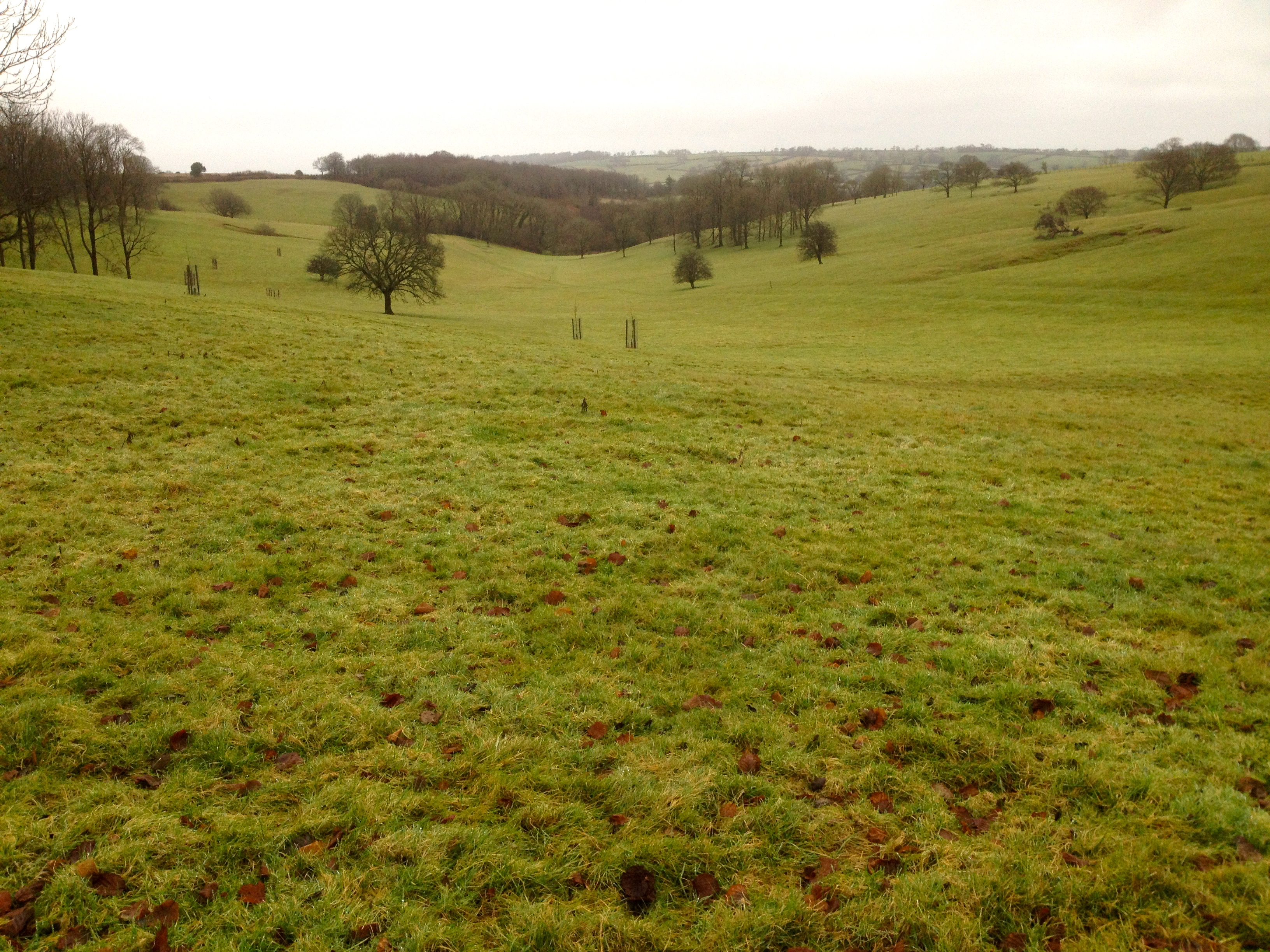
Today the Factcheck is about Lowland Acid Grassland. Lowland Acid Grassland is not the most exciting habitat in the world. It often looks like the photo above, which I took recently on teh part of Rampisham Down that is not surrounded by barbed wire with Ghurka security guards. This bit is also not in the SSSI. I was delighted then to find essentially unimproved lowland acid grassland here.

Lowland Acid Grassland is very much the poor cousin of England’s unimproved grasslands: it often doesn’t have the beauty of wildflower meadows, or the species-richness of chalk downlands. It had long been neglected by conservationists too busy with other species and habitats – and it was often regarded as merely a degraded form of lowland heathland. In some senses this is true, in the same way that lowland heathland could be regarded as a degraded form of woodland. The millions of hectares of acid grassland that covers the hills of upland Wales is rightly castigated as sheep-wrecked by George Monbiot, though it is quite funny how he delights in finding some flowers, acid grassland flowers, on an ungrazed road verge, in Feral. It was only with the advent of Biodiversity Challenge in 1994 and the subsequent Biodiversity Steering Group report in 1995, that Lowland Acid Grassland became recognised as a valuable habitat in its own right and worthy of conservation effort. 20 years on we know much more about it how much is left, and why it is important.

Although it can often look rather dull, especially if it has been overgrazed, or neglected, Lowland Acid Grassland can be surprisingly rich in wildlife, and support rare species.

Professor Ghillean Prance, former Director of Kew Gardens, presented evidence to the West Dorset Planning Committee in support of the application to build a solar farm on Rampisham Down. He unashamedly used his  botanical credentials, explaining to the committee how many books and papers he had published, before stating that he had walked over Rampisham down and found “degraded impacted habitat” with “nothing especially rare” and concluded it had “no botanical species of great concern”.

The Botanical Society of Britain and Ireland, an organisation I have worked with for the past 25 years; and the pre-eminent authority on the status of British wild plants, have recently published the England Red List for Vascular Plants. 

For anyone interested in conservation or natural history it is worth reading. It is an extraordinarily powerful piece of research. The BSBI have looked again at the status of the 1500 or so wild plants in England and re-assessed their status, using internationally adopted criteria. A surprisingly large number of flowers have been assessed as Red-list Near Threatened. This means these species are in real trouble in England, mostly due to a significant shrinkage in their distribution – they have disappeared altogether from large parts of England, especially lowland England.

After the planning committee meeting, I asked Professor Prance if he was aware of the new England red data list and he confirmed that he was.

I have looked through the species lists for Rampisham. The Lowland Acid Grassland and the vanishingly rare, possibly unique areas of acid/chalk grassland there support Nine Red Data Book plant species.

The Near Threatened species are: Harebell, Tormentil, Heather, Bell Heather, Heath Speedwell, Quaking Grass, Heath Milkwort.

In addition there are two species which are Red Data Book Vulnerable, an even more serious class of threat: Lousewort and Heath Dog-Violet.

Lowland Acid Grasslands such as Rampisham are also very important, internationally important, for their fungi – particularly Waxcaps and their allies, a group collectively known as CHEGS. A brief survey last year confirmed that Rampisham was at least regionally important for its fungi. For other groups we simply don’t know what species are there – no invertebrate surveys have even been carried out.

Lowland Acid Grasslands of this kind (U4 in technical language) are now extremely rare – there are almost certainly less than 5000ha left in England – Rampisham Down alone makes up around 1.5% of the surviving resource. Natural England’s own policies require them to notify every surviving example (over 0.5ha in area) of any habitat where less than 10,000ha survives in Britain, or the British Lowlands.


Posted in Rampisham Down, Uncategorized | Tagged | 6 Comments

Lodge Hill latest: Medway writes back to Housing Minister Brandon Lewis pleading against a Call-in

I have just been sent a copy of the letter which Medway Council has sent to Housing Minister Brandon Lewis, responding to his request for information just before christmas, about Medways plans to build a 5000 house new town on Lodge Hill SSSI, home to the famous nightingales, but actually also an incredibly important place for all sorts of other wildlife, and history.

In essence, in their response Medway seek to dismiss all opposition to Lodge Hill from Natural England, RSPB, Kent Wildlife Trust and over 11,000 people who wrote to the Government asking for this decision to be called in. Medway completely ignore concerns that the Nightingale Compensation land will fail to deliver for Nightingales, while destroying existing high quality (and protected) wildlife areas.

They didn’t even bother to respond to concerns that their plans to translocate all the nature-rich grassland from Lodge Hill to a neighbouring farm were unjustified, untested and would not work.

As for alternative sites for housing, they belittled the Planning Inspector’s damning rejection of their Local Plan Core Strategy in 2013 and instead explained that they were happy with the applicant’s assessment of alternatives for housing allocations. It’s hardly surprising that the developers at Lodge Hill are not going to have found alternatives – it wouldn’t exactly be in their interest, would it? “Oh no, it’s ok, we won’t don’t want to build these 5000 houses on this bit of land we own, as there are plenty of other places to build them in the area.” That doesn’t seem very likely.

I’m no expert, but I think the idea behind local planning is that the council do an independent assessment of housing needs based on government projections of population growth, then identify locations where the houses can be built – assessing the suitability of each location against a series of tests set out in the NPPF. This is what I seem to recall being called a Local Plan? Perhaps Medway Councillors need to go on a training course.

Here’s the letter.

MC_11_2516-LETTER_TO_MINISTER_OF_STATE-2523281

Posted in Brandon Lewis, housing, Lodge Hill, public land, SSSis | Tagged , , | 3 Comments

Another SSSI to be trashed? Councillors approve solar farm on Rampisham Down


Rampisham photo


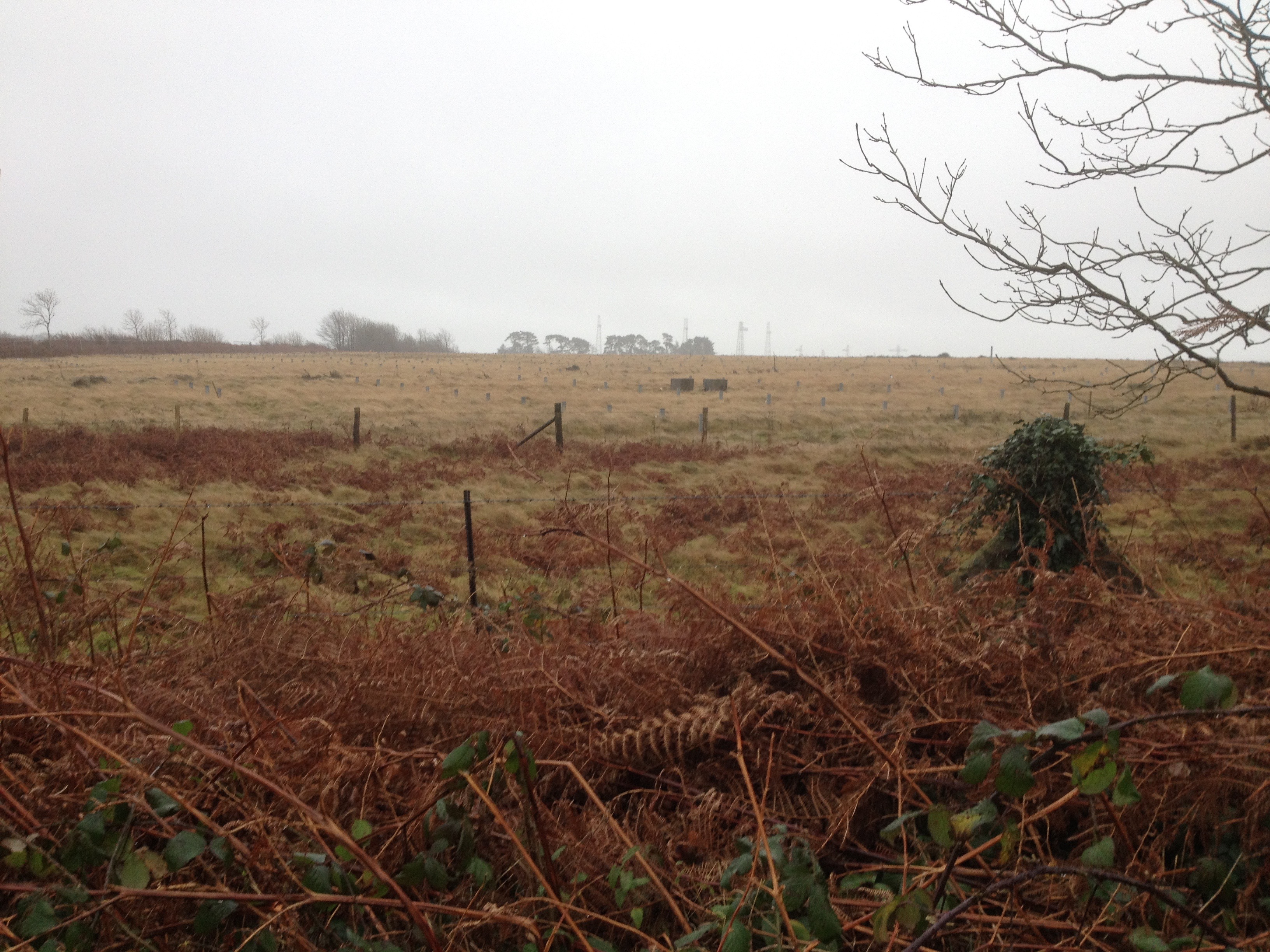
Rampisham Down SSSI  (c) Miles King


While we wait to hear whether Brandon Lewis will decide to call in the planning permission granted by Medway District Council for the new town on Lodge Hill, another District Council planning committee, this time in West Dorset, has decided to approve the development of a Solar Farm on one of the largest areas of wildlife-rich acid grassland in England. You may recall I have written on a number of occasions about Rampisham Down and the tale of the Solar Farm development – here, here and here, for example. The site was well known as a County Wildlife Site, but proposals to develop it as a solar farm, provided the evidence that it was SSSI quality and Natural England duly notified it.

British Solar Renewables, the developers, have argued that their new solar panels with windows in them, will mean enough light can pass through the panels so there will be no impact on the grassland communities underneath. They even employed some ecological consultants to do some experiments to look at whether there were any changes. After as many as six months monitoring, they decided there was no change and the panel windows worked. Natural England were entirely unconvinced and said so in their objection letter.

Today British Solar Renewables made their case to the West Dorset District Council planning committee. Professor Ghillean Prance, former director of Kew Gardens, was their star witness. He explained that he had written hundreds of papers and many books and therefore when he said that the site was “degraded, impacted habitat” I expect he thought the Councillors would feel he must be right. He explained that the shading experiments were terribly valuable and have a significance “far beyond Rampisham”. He explained that the translucent panels greatly reduced any effect on the vegetation, and even this little effect could be mitigated through grazing by sheep.

Prance suggested that Dorset Wildlife Trust had a “less credible understanding of the environment”, than himself presumably, and he went on to explain that there were “no botanical species of great concern” at Rampisham and repeated that the site was “highly impacted.” He reassured the councillors that the solar farm would actually improve the nature value of the site, that in any case only 50% of the site would be affected, and that BSR were “doing all they can for the environment.”

Then there were several speeches supporting the development from local councillors. They thought anything would be better than the transmitting station with its enormous masts, which had dominated the landscape of that part of West Dorset for 70 years. One councillor suggested that the site could not be unimproved grassland because she knew that part of it had been sprayed with herbicide, and another part fertilised. And she’s right, parts of the site show evidence of agricultural improvement, but large areas of the site are unimproved.

She also suggested that without the solar farm, the site would “go to scrub”. Now there’s nothing to put the fear of god into people than raising the spectre of Scrub is there? It’s like invoking some sort of vegetal demon. Of course, since the site is SSSI, it’s unlikely to go to scrub, unlike the bad old days, because Natural England has powers to enforce management, under the CROW act. Natural England did point out this fact, in vain.

Many councillors and others repeated that because it was a brownfield site, it should therefore be developed. The planning officer for the case, repeatedly reminded the councillors that the NPPF was very clear, that the presumption in favour of development on brownfield sites did not apply if they were SSSIs, to no avail. Natural England have rightly argued that most of the site is not brownfield, but semi-natural grassland. This has fallen on deaf ears.

One Councillor said that Rampisham Down became a brownfield site when it had been converted into a radio transmitting station in 1939. He also described how it was a brownfield site in 2 ways now, because the lack of sheep grazing last year had caused the down to turn brown, on account of the “brown from all the seedheads”. I assume this was meant to be a joke. No-one laughed. He also complained about Natural England (or English Nature, several Councillors still thought EN was around) saying “it was a bit rich of NE to come here now – what were they doing before that – they weren’t bothered”, as if there was some sort of statute of limitations, which prevented Natural England from notifying sites too late in a planning process. There isn’t. Another Councillor complained about Natural England “turning up at the last minute to notify the site – why so late?”

NE notified the site because the applicants own ecologists collected data which showed how important the site was.

Many of the Councillors felt that creation of renewable energy was the most important thing about the solar farm at Rampisham Down – one planning committee member said that as she was a great supporter of renewable energy and  as “45% of the site would be left where we will have this unique acid grassland”, the sum total of the two would be “significant environmental benefits.”

So, despite Natural England’s evidence and despite a very comprehensive assessment of the planning situation from the West Dorset Planning Officer, the planning committee unanimously approved the application. The Planning Officer explained to the planning committee that there is a 21 day deadline for Natural England and others to apply for the planning permission to be called-in by the Secretary of State for Communities and Local Government, Eric Pickles. This is what needs to happen now.

If you think all this sounds familiar – that is because it bears some similarities with the situation at Lodge Hill in  Kent. Both are formerly defence infrastructure sites, both support large areas of unimproved grassland; both were notified as SSSI under threat from development; and both have had planning applications approved which would result in the destruction of a large part of each site.  The difference is that Lodge Hill has Nightingales on it – Rampisham was notified for its flowers.


Posted in Eric Pickles, Lodge Hill, Military Land, Natural England, public land, Rampisham Down, Solar Farms, SSSis, Uncategorized | Tagged , , , , , | 15 Comments

NFU claims badger cull is working; Defra continue to “revise” their bTB figures, downwards.

It’s good to see that Labour have one clear environmental policy – abandoning the Badger Cull. Huw Irranca-Davies confirmed that this was Labour’s position at the Oxford Farming Conference yesterday. According the Cull-supporting Western Morning News,

“Mr Irranca-Davies said it was not the badgers who had moved the goalposts, during the first round of pilot culls, as Mr Eustice’s former boss, the sacked Defra Secretary Owen Paterson had claimed, but Defra itself.

Mr Irranca-Davies said having initially insisted the culls should take no longer than six weeks and remove at least 70% of badgers the Government had changed tack and allowed culling to continue for a total of 13 weeks in Somerset and even then had failed to hit their targets.”

Mr Irranca-Davies continues to perform well as a Labour environment speaker – where are the others?

I-D put down a parliamentary question which was not answered yesterday by the farm minister George Eustice.

Q: To ask the Secretary of State for Environment, Food and Rural Affairs, what changes there have been in the number of herds under TB restrictions (a) in each area of the UK, (b) in the Gloucestershire pilot cull area and (c) in the Somerset pilot cull area in each month since January 2010.

A: Statistics below county level are not available. For Gloucestershire and Somerset as a whole, the number of herds not officially TB free due to a bovine TB incident as at the end of January in each year since 2010, plus the latest published figures for September 2014, are shown below.

Gloucestershire Somerset
January 2010 220 146
January 2011 228 220
January 2012 222 227
January 2013 230 254
January 2014 230 269
September 2014 185 194

As I have written about previously, it is a great pity that Bovine TB reporting at parish level has ceased, as we do not have the fine scale resolution that is needed to show exactly is happening in relation to badgers and TB. However, Defra receive herd breakdown data from farms – they do not gather data using satellites. Therefore they know exactly where each farming holding is located, and would easily be able to convert the data they hold to show changes at parish or even farm level, within reason. So it is entirely disingenuous to suggest that Defra could not provide bTB statistics at below county level ie to report on changes within each cull area boundary.

The figures themselves are also quite telling. Defra has been desperately trying to make their bTB reporting data more accurate since the monumental cock-up it experienced in 2012 following an IT upgrade, which led to their bTB figures being inflated by a third.

Now Defra have been busily amending previous year’s figures, so the latest version is in the table above. The original figure for Somerset (used to justify the cull), published just over a year ago was 327 herds “not officially TB free” in September 2013. This was then “revised” down to 264 in Jan 14, a  24% error. For Gloucestershire the over-reporting was even higher at 34%, with the number of nOTF herds coming down from 259 to 194.

The table above would suggest that there has been a reduction in bTB outbreaks in Gloucestershire and Somerset, where the culls have taken place. Except of course that the figures only apply to 3/4 of 2014. A simple scaling up would give 247 for Gloucestershire and 259 for Somerset, to year end 2014. However this may be too simplistic.

I had a look at the latest figures for bovine TB outbreaks (real or suspected). If you compare like with like, for Gloucestershire the nOTF figures (for September, presumably now corrected for data errors by Defra) are:

2008 249

2009 204

2010 183

2011 196

2012 207

2013 189

2014 185

for Somerset

2008 166

2009 141

2010 198

2011 236

2012 247

2013 248

2014 194

Two things pop out from these figures. Firstly, Defra have revised the Sept 2013 figures down again (this time with no publicity at all.) According to Defra stats, Somerset, at the time, had 327, then it was 264, now it’s 248 nOTF herds. That’s a whopping 32% overstatement (will it go up again?).

For Gloucestershire the revision was smaller, so the original figure was 259, then it was 194, now it’s 189. So the total overstatement at the time was 37%.

Just in case you think this is all ancient history, it was these erroneously overstated figures that were used to justify the badger cull.

The other thing that occurs to me is that herd breakdowns in Gloucestershire do appear to be declining, regardless of the badger cull. Back in 1998, before the bTB radiation caused by illegal cattle movements during the 2001 Foot and Mouth Disease outbreak, there were 261 cattle herds under movement restrictions in Gloucs. In Somerset there appears to have been a bTB increase through 2011-2013 which is falling back again in 2014. Bearing in mind though that the Defra stats cock-up started in 2011, I would still treat these years’ stats with extreme caution. What may appear to be an increase, might still be down to stat errors.

Let’s assume for one moment that the badgers that had been responsible for moving the statistical goalposts have now been shot, and that these are the actual true figures for herd breakdowns. In Somerset there has been a small reduction in bTB breakdowns since the cull started. Defra’s own statistics show that nOTF herds in Somerset were 237 in August 2013 and 212 in August 2014 – a reduction of 10.5%. The total number of herds in Somerset in 2013 was 2694 – so 237/2694 = 8.8% of herds were under restriction. In 2014, 2618 herds were registered (to september) 212/2618= 8.1% are under restriction. This is a tiny reduction in the proportion of herds under restriction – and it is almost certainly just random noise.

For Gloucestershire since the cull started the number of nOTF herds had declined from 198 (Aug 2013) to 189 (Aug 2014) herds  – a 9.5% reduction. The proportion of Gloucs herds under restriction has actually increased from 17.2% to 17.5%, because the number of cattle herds in Gloucestershire has dropped from 1148 to 1077.

Of course all this detail has passed by our friends at the NFU. Meurig Raymond, the NFU’s new boss was quoted as saying;

“We’ve been told by farmers in the Somerset cull zone that there has been a huge reduction in the number of herds under TB restriction since culling started in 2013, from 34 per cent to 11 per cent.

 “We will wait for the scientific evidence to come in future years but, until that happens, for farmers in the area this is evidence that culling badgers is working and is helping them tackle this disease.”

This is absolutely amazing. To back up these statistics, the NFU must have got access to all the cattle farmers in the Somerset cull zone, contacted them and collected data on herd bTB breakdowns before and after the cull. Is it really possible that the NFU can gather bTB data at the farm level, but Defra cannot, even though Defra are collecting bTB data at the farm level. Or is it just that Defra have lost all confidence in their bTB stats, and the NFU are talking bollocks? You decide.
 

Posted in badgers, Huw Irranca-Davies, Labour, NFU, Uncategorized | Tagged , , , | 1 Comment

Highthorn Opencast Coal Mine – some questions

Coal is, amazingly, still a large component (20%) of the UK’s energy supply. Still, that is big decline compared to the 85% of UK energy provided by coal in 1956, when we were still a manufacturing nation.

Most of the coal these days comes from abroad, after Maggie Thatcher destroyed the UK’s deep mines in a political war against the unions. But Coal is making a comeback, as open cast. Instead of it all happening deep underground, the ground itself is removed, the coal extracted, then the land is re-landscaped. If you believe the greenwash of companies like Banks group, who extract millions of tonnes of coal a year from Viscount Matt Ridley’s land, it’s actually better for the land and society for the coal to be removed, than for it to be left in the ground.

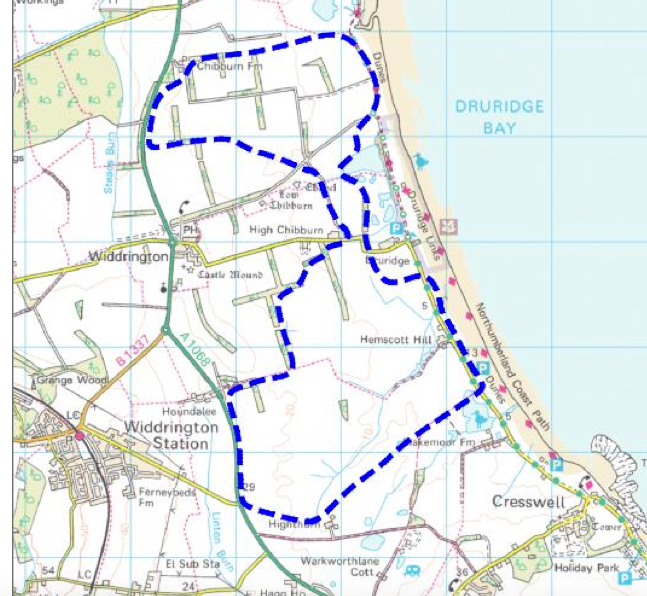
Banks group is now proposing to open an extremely large Open Cast mine covering something like 600ha of land, from which Bank will extract 5 million tonnes of coal. This area is known as Highthorn.

highthorn

Highthorn is right next to Druridge Bay, a Site of Special Scientific Interest and heritage coast. Druridge Bay has long been a contested landscape: it was scarred by the previous history of coal mining in the 19th and 20th century, and is still recovering from that change. It was also long fought over as a location for a nuclear power station and for sand extraction. In more recent years, all those with an interest have come together as the Druridge Bay Partnership to see a longer term future for the area that places nature at the heart of decision making.

So it not surprising that Banks’ proposals to return to open-casting in this recovering landscape has been met by horror and a Save Druridge Bay campaign is now up and running. I was interested to try and find out whether The Rational Optimist Viscount Matt Ridley might have his finger in this particular pie.

In these days when it is a matter of a few seconds work on the internet to find out who are the directors of a company, or how much your neighbours bought their house for, or how much a particular MP received from a business (for whatever reason), that is it still not possible to tell who owns millions of acres of England.

I had a good look in various places and discovered that two farming businesses were claiming agri-environment scheme payments from within the area of search for Highthorn: W and S Bell at Hemscott Farm, and EA Storey and Sons, in the northern section of the search area. I also noticed that Alcan Farms Estate were getting a forestry payment to the south of the area. The Bells at Hemscott Farm run a glamping business, encouraging people to come and stay on the farm and enjoy the delights of the local natural environment. EA Storey and Sons are based quite a long way away at Ponteland. Ponteland lies, as far as I can tell, within the Blagdon Estate owned by Matt Ridley.

The Alcan Estate was a large area owned by the Aluminium smelting company Alcan, land around the Lynmouth smelter which has now closed. Alcan sold this estate, of some 4500 acres, to the Crown Estates, earlier this year. This is now known as the Ellington Estate, and includes farms at Highthorn and Blakemoor, both of which lie within the area Banks is exploring as part of its open cast proposal.

I think, but cannot prove, that the land which the Bells and EA Storey claim payments on, is tenanted. Who might be the ultimate owners  – and beneficiaries of the “wayleave” paid to extract the coal? Given that EA Storey are based in Ponteland, on what appears to be Blagdon Estate land, is it too much of a stretch of the imagination to believe that The Rational Optimist Viscount Ridley is a landowner who will profit from the Druridge Bay opencast? Whether he is or he isnt, another beneficiary will be the Crown Estates.

The Crown Estate is an odd beast. It was of course originally land owned by the King or Queen – but it is now 100% owned by us, the British public; yet it acts like a commercial property company. It owns a lot of land and controls all of the seabed in the UK territorial waters. It is controlled ultimately by the Treasury, and with the current Chancellor that spells trouble, especially for things like nature.

Having said that, the Crown Estate has invested heavily in renewable energy production, on our behalf. So why is it involved in open cast coal mining? The word “sustainable” litters the pages of the CE website  – I cannot imagine anything less sustainable that a massive open cast coal mine right next to one of the finest area for nature in Britain.

We, the British public, need to know more – is leading climate denier Viscount Ridley going to profit from the High Thorn site; how much is the Crown Estate going to profit from it, and how does this fit in with its own sustainability commitments.

Posted in coal, Crown Estate, Matt Ridley | Tagged , , | 4 Comments

A new Nature Blog: 2014 in review

The WordPress.com stats helper monkeys prepared a 2014 annual report for this blog.

Here’s an excerpt:

The concert hall at the Sydney Opera House holds 2,700 people. This blog was viewed about 60,000 times in 2014. If it were a concert at Sydney Opera House, it would take about 22 sold-out performances for that many people to see it.

Click here to see the complete report.

Posted in Uncategorized | Tagged | 6 Comments

Leaving Footprint, starting something new

Today is my last day at Footprint Ecology.

I’ve had a very interesting 18 months here, working on a number of management plans, a variety of Habitat Regulations Assessments, the protection of Lodge Hill and Rampisham Down, researching and writing a book about nature and people in churchyards; and running a large vegetation survey of Vegetated Coastal Shingle in and around the Solent.

It’s in the nature of most of these contracts that they fall into the “grey” literature, so I can’t show you what I’ve done, which is a pity. Some are obviously confidential, but others, such as the Solent work for Natural England, really ought to be in the public domain, but aren’t. Having said that, after we had done a comprehensive survey of the shingle plants, most of them – and the shingle – was washed away in last winter’s storms. The one that will see the light of day soon is the book “The Nature of God’s Acre”, more on this soon.

Footprint are an excellent small consultancy specialising in the ecological impacts of visitors (and their dogs) to nature sites; and Habitat Regulations Assessments. In both these areas they are leading experts in the UK. They also do more typical consultancy work like management plans. They do not do any commercial work for developers, and this makes them highly unusual.

In 2015 I am starting a new project, something I have been thinking about for quite a few years now. It will focus on the importance of nature to people, the way people need nature for spiritual health, for inspiration, for contemplation, even solace. I hope it will act as a counterbalance to the “Natural Capitalism” approach that is gaining ascendancy, particularly through things like Biodiversity Offsetting. It will also work to highlight how important public land is for nature (and other values), and how political actions and policies can help, or hinder, nature protection.

If you are interested in working with me on this new endeavour, please let me know.


Posted in Footprint, public goods, public land, spiritual value | Tagged , , , | 14 Comments