Badger Cull Circus comes to Dorset

The badger cull circus is coming to town – well to Dorset anyway. This was the announcement, a not entirely unexpected one, which was dribbled out on the friday before the bank holiday weekend. A piece of news management? It depends whether you believe there are any press officers left in Defra, after the repeated heavy blows to the head that the department has faced over the last five years, leaving it in a semi-comatose state.

Badger ecology expert Prof Rosie Woodroffe described the decision as “jaw-dropping”  as she pointed out that the Govt had decided (sorry is consulting on plans) to reduce the minimum cull area from 150km to 100km2, against the evidence gained from the only large-scale scientific experiment in culling badgers against bovine TB, the Krebs Trials (RBCT). They are also proposing to weaken other rules governing how the cull will operate, including the requirement that landowners covering 70% of land within a killing zone have to take part.

How many badgers are there in Dorset, and how many is too many? Natural England has estimated that 615 badgers need to be killed in the Dorset KZ (killing zone) which is apparently 223km2. Based on a survey of setts within one 36km2, Defra estimates there are between 879 and 1547 badgers in there ie 1213 +/- 334 badgers. Clearly with the large error on these figures if the cull removes 615 from 1547 it will not have met the 70% reduction the RBCT indicates is the minimum necessary to achieve a reduction in the bTB rate in cattle. Helpfully, Natural England have also provided a maximum kill number, to make sure we arent in contravention of the Berne Convention; this is 835. So if the population turns out to be 879 after all, then 44 badgers will be left after the kill – in an area of 22000ha.

I have spoken to many people in Dorset about the badger cull this year – it’s quite a hot topic. What’s clear to me is that, in general, the landowning fraternity do not like badgers. They blame them for spreading TB and of course if you’re in beef or dairy that’s a huge issue (regardless of the science) . But I think in the main there’s a gut feeling that there are now too many badgers around in the countryside and they need to be kept under control. I don’t think more than a handful of landowners want badgers extirpated from Dorset, just want the numbers reduced.The reasons for this are practical – badgers do a lot of digging and this can be near to buildings, undermining roads and tracks etc. They also do some damage to crops, especially maize. As the area of maize increases inexorably across Dorset, the amount that is trampled and eaten by badgers also increases.

Badgers love maize – it’s an easy source of high energy food for them. So it’s no surprise to read on farming forums how much farmers want rid of badgers because of the damage done to maize crops, nothing to do with bovine TB. One Somerset farmer said, on the topic of badgers eating maize and what can be done about it:

“make sure you are in the cull zone….we normally loose (sic) 2 to 3 acres they find the most ripe plants….that was last year since the cull we don’t get any trouble.”

There is already evidence to show that badgers are enticed to forage around farm buildings to seek out maize feedstuffs, thus putting them in direct contact with cattle and increasing the risk of catching or passing on bTB. There are also suggestions that a maize diet may be directly affecting the badger immune system making it more vulnerable to catching bovine TB. I haven’t seen any firm scientific evidence that this is the case – but it seems like something worth investigating.

Perhaps there are too many badgers in the heavily engineered industrial shop floor we call modern farmland, in the same way that a poorly protected grain store can produce rat populations of biblical proportions. But if that is the case, it is a problem created by intensive farming techniques our farming industry is so wedded to. It is also a searing indictment on our hypocritical attitudes towards wildlife and nature more generally: we as a nation think of ourselves as animal lovers and that we care about nature, while complicitly supporting the intensive industrial processes which create these unpalatable “problems”. Problems such as a burgeoning population of badgers.

Posted in agriculture, badgers, bovine TB | Tagged , , | 5 Comments

Return from a break

we had a walk up near Blandford yesterday to see how the Steam Fair was coming along (especially with all the rain we’ve had). There were already loads of people camping there and we could see a lot of traction engines already lined up (but not steaming).  The walk took us along a series of arable fields and I kept my eyes on the ground looking for interesting arable plants. This one caught my eye – not a particularly common plant in Dorset these days – Henbit Dead-nettle Lamium amplexicaule. You can check out recent records for it in your area on the excellent BSBI mapping tool. Henbit deadnettle has very curious “furry” flowers, almost like a cat’s paw when they first appear. And what appear to be leaves in the photo are actually bracts which form a cushion under the flowers. I think it’s quite a pretty plant!

P1040408


I was also delighted to see the Red Data Book Dwarf spurge Euphorbia exigua growing in the corner of a field of beans. The land seemed to be being managed quite sympathetically for its arable plants (uncultivated margins), though it isnt in an agri-environment scheme.

I’ve had a bit of a break from writing this blog over the summer, as some of you might have noticed. This has been for a variety of reasons – we were away for a while and before that I was focussing all my (limited) intellectual capacity onto a rather complicated management planning process for a contract I have been working on over the past 18 months (on and off).

I also rather lost the will to write about environmental and political issues after the election.

Once the contract is out of the way, I am starting work properly on the new charity People Need Nature this month. There are still various administrative things to do which are all essential if not necessarily that interesting. I have also arranged a number of talks where I will be explaining what People Need Nature is all about. The first one is local in Dorset on 23rd September at Knoll Gardens in Ferndown. I’ll post a link for the Knoll Gardens Foundation website where you can book tickets. Later on in the autumn (November 3rd and 4th) I will be speaking at the CIEEM conference in Sheffield on Reconnecting People and Nature.

I will endeavour to write regularly through the autumn and keep you all up to date on progress with People Need Nature.


Posted in 2015 election, People Need Nature | Tagged | 5 Comments

Kids Company sheds little light in what Government thinks Civil Society is for

quote-charity-begins-at-home-and-justice-begins-next-door-charles-dickens-50486


Yesterday brought the very sad and alarming news that Kids Company had closed, due to lack of funding. It appears that the last straw was when a private philanthropist who withdrew a £3m donation on hearing that there was an investigation into alleged criminal activity on the charity premises – allegations that appeared in the media before the Charity were aware of them. Note the allegations are as yet unfounded.

I have had personal experience of a charity failing. After working for The Grasslands Trust for nearly six years I left shortly before it went under: I could see the writing on the wall and left shortly before it did. In simple terms the reason it went under was because the money went out, and not enough came back in. To be honest TGT had led a hand to mouth existence for much of its short life. The recession that hit in late 2007 (and in many ways continues to this day) had a very profound impact on the income of charities large and small. TGT relied for unrestricted income on Grant Making Trusts (GMTs).

GMTs have a pot of money which they invest. They then give away the investment income to good causes (usually charities), leaving the capital untouched. They are mostly charities themselves, with Trustees. Occasionally the Trustees of a GMT will decide to wind up the GMT and will give away the capital and the investment income. Some GMTs are huge and provide millions every year (Esmee Fairbairn Foundation are particularly generous to environmental charities and funded my post at TGT). Others have smallish endowments and give away a few thousand each year.  One figure suggests that around 4500 GMTs provide £3Bn a year to charities and other good causes. Another suggests 7500 provide £2Bn a year.

When the recession hit (a recession caused, as you will remember, because banks decided to create lots of new money which they then lost in gambling), the return on investments went down dramatically  – for a number of reasons. GMTs as charities are required to invest their money carefully – anything invested in a bank suffered when the interest rate dived down to near enough zero. Investments in stocks took a major hit when the stock markets crashed. The main beneficiaries of the global recession were the Hedge Funds, but their risky investment strategies would most likely have prevented charities from investing with them.

Since 2010 and the cuts to public expenditure, charities have seen their income from Government and Local Government grants fall. The only source of income for charities that has held up has been individual giving. Despite the recession, individual donations are still large – last year nearly £11Bn was donated by individuals to charities. But during the recession individual giving declined by 10% and has still not recovered to pre-recession levels.

Charities continue to face hard times though. And yesterday’s closure of Kids Company has to be seen in this context. There may well turn out to have been problems with the Charity’s management and governance. It certainly sounds like an organisation that has been on the edge of chaos for a long time. But then many charities are in that position, and it does not mean that they are failing to deliver public benefit.

Charities have to deliver public benefit, that is what they are there for. The Charity Commission has gone to quite a lot of effort to define what Public Benefit is and what it is not. You can read their guidance here.

I don’t think many would question whether Kids Company was providing public benefit. The Charity Commission, who is the regulator for charities and decides whether charities are delivering public benefit or not, clearly felt that KC was providing public benefit, by supporting vulnerable children who needed help, which they were not getting from anywhere else. It could be argued that if Government or local communities or businesses had been providing that support, then Kids Company wouldn’t need to have existed. But that is the case for the entire voluntary sector. It exists precisely because individuals, organisations of the state and businesses cannot provide all the needs of society.

Perhaps as a definition that sounds unduly negative, as if the voluntary sector only exists to fill a hole left by other entities. Better then to call it Civil Society and see it as an essential part of society, which provides support for those that need it, but also leads the way, has a vision for a better society, develops new ways of doing things which mean people have a better quality of life (in all its senses).

If the Kids Company saga shows up anything useful, it is that the Government doesn’t really know what it wants from Civil Society. On the one hand it wants organisations like Kids Company to step in and take on a role that arguably the State should provide, supporting vulnerable children. For this, very much a contractual arrangement, KC received £4m last year, about 20% of its funding.

On the other hand Government does not want to hear Charities criticising Government policy – something KC founder Camilla Batmanghelidjh was very good at doing. Witness the moves to stifle Charity lobbying via the Gagging Clause, or shut down comment or criticism by Charities in receipt of Government funding (the sock puppet issue.) But if Civil Society is to be the engine of innovation (David Cameron’s vaunted Big Society), developing new approaches to tackling Societ’s problems, how will it effectively advocate those solutions to the very people who need to listen to them, if they are gagged or muzzled?

It would be paranoid to think there’s a concerted campaign within Government to reduce the influence of Civil Society – but there are signals of an increased animosity. Former Charity Commissioner Andrew Purkis keeps watch on CC chair William Shawcross and notes Shawcross is sending increasingly antipathetic and strident signals about Charity work, especially Charity campaigning and advocacy  – hardly the neutral, cautious stance expected from the chair of a Regulator. The enthusiasm with which the right wing press and commentariat have put the boot in to Kids Company is another example of this animosity. One such commentator Conservative Home editor Mark Wallace yesterday suggested that Kids Company deserved to go under because they had broken the terms of the contract with the Cabinet Office on their latest payment, regardless of the consequences. While that may have some logic to it, if every organisation that bent the rules on grants they received were treated so draconially (is that a word?), there would be pandemonium.

And it’s salutary to consider what Society gets from Civil Society for the public expenditure it receives. Latest figures indicate that Civil Society had a total income of around £40Bn in 2012/13. Of this Local Government provided £6.8Bn while Central Government provided £5.8Bn. Tellingly £11.1Bn or 85% of Government funding was in the form of contracts, not grants. And Government support for Civil Society is shrinking – £1.7Bn down from 2010/11 to 12/13. No doubt the fall since then will have been even steeper.

Compare this with the £93 Billion a year Corporate Welfare support system. That’s right, taxpayers help out profit-making businesses to the tune of £3500 a year per household in hand-outs of various types; corporate hand-outs which characterised the Chancellor’s latest budget. And that £93Bn is a conservative estimate. It doesnt include, for example , the bank bailout which will end up costing taxpayers billions once the final figures are in.

While individuals gave £10.6Bn to charities last year, the Government took taxpayers money and gave 9 times as much to businesses. For what? What public benefit do businesses contribute to Society? Businesses are created to make profit for their owners – that might be individuals, or it might be shareholders. Creating profit in and of itself is not a public benefit. The Charity Commission are very clear on that point.

So it seems the Government is a bit confused about what it thinks Civil Society is for: is it a cheap semi-private form of contract provision for things the real private sector won’t touch (because there is no profit there)? Is it a place where innovation is created to help Society develop and improve people’s quality of life? Is it a source of embarrassment, full of “mesmerising” people who are actually dangerous extremists? Perhaps Civil Society itself needs to start vigorously promoting what it believes itself to be and what it is for.

Posted in Charities campaigning, Charities Commission, Uncategorized | Tagged , , | 9 Comments

The unforgotten Hawthorn

Last week our neighbourhood lost one of its oldest members. Its loss will have gone un-noticed by many, perhaps most; perhaps a few will have rejoiced in its passing. I thought I would write something in the way of a valedictory.

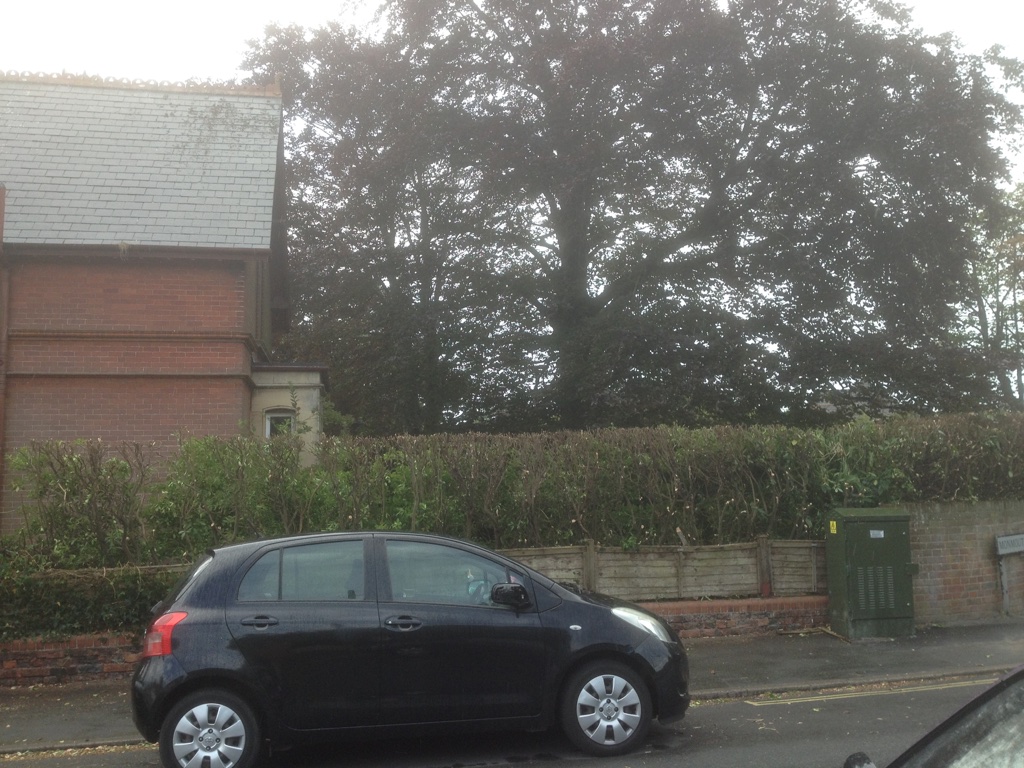
Here it is last summer.

hawthorn


The same scene today

thumb_IMG_0896_1024


We have lost a hawthorn tree, certainly 12o years old, perhaps more. It was old, and much of it was dead, though still standing. On a windy day last winter, part of it collapsed onto the pavement (narrowly avoiding a parked car). I cleared it away and threw the branches back into the hedge. I marvelled at its resilience, and its quality of quietly just getting on with life without anyone paying too much attention to it. The house isn’t lived in, so the tree had escaped any resident desire to tidy up, remove or improve.

Old hawthorns are some of our most valuable yet under-rated trees, because – to many – they are not “proper” trees. But given half a chance they can grow into magnificent individuals. They can support upwards of 150 different kinds of insects and can also be valuable hosts for lichens bryophytes and fungi. Their flowers are beautiful even if their scent is a little musky. It’s easy to see why people in the past saw them as magical. In many ways they still are.

I mentioned resilience – and though the tree has been cut down, its stump remains. Knowing how difficult it is to get rid of hawthorn (it is a robust invader of unmanaged grasslands) I expect to see shoots appearing in the Spring. Though the tree is gone, I hope it will return.

Posted in Uncategorized | Tagged , , | 2 Comments

Guest Post: Austerity and the Environment by Pete Johnstone

It’s a great pleasure to publish a Guest Blog today written by Pete Johnstone: the topic if Austerity and the Environment:

News that the Government will be cutting Defra’s budget again this year comes as no surprise. There will of course be further cuts in the coming years which will mean less funding for the environment in England. Putting the Agri –environmental funding and the re-energised (or is it re-booted?) England coast path aside there hasn’t been any substantial Defra funding going into countryside access or nature conservation for some years now.

This is nothing new to the environmental voluntary sector as they have seen the writing on the wall. An added pressure is the the government haste to transfer state owned assets into the charity sector. The emergence in 2012 of the Canal and River Trust from the old British Waterways Board and the more recent break-up of English Heritage into Historic England and the English Heritage Trust has shown that the Government’s role for safeguarding our heritage, one that has been painstakingly built up over the last 60 years is now fast declining and being handed over in an ever increasing rate, albeit with a dowry in some cases, to the charity sector for them to manage.

Of course It may well be that central government or their agencies should not be managing historic buildings as visitor attractions nor canals for holiday makers in the first place and it was just a quirk of fate and history that led them to take on these responsibilities as at the time there was on other body to do the work.

Well maybe government had got too big and it is really time now to slim down and focus on governing the country and that the management and upkeep of waterways, old buildings, art, historic landscapes, national nature reserves and even forests are non-governmental activities which should be for others to look after?

If that is the direction we are heading then I do believe that there needs to be some broader government thinking and public consensus on how this so called divestment is going to take place, managed and be funded, not just in the short term but longer term too. Otherwise we face the uncertainty of our heritage, our inheritance, being whittled away and passed down to the charity sector to manage in piecemeal fashion with no coherent long term strategy.

And, if the established voluntary sector says ‘no’ to taking on properties, land and staff because it will not be adequately funded by government for that task then, as is the case now, the old guard charities will be by passed and new charities established to take on the new functions. The follow on scenario is that we will see the continued rise in the number of charities and yet more pressure on grant giving bodies, such as the Heritage Lottery Fund, trusts and foundations and the general public. If the pressure to raise funds gets to boiling point (it’s at simmering point now) then it is likely that grant giving bodies will tighten their priorities even further and the general public, who are generally very sympathetic donors to charities and their causes, will be inundated in funding requests and will either lose interest or worse still, turn against the not-for-profits in anger.

Is there and answer? Well there could be. In 1994 John Major’s Conservative government created the National Lottery which to date has contributed a whopping £33 billion pounds to a range of good causes including the built and natural heritage. Two years later in 1996 the same Conservative government established the Landfill Communities Fund (LCF) as the first environmental tax in the UK which was introduced to increase the cost of landfill and therefore help reduce waste. Since its introduction the LCF has contributed £1.27 billion to environmental projects including public parks, biodiversity and public access projects, many of which would just not have happened without the LCF contribution. ¹

So can the present day Conservative government be forward thinking enough to follow on from these two seminal ventures created in the 1990s to tackle the current the problem of who should be responsible for the long term management of our state owned natural assets? And if the answer is yes then what would the answer look like? One practical charity led example is from Nesta, ³ who are running an innovative initiative to explore and test out new ways of managing and funding local authority owned parks with their Rethinking Parks Programme.

The uncoordinated disposal of state owned heritage is too big an issue for charities to sort out for themselves and it needs government resolve to seek a solution. A proper public debate and a Royal Commission ² to investigate the value of our state owned national and built assets and to lay out possible options of future management and funding is, to my mind, the best way forward. This process has to be done in an open and transparent way and one that clearly thinks through the long term solutions. Yes, it might take several years for the Commission to report back but if we don’t have this debate now then I fear we will face a future of increasing management cuts to state owned national forests, nature reserves and landscapes to a point that they will be termed ‘nationally renowned’ in name only.

Pete Johnstone is the owner of PJ.elements, a consultancy with a focus on assisting social enterprises and charities with project management and community and environmental funding advice such as via crowdfunding. Pete is a Chartered Environmentalist and is an enthusiastic supporter of re-connecting people with the natural environment.


Notes and References

  1. Following the Autumn Statement of 2014 the government are currently undertaking to reform the LCF. The consultation closed in June 2015. The outcome is not yet known.


  1. UK Parliament: A Royal Commission is a selected group of people appointed by the Government to investigate a matter of important public concern and to make recommendations on any actions to be taken.


  1. Nesta is an innovation charity with the purpose to help people and organisations bring great idea to life. Their Rethinking Parks Programme is working with 11 parks teams to counter reduced public investment in parks management.
Posted in austerity, guest blogs | Tagged , | 4 Comments

More on the #Rampisham Propaganda War.


thumb_P1040207_1024After yesterday’s blog about describing the opening salvo’s in the propaganda war that’s started in advance of the Rampisham Solar Farm public inquiry, more shots come thick and fast.

Dorset Eye, a Dorset community media website, have published a piece from Hannah Lovegrove who has launched a scathing attack on Dorset Wildlife Trust. Lovegrove, you may recall, is British Solar Renewable’s Director Giles Frampton’s partner and works for Community Heat and Power, a front organisation which claims to represent community interests when negotiating with Solar power developers, but is actually owned by British Solar Renewables owner Angus MacDonald. Normally these pieces would be signed off by Community Heat and Power but in this case Lovegrove has signed it personally. So it’s a personal attack on Dorset Wildlife.

The piece is titled

Rampisham Down: “Are charities taking advantage of people’s generosity, or indeed just taking advantage of people full stop?”

and the title uses a quote from the Information Commissioner Chris Graham in an interview with the BBC regarding claims that four charities, NSPCC, Oxfam, Macmillian Cancer Support and British Red Cross,

“Are the charities taking advantage of people’s generosity, or indeed just taking advantage of people full stop?”

This quote refers specifically to the four charities and specifically in relation to the alleged use of cold calling to pressure people into giving money to these charities.

Note Lovegrove has mangled the original quote – by removing the “the” which relates the comment to the four charities and their fundraising activities, she has created a fake quote which implies the Information Commissioner is asking a completely different question about all charities in general, and their activities in general, rather than about fundraising.

Lovegrove goes on in the piece to attack Dorset Wildlife Trust on the same grounds that British Solar Renewables have all along, framing BSR as the victim who is the only organisation that truly stands up for the interests of the wildlife at Rampisham. Reading through her claims, you would scarcely know British Solar Renewables were a business in the business of making profits from taxpayer-funded subsidies. I’m not going to explain why she is wrong, as I have already done so on many occasions, but if you have not yet done so please take a look at my Rampisham Down Factsheet series of blogs.

I mentioned in yesterdays blog that a Solar Industry Analyst Finlay Colville had been taken in by BSR’s line and hadn’t looked at the other side of the story. I approached him on twitter offering to meet him at Rampisham Down to show him the wildlife there and explain to him why I was so concerned by the proposals. His response? He has blocked me on twitter.

Posted in British Solar Renewables, community heat and power, Rampisham Down, Solar Farms | Tagged , , , , , | 6 Comments

Rampisham: the propaganda war begins

thumb_P1040206_1024

It was inevitable that with the announcement of the Public Inquiry for the Rampisham Down Solar Farm, the developers would break cover and start a media campaign to persuade the public that their position is the right one.

So it begins. An article on an industry website Solar Power Portal reports that Rampisham owners and all round Solar subsidy farmers,  British Solar Renewables, have apparently released a report which they claim to prove that the solar farm poses no threat to the wildlife at Rampisham. Remember they claimed this before, with their risible attempts to show no long term change in vegetation under solar panels by monitoring the flowers over one growing season. This claim led to one of the most comprehensive demolitions of an “environmental consultant’s” claims by Natural England, that I have ever seen.

I have been trying to find this report; “a significant ecological study” according to Solar Power Portal, but with no success. I wonder where it is – anything being submitted to the Planning Inspectorate for the Public Inquiry should be in the public domain. But I suspect this report is just an update of the one from last year, perhaps with another two whole months of vegetation monitoring. BSR have been playing this one card all along, that they have proved already that the solar panels (yet to be constructed) will have no effect on the vegetation and associated animals on Rampisham Down. But, however much they may crow about being “scientific”, all the scientists involved will know in their heart of hearts that this is an entirely unscientific claim, based on one year’s monitoring, on an inadequate number of samples, which fail to take into account some critical variables.

An industry analyst Finlay Colville was also quoted in the story. He appears to have swallowed the BSR bait, hook line and sinker, saying

Until the end of 2014, BSR’s engagement with all relevant parties appeared to be of a highly collaborative nature, seeking to pacify all potential objections in a professional manner. From the start of 2015, it would appear that there is more intent now from BSR to simply make this site happen, and that enough-is-enough.

“While the case has been called in for review, the fact that the case went the public inquiry appeal route may actually end up to BSR’s advantage. Either way, there is likely to be serious sums of money involved pending the final decision of the inquiry, and what could have been a win-win situation if dealt with differently last year, may now only have one winner and one out-of-pocket loser.”

Now apart from anything else, how would Mr Colville know exactly what BSR’s engagement with all relevant parties was? He hadnt even spoken to Dorset Wildlife Trust; and Natural England don’t even get a mention. And the fact the site is nationally, possibly internationally important for its wildlife is also ignored.

BSR has also posted three short youtube films about Rampisham. I have only watched two of them as I didnt feel the need to put myself through listening to Councillor Jill Haynes again, after her performance at the West Dorset Planning Committee. The first film is Rampisham Scenery and shows a flowery scene, much as I described recently.

Pignut flowers wave in the breeze and the soundtrack is full of the song of skylarks. There’s a close of up the sward showing some flowers as well. It looks very nice. The next film is of an interview with Professor Ghillean Prance intercut with scenes showing Rampisham as brown and rank, because they were taken in the winter before the site had some grazing. Prance sounds like he is talking from a script – he praises BSR as if they were RSPB, and says Rampisham is a “trashed environment”. Prance criticises Natural England and claims that no plants at Rampisham are “really seriously endangered”, ignoring the nine Red Data Book species that occur there; let alone the importance of the site for Waxcap fungi, which has not even been fully elucidated yet.

I find it shocking, that a Professor of Botany and former Director of Kew Gardens should be so dismissive of the value of the plant communities and species at Rampisham Down.


Posted in British Solar Renewables, Professor Ghillean Prance, Rampisham Down, Solar Farms | Tagged , , , , | Leave a comment

National Meadow Day

It’s National Meadow Day. I hadn’t noticed until today when I saw this piece on the BBC Earth website. The piece kindly references a report I wrote for Plantlife and the Wildlife Trusts about meadows back in 2002, called “Green Unpleasant Land”. This is still downloadable from the Plantlife website.

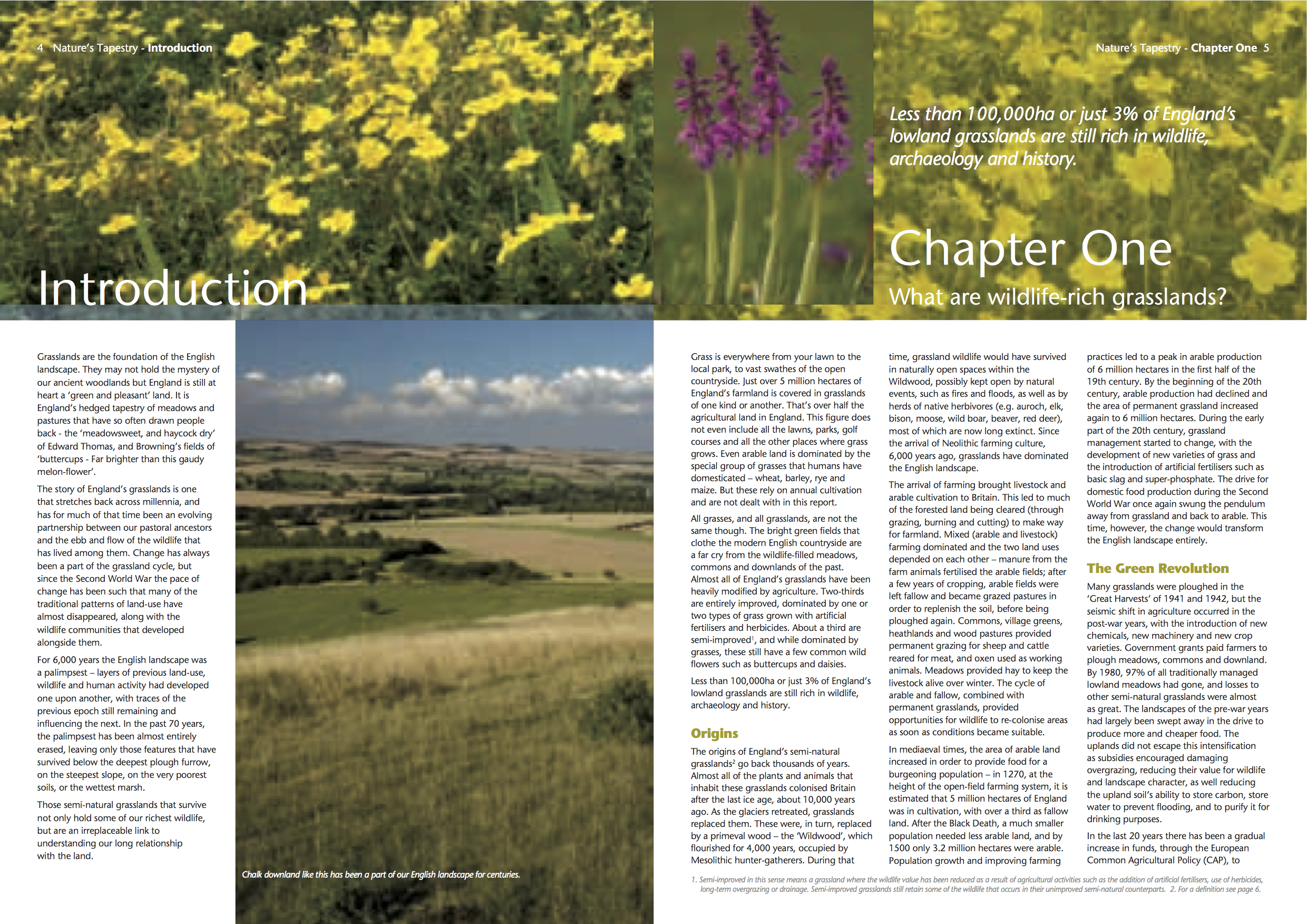
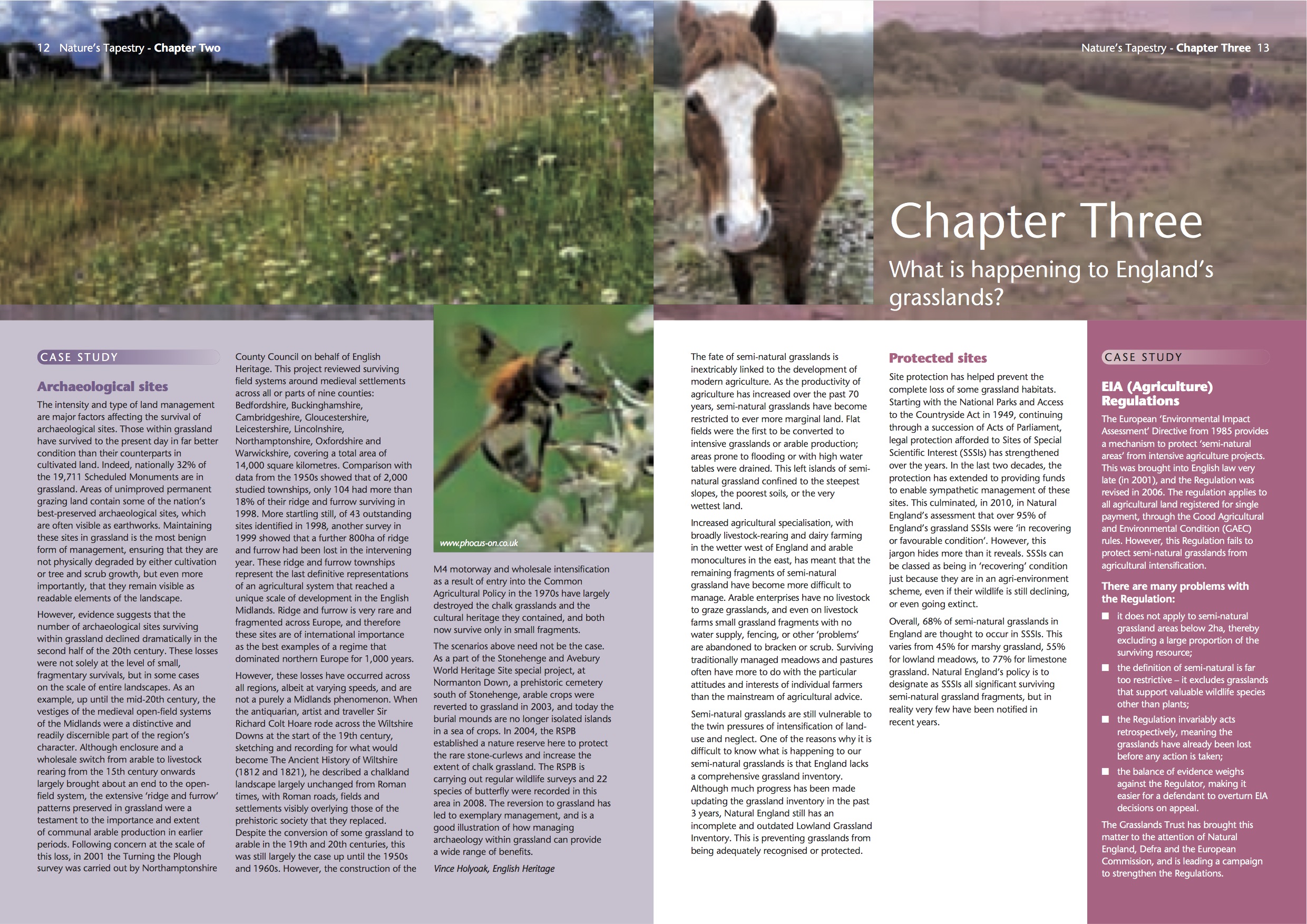
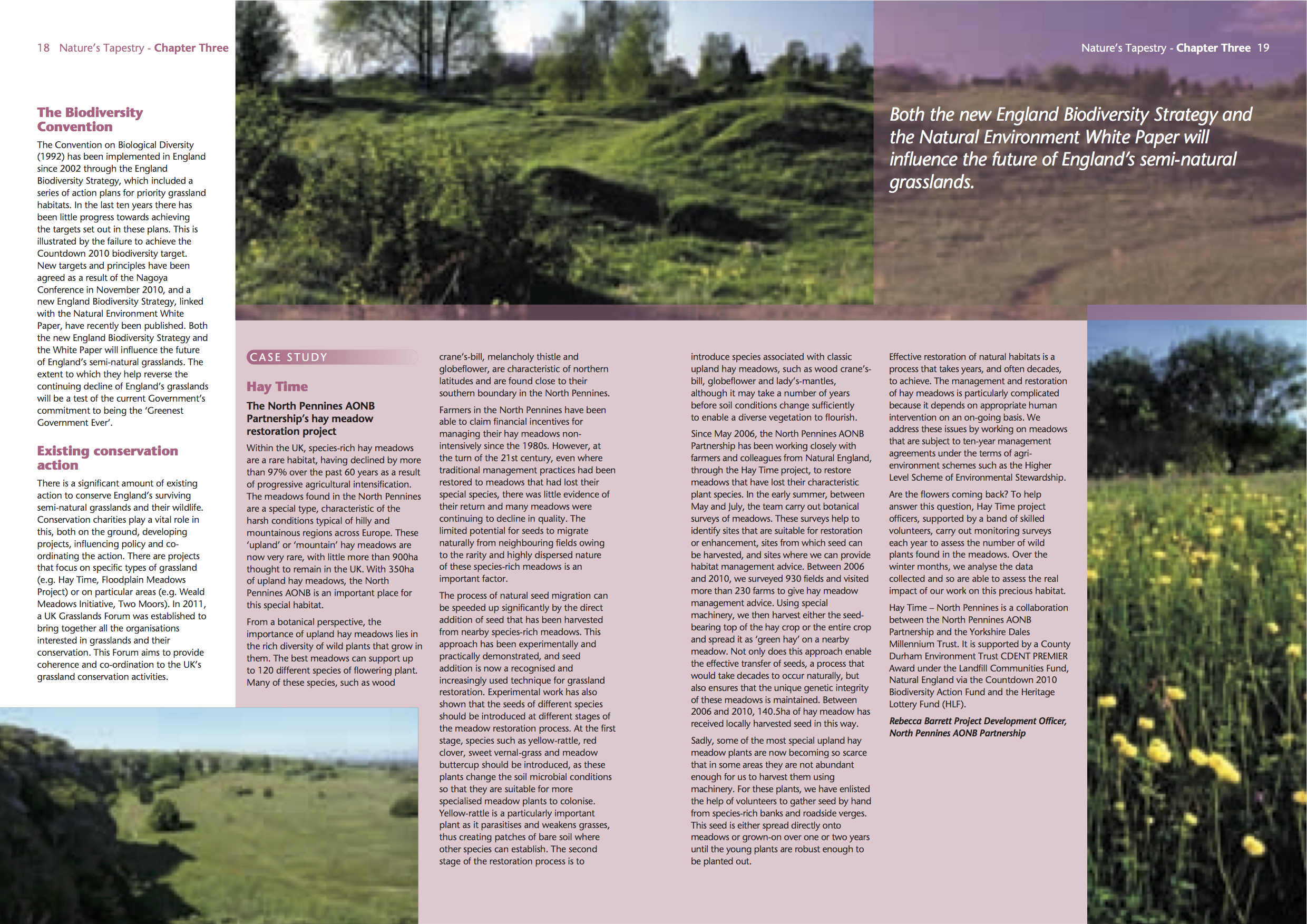
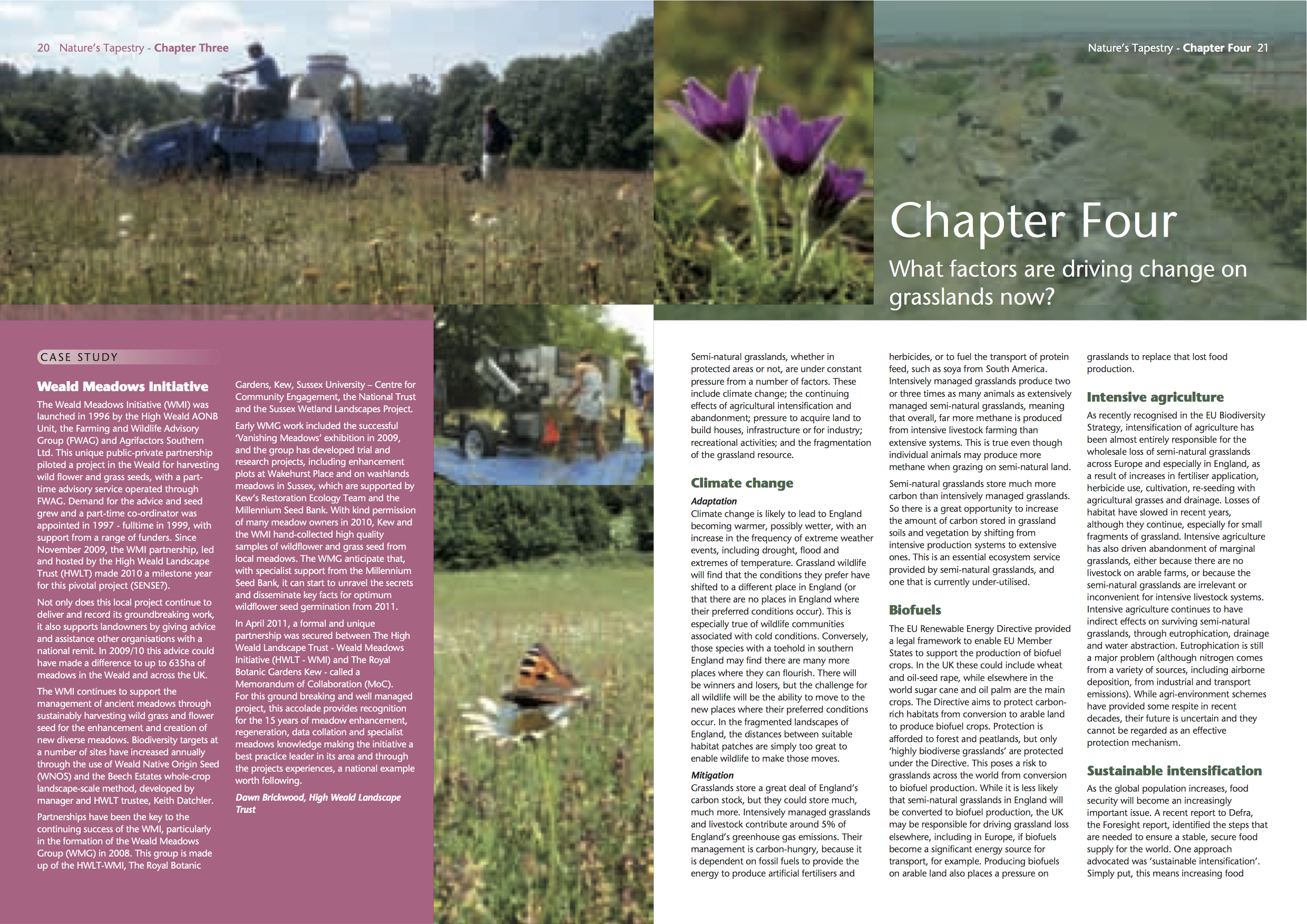
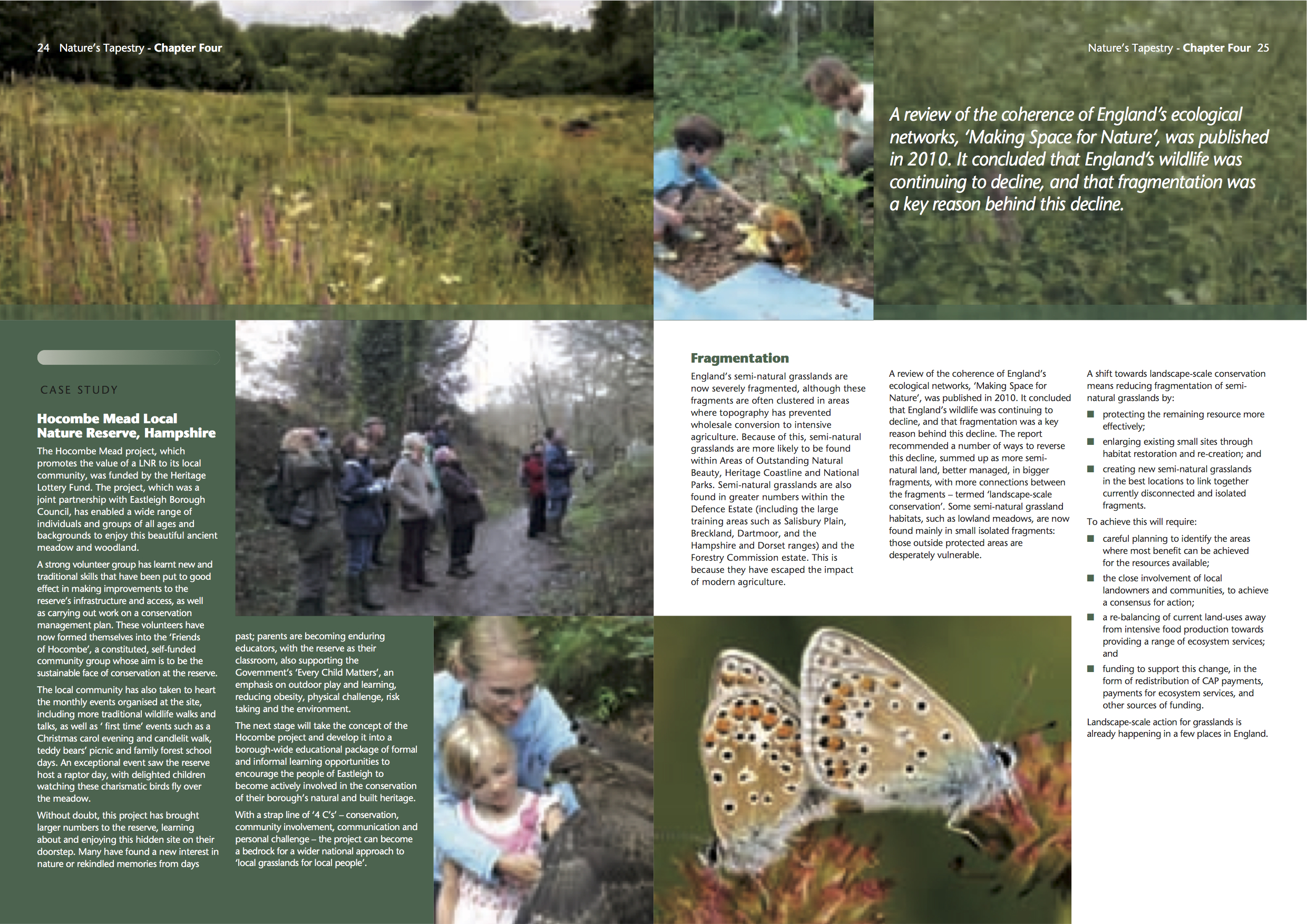
What the article doesn’t mention is that I wrote an comprehensive update to Green Unpleasant Land, called Nature’s Tapestry, which was published four years ago in July 2011. This was written when I was Conservation Director at the now defunct Grasslands Trust. Since the Grasslands Trust’s website has been taken down, there are no links to the report. So here it is  – I have put it on here as a series of jpeg images, but I also have it in pdf. If you would like me to email you a pdf copy please let me know via twitter or the comments page, or directly via email to miles@milesking.demon.co.uk

TheGrasslandsTrust_NaturesTapestry


TheGrasslandsTrust_NaturesTapestry 2


TheGrasslandsTrust_NaturesTapestry 3


TheGrasslandsTrust_NaturesTapestry 4


TheGrasslandsTrust_NaturesTapestry 5


TheGrasslandsTrust_NaturesTapestry 6


TheGrasslandsTrust_NaturesTapestry 7


TheGrasslandsTrust_NaturesTapestry 8


TheGrasslandsTrust_NaturesTapestry 9


TheGrasslandsTrust_NaturesTapestry 10


TheGrasslandsTrust_NaturesTapestry 11


TheGrasslandsTrust_NaturesTapestry 12


TheGrasslandsTrust_NaturesTapestry 13


TheGrasslandsTrust_NaturesTapestry 14


TheGrasslandsTrust_NaturesTapestry 15

Posted in grasslands, meadows | Tagged , , , | 6 Comments

Rampisham Down planning permission called in for Public Inquiry

thumb_P1040200_1024

An array of wildflowers at Rampisham Down SSSI

Good news today from the Department for Communities and Local Government. New Secretary of State Greg Clark has decided that West Dorset District Council’s extraordinary decision to give planning permission for a 50ha solar farm on a Site of Special Scientific Interest at Rampisham Down, West Dorset, should be reviewed by a Planning Inspector at a Public Inquiry.

This sensible decision was by no means inevitable, but happened at least in part thanks to all the 10,870 people who signed the Wildlife Trust’s e-petition asking the previous Secretary of State Eric Pickles, to call in the planning permission.

What happens next? The Planning Inspectorate (PINS) has asked the developer and the planning authority to provide statements including “full particulars of the case” and a list of documents they intend to refer to. Natural England will also be asked to do the same and Dorset Wildlife Trust, who have made a number of valuable interventions to defend Rampisham Down, are also being invited to do the same. All these documents need to be prepared and sent off in the next six weeks (ie by 11th August.)

The Inspector has already indicated that they are particularly interested in evidence as to whether the development is consistent with NPPF paragraph 10 (climate change) and 11 (conserving and enhancing the natural environment). They are also interested in the extent to which the development is in line with the Local Plan.

Any organisation or individual that objected to the original planning application potentially is in a position to give verbal or written evidence to the Inquiry. As is always the case, the more people who send in evidence or are prepared to stand up and be counted, the more likely we will win. I am thinking about whether to attend and give oral evidence or not, but I will certainly be submitting written evidence. I will keep you posted with latest developments and how to go about giving evidence.

Posted in public inquiries, Rampisham Down, Solar Farms, SSSis, Uncategorized | Tagged , , , | 15 Comments

Rampisham Down in Flower: what British Solar Renewables don’t want you to see

I thought it would be a good idea to see how Rampisham Down was looking as we have had some good weather and the site had received some (not enough but a start) grazing in the winter to remove some of the “thatch” that had built up over the previous years of no management.

I was extremely pleasantly surprised to see that it was looking really lovely. The air was buzzing with the sound of bees and other insects, butterflies flitted across the grassland and there was a spectacular array of wildflowers.

Contrary to what the site owners, Solar Subsidy Farmers British Solar Renewables, want everyone to believe, Rampisham Down is not “severely damaged” grassland. Despite British Solar Renewable’s  front organisation Community Heat and Power’s claims about Rampisham Down (eg here) it was indeed possible to graze the site last winter; and this has done a power of good for the lowland acid grassland for which the site is so special.

Here are the photos I took earlier this week from the public right of way which runs along the southern boundary of Rampisham Down.

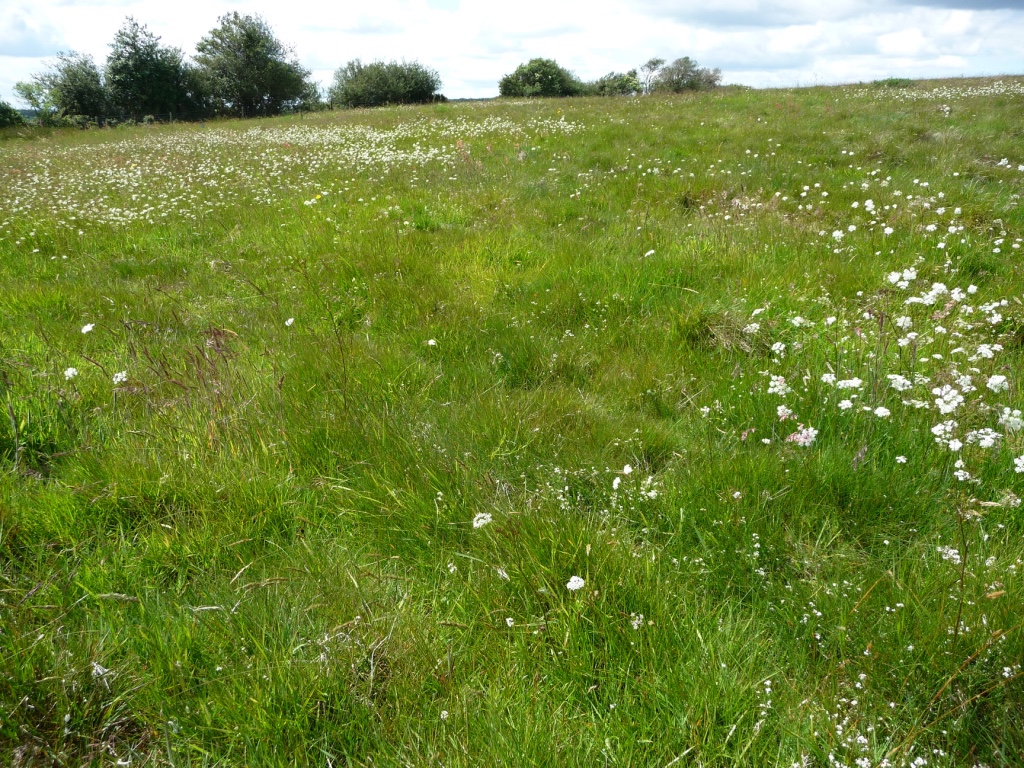
The yellow will generally be bird’s-foot trefoil though there is Tormentil too. White flowers include large sheets of Pignut, Lesser stitchwort and heath bedstraw. The red is common sorrel. I saw very little bracken on the southern half of the site, which is excellent news and completely at odds with the extraordinary claims made by Professor Ghillean Prance, a paid consultant acting on behalf of British Solar Renewables, at the planning committee hearing, who said that the site would quickly become covered with bracken.


thumb_P1040215_1024

rabbit-grazed acid grassland in the south-east corner of Rampisham Down

thumb_P1040214_1024

looking across the down towards the test solar panel array. If approved much of the acid grassland at Rampisham will be under these large panels.

thumb_P1040208_1024

large carpets of bird’s foot trefoil adorn the sward at Rampisham. This is an important plant providing nectar for insects and also the food plant for the common blue butterfly

thumb_P1040207_1024

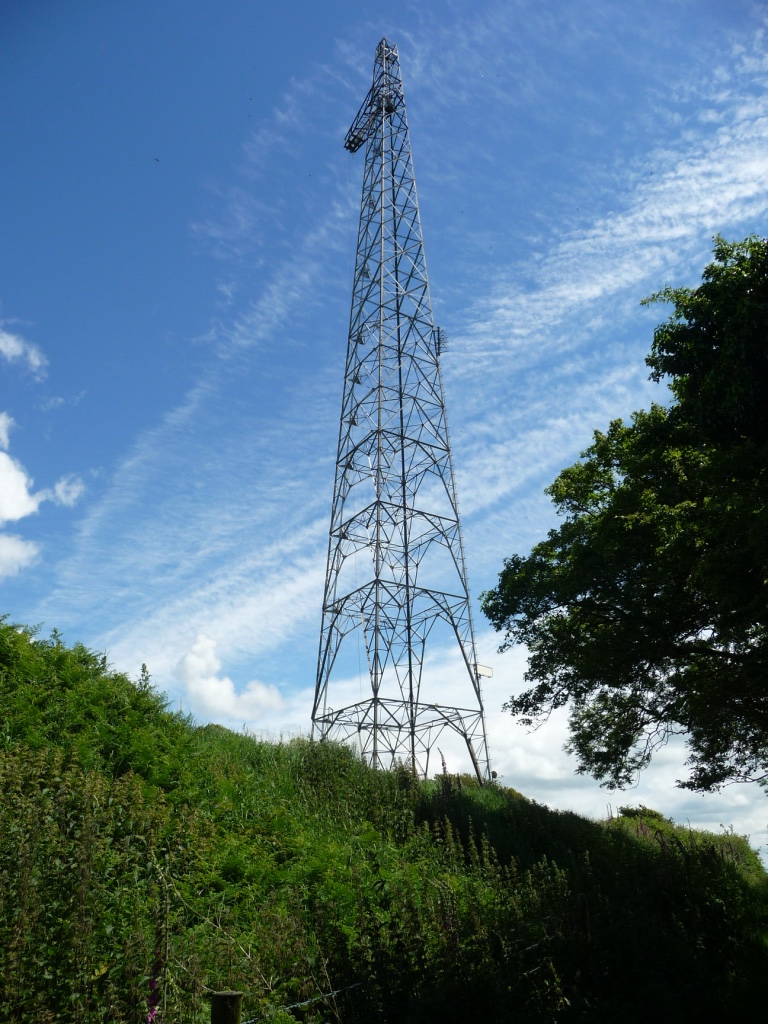
one of the surviving radio masts attesting to Rampisham’s very important role in British broadcasting history. At one point Rampisham was the most powerful radio transmitting station in the world.

thumb_P1040203_1024

Ladies bedstraw grows alongside Heath bedstraw, showing how Rampisham supports very rare “chalk heath” plant communities.

thumb_P1040200_1024

A profusion of pignut flowers at Rampisham, joined by Lesser stitchwort and Heath bedstraw, each a different hue of white.

thumb_P1040204_1024

bird’s foot trefoil growing on a bank at Rampisham

thumb_P1040201_1024

These flowers will disappear if BSR gets their permission to cover most of Rampisham Down in solar panels

thumb_P1040199_1024

a closer look at the sward showing Heath bedstraw and Pignut among a variety of different grasses and flowers

thumb_P1040194_1024

Bracken is confined to the edge of Rampisham down, at least along the southern boundary. Management at this stage will ensure it does not spread across the acid grassland.


Posted in British Solar Renewables, community heat and power, lowland acid grassland, Rampisham Down | Tagged , , , , , | 7 Comments