
Giacomo Balla, Sculptural Construction of Noise and Speed (1914)
The risk all utopians run is that entryists will use their idealism for their own ends. This would appear to be happening this week, as arch neoliberal brothers Owen Paterson and Viscount Matt Ridley, and others, seek to appropriate Ecomodernism for their own ends.
Ecomodernism is not, as you might imagine, a return to modernist art, music or literature from an environmental perspective (although perhaps that also exists). But ecomodernism does take key tenets from at least some strands of modernism – that a collective approach is better than individualism, that new is better, that technological progress is generally good; and that humanity can overcome nature. It also conveniently ignores other modernist philosophies, which emphasised the importance of spiritual life and working with nature, such as in the architecture of Frank Lloyd Wright and other advocates of Organic Architecture.
Ecomodernism is a utopian venture developed by The Breakthrough Institute. The Ecomodernists modestly describe themselves as “leading global thinkers” and who am I do argue with their self-identification. Their goal is to decouple humanity from nature. They believe
“humanity must shrink its impacts on the environment to make more room for nature” and reject the notion that “humans must harmonize with nature to avoid economic and ecological collapse:”.
Their utopian vision is that technology will solve the worlds problems – and this is certainly a modernist belief. From a hundred years ago.
I’m not inclined to critique this vision further, just now – though I can recommend readers look at this essay by Chris Smaje.
What interests me this week is the strange bedfellows the ecomodernists have attracted, namely former Secretary of State for the Environment Owen Paterson, about who I have written many times, and his brother in law Viscount Matt Ridley, who has also graced these pages all too often.
This week Paterson’s “think tank” UK2020 invites Breakthrough Institute’s global think leaders to speak on ecomodernism. Paterson has been voluble in his support for GMOs, something TBI are also keen on. Paterson also believes in decoupling, because he is a neoliberalist, who believes that the market will solve all humanity’s ills.I previously described Paterson as a latter day “enlightenment man” but perhaps that does a disservice to the enlightenment. Paterson fundamentally believes that humanity can improve nature and that it is our duty to do so.
Ridley is also a staunch supporter of free market fundamentalism, though he often goes further and has been described as a neo-libertarian. He does not believe there is any good in the state, the public sector, collective action, whatever you want to call it. This is ironic considering how much he receives from the taxpayer in farm subsidies, let alone the cost of his mistakes as chair of Northern Rock, which collapsed, costing the uk taxpayer billions.
Paterson, writing in the Telegraph yesterday, takes up the cudgels for ecomodernism. Paterson is always good value for his absurd quotes, so here are some:
“Today’s seven billion people have both more food and more nature reserves than the five billion of 30 years ago.”
Is the area under “nature reserve” whatever Paterson actually means by that, a good indicator of the health of the planet? Perhaps land 30 years ago didn’t need to be in a nature reserve because it was not under threat?
“The rich parts of the world, like Europe and North America, are now teeming with far richer wildlife populations than for many centuries, to the point where it is becoming a problem in cities – foxes in London, turkeys in Boston, bears in Philadelphia.”
Paterson always does take a route A approach to facts. Why spend years developing complex indicators for wildlife or biodiversity when you can just SEE ALL THE FOXES?
“Outside the developing world, forests are increasing in extent and diversity all the time.”
Paterson in his days at Defra, explained that the environment would be improved by getting rid of an ancient woodland, but planting loads of new trees. This is equivalent to others who argue that replacing a rainforest with an oil palm plantation means there has been no loss of forest. Real scientists have found that 3% of global forest was lost between 2000 and 2012 and that fragmentation during that period was profoundly affecting 10% of global forest. Paterson never worries too much about scientific evidence though.
According to Paterson, the developing world has the worst environmental problems, because they have not made the transition to intensive industrial agriculture, or using fossil fuels instead of burning wood. “they are still coupled to the natural environment” he says, using the language of the ecomodernists.
Paterson goes on to his favourite topic of late “the green blob”. We are told that environmental organisations have more clout in Brussels than corporate lobbyists – that would explain why the Common Agricultural Policy continues to be paid to farmers to deliver minimal public benefits I guess, or why environmental campaigners are not winning their fight to stop the EU from signing a secretive trade deal called TTIP with the US. Paterson’s world is a genuinely scary one – for the rest of us as well as him.
The Breakthrough Institute support things that are anathema to Paterson and Ridley. They believe the state has a key role to play in creating their utopian vision. After all, arguably the most significant outcome of the modernist age in the political sphere were the Socialist revolutions of Russia, China and elsewhere. TBI argue for state intervention to fast track the world to a future fuellled by nuclear energy. Now where have we heard that one before? Oh yes, the white heat of technology that was going to give us nuclear power so cheaply it would too cheap to meter. That doesnt appear to be coming any time soon, as efforts to build just one new nuclear plant in the UK are mired in chaos amid every spiralling costs – £24Billion pounds and counting. Having said that, TBI also appear to ignore the evidence that neoliberal economic dogma has created many of the worlds modern environmental, social and political problems – neatly summed up in the concept of “market failure”.
Why would brothers Paterson and Ridley seek to team up with these big state intervention ecotopians? I can only assume it is classic entryism, seeking to exploit the naive idealists at the Breakthrough Institute for their own nefarious ends. But they are not the only entryists on the block this week. Step forward the Living Marxism network, or LM in short.
I’ve written previously about the links between the libertarians of LM and UKIP. One of the LM front organisations is called Sense about Science, and it is they who are hosting the Breakthrough Institute this week, after their visit to Paterson’s world. Sense about Science are unashamedly pro GMO and have taken funding from big pharma in the past. It is also I think no coincidence that Matt Ridley sits on Sense About Science’s advisory council. CEO of Sense About Science is Tracey Brown who has, along with other LMers like Adam Curtis, attacked the Precautionary Principle as being anti-progressive, even arguing that the ban on neonicotinoids would not benefit bees. I wonder what the Breakthrough Institute feel about the precautionary principle.
Can we seriously talk about decoupling humanity from nature? And if so, would that be a good thing? I think it is utopian hubris to believe we can decouple ourselves from nature. It’s akin to the idea that we can “cure” cancer, or that all infectious diseases will be wiped from the earth in the way that smallpox was. These things are part of life, in the way death is part of life, an essential part.
Should we decouple ourselves from nature? No, we should not. We need to be more connected to nature, not less. People Need Nature.
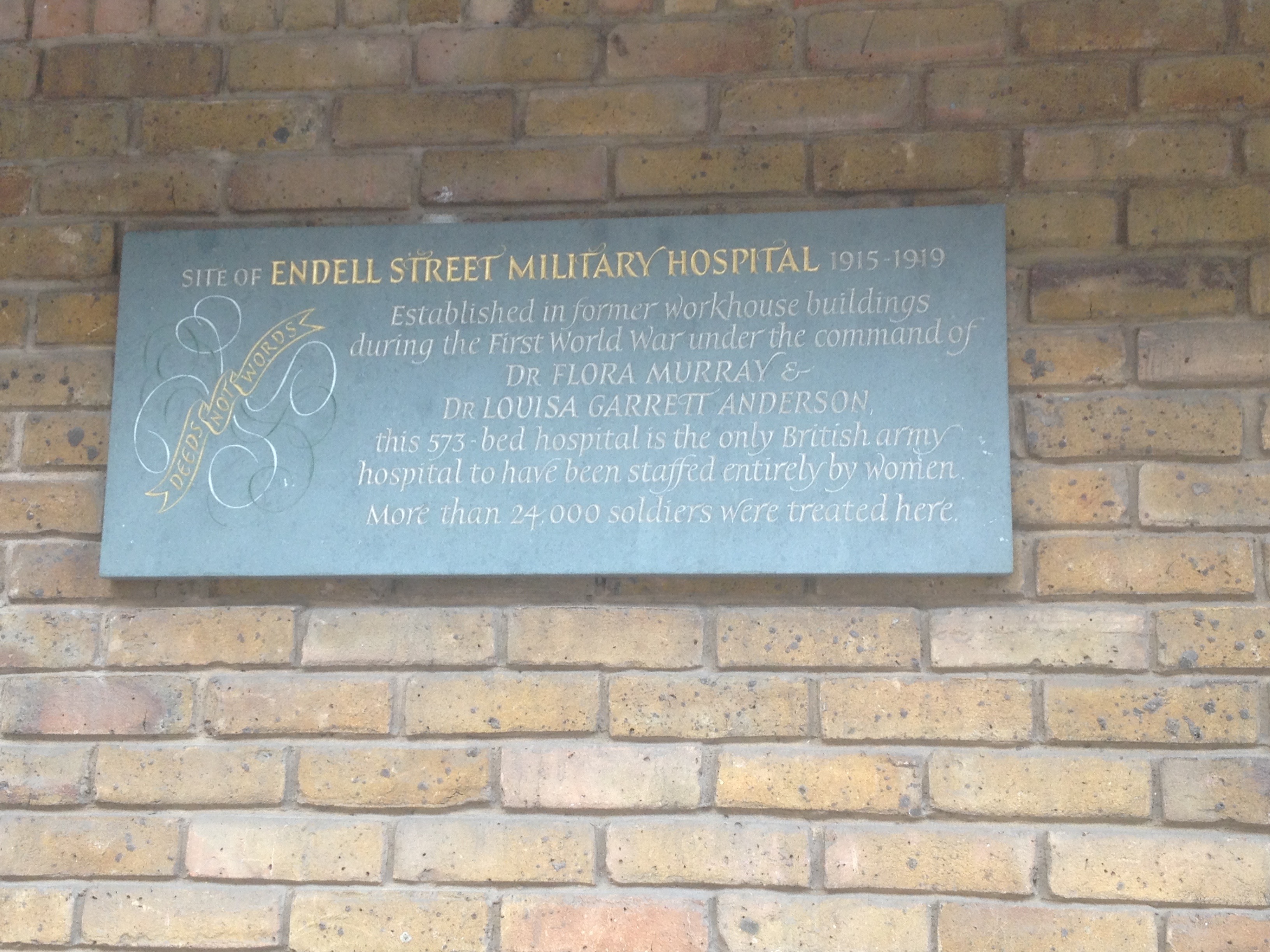 Endell Street was the first hospital to be created, run and staffed entirely by women doctors and nurses and opened 100 years ago this year.





 a new nature blog


.jpg)
